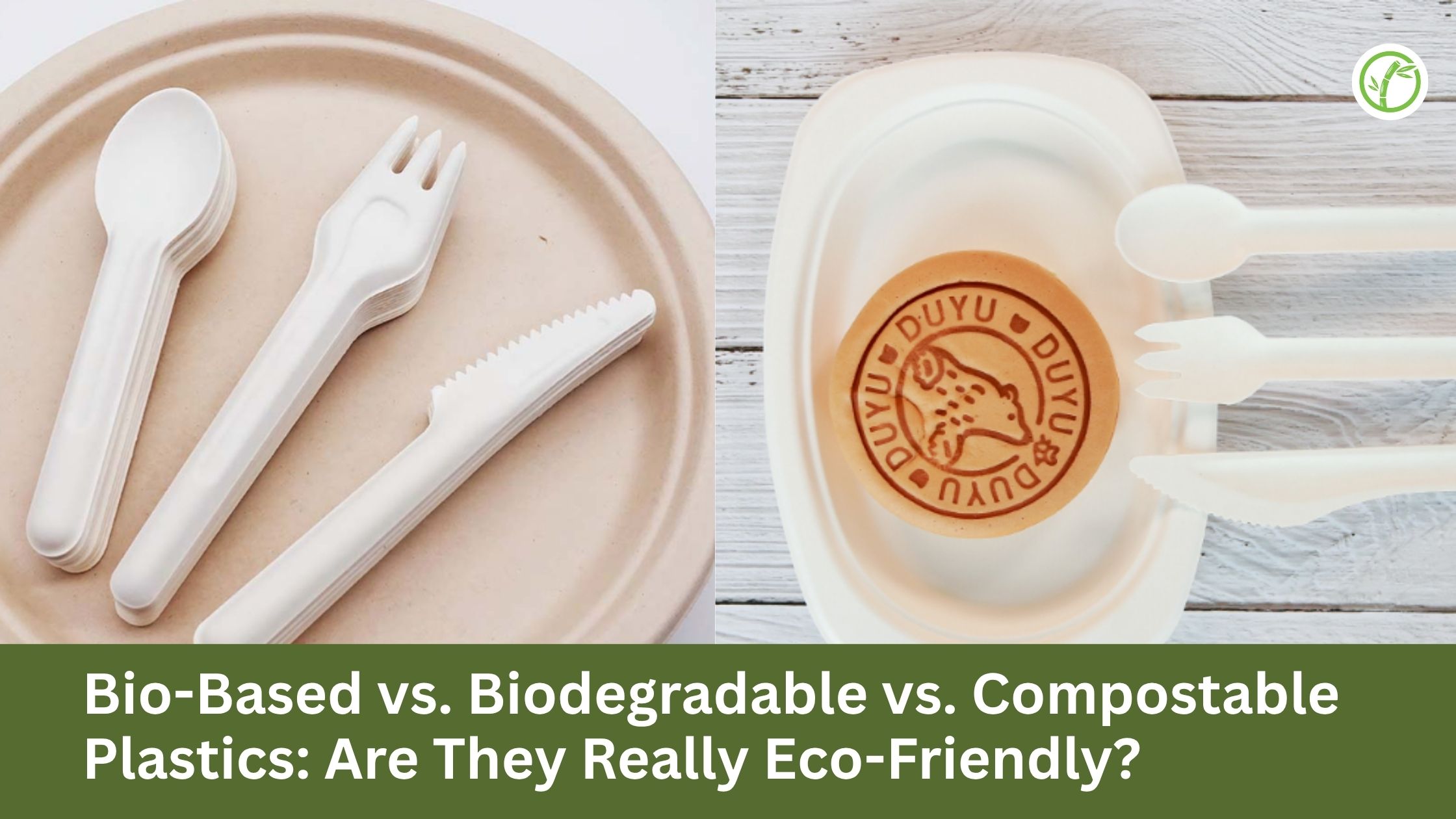
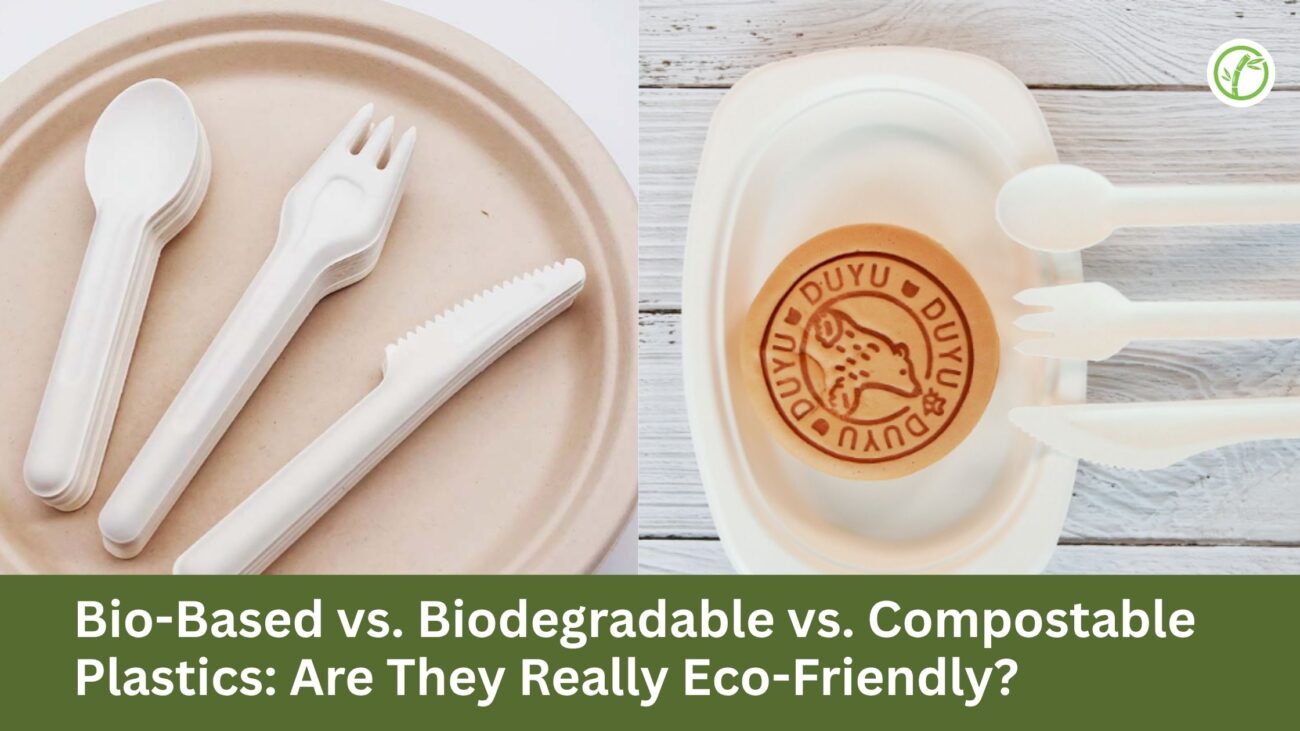
Bio-Based vs. Biodegradable vs. Compostable Plastics answer three different questions: what a plastic is made from, whether microbes can break it down, and whether it breaks down on a tested timeline in a composting facility. None of them is eco-friendly by default. Each works only when the product reaches the conditions its label assumes, and in many markets it doesn’t.
A plant-based bottle can be chemically identical to a petroleum one. A “compostable” fork can sit in a landfill for years. And in the EU and England, single-use cutlery and plates made from these plastics are already banned.
Key takeaways
- Bio-based describes the raw material, not the end of life. Bio-PE is made from sugarcane and does not biodegrade.
- Biodegradable means microbes can eventually break a material down. The word sets no time limit and no environment, which is why California restricts it on product labels.
- Compostable means certified to break down on a deadline. Under EN 13432, a material must disintegrate within 12 weeks and reach at least 90% biodegradation within six months in industrial composting.
- PLA and CPLA need industrial composting at around 58°C. They don’t break down in a backyard bin, soil or seawater.
- Biobased plastics are about 0.5% of the world’s 431 million tonnes of annual plastic production.
- The EU has banned single-use cutlery, plates, straws and stirrers made from any plastic since 3 July 2021, including PLA. Bamboo, wood and uncoated fiber are the accepted replacements.
What’s the difference between Bio-Based vs. Biodegradable vs. Compostable Plastics?
The three terms overlap, but they are not interchangeable. “Bio-based” is about the start of a product’s life. “Biodegradable” and “compostable” are about the end.
| Term | What it tells you | What it doesn’t tell you | Common examples | Where it should end up |
| Bio-based | Some or all of the carbon comes from plants such as corn, sugarcane or cassava | Whether the material breaks down at all | PLA, PHA, bio-PE, bio-PET | Depends on the polymer: recycling for bio-PE and bio-PET, industrial composting for PLA |
| Biodegradable | Microorganisms can convert it into CO2, water and biomass | How long it takes, or in which environment | PLA, PHA, PBAT, PBS, PCL | No reliable route unless it is also certified compostable |
| Compostable | It breaks down within a tested timeline in composting conditions and leaves no toxic residue | Whether your local facility accepts it | Certified PLA, PBAT blends, some PHA grades | Industrial composting, or a home bin if certified home compostable |
Every compostable plastic is biodegradable. Not every biodegradable plastic is compostable. And bio-based is a separate question: a plastic can be plant-based and permanent, or fossil-based and biodegradable.
| Biodegradable | Not biodegradable | |
| Bio-based | PLA, PHA, bio-PBS | Bio-PE, bio-PET, bio-PA |
| Fossil-based | PBAT, PCL, PBS, PVOH | Conventional PE, PP, PET, PS |
The bottom-left box surprises most buyers. PBAT is made from petroleum, yet it is one of the most common ingredients in compostable bags because it adds flexibility that PLA lacks.
What does “bio-based” plastic actually mean?
A bio-based plastic is made wholly or partly from renewable biological material instead of crude oil or natural gas. The label says nothing about what happens after use.
Bio-based plastics fall into two groups, and they behave very differently at end of life.
- Drop-in bioplastics such as bio-PE, bio-PET and bio-PP have the same chemical structure as their fossil versions. They can go into existing recycling streams, and they do not biodegrade.
- New bio-based polymers such as PLA and PHA have different chemistry. They cannot be recycled with conventional plastics, and they need specific conditions to break down.
“Bio-based” can also mean partly bio-based. A product with 30% plant-derived content can carry the term, so ask suppliers for the exact percentage. Bio-based content is measured by radiocarbon testing under ASTM D6866 in the US or EN 16640 in Europe.
The main benefit is less fossil carbon going into the product. Whether the finished item has a lower carbon footprint depends on the crop, farming inputs and factory energy, so ask for a product-specific life cycle assessment rather than assuming it.
The market is still small. According to European Bioplastics’ 2025 market update, biobased plastics make up roughly 0.5% of the 431 million tonnes of plastic produced each year. Capacity is forecast to double from 2.31 million tonnes in 2025 to about 4.69 million tonnes by 2030.
Most PLA today comes from corn or sugarcane starch. That is why critics raise land-use and food-crop questions about scaling it up.
Is biodegradable plastic better than regular plastic?
Only if it ends up somewhere it can actually biodegrade in a reasonable time. On its own, “biodegradable” is one of the least useful words on a package.
The word has no built-in deadline. Given enough time, most organic materials break down, so the label alone can’t tell you whether that takes three months or thirty years.
The environment decides the outcome. University of Florida extension guidance notes that PLA, though called compostable, will not biodegrade in the environment or in a backyard compost pile. Some PHA grades are certified to break down in soil or seawater, but they are the exception.
Landfills make it worse. Buried waste has little oxygen, and when material breaks down without oxygen, methane is produced alongside CO2. A “biodegradable” item in a landfill is not a climate win.
What about oxo-degradable plastic?
Oxo-degradable plastic is conventional plastic with additives that make it crumble into small fragments. It is often sold as “degradable” or “biodegradable.”
The EU treats it as a pollution source, not a solution. The Single-Use Plastics Directive bans oxo-degradable plastic products, single-use or not. If a supplier offers “degradable” bags or wraps at conventional-plastic prices, ask whether they contain oxo additives.
Why regulators distrust the word
California’s AB 1201 prohibits selling products labeled “biodegradable,” “degradable,” or “decomposable” unless they meet specified standards for environmental marketing claims. The practical effect is that most brands selling into California avoid the word entirely.
What makes a plastic “compostable”?
A plastic is compostable when it passes a recognized standard that sets a deadline, a temperature, and a toxicity test. Without a certificate, “compostable” is just a marketing word.
The EU standard for packaging is EN 13432. To pass, a material must meet four requirements:
- Composition: at least 50% volatile solids, and heavy metals and fluorine below set limits.
- Biodegradation: at least 90% of the material converted to CO2 within six months at about 58°C.
- Disintegration: after 12 weeks, at least 90% of the material passes through a 2 mm sieve.
- Compost quality: plant-growth and ecotoxicity tests show the finished compost is not harmful.
That 58°C figure (about 136°F) matters. It is the temperature of a large, managed industrial pile, not a garden bin.
Which certification should you ask a supplier for?
| Standard | Main markets | Composting conditions | Common certification marks |
| EN 13432 | EU, UK and many export markets | Industrial, about 58°C | Seedling, TÜV OK compost INDUSTRIAL |
| ASTM D6400 (plastics) / ASTM D6868 (coated paper) | US, Canada | Industrial | BPI |
| ISO 17088 | International | Industrial | Referenced by several national schemes |
| AS 5810, NF T51-800, OK compost HOME | Australia, France, global | Home, ambient temperature | TÜV OK compost HOME, ABA home compostable |
Ask for the certificate of the finished product, not only the raw resin. Inks, adhesives, thickness, and additives can all change the result.
Does home-compostable plastic really break down at home?
Often not. In the UK’s Big Compost Experiment, researchers found that 60% of plastics certified as home compostable did not fully disintegrate in real home compost bins.
Will a composting facility accept it?
Not always. Researchers at Michigan State University report that many industrial composters still avoid accepting PLA, partly because it looks identical to conventional plastic on a sorting line. Before switching a venue or delivery operation to compostables, get written confirmation from the local hauler about which items they take.
Is PLA compostable, and is CPLA any better?
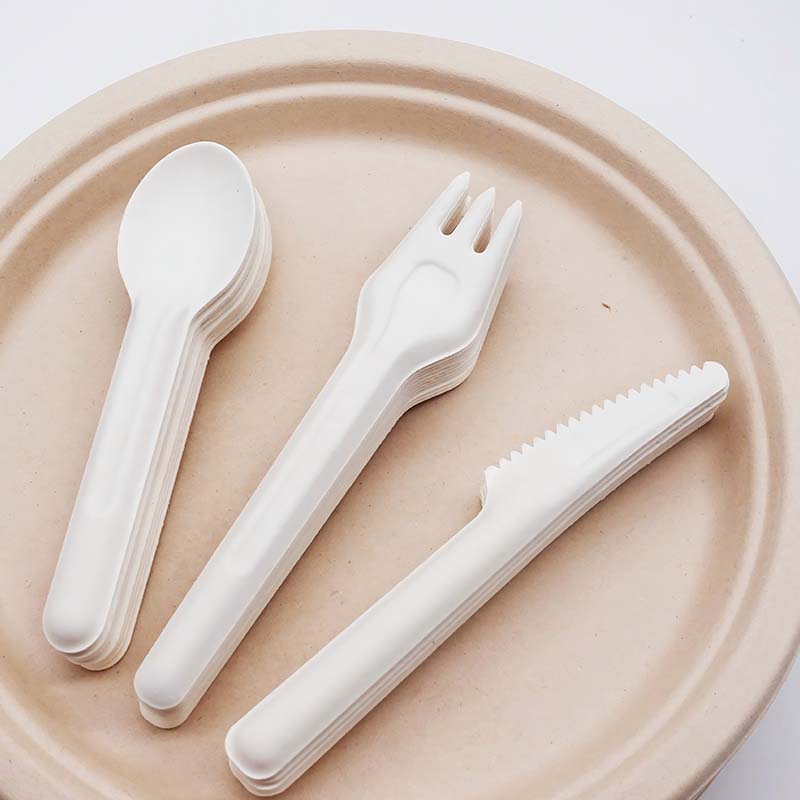
PLA is compostable in industrial facilities only. CPLA handles heat better, but it has the same end-of-life limits.
PLA (polylactic acid) is the most common bio-based, compostable plastic. It is clear and rigid, which is why it is used for cold-drink cups, salad clamshells and window films. Standard PLA softens at around 55–60°C, so it is not suited to hot food or drinks.
CPLA (crystallized PLA) is PLA that has been heat-treated, usually with mineral fillers, so its molecules form a more ordered structure. The result is stiffer and more heat-resistant. It is mostly used for cutlery and hot-cup lids, and suppliers commonly rate it for hot food up to about 85°C. Check the specific product’s data sheet.
Both share three practical problems:
- They need industrial composting and do not break down in home bins, soil or seawater.
- They cannot go into plastic recycling. The University of Florida guidance notes PLA items cannot be recycled, and its low melting point causes problems when mixed with other plastics.
- They look like conventional plastic, so sorting staff and machines often send them to landfill.
There is also a regulatory limit. In the EU, PLA and CPLA cutlery falls under the single-use plastic ban because the directive treats bioplastics as plastic.
So, are bioplastics really eco-friendly?
Sometimes. The material matters less than where it ends up after use.
When bioplastics deliver
- Closed venues with one compost stream. Stanford’s Coupa Café switched all its foodware to certified compostable items, so everything goes in one bin. There is no sorting decision for customers to get wrong.
- Drop-in bio-based plastics where recycling works. Bio-PE and bio-PET cut fossil feedstock without changing how the item is recycled.
- Items that are hard to separate from food waste. Tea bags, coffee pads and fruit stickers are the EU’s own examples, covered in the next section.
When they fall short
- Markets without industrial composting. The item goes to landfill, where it behaves much like conventional plastic. A California Assembly analysis found that even with compostability standards in place, most compostable plastic material is still sorted out and landfilled.
- Events that mix compostable and conventional plastic. Waste handlers often use an all-or-nothing rule. If both types are present, none of the material gets composted, because separating them is too costly.
- Home-compost claims. As the UK study showed, a home-compostable label does not guarantee the item breaks down in a real bin.
- When “compostable” is treated as compliance. San Francisco’s 2019 straw ban covered compostable PLA straws as well as plastic ones, and some businesses assumed the label alone made them compliant.
This is the concern community composters raise most often. For many, a “compostable” item without a facility to take it is simply another piece of trash.
Which eco-claims can you legally print on packaging?
In the EU and California, the wording on a product is regulated. The safe rule is to print only what a named certificate backs.
EU: the Packaging and Packaging Waste Regulation (PPWR)
The PPWR entered into force on 11 February 2025 and has applied since 12 August 2026. For compostable packaging, the key points are:
- From 12 February 2028, permeable tea and coffee bags, soft single-serve beverage units and sticky labels on fruit and vegetables must be industrially compostable.
- Member states can add to that list where suitable bio-waste systems exist, for example very lightweight carrier bags.
- Everything else must be designed for material recycling by the same date, even if it is made from compostable materials.
- PFAS limits for food-contact packaging took effect on 12 August 2026.
- Harmonised material labels are due from 12 August 2028.
The PPWR also covers only packaging. Single-use cutlery, plates, straws and stirrers fall under the separate Single-Use Plastics Directive, which bans them when made from any plastic, including bioplastics.
England: single-use plastic ban
Since 1 October 2023, businesses in England cannot supply single-use plastic plates, bowls, trays and cutlery to the public. The ban covers all plastics, including biodegradable, compostable and recycled, and items with plastic coatings or linings.
California: AB 1201
Under AB 1201, products labeled “compostable” must meet ASTM specifications, and “home compostable” claims need OK compost HOME certification. Products labeled “biodegradable,” “degradable,” or “decomposable” are prohibited unless they meet specified standards. Washington, Colorado and Maryland have similar truth-in-labeling laws.
Can I print this claim?
| Claim | What backs it | Safe to use? |
| “Compostable” or “industrially compostable” | EN 13432 or ASTM D6400/D6868 certificate for the finished product | Yes, with the certification mark and “where facilities exist” |
| “Home compostable” | OK compost HOME, AS 5810 or NF T51-800 | Only with that specific certificate |
| “Bio-based” | Radiocarbon test (ASTM D6866 or EN 16640) | Yes, stating the percentage |
| “Biodegradable” | No single standard covers a general claim | Avoid, and restricted in California |
| “Oxo-degradable” | None | No: banned in the EU |
| “Eco-friendly” or “green” | Nothing specific | Avoid unqualified use; the US FTC warns against broad environmental claims |
This section is general information, not legal advice. Check current rules for each destination market before printing.
How do you choose the right material for your market?
Start with where the product will be used and thrown away, then pick the material. Choosing the material first is how businesses end up with “compostable” stock they can’t legally sell or can’t dispose of properly.
| Where your products end up | Avoid | Choose |
| EU: cutlery, plates, straws, stirrers | Any plastic, including PLA and CPLA, and plastic-lined paper | Bamboo, wood, bagasse, uncoated paper |
| England: plates, bowls, trays, cutlery for the public | All single-use plastic, including biodegradable and compostable | Bamboo, wood, bagasse, uncoated paper |
| EU: takeaway containers and cups | Compostable plastic packaging outside the Article 9 list | Recyclable or reusable designs; fiber packaging that meets PFAS limits |
| California and other US states with labeling laws | “Biodegradable” on labels; uncertified “compostable” claims | ASTM D6400 or D6868 certified products, labeled to match |
| A venue or event with a confirmed compost hauler | Mixing compostable and conventional plastic | One certified compostable system across every item |
| Markets with little industrial composting | Paying extra for PLA or CPLA “compostable” | Reusables where possible; otherwise natural-fiber items |
Three questions to ask any supplier before ordering:
- Which certificate covers this exact finished product, and can I verify its number with the certifier?
- What is the bio-based content, as a percentage, and how was it tested?
- Does the product contain any plastic coating, lining, binder or intentionally added PFAS?
For a wider look at material choices by food type, see our guide to eco-friendly food packaging for small businesses.
Where do bamboo, wood, and bagasse fit?
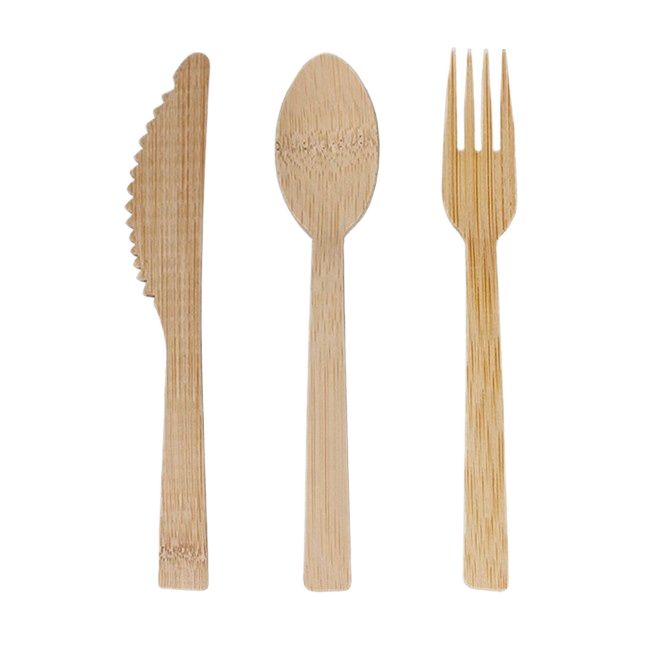
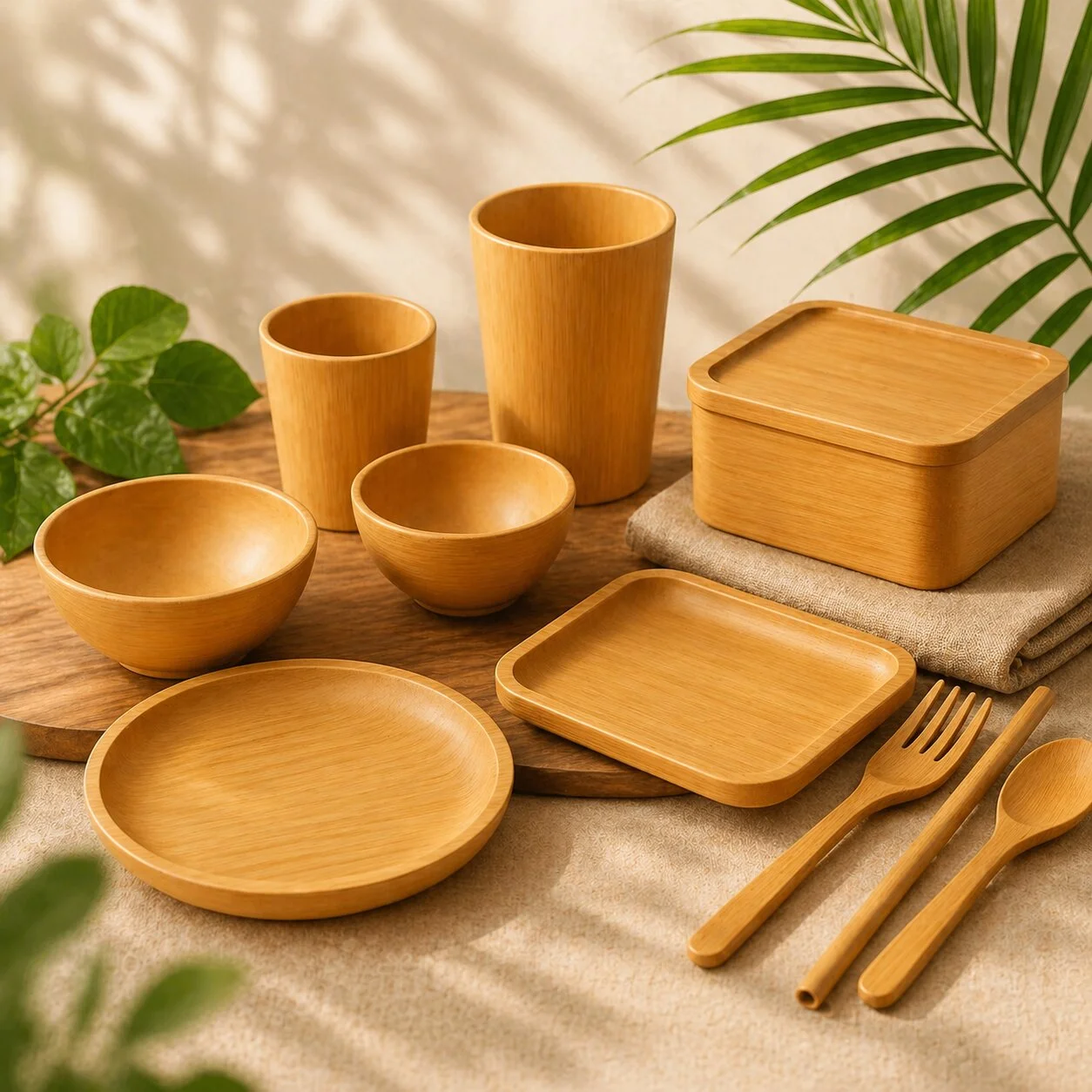
They sit outside the plastic debate entirely. Solid bamboo, birch wood and molded sugarcane fiber are plant materials, not polymers made to imitate plastic.
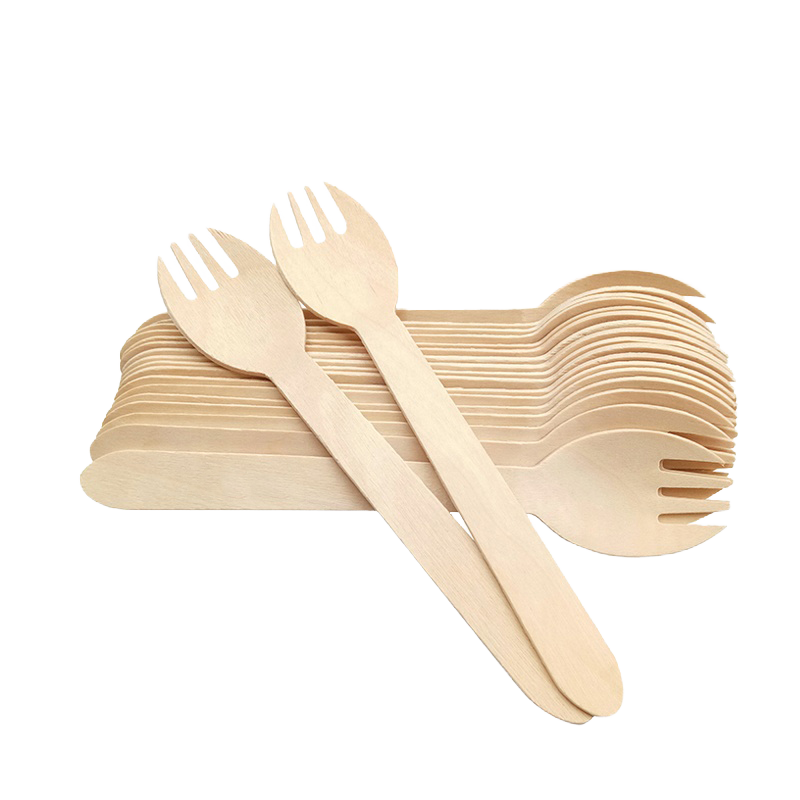
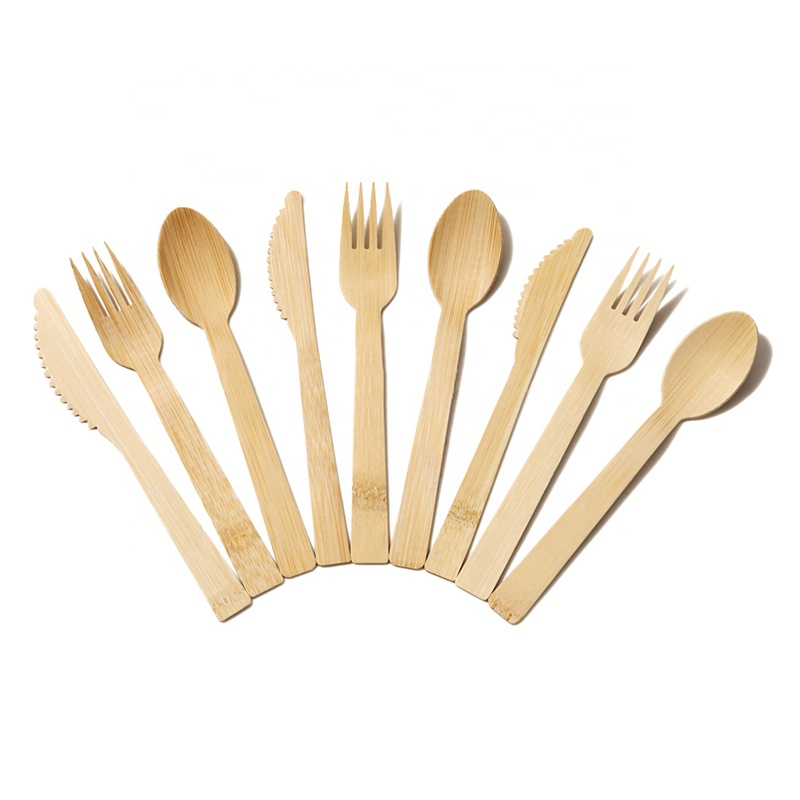
That is why EU guidance lists bamboo, wood and paper as replacements for banned plastic cutlery, and bagasse, palm leaf and unlined paper as replacements for plastic plates.
Hot-pressed bamboo cutlery is bonded by heat and pressure alone, with no resin binder. Our explainer on how bamboo cutlery is made walks through each production step. Bagasse tableware is molded from the fiber left after sugarcane juice is extracted, so it uses an agricultural by-product rather than a purpose-grown crop.
Natural fiber still needs checking. Three points to raise with any supplier:
- “Bamboo fiber” composites are different. Some bamboo plates and cups use melamine resin as a binder. They are not compostable, and they are not the same product as solid bamboo.
- Grease barriers can contain PFAS. Some fiber foodservice products have used fluorine compounds as grease barriers. With EU PFAS limits now in force, ask for a test report.
- Compostability claims still need proof. A plant origin doesn’t replace a certificate for the specific item you plan to label.
Natural-fiber disposables are still single-use. Where dishwashing is possible, reusable tableware avoids the waste altogether.
What Friendly Bamboo supplies
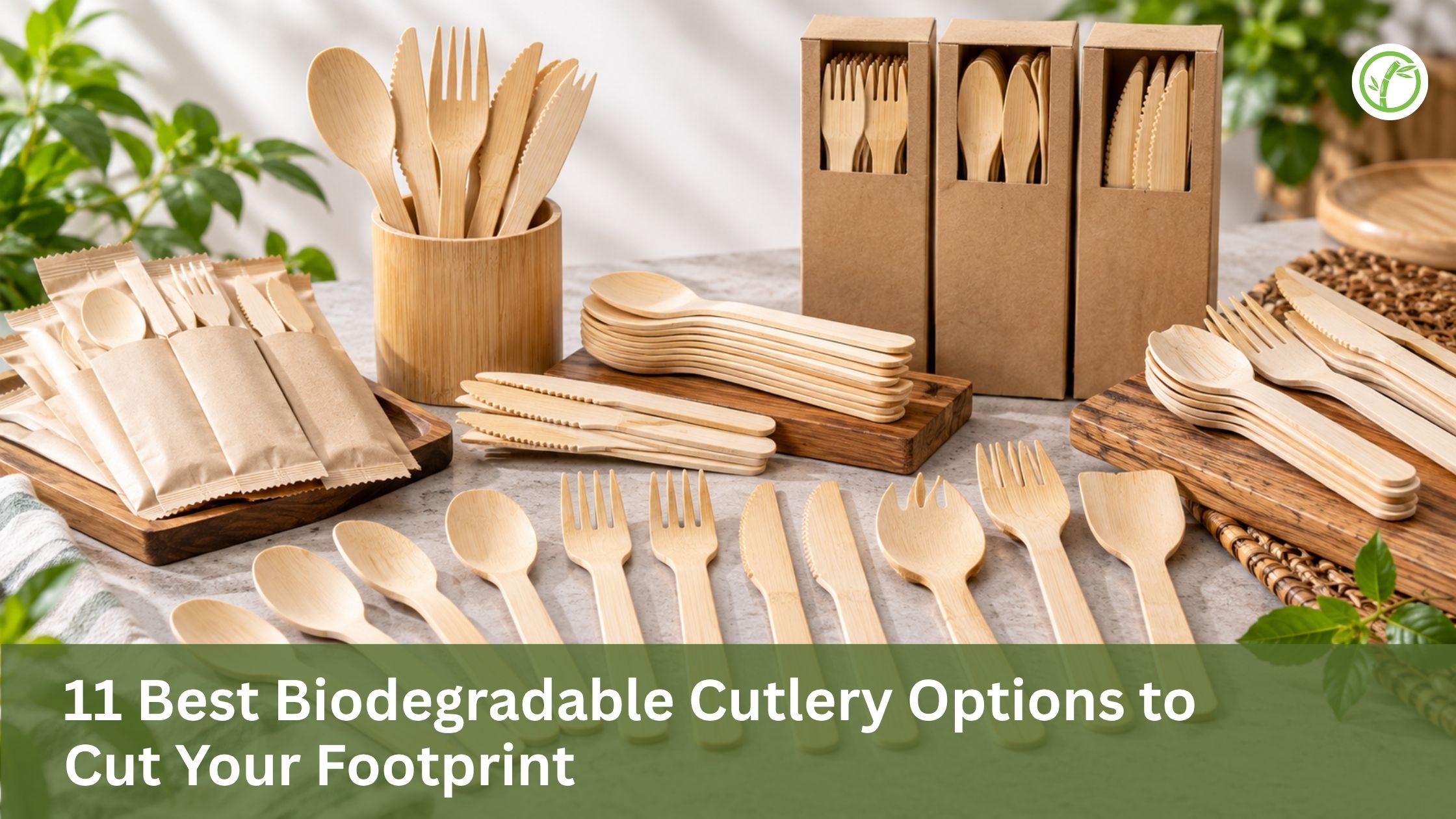
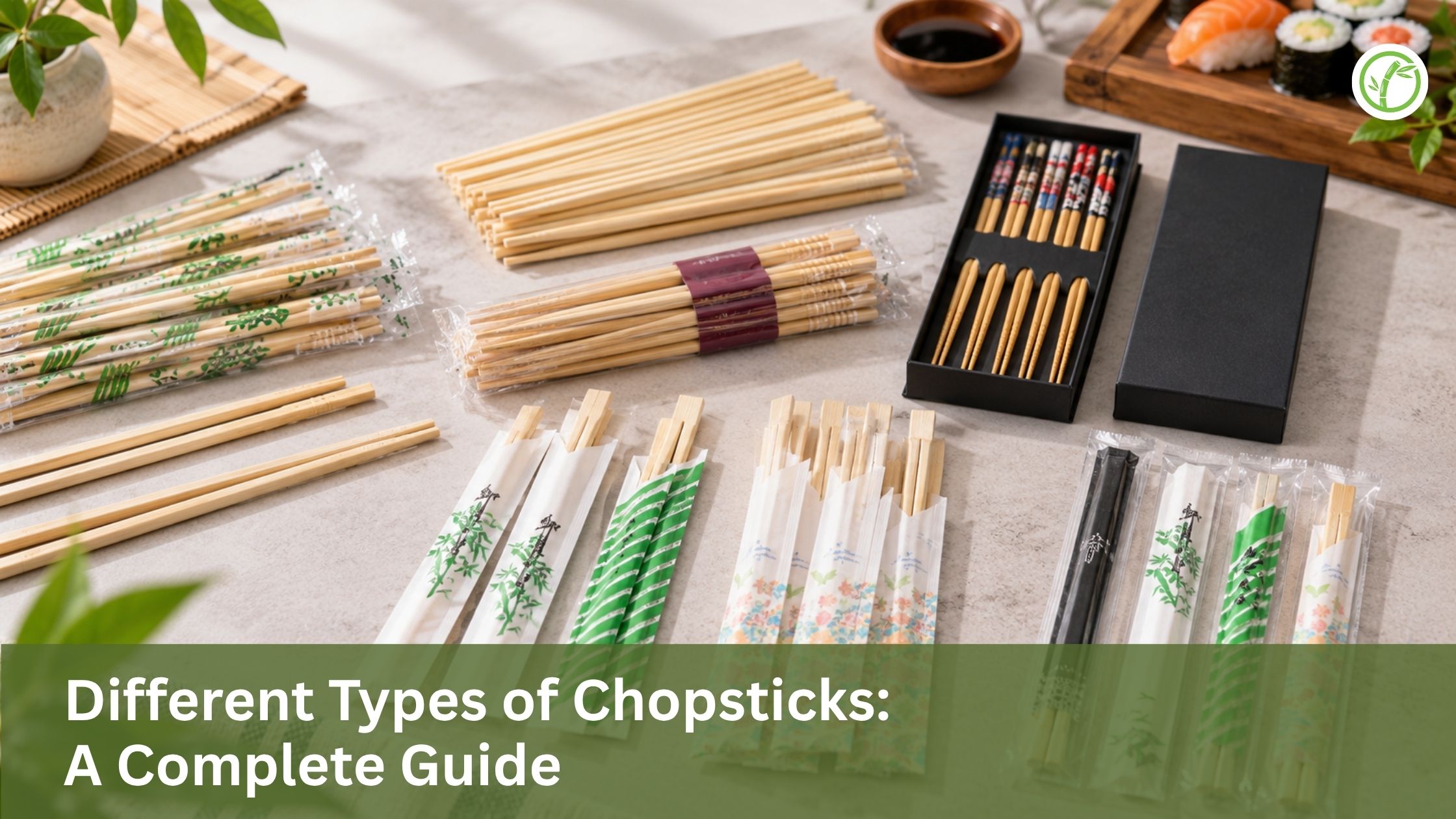
Friendly Bamboo manufactures bamboo, birch wood and bagasse disposables in Huoshan, Anhui Province, one of China’s main bamboo-growing regions. The range covers cutlery, straws, chopsticks, skewers, stirrers, plates and bagasse containers, with custom branding for B2B buyers in 50+ countries. See our bamboo foodservice products guide for the full list, or compare biodegradable cutlery options by use case.
Friendly Bamboo holds FSC certification for responsible sourcing, and its products are tested against FDA (US) and LFGB (Germany) food-contact requirements. These cover sourcing and food safety, not compostability. If you plan to print “compostable” on packaging, ask for an EN 13432, ASTM D6400 or OK compost certificate for that exact product.
Frequently asked questions
No. Since 3 July 2021, the Single-Use Plastics Directive has banned single-use cutlery made from any plastic, including PLA and other bioplastics. Bamboo and wood cutlery are permitted alternatives.
It depends on local waste systems. Compostable plastic only helps where it is collected with food waste and processed in a facility that accepts it. Where recycling works and composting doesn’t, recyclable packaging with recycled content is often the better choice.
It breaks down slowly, if at all, because landfills lack the heat, moisture and oxygen of a composting pile. Where it does break down without oxygen, it can release methane.
No. PLA and other compostable plastics cannot be recycled with conventional plastics and can contaminate a recycling batch. If there is no compost collection, they belong in general waste.
Only if it is certified home compostable, such as OK compost HOME or AS 5810. Items certified only to EN 13432 or ASTM D6400 need industrial composting at around 58°C.
Not necessarily. Bio-PE and bio-PET are made from plants but are chemically identical to conventional plastic and do not biodegrade. PLA and PHA are both bio-based and biodegradable under the right conditions.