Best Biodegradable Cutlery Options: Plastic cutlery is on borrowed time. With single-use plastic bans spreading across the EU, UK, Canada, Australia, India, and a growing number of US states and diners increasingly judging brands by their packaging — biodegradable cutlery has moved from a nice-to-have to a business necessity.
But “biodegradable” covers a surprisingly wide range of materials, and they’re not interchangeable. Some handle hot soup; others go soggy. Some break down in a home compost bin; others need an industrial facility. Choosing the wrong one can mean customer complaints, failed compostability claims, or simply overpaying.
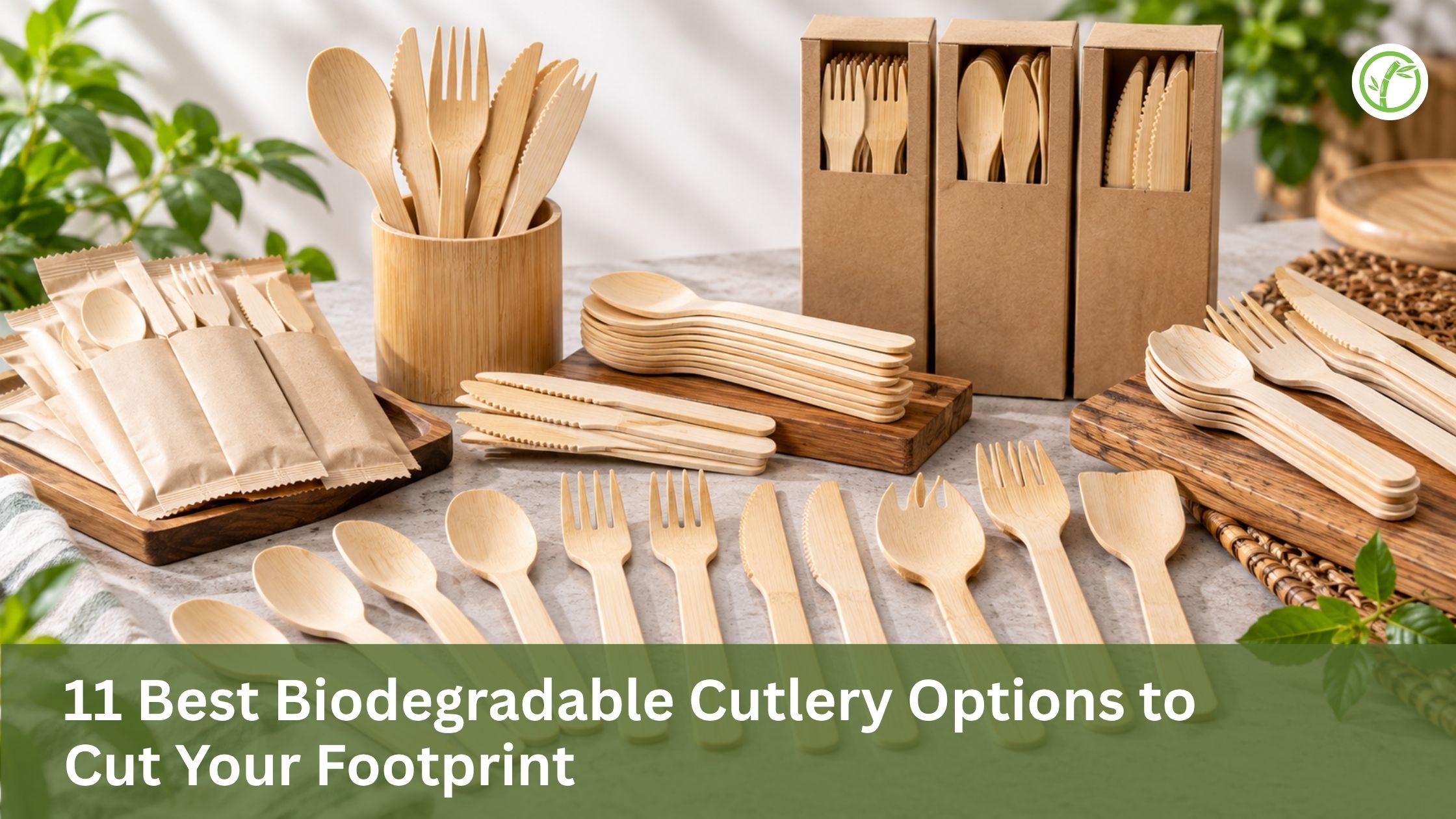
This guide breaks down the 11 best biodegradable cutlery options — their strengths, limitations, heat tolerance, and composting requirements — so you can match the right material to your business.
Why Switch to Biodegradable Cutlery?
Conventional plastic utensils can take hundreds of years to break down, and along the way they fragment into microplastics that pollute oceans and harm wildlife. Biodegradable cutlery, by contrast, is made from natural or plant-based materials that return to the earth far faster under the right conditions.
For businesses, the benefits stack up quickly:
- Regulatory compliance as single-use plastic bans expand
- Lower carbon footprint across the product lifecycle
- A stronger brand image with sustainability-minded customers
- Reduced landfill and ocean waste
Switching isn’t only the ethical move — it’s an increasingly commercial one.
Quick Comparison: 11 Biodegradable Cutlery Materials
| Material | Heat Resistance | Composting | Best For | Relative Cost |
|---|---|---|---|---|
| Bamboo | High | Home compostable | Premium dining, events, takeaway | Mid–High |
| Birch Wood | High | Home compostable | Everyday takeaway, catering | Low–Mid |
| Sugarcane Bagasse | High (heat & grease) | Industrial preferred | Hot meals, restaurants | Mid |
| Palm Leaf | High | Home compostable | Weddings, upscale eco-events | High |
| Rice Husk | Medium–High | Compostable | General foodservice | Mid |
| Avocado Seed | Medium–High | Compostable | Specialty eco-brands | High |
| Coconut Shell | Medium | Biodegradable (reusable) | Boutique, rustic settings | High |
| Cornstarch (PLA) | Low–Medium | Industrial only | Cold foods, takeout | Low–Mid |
| CPLA | High (up to ~85°C) | Industrial only | Hot foods, catering | Mid–High |
| Wheat Straw | Medium–High | Depends on blend | Restaurants, events | Mid |
| Paper | Low | Home compostable | Desserts, light meals | Low |
(Composting timelines and claims vary by product and local facilities — always verify certifications for your market.)
The 11 Best Biodegradable Cutlery Options
1. Bamboo Cutlery
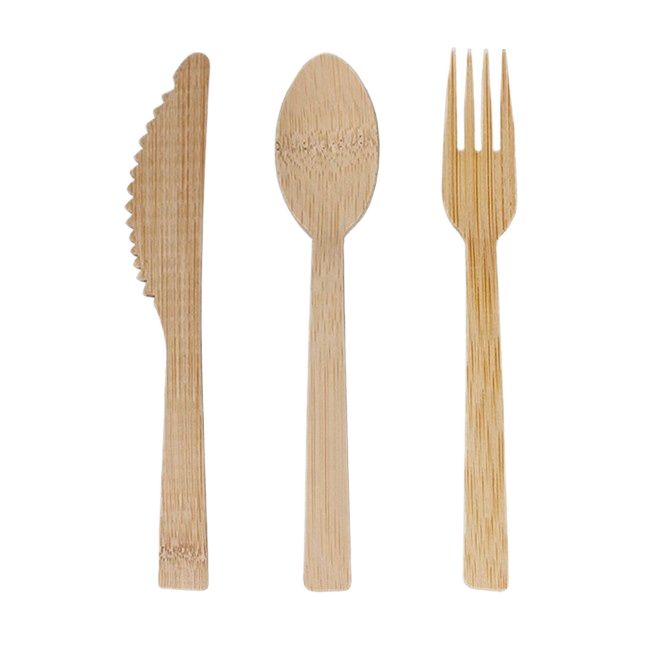
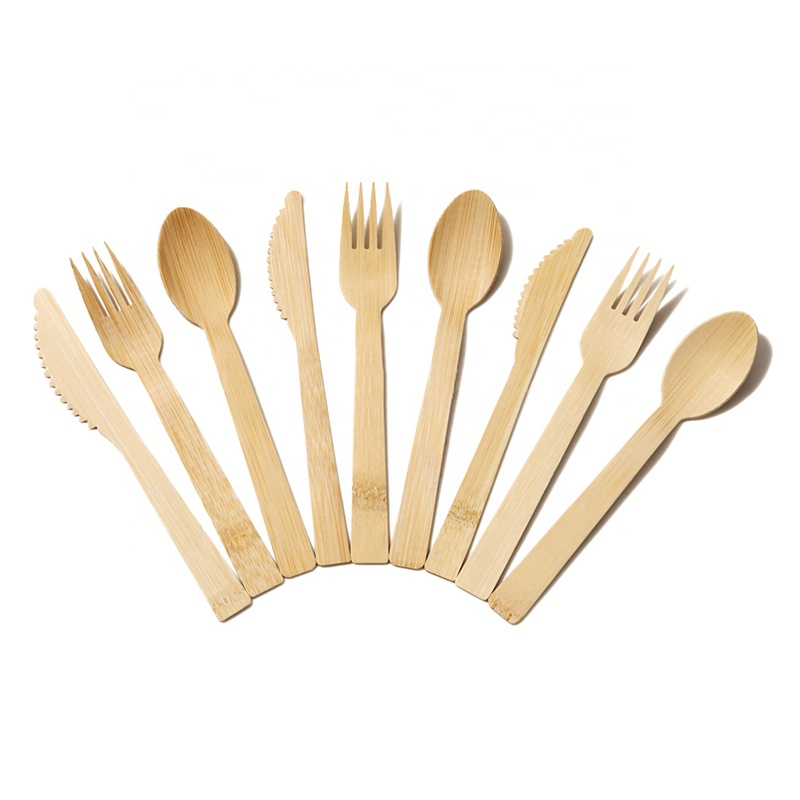
Made from 100% natural bamboo, this is one of the most popular choices for good reason. Bamboo is strong, lightweight, naturally antimicrobial, and heat-resistant, with an elegant natural finish that suits upscale events and premium takeaway alike. Because bamboo is a rapidly renewable grass rather than a slow-growing tree, it also carries one of the strongest sustainability stories in the category.
Pros: Strong, stylish, naturally antimicrobial, home-compostable, reusable if cleaned
Cons: Higher cost than basic options; not microwave-safe
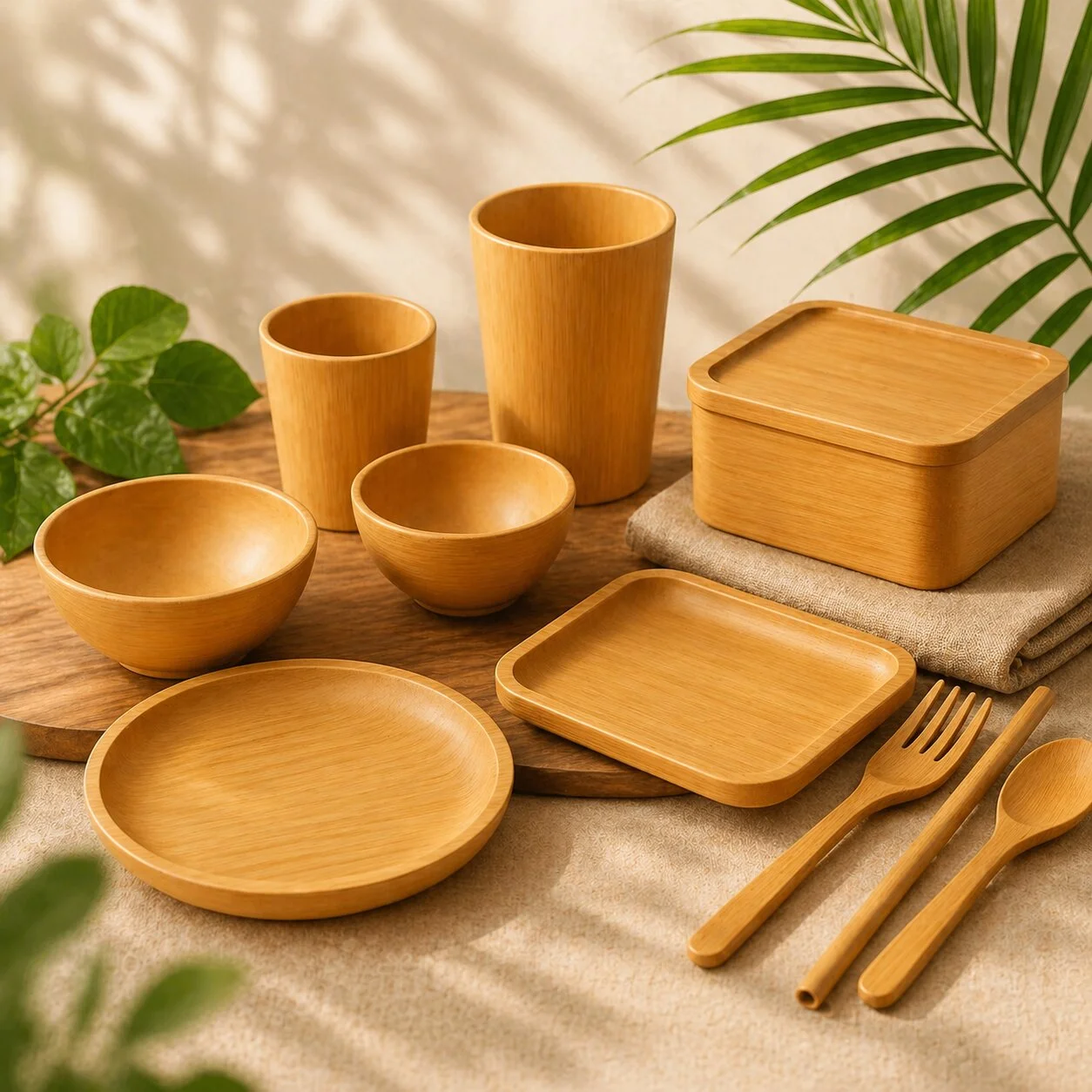
Explore FriendlyBamboo’s full range of bamboo disposable tableware to see how cutlery fits into a coordinated eco lineup.
2. Birch Wood Cutlery
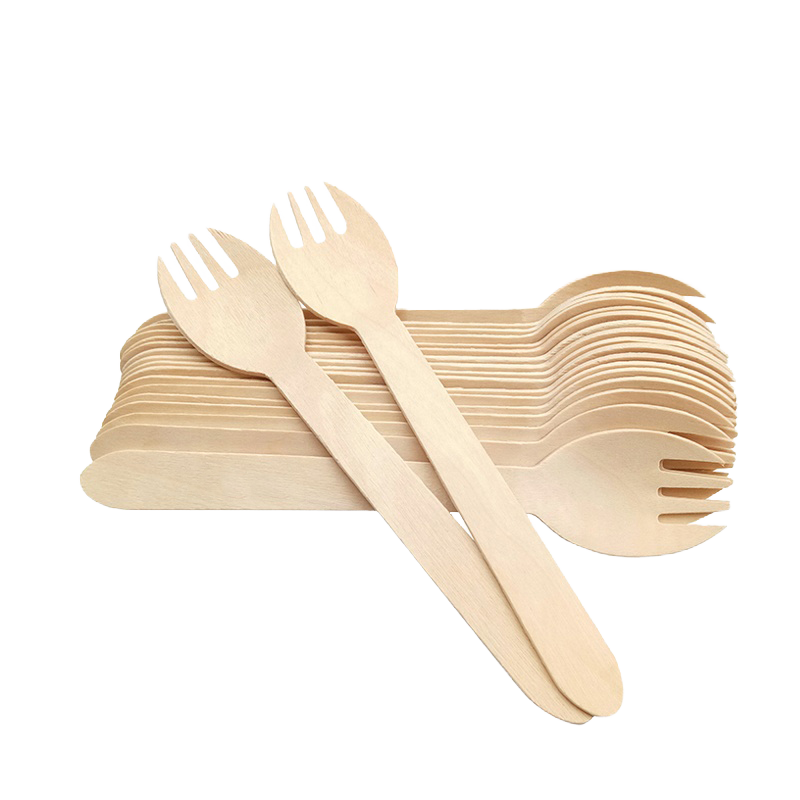
Smooth, sturdy, and splinter-free when properly finished, birch wood cutlery is a reliable everyday workhorse for takeaway and catering. Sustainably sourced birch is chemical-free, biodegradable, and adds a clean, rustic touch to any meal.
Pros: Smooth finish, sturdy, compostable, affordable, versatile
Cons: Slightly heavier than plastic; single-use only
3. Sugarcane Bagasse Cutlery
Made from the fiber left over after sugarcane juice is extracted, bagasse turns a waste byproduct into durable, heat- and grease-resistant utensils. It’s microwave- and freezer-safe, making it excellent for hot restaurant meals.
Pros: 100% compostable, heat- and grease-resistant, microwave/freezer safe
Cons: Costs more than plastic; breaks down fastest in industrial composting
4. Palm Leaf Cutlery
Crafted from naturally fallen Areca palm leaves, this cutlery is sturdy, leak-proof, and strikingly elegant — each piece slightly unique in grain and color. A favorite for weddings and premium eco-events.
Pros: Elegant natural design, sturdy, chemical-free, compostable
Cons: Higher price; limited availability in some regions
5. Rice Husk Cutlery
Made from rice husks (a milling byproduct), this cutlery is durable, lightweight, heat- and water-resistant, with a distinctive textured look. A smart way to upcycle agricultural waste.
Pros: Compostable, non-toxic, heat- and water-resistant, unique texture
Cons: Can be more brittle than bamboo or wood; fewer style options
6. Avocado Seed Cutlery
An innovative option made from upcycled avocado pits, diverting waste from the avocado industry. Durable, food-grade, and heat-resistant, with a distinctive look for specialty eco-brands.
Pros: Strong, compostable, reduces food waste, heat-resistant
Cons: Limited availability; premium pricing
7. Coconut Shell Cutlery
Handcrafted from reclaimed coconut shells and wood, this reusable, chemical-free cutlery combines durability with rustic natural beauty. Ideal for boutique settings and eco-conscious homes.
Pros: Reusable, biodegradable, durable, aesthetic appeal
Cons: Higher cost; less suited to high-volume disposable use
8. Cornstarch (PLA) Cutlery
Made from corn-based PLA, this cutlery looks and feels like plastic, making it familiar to customers. Lightweight and cost-effective, it’s a strong fit for cold foods and takeout.
Pros: Plastic-like feel, compostable, lightweight, cost-effective
Cons: Requires industrial composting; not for high heat
9. CPLA Cutlery
A crystallized, heat-tolerant version of PLA (stable up to around 85°C), CPLA delivers a smooth, high-quality finish suited to hot foods, catering, and events that want a plastic-like utensil without the plastic.
Pros: High heat resistance, premium finish, compostable
Cons: Industrial composting only; pricier than standard PLA
10. Wheat Straw Cutlery
Made from leftover wheat stalks, often blended with bioplastics for added strength. Lightweight, smooth, and frequently microwave- and freezer-safe.
Pros: Renewable, lightweight, smooth, often microwave/freezer safe
Cons: Some blends contain PLA; needs correct disposal for full breakdown
11. Paper Cutlery
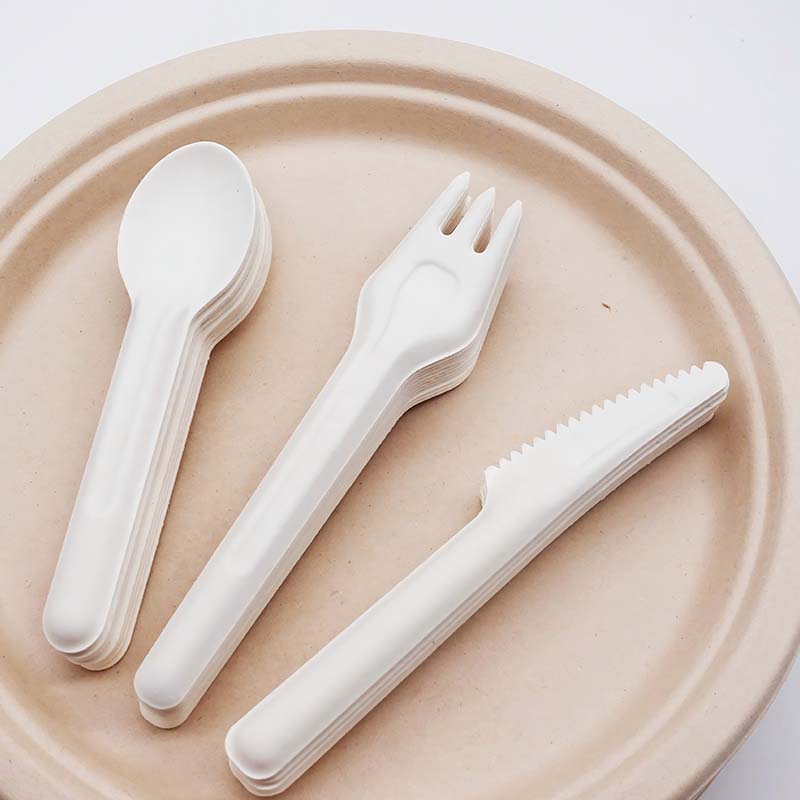
The lightest, most economical option, fully compostable and easily customizable. Best kept to desserts and light meals, since it softens in liquids and heat.
Pros: Fully compostable, inexpensive, customizable, lightweight
Cons: Not for heavy or greasy foods; softens when wet
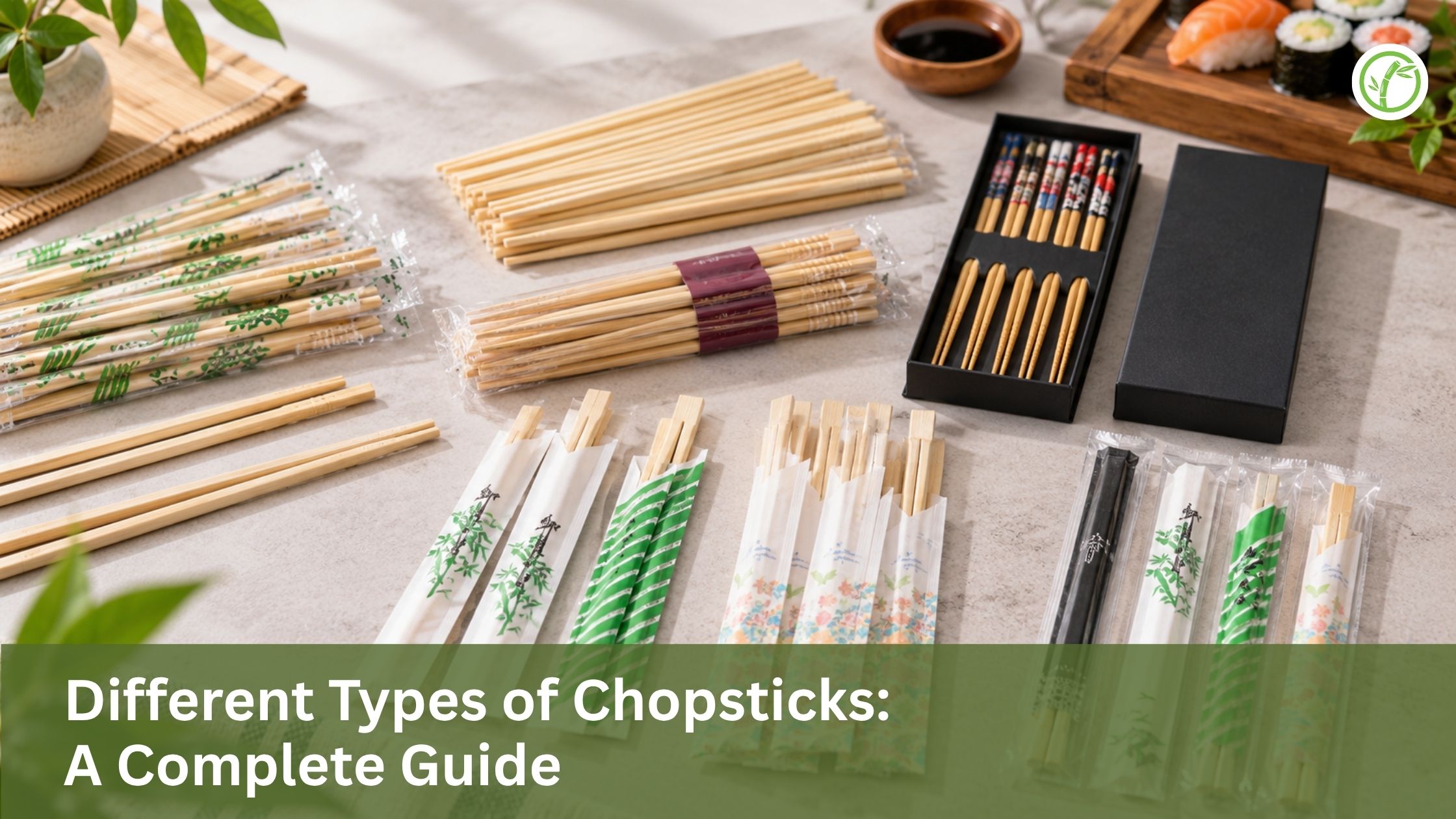
Also read – Different Types of Chopsticks
How to Choose the Right Biodegradable Cutlery
The “best” material depends entirely on how you’ll use it. Run through these five questions:
- What food will it serve? Hot soups and mains need bamboo, bagasse, or CPLA. Cold desserts can use paper or PLA.
- How will it be composted? Bamboo, wood, and palm leaf are often home-compostable; PLA and CPLA need industrial facilities. This affects the claims you can legally make.
- What’s your brand positioning? Bamboo and palm leaf signal premium; wood and bagasse are dependable everyday choices.
- What’s your budget vs. impact target? Balance unit cost against the sustainability story your customers expect.
- What certifications do you need? Look for compostability standards like ASTM D6400, EN 13432, or OK Compost for your destination market.
A practical advantage: sourcing bamboo, wood, and bagasse from a single supplier lets you cover premium, everyday, and hot-food needs from one partner — simplifying logistics and keeping quality consistent. FriendlyBamboo produces all three, alongside its wider bamboo disposable tableware range.
The Environmental Impact of Making the Switch
Conventional plastics emit greenhouse gases across their entire lifecycle — from fossil-fuel extraction and manufacturing to disposal in landfills or oceans. Biodegradable alternatives change that math:
- Lower production emissions, especially for plant-based materials like bamboo and bagasse
- Natural breakdown that returns nutrients to soil instead of polluting it
- Waste diverted from landfill through composting
- Less ocean plastic, protecting marine ecosystems
Composting biodegradable material also avoids the methane emissions that organic waste produces in landfill. Scaled across the millions of utensils a busy foodservice operation gets through, those savings add up fast — making cutlery choice a genuine lever for cutting your carbon footprint.
Final Thoughts
Switching to biodegradable cutlery is a small change with an outsized impact. Whether you prioritize premium presentation, everyday durability, or the lowest cost, there’s a material that fits — from rapidly renewable bamboo and sturdy birch wood to grease-proof sugarcane bagasse. As plastic regulations tighten and customer expectations rise, now is the ideal time to make the move.
FriendlyBamboo is a bamboo, wood, and bagasse tableware manufacturer with 12+ years of experience, offering FSC-certified sourcing, chemical-free production, and export-ready compliance for businesses worldwide. We provide OEM/ODM services, custom logos and packaging, and competitive wholesale pricing.
Ready to make the switch? Request a bulk quote, and our team will help you choose the right biodegradable cutlery for your menu, market, and sustainability goals.
Frequently Asked Questions
Yes. Certified biodegradable cutlery is food-contact safe and typically tested for hygiene and safety before sale.
It varies by material and composting conditions — anywhere from a few weeks to a few months. Natural materials like bamboo and bagasse break down faster in proper composting environments.
Some materials, like bamboo, wood, and bagasse, are often home-compostable, while PLA and CPLA generally require industrial composting. Always check the product’s specific certification.
Usually a little more per unit upfront, but the compliance, brand, and environmental benefits — plus falling prices as demand grows — increasingly close the gap.
Bamboo, bagasse, and CPLA all handle heat well, making them the top choices for soups, mains, and hot takeaway.