Wholesale Bamboo Straw Products – Bulk Supply & OEM Factory
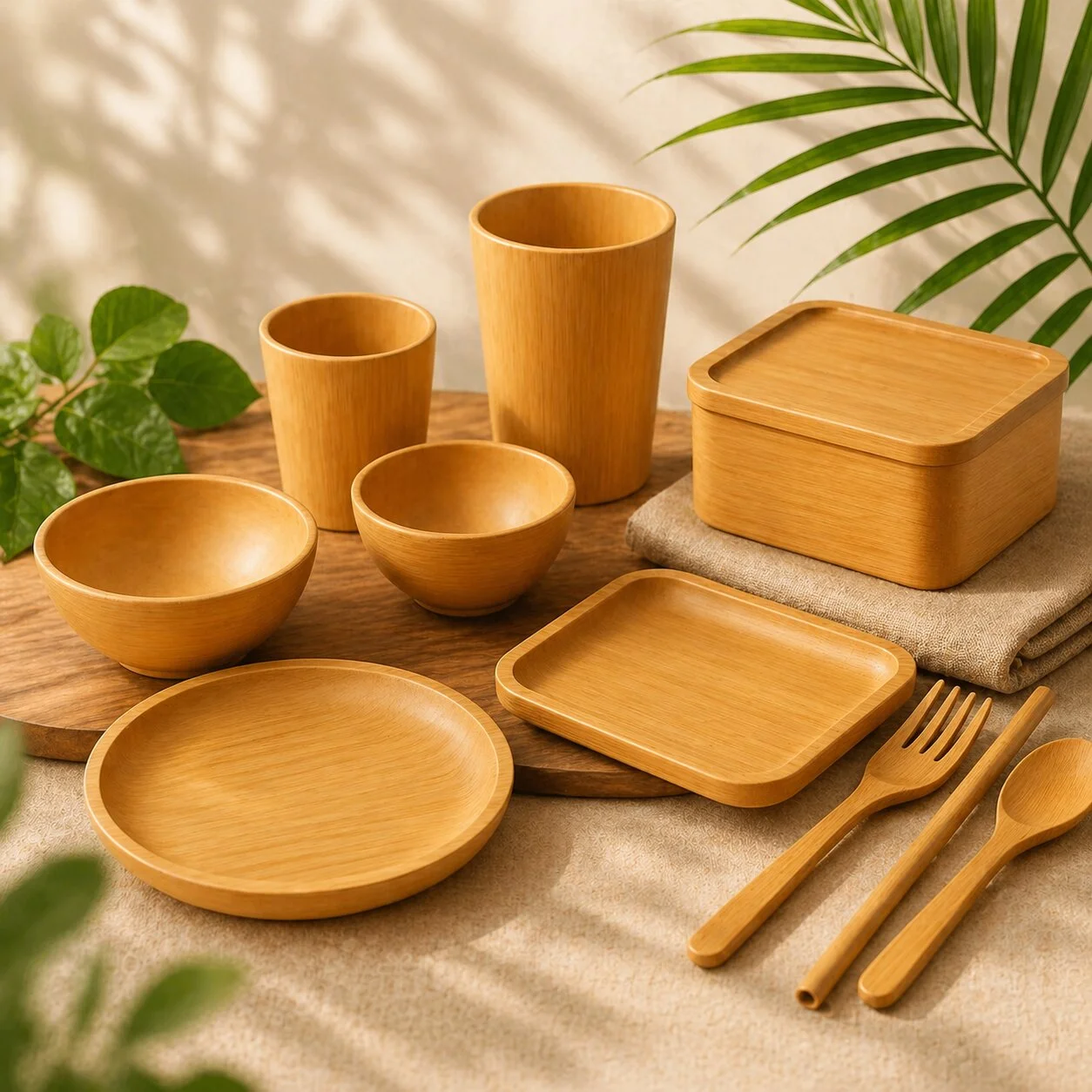
From packaging and tableware to private label products, our catalog is designed to meet the needs of restaurants, hotels, event organizers, and distributors worldwide.
Showing(All)
All Bamboo Straw
Showing all 5 results
-
 ECO
ECOBamboo Straw 10240 mm & 11200 mm
MOQ:10 CartonsMATERIAL:Bamboo -
ECO
Bamboo Straw 200 mm with Diameter 8 mm/9 mm...
MOQ:10 CartonsMATERIAL:Bamboo -
ECO
Bamboo Straw Box Packing
MOQ:10 CartonsMATERIAL:Bamboo -
ECO
Biodegradable Bamboo Straw – 6×200 mm...
MOQ:10 CartonsMATERIAL:Bamboo -
ECO
Yellow Bamboo Straw 12200mm/12230 mm
MOQ:10 CartonsMATERIAL:Bamboo
Your Bamboo Straws Wholesale Supplier
The plastic straw was the first casualty of the global sustainability movement. Banned in the EU, India, Australia, Canada, and hundreds of US cities. But the replacement that most businesses reached for — paper straws created a new problem: they go soggy in 10 minutes, collapse in cold drinks, leave a papery taste in smoothies, and frustrate customers who just want a straw that works.
Bamboo Straws Wholesale solve what paper straws could not. They do not soften in liquid. They do not collapse, bend, or disintegrate. They are completely taste-neutral no papery flavour, no chemical aftertaste, no woody notes. They work in hot coffee, iced tea, smoothies, cocktails, and bubble tea. They last for hours in a drink and for months with proper care if reused.
FriendlyBamboo has supplied bamboo straws in bulk to cafes, hotels, cocktail bars, juice bars, bubble tea chains, and wholesale distributors across 30+ countries for over 12 years. Natural colour, green, yellow — multiple diameters, multiple lengths, all from mature Moso bamboo with FSC, FDA, and ISO certification.
Available Types of Bamboo Straws
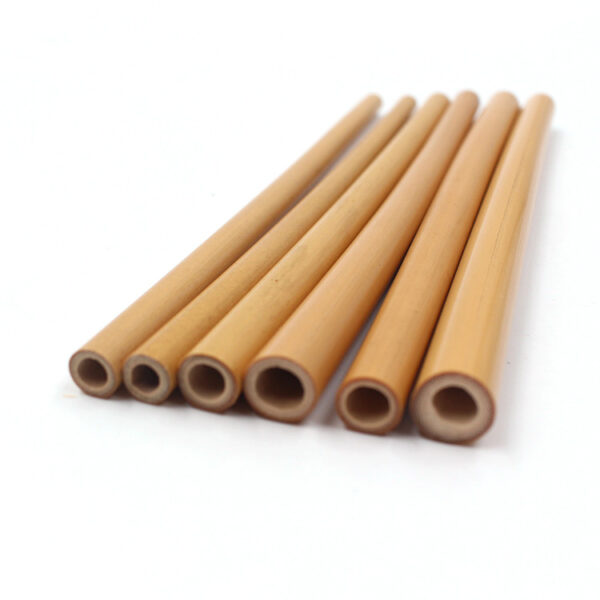
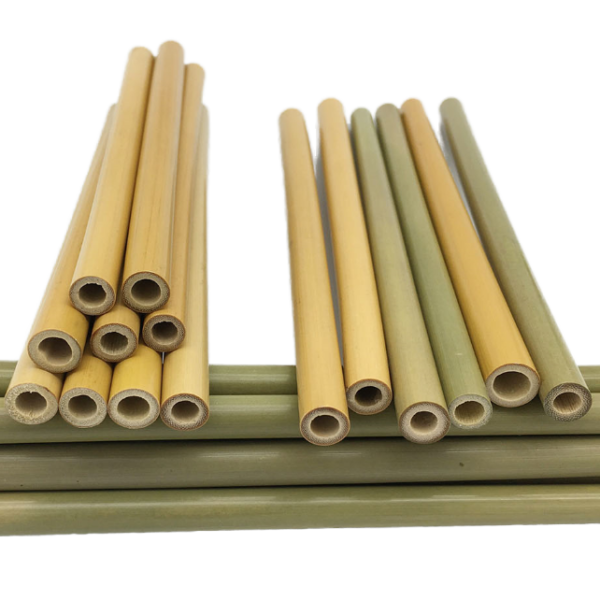
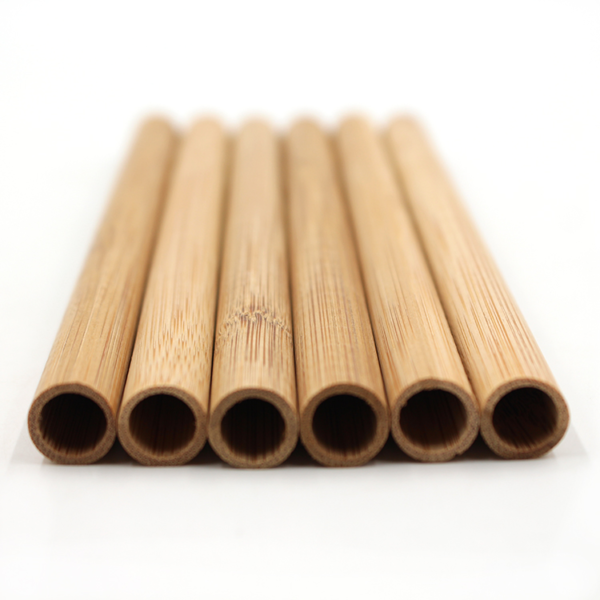
Natural Bamboo Straws — Standard golden-tan colour with visible bamboo grain and natural nodes. Each straw is unique — slight colour and diameter variations are inherent characteristics of a natural product, not defects. Available in 200mm (8 inch) standard length with 6mm to 12mm diameters. The natural aesthetic is the entire point — customers see a bamboo straw and immediately understand your sustainability commitment. Reusable with proper cleaning, or single-use and compostable.
Green Bamboo Straws — Straws made from bamboo that retains its natural green outer layer. The green colour is not dyed or painted — it is the natural colour of freshly processed bamboo preserved through specific manufacturing techniques. Creates a vibrant, eye-catching look in drinks. Popular in tropical-themed bars, health-conscious juice bars, eco-resorts, and natural food brands. Available in 200mm length.
Yellow Bamboo Straws — Straws with a lighter, warm yellow tone achieved through controlled heat treatment. The golden colour gives a clean, sun-bleached appearance that works particularly well in lighter-coloured drinks like lemonade, white wine spritzers, and tropical cocktails. Available in 200mm and 230mm lengths with 12mm diameter.
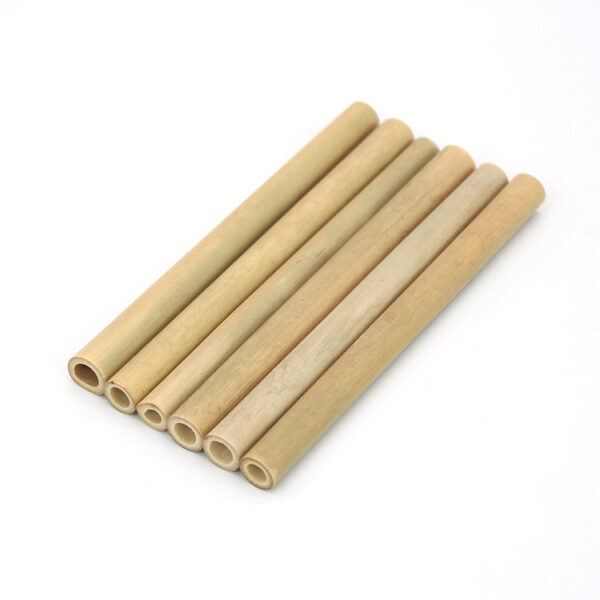
Biodegradable Bamboo Straws (Thin Diameter) — 6mm diameter straws specifically designed for standard beverages — water, juice, soft drinks, iced coffee, cocktails. The thinner diameter matches the size customers expect from a conventional straw. Available in 200mm length. Ideal for operations transitioning from plastic where customers are accustomed to standard straw thickness.
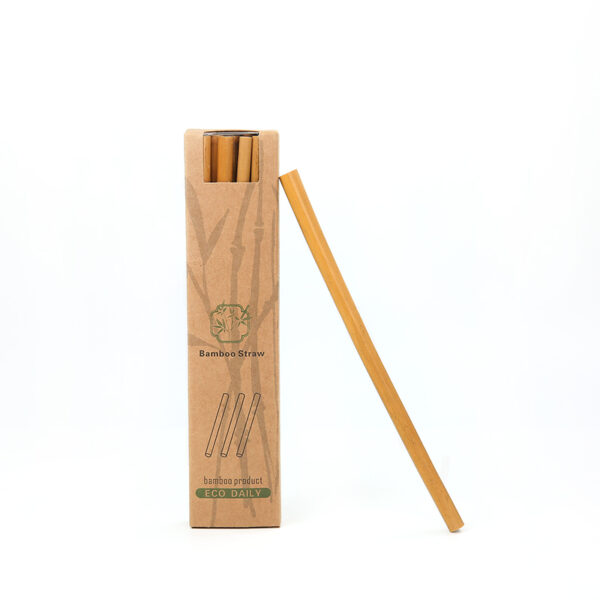
Box-Packed Bamboo Straws — Straws packed in branded or plain kraft boxes for retail sale, hotel amenity display, or eco-gift sets. The box packaging adds perceived value and makes bamboo straws a sellable product, not just a service item. Popular with eco-product retailers, hotel gift shops, and café merchandise displays.
Wide Diameter Bamboo Straws (Bubble Tea / Smoothie) — 10–12mm diameter straws designed for thick drinks — bubble tea (boba), smoothies, milkshakes, and açaí bowls. The wide opening allows tapioca pearls and thick blended liquids to pass through easily. This is the product that bubble tea chains cannot replace with paper — paper straws collapse immediately under suction with thick drinks. Bamboo holds firm.
Sizes & Specifications
| Diameter | Length | Best For |
|---|---|---|
| 6mm (thin) | 200mm (8″) | Water, juice, soft drinks, iced coffee, cocktails |
| 8mm (standard) | 200mm (8″) | Standard beverages, iced tea, lemonade, mixed drinks |
| 9mm (medium) | 200mm (8″) | Smoothies, thicker juices, frozen drinks |
| 10–12mm (wide) | 200–230mm (8–9″) | Bubble tea, boba, milkshakes, açaí bowls, thick smoothies |
Which diameter do you need? For standard drinks (water, juice, coffee, cocktails), 6–8mm works. For smoothies and thicker beverages, 9mm. For bubble tea with tapioca pearls, 10–12mm is required — anything narrower blocks the pearls. Most cafes and bars stock 8mm as their all-purpose straw and add 12mm if they serve bubble tea or thick smoothies.
Natural diameter variation: Because bamboo straws are cut from natural bamboo culms, each straw has a slightly different internal diameter. The diameters listed are target ranges, not exact measurements. Variation of ±1mm is normal and inherent to any natural bamboo straw product. This is not a defect — it is what makes bamboo straws authentic.
Wholesale Pricing of Bamboo Straws
| Product | Volume | Price Per Straw |
|---|---|---|
| Natural straws (6–8mm, 200mm) | 10,000+ pcs | $0.05 – $0.10 |
| Natural straws (10–12mm, 200–230mm) | 10,000+ pcs | $0.08 – $0.15 |
| Green bamboo straws | 10,000+ pcs | $0.08 – $0.15 |
| Yellow bamboo straws | 10,000+ pcs | $0.08 – $0.15 |
| Box-packed straws (per box, 10–12 straws) | 2,000+ boxes | $0.80 – $1.50 |
| Custom branded / private label | 10,000+ pcs | $0.10 – $0.20 |
Bamboo straws cost more per unit than paper straws ($0.01–$0.03/pc) but they are reusable, taste-neutral, and do not disintegrate in drinks. The higher per-unit cost is offset by reusability — a single bamboo straw can be washed and reused 50–100+ times in a dine-in setting. For single-use applications, bamboo straws cost more than paper but eliminate the customer complaints that paper straws generate.
Reusable vs Single-Use: How Bamboo Straws Work Both Ways
This is the question every buyer asks: are bamboo straws reusable or disposable?
The answer is both. And the choice depends on your operation.
Reusable (Dine-In) — In a sit-down restaurant, café, or bar, bamboo straws can be collected after service, washed with a straw cleaning brush, sanitised, air-dried, and reused. A well-maintained bamboo straw lasts 3–6 months of regular use. This model works for dine-in operations with back-of-house dishwashing capacity. Per-drink cost drops to fractions of a cent when spread across 50–100+ uses.
Single-Use (Takeaway and Delivery) — For takeaway cups, delivery orders, and any application where the customer takes the straw with them, bamboo straws function as a premium single-use product. After use, the straw is compostable. This model works for cafés, juice bars, and any operation with takeaway service. Per-drink cost is $0.05–$0.15 — higher than paper but with zero customer complaints about sogginess.
Hybrid Model — Many operations use reusable bamboo straws for dine-in service and single-use bamboo or bagasse straws for takeaway. This optimises cost while maintaining a consistent eco-brand message across both service modes.
Cleaning & Maintenance (For Reusable Use)
For operations using bamboo straws as reusable, proper cleaning extends straw life and ensures food safety.
After each use — Rinse immediately with hot water. Use a straw cleaning brush (natural bristle, sized to match straw diameter) to scrub the interior. Brush from both ends.
Sanitisation — Soak in boiling water for 5–10 minutes, or soak in food-grade white vinegar solution (1:4 vinegar to water) for 15 minutes. Air-dry completely upright in a well-ventilated area.
Weekly deep clean — Boil for 10 minutes. Sun-dry if possible — UV light naturally inhibits bacterial and mould growth.
Replacement cycle — Replace straws that show discolouration, cracking, or softening. Average replacement cycle is 3–6 months with daily commercial use.
Cleaning brushes are available as an add-on product — ask us to include them with your straw order.
Packaging Options for Bamboo Straws
Bulk Bag — Straws packed in OPP bags inside master cartons. Standard for food service operations that distribute straws from back-of-house. Pack counts: 50, 100, or 200 per bag. Lowest per-unit cost.
Box Packed (Retail / Gift) — 10–12 straws packed in a kraft or printed box, often with a cleaning brush included. Retail-ready for café merchandise displays, hotel gift shops, eco-product stores, and e-commerce. The box is your branding and storytelling surface.
Individual Paper Sleeve — Each straw wrapped in a paper sleeve for hygiene. Used in hotels, airlines, and any setting where individually packaged items are expected. Available with plain or custom-printed sleeves.
Custom Branded Packaging — Your brand on bags, boxes, sleeves, or cartons. Full-colour printing. Private-label programmes available.
Custom Branding
Laser Engraving — Your logo or brand name engraved directly onto the bamboo straw surface. Subtle, permanent, premium. Works best on wider diameter straws (10–12mm) where the logo has enough surface area to be legible. Popular with branded bubble tea chains and eco-product retailers.
Branded Box Packaging — Your brand on the retail box. Full-colour printing — logo, brand story, sustainability messaging, cleaning instructions, barcodes. The box becomes your sales pitch on the shelf.
Branded Sleeve — Your logo on the individual paper sleeve. Premium format for hotels, airlines, and upscale beverage service.
Private Label — Complete white-label. Your brand on straws, boxes, sleeves, and documentation. We manufacture, you own the brand. Ideal for eco-product brands, hotel procurement, and distributors.
→ Request Custom Branding Quote
How Wholesale Bamboo Straws Are Made
Unlike moulded bagasse products, a bamboo straw isn’t formed — it’s cut from a naturally hollow stalk, which is why no two straws are ever perfectly identical.
Step 1 — Culm Selection. Mature Moso bamboo culms are selected specifically for straw production, chosen for the right internal bore diameter and wall thickness at each cutting point along the stalk.
Step 2 — Cutting to Length. Culms are cut into straw-length sections — typically 200mm or 230mm — with node placement checked so the straw’s natural internal diameter falls within the target range for its category (thin, standard, or wide).
Step 3 — Hollowing and Cleaning. Any internal membrane at the nodes is cleared so the straw is fully open end-to-end, then the interior is cleaned to remove pith and residue.
Step 4 — Heat Treatment. Straws undergo controlled heat treatment, which stabilises the fibre, sterilises the material, and — depending on temperature and duration — produces the natural, green, or yellow finish. None of these colours are dyed; they come from how the bamboo is heat-processed.
Step 5 — Sanding and Smoothing. Both the outer surface and the straw’s open ends are sanded smooth, removing any rough edge that could catch on a customer’s lip.
Step 6 — Sorting and Grading. Because internal diameter naturally varies by ±1mm from culm to culm, straws are sorted into diameter bands — 6mm, 8mm, 9mm, and 10–12mm — so each batch is consistent within its category even though no individual straw is machine-uniform.
Step 7 — Packing. Finished straws are packed loose in bulk bags, boxed for retail, or individually sleeved, depending on the order.
This is also why bamboo straws can be reusable rather than single-use only; there’s no coating or lining to break down in the wash, just solid bamboo fibre from end to end. For how this compares to other bamboo products in the range, see how bamboo cutlery is made.
Quality Standards
Every batch of straws is checked against the same standards before it ships:
- Diameter consistency within band — straws are sorted so a batch sold as 8mm stays within a tight tolerance of that target, even though bamboo is a natural material.
- Open-bore verification — every straw is checked to confirm the nodes are fully cleared, since a blocked straw is a functional failure, not a cosmetic one.
- Structural integrity in liquid — tested to hold shape for hours in hot coffee, iced drinks, and thick beverages without softening or collapsing, the core failure point of paper straws.
- Taste neutrality — verified against delicate applications like specialty coffee and fresh juice, where any woody or processing residue would be immediately noticeable.
- Surface finish — sanded and inspected for splinter risk on both the straw body and the open ends, since this is a product held directly to the mouth.
- Certified sourcing and food-contact compliance — FSC-sourced bamboo, FDA 21 CFR 177 compliance, and ISO 9001 / ISO 14001 manufacturing controls apply to every diameter and colour in the range.
The same quality bar applies whether the order is natural bamboo straws, wide bubble-tea diameters, or custom laser-branded straws for a hotel or café chain.
Sustainability
Bamboo straws solve the plastic-straw problem without creating the paper-straw problem. Where paper straws are single-use by necessity and still generate real waste volume, bamboo straws are built to be reusable — which changes the sustainability math per drink served, not just per straw produced.
- Fast-growing, renewable source. Moso bamboo grows up to 91cm a day and reaches harvest maturity in three to five years, regenerating from its own root system without replanting.
- Reusable, not just recyclable. A well-maintained straw handles 50-100+ uses over 3-6 months, meaning one straw can offset dozens of single-use paper or plastic straws in a dine-in setting.
- No coatings, no chemicals. Straws are shaped using only heat treatment — no plastic lining, no bleach, no adhesive — so there’s nothing artificial entering the compost stream at end of life.
- Compostable at end of life. Fully biodegradable in 90-180 days, whether reused for months first or composted after a single takeaway use.
- FSC-certified sourcing. Bamboo is harvested from responsibly managed, independently audited forests, documented for ESG reporting.
For operations building a complete eco-tableware programme, straws pair naturally with the rest of the bamboo range — cutlery, chopsticks, and cups — or with bagasse containers for takeaway. See the broader case in Why Bamboo Is Outpacing Plastic.
Country Regulations
Bamboo straws sit on the right side of every major plastic-straw and PFAS regulation currently in force or coming into effect.
- Plastic straw bans. Plastic straws are already banned across the EU, India, Australia, Canada, and hundreds of US cities, which is what drove most food service operators toward paper in the first place — and toward bamboo once paper’s performance problems became apparent.
- European Union — PFAS ban, August 2026. Bamboo carries no PFAS or synthetic coating, so it requires no reformulation to stay compliant as this takes effect.
- United States — state-level PFAS restrictions. Maine’s PFAS prohibition takes effect May 2026, with other states following similar timelines. Multi-state chains — bubble tea and café operators especially — increasingly standardize on PFAS-free straws to avoid managing different specs per state.
- FDA compliance (US). Every straw meets 21 CFR 177 standards for direct food and beverage contact, with lab test reports available on request.
- Export documentation. FSC sourcing and ISO 14001 environmental management cover most import and retail-compliance requirements, and phytosanitary certificates are handled directly for markets that require them.
Bamboo Straws vs Paper Straws vs Plastic Straws
| Factor | Bamboo | Paper | Plastic |
|---|---|---|---|
| Durability in liquid | Hours — no softening | 10–20 min — goes soggy | Hours — no change |
| Thick drinks (bubble tea) | Handles easily at 12mm | Collapses under suction | Handles easily |
| Taste transfer | None — completely neutral | Papery taste, especially in cold drinks | Can impart chemical taste |
| Reusable | Yes — 50–100+ uses with care | No — single use only | Technically yes, practically no |
| Compostable | Yes — 90–180 days | Yes — if no plastic lining | No — 400+ years |
| Customer satisfaction | High — feels premium | Mixed — sogginess complaints | High — but banned |
| Cost per straw | $0.05–$0.15 (single use) / fractions of a cent (reusable) | $0.01–$0.03 | $0.005–$0.01 |
| Plastic ban compliant | Yes | Yes | Banned in most markets |
Paper straws are cheaper but generate the most customer complaints of any eco-product category. Bamboo straws cost more per unit but eliminate sogginess complaints, are reusable in dine-in settings, and work with thick drinks that destroy paper straws. For any business that serves smoothies, bubble tea, or iced beverages or that simply wants zero straw complaints, bamboo is the answer.
Some of the Products Customers Order More Often:
coffee stirrers bulk wholesale
eco leaf plates wholesale exporter
Certifications
| Certification | What It Verifies |
|---|---|
| FSC | Bamboo sourced from responsibly managed forests |
| FDA (21 CFR 177) | Safe for food and beverage contact — lab tested |
| ISO 9001 | Consistent manufacturing quality across every batch |
| ISO 14001 | Environmental management at the factory level |
| PFAS-Free | No chemicals, coatings, or treatments |
Industries We Supply
Cafes and Coffee Shops — Reusable bamboo straws for dine-in iced drinks. Single-use for takeaway cups. 8mm standard diameter covers most café beverages.
Bubble Tea and Boba Chains — Wide 12mm straws that handle tapioca pearls. The product that paper straws cannot replace. High-volume recurring supply.
Juice Bars and Smoothie Shops — 9–10mm straws for thick smoothies, açaí bowls, and fresh juice. Taste-neutral so they do not affect delicate juice flavours.
Cocktail Bars and Hotels — Premium natural bamboo straws for cocktails, mojitos, and iced drinks. Branded straws and box-packed retail sets for hotel gift shops.
Eco-Product Retailers — Box-packed bamboo straw sets with cleaning brushes for retail shelves and e-commerce. Private-label programmes for building your own brand.
Wholesale Distributors — Private-label straw programmes for food service and retail distribution. Growing category as paper straw dissatisfaction drives operators to upgrade.
How to Order
Step 1 — Choose your straw diameter, colour, and packaging format from the listings above.
Step 2 — Submit the bulk quote form with quantities, branding needs, and delivery destination.
Step 3 — We send your tailored proposal within 24 hours.
Frequently Asked Questions
What is the minimum order for wholesale bamboo straws? Standard orders start at 10,000 straws. Box-packed retail sets start at 2,000 boxes. Custom-branded and private-label orders may require higher MOQs depending on the branding method. Trial quantities available for first-time buyers testing a new diameter or colour.
How much do bamboo straws cost in bulk? Natural bamboo straws (6–8mm) cost $0.05 to $0.10 per straw at 10,000+ units. Wide diameter (10–12mm) cost $0.08 to $0.15. Box-packed retail sets (10–12 straws with brush) cost $0.80 to $1.50 per box. Custom branded cost $0.10 to $0.20 per straw.
Do bamboo straws go soggy like paper straws? No. This is the primary advantage of bamboo over paper. Bamboo straws maintain full structural integrity for hours in any liquid — hot coffee, iced tea, smoothies, cocktails, and bubble tea. They do not soften, collapse, or disintegrate. Paper straws typically begin to soften within 10–20 minutes.
Do bamboo straws affect the taste of drinks? No. Properly manufactured bamboo straws are completely taste-neutral. They do not impart any woody, papery, or chemical flavour to beverages. This is especially important for delicate drinks like specialty coffee, fresh juice, and cocktails where any off-flavour is immediately noticeable.
Are bamboo straws reusable? Yes. With proper cleaning (rinse, brush, sanitise, air-dry), a bamboo straw lasts 3–6 months of regular commercial use and can be reused 50–100+ times. Many dine-in restaurants and bars use reusable bamboo straws to reduce per-drink cost to fractions of a cent. For takeaway and delivery, bamboo straws function as premium single-use and are compostable after use.
Can bamboo straws handle bubble tea with tapioca pearls? Yes. Our wide diameter straws (10–12mm) are specifically designed for bubble tea. The opening is large enough for tapioca pearls to pass through easily. This is the product category where bamboo has no viable paper alternative — paper straws collapse under suction with thick boba drinks.
How do I clean bamboo straws for reuse? Rinse with hot water immediately after use. Scrub interior with a straw cleaning brush from both ends. Sanitise by soaking in boiling water for 5–10 minutes or in food-grade vinegar solution for 15 minutes. Air-dry completely upright. Replace straws showing discolouration or cracking, typically every 3–6 months.
Why do bamboo straws vary in diameter? Bamboo straws are cut from natural bamboo culms. Each piece of bamboo has slightly different wall thickness and internal diameter. Variation of ±1mm from the target diameter is normal and inherent to any natural bamboo straw. This is not a defect — it is what makes bamboo straws authentic. We sort by diameter range to ensure consistency within each batch.
Can I get my brand on bamboo straws? Yes. Laser engraving works on wider straws (10–12mm). Branded box packaging and individual paper sleeves support full-colour printing. Private-label programmes available for building your own bamboo straw brand. Cleaning brush add-ons available for retail sets.
Are bamboo straws compostable? Yes. 100% biodegradable and compostable. Decompose in 90 to 180 days. Made from natural bamboo with no coatings or chemicals. Can be home composted by snapping into smaller pieces.
Do you ship internationally? Yes. We deliver to 30+ countries. Sea freight (20–35 days) and air freight (3–7 days) available. Bamboo straws are lightweight. We handle all export documentation. FOB and CIF pricing available.
You May Also Need
Cocktail Picks → Bamboo Skewers → Bamboo Fruit Forks → Bamboo Fruit Sticks → Bamboo Toothpicks → Bamboo Pole → Bamboo Cutlery → Bamboo Chopsticks → Bamboo Straws → Bamboo Plates → Bamboo Toothpicks →
Guides & Resources
The Complete Guide to Bamboo Cutlery → Bamboo vs Plastic Cutlery → Bamboo Spoons vs Wooden Spoons → Disposable Wooden Forks → Are Bamboo Utensils Safe for Food → Custom Branded Bamboo Cutlery →