Wholesale Bagasse Bowl Products – Bulk Supply & OEM Factory
FriendlyBamboo supplies bamboo straws wholesale to cafés, bubble tea chains, bars, hotels and distributors in 30+ countries. Choose natural or yellow Moso bamboo straws in 6–12mm diameters and 200–240mm lengths, packed in bulk bags, retail boxes or paper sleeves, with laser-engraved or private-label branding. Prices from $0.05 per straw at 10,000+ units.
Showing(All)
All Bagasse Bowl
Showing all 7 results
-
 ECO
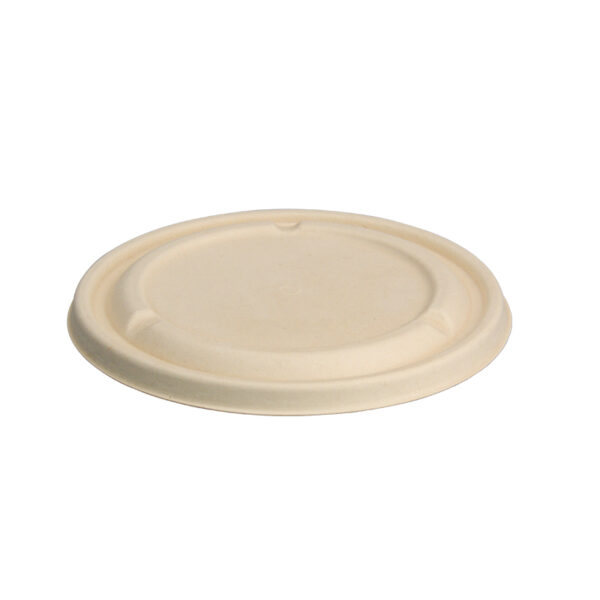
ECOBagasse Bowl Lids – 500ml – 2500ml bowl...
MOQ:20 CartoonsMATERIAL:Bagasse -
ECO
Compostable Round Bagasse Bowl Lids
MOQ:20 CartoonsMATERIAL:Bagasse -
ECO
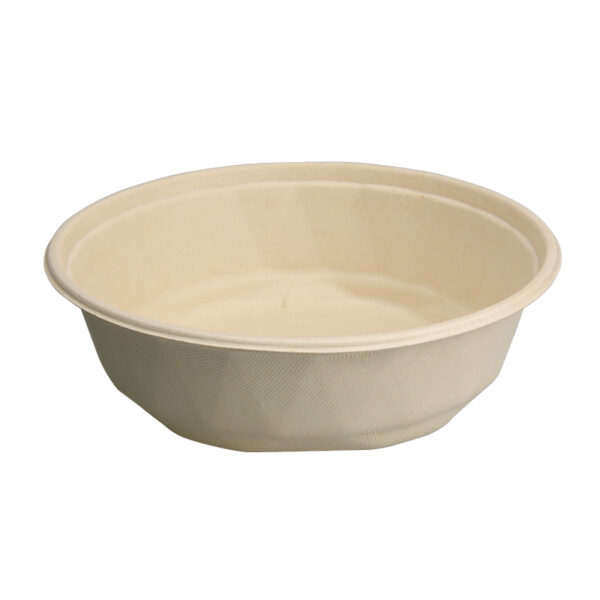
Large Round Bagasse Bowls in 12oz / 16oz
MOQ:10 CartonsMATERIAL:Bagasse -
ECO
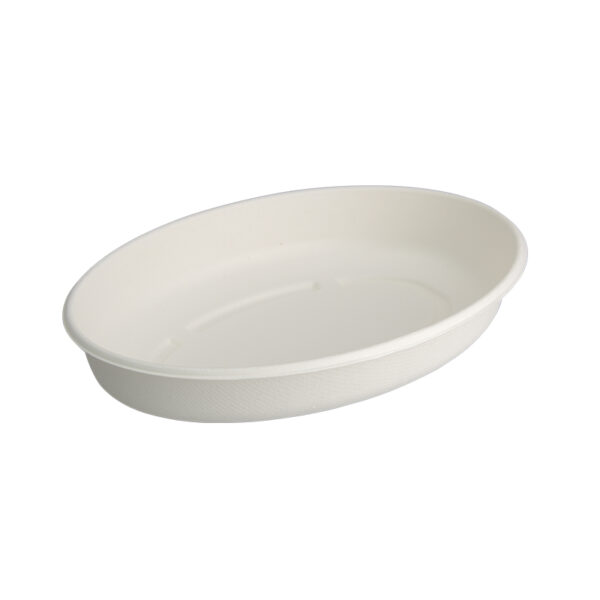
Oval Bagasse Bowls 18oz & 40oz
MOQ:20 CartoonsMATERIAL:Bagasse -
ECO
Round Bagasse Bowls – 24oz / 32oz / 40oz...
MOQ:10 CartonsMATERIAL:Bagasse -
ECO
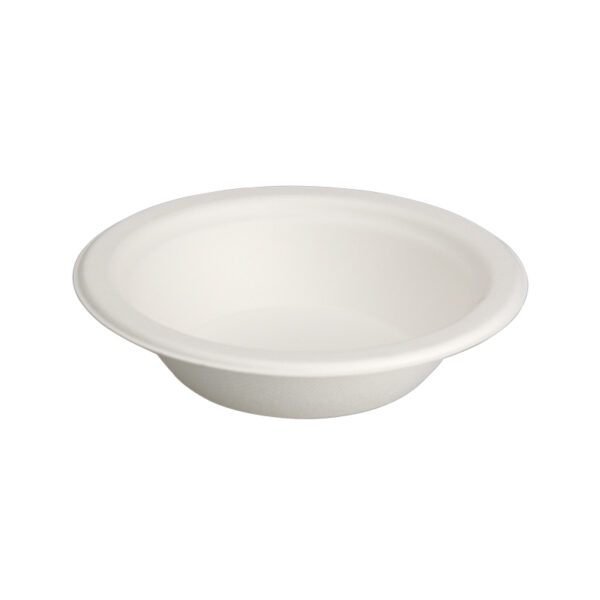
Round Bagasse Bowls 12oz & 30ml
MOQ:20 CartoonsMATERIAL:Bagasse -
ECO
Square Bagasse Bowls 16oz / 24oz / 32oz
MOQ:10 CartonsMATERIAL:Bagasse
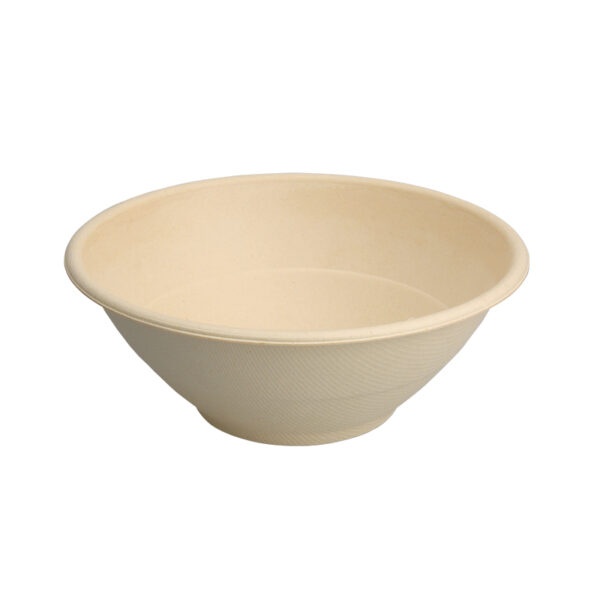
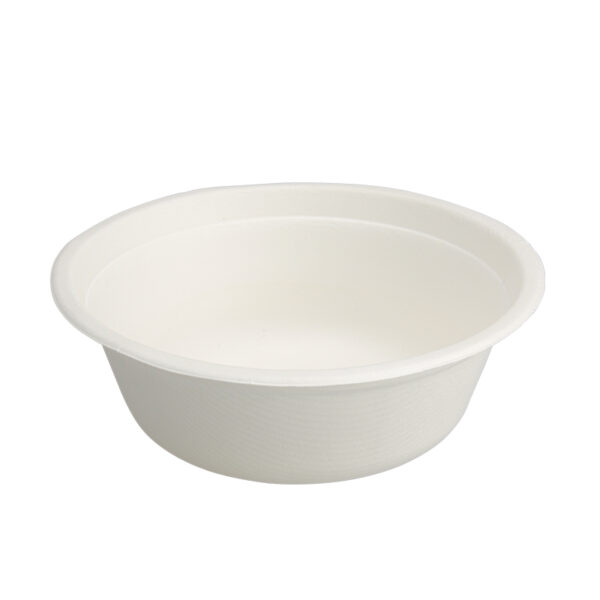
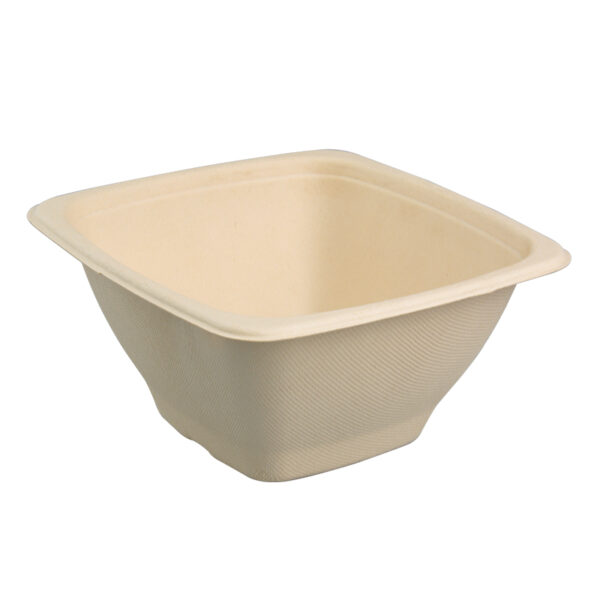
Your Wholesale Bagasse Bowl Supplier
Every year, the global sugar industry produces approximately 1.2 billion tonnes of sugarcane. After the juice is extracted, what remains is bagasse — a dry, fibrous waste material that was historically burned or discarded. Today, that waste sugarcane fibre is being moulded into some of the most practical eco-friendly disposable products on the market.
Bagasse bowls are the product that changed how restaurants, cloud kitchens, and catering companies think about disposable food containers. They hold hot soup without leaking. They handle oily curries without bending. They go from freezer to microwave without cracking. And when your customer is done eating, the bowl composts in 60 to 90 days instead of sitting in landfill for 500 years.
FriendlyBamboo has supplied bagasse bowls in bulk to restaurants, QSR chains, hotels, cloud kitchens, event caterers, and wholesale distributors across 30+ countries for over 12 years. Round, oval, square — every shape, every size from 12oz to 40oz, all made from waste sugarcane fibre with FSC, FDA, and ISO certification. Eco-friendly disposable products that actually perform.
What Is Bagasse and Why Does It Make Great Bowls?
Bagasse is the fibrous residue left after sugarcane stalks are crushed for juice in sugar mills. Instead of burning this waste sugarcane material, manufacturers clean the fibre, blend it with water into a pulp, and mould it under high heat and pressure into plates, bowls, cups, and containers.
The result is a disposable product made entirely from agricultural waste — no trees cut, no petroleum used, no synthetic chemicals added. Bagasse bowls are naturally rigid, heat-resistant, oil-proof, and compostable. They perform as well as polystyrene or plastic in food service but decompose in weeks, not centuries.
For businesses looking for eco-friendly disposable alternatives that do not compromise on functionality, bagasse bowls are the proven solution that thousands of food service operations worldwide have already adopted.
Available Types
Round Bagasse Bowls (Standard) — The most versatile and widely ordered format. Available in 12oz (350ml) and 16oz (475ml). Deep enough for soups, stews, salads, rice bowls, noodles, and porridge. Smooth interior surface for easy eating. Stackable for efficient storage and transport. The everyday workhorse bowl for restaurants, cafeterias, and takeaway operations.
Round Bagasse Bowls (Large) — Larger capacity bowls in 24oz (710ml), 32oz (950ml), and 40oz (1180ml). Designed for generous portions — large ramen bowls, family-size salads, loaded poke bowls, açaí bowls, and pasta dishes. Deep walls prevent spilling during delivery. Popular with cloud kitchens and delivery brands where portion size is a selling point.
Oval Bagasse Bowls — Elongated oval shape in 18oz (530ml) and 40oz (1180ml). The oval profile fits more naturally on rectangular trays and in delivery bags than round bowls. Also provides a distinctive plating presentation — breaking the visual monotony of round containers. Popular for salads, grain bowls, and saucy dishes where the wider shape allows food to spread for better presentation.
Square Bagasse Bowls — Modern square profile in 16oz (475ml), 24oz (710ml), and 32oz (950ml). The geometric shape stacks more efficiently than round bowls — saving up to 15% storage space. Clean, contemporary aesthetic works well for fusion restaurants, modern cafés, and brands with a design-forward identity. The square edges also prevent bowls from rolling during transport and delivery.
Bagasse Bowl Lids — Matching lids in 500ml to 2500ml sizes. Made from bagasse (not plastic) for a fully compostable bowl-and-lid combination. The lid snaps securely onto the bowl rim for spill-proof takeaway and delivery. No need for plastic cling wrap or separate plastic lids. When your customer opens a bagasse bowl with a bagasse lid, every component is eco-friendly and compostable — a powerful sustainability message with zero compromises.
Sizes & Capacity
| Shape | Sizes Available | Capacity | Best For |
|---|---|---|---|
| Round (Standard) | 12oz, 16oz | 350-475ml | Soups, salads, rice, noodles, porridge, sides |
| Round (Large) | 24oz, 32oz, 40oz | 710-1180ml | Ramen, poke, açaí, pasta, large salads, family portions |
| Oval | 18oz, 40oz | 530-1180ml | Salads, grain bowls, saucy dishes, modern plating |
| Square | 16oz, 24oz, 32oz | 475-950ml | Fusion, modern cafes, design-forward brands |
| Lids | 500ml – 2500ml | Matches bowl sizes | Takeaway, delivery, spill-proof sealing |
Which size and shape do you need? For standard restaurant portions (soups, salads, sides) — 12oz or 16oz round. For generous main portions (ramen, poke, pasta) — 24oz or 32oz round or square. For delivery operations — add matching bagasse lids for a fully compostable sealed package. For modern brand aesthetics — square bowls. For efficient tray placement — oval.
Wholesale Pricing
| Product | Volume | Price Per Piece |
|---|---|---|
| Round bowls 12oz | 10,000+ pcs | $0.03 – $0.06 |
| Round bowls 16oz | 10,000+ pcs | $0.04 – $0.07 |
| Round bowls 24-32oz | 10,000+ pcs | $0.05 – $0.09 |
| Round bowls 40oz | 10,000+ pcs | $0.06 – $0.10 |
| Oval bowls 18-40oz | 10,000+ pcs | $0.05 – $0.10 |
| Square bowls 16-32oz | 10,000+ pcs | $0.05 – $0.09 |
| Bagasse lids (all sizes) | 10,000+ pcs | $0.03 – $0.06 |
| Custom branded / private label | 10,000+ pcs | $0.06 – $0.15 |
Bagasse bowls made from waste sugarcane are priced competitively with polystyrene and plastic alternatives. At many volume tiers, the cost difference is under 2 cents per bowl. Factor in regulatory compliance (polystyrene is banned in most markets), waste disposal savings (compostable bowls reduce waste management fees), and customer perception (eco-friendly disposable products signal quality), and bagasse is the more economical total-cost choice for most operations.
How Bagasse Bowl Wholesale Is Made
A bagasse bowl asks more of the moulding process than a flat plate does — deeper walls, a curved base, and the job of actually containing liquid rather than just supporting food. That extra structural demand is where quality separates most clearly across suppliers of bagasse bowl wholesale.
Step 1 — Fibre extraction. Sugarcane stalks are crushed at the sugar mill to extract juice for sugar production. What remains — dry, fibrous cane pulp — is bagasse, a by-product rather than a dedicated crop grown for tableware.
Step 2 — Pulping. Bagasse fibre is cleaned and pulped with water into a slurry, the same base process used across the bagasse range.
Step 3 — Deep-draw moulding. The pulp slurry is pressed into heated steel moulds shaped as bowls — a deeper, more curved cavity than a plate mould requires. This “deep-draw” moulding needs more even pulp distribution across the mould than a flat product does; uneven distribution produces bowls with thin spots at the base or walls that are prone to leaking or cracking.
Step 4 — Heat-pressing and drying. Moulded bowls are pressed under heat, which removes moisture and bonds the fibres into a rigid, watertight shape in a single step — no separate oven-drying stage, no added binder.
Step 5 — Trimming and rim finishing. Excess material is trimmed to a clean, even rim, and each bowl is checked for wall thickness consistency, base rigidity, and rim smoothness.
Step 6 — Quality sorting and packing. Finished bowls are sorted by size and grade, then packed into bulk cartons for export.
Because deep-draw moulding is a more demanding process than flat-product moulding, sourcing bagasse bowl wholesale from a manufacturer with dedicated bowl-moulding capacity and proven wall-thickness control is the clearest way to avoid the thin-spot leaks and base cracking that show up with lower-quality suppliers.
Performance Features
Bagasse bowls are not just eco-friendly — they are engineered for real food service demands.
Heat Resistant — Withstands temperatures up to 120°C (250°F). Hot soups, stews, and freshly cooked dishes go directly into the bowl without structural change. No warping. No softening.
Microwave Safe — Reheat directly in the bowl. Your customer does not need to transfer food to another container before microwaving. This is a significant advantage over polystyrene (which cannot be microwaved) and many plastic containers.
Freezer Safe — Store pre-portioned meals in bagasse bowls at -18°C without cracking. Goes from freezer to microwave directly. Ideal for meal prep businesses and pre-packaged food operations.
Oil & Grease Resistant — Holds oily curries, butter-based sauces, and greasy food without leaking or softening. This resistance is achieved without PFAS or plastic coatings — the dense bagasse fibre structure naturally resists oil penetration.
Leak-Proof (With Lid) — When paired with a matching bagasse lid, the bowl creates a secure, leak-resistant seal for takeaway and delivery. Not hermetically sealed like a plastic container, but functionally leak-proof for normal food service transport.
Cut-Resistant — The bowl surface resists knife and fork cuts during eating. Your customer can cut food inside the bowl without slicing through the base — a common problem with thin paper and foam bowls.
Packaging Options
Sleeve Wrapped — Bowls stacked in sleeves of 25 or 50, then packed into master cartons. Standard food service format. Easy to unpack and deploy at prep stations.
Bulk Carton — Bowls packed loose in master cartons. Lowest per-unit shipping cost. Standard for high-volume operations and distributor warehousing.
Retail-Ready Packaging — Bowls in branded packaging with barcodes, product images, and compostability messaging. Designed for supermarket shelves, kitchen stores, and e-commerce. Popular for retail and private-label programmes.
Custom Branded Packaging — Your brand on sleeves, cartons, or retail boxes. Private-label programmes available.
Sustainability
Bagasse bowls carry the same core sustainability advantage as every other bagasse product — a raw material that’s waste before it’s a product — applied to a category (soups, curries, noodles, wet food) where plastic and PLA-lined alternatives are still common.
A genuine by-product, not a dedicated crop. Sugarcane is grown for sugar; bagasse is what’s left after juice extraction. Millions of tonnes are produced globally regardless of demand for tableware, so using it for bowls adds no new land or water demand.
No plastic lining required. Unlike many “eco” bowls that rely on a thin plastic or PLA lining for liquid resistance, uncoated bagasse achieves watertightness through fibre density and moulding alone — no lining means no PFAS, and no plastic film to strip out at end of life.
Fast, accessible biodegradation. Bagasse bowls compost in 60 to 90 days in commercial facilities and break down in soil over a similar timeframe, with no synthetic residue.
Water-based processing. Pulping and moulding uses water and heat, not solvents or chemical binders — a manufacturing footprint closer to moulded paper than to plastic production.
Scales without seasonal supply limits. Bagasse supply tracks the global sugar industry’s harvest — large and geographically distributed, supporting consistent year-round manufacturing at genuinely high volume, unlike seasonal materials.
For wholesale buyers with ESG or Scope 3 reporting requirements, the by-product sourcing story combined with ISO 14001 and compostability documentation gives bagasse bowl wholesale one of the clearest “waste-to-product” narratives available for wet and liquid food packaging specifically.
Custom Branding
Printed Bowls — Your logo printed directly on the outer surface of the bowl using food-safe ink. Every bowl your customer holds carries your brand. Popular with cloud kitchens, delivery brands, and QSR chains where the bowl is the primary brand touchpoint.
Branded Sleeves / Wraps — A printed paper band around the bowl. Full-colour artwork, logo, sustainability messaging, QR codes. Cost-effective alternative to direct-print when order volumes are lower.
Branded Lids — Your logo on the bagasse lid surface. The first thing the customer sees when they open a delivery order.
Branded Packaging — Your brand on outer cartons and retail boxes. Barcodes, product info, and certifications displayed.
Private Label — Complete white-label programme. Your brand on bowls, lids, packaging, and documentation. We manufacture eco-friendly disposable products under your name. Ideal for distributors and retail brands.
→ Request Custom Branding Quote
Bagasse Bowls vs Plastic Bowls vs Paper Bowls vs Polystyrene
| Factor | Bagasse (Sugarcane) | Plastic (PP) | Paper | Polystyrene (Foam) |
|---|---|---|---|---|
| Material source | Waste sugarcane fibre | Petroleum | Trees | Petroleum |
| Hot food | Up to 120°C | Up to 120°C | Can leak with liquid | Insulates but not microwavable |
| Microwave safe | Yes | Some types | No (coating melts) | No (releases chemicals) |
| Freezer safe | Yes | Yes | Limited | Yes |
| Oil resistance | Excellent — no coating needed | Good | Needs PFAS or PE coating | Good |
| PFAS-free | Yes — inherently | N/A | Often contains PFAS | N/A |
| Compostable | Yes — 60-90 days | No — 400+ years | Only if uncoated | No — centuries |
| Cost (bulk) | $0.03-$0.10/pc | $0.03-$0.08/pc | $0.02-$0.06/pc | $0.01-$0.04/pc |
| Plastic ban compliant | Yes, everywhere | Increasingly restricted | Yes | Banned in most markets |
| Customer perception | Eco-friendly, responsible | Neutral to negative | Basic, generic | Cheap, outdated |
Polystyrene is the cheapest but is banned in the EU, India, and most US major cities. Plastic bowls face growing restrictions. Paper bowls often need PFAS coating for grease resistance — a regulatory problem in 2026. Bagasse bowls made from waste sugarcane are compliant everywhere, PFAS-free, microwave safe, and compostable. For any operation sourcing disposable products with a future-proof material, bagasse is the answer.
Certifications
| Certification | What It Verifies |
|---|---|
| FSC | Raw material sourced from certified sustainable supply chains |
| FDA (21 CFR 177) | Safe for direct food contact — hot, cold, oily, acidic food |
| ISO 9001 | Consistent manufacturing quality across every batch |
| ISO 14001 | Environmental management at factory level |
| BPI | Compostable in commercial composting facilities |
| PFAS-Free | No forever chemicals — verified by independent lab testing |
PFAS-free certification is particularly important for bagasse bowls because many competing paper and moulded-fibre products use PFAS coatings for grease resistance. Our bagasse bowls achieve grease resistance through fibre density alone — no coatings of any kind.
Quality Standards
A bowl has one job a plate doesn’t: holding liquid without leaking, for the duration of a meal. Quality control is built specifically around that requirement.
Pulp consistency and distribution checks. Incoming bagasse fibre is checked for contamination before pulping, and pulp distribution across the mould is monitored during pressing — uneven distribution is the leading cause of thin spots that leak or crack under load.
Wall thickness sampling. Thickness is sampled at the base and walls separately, since deep-draw moulding is more prone to uneven thickness than flat moulding — a bowl that’s strong at the rim but thin at the base still fails in use.
Leak and liquid-hold testing. Finished bowls are tested with actual liquid — hot broth, sauce, or oil — held for a realistic serving duration, not just visually inspected for shape. This is the single most important test for this product category specifically.
Load and stacking testing. Bowls are tested for rigidity under a full, liquid-loaded serving, and for stacking stability in retail or foodservice storage.
Oven- and microwave-safety verification. Where a bowl is marketed as microwave-safe, heat tolerance is tested at rated temperature and duration rather than assumed from the raw material spec.
Certification backs each checkpoint:
| Certification | What It Verifies |
|---|---|
| FDA (21 CFR 177) | Safe for direct food contact, including hot, oily, and liquid food |
| ISO 9001 | Consistent manufacturing quality across production runs |
| ISO 14001 | Environmental management in production |
| PFAS-Free | No fluorinated coatings or chemical treatments |
Full certificate copies are available for procurement qualification, customs clearance, and ESG reporting on every wholesale order.
Industries We Supply
Restaurants & QSR Chains — Round bowls for soups, salads, rice, and noodle dishes. High-volume recurring supply for dine-in, takeaway, and delivery. The #1 segment for bagasse bowls by order volume.
Cloud Kitchens & Delivery Brands — Large round and square bowls with bagasse lids for spill-proof delivery. Every component eco-friendly and compostable. The bowl and lid together become your brand’s sustainability statement in every delivery bag.
Hotels & Resorts — Bowls for breakfast buffets, room service, poolside dining, and banquet events. The natural off-white bagasse colour works in hospitality settings without looking “cheap disposable.”
Event Caterers & Festival Food — Bulk bowls for large-scale food service at concerts, festivals, sporting events, and corporate gatherings. Compostable disposal simplifies post-event waste management.
Meal Prep & Pre-Packaged Food — Freezer-to-microwave compatible bowls for pre-portioned meal delivery services. The customer receives, stores, heats, eats, and composts — all in the same bowl.
Wholesale Distributors — Private-label bagasse bowl programmes for food service distribution. Growing category as polystyrene and PFAS bans drive material switching across every market.
How to Order
Step 1 — Choose your bowl shape, size, and whether you need matching lids.
Step 2 — Submit the bulk quote form with quantities, branding needs, and delivery destination.
Step 3 — We send your tailored proposal within 24 hours.
Country Regulations
Because uncoated bagasse bowls contain no plastic and no PFAS, they clear virtually every single-use plastics and food-contact regulation currently in force — including the newer wave of rules aimed specifically at PFAS-lined “compostable” wet-food containers.
European Union. The EU Single-Use Plastics Directive bans plastic food containers outright across member states, and PFAS restrictions under REACH are tightening further. Uncoated bagasse bowls are exempt from both.
United States. Plastic foodware restrictions are active across California, New York, and hundreds of other jurisdictions, with a growing number specifically targeting PFAS in compostable-labelled wet-food packaging (e.g. California’s AB 1200) — a category that has historically relied on PFAS coatings for grease and moisture resistance. Uncoated bagasse bowls meet FDA 21 CFR Part 177 and clear these newer PFAS-specific rules that many coated competitors fail.
United Kingdom. The UK’s single-use plastics restrictions and food-contact material rules permit uncoated bagasse bowls without additional exemption filing.
Canada. The federal Single-Use Plastics Prohibition Regulations target plastic foodservice containers; bagasse alternatives are unaffected.
Australia & New Zealand. State-by-state and nationwide phase-outs of single-use plastic foodware apply across most of Australia and New Zealand, with bagasse widely accepted as a compliant substitute.
Middle East & GCC. The UAE and Saudi Arabia’s single-use plastic bans cover food containers broadly; bagasse bowls meet requirements as imported.
The practical upshot: wet-food containers are exactly the category where PFAS-specific bans are catching the most non-compliant “eco” products, since liquid and grease resistance has traditionally relied on chemical coatings. Uncoated bagasse bowl wholesale sidesteps that risk entirely. Full certificates for customs filing across our 30+ export markets are available on the certifications page, and destination-specific requirements can be confirmed as part of your bulk quote.
Some of the Best Costume Branded Products:
- cocktail picks wholesale
- bamboo disposable Tableware
- bamboo flower sticks wholesale
- wholesale bamboo tableware
- flat bamboo skewers wholesale
- bamboo flag picks wholesale
- bamboo knot cocktail picks wholesale
- bamboo bbq skewers wholesale
- bamboo flat skewers wholesale
- sushi chopsticks wholesale
- tensoge bamboo chopsticks wholesale
- bamboo flat skewers wholesale
- eco friendly restaurant supplies
Frequently Asked Questions
What is the minimum order for wholesale bagasse bowls? Standard orders start at 10,000 pieces for all bowl shapes and sizes. Lids start at 10,000 pieces. Custom branded bowls may require higher MOQs depending on the branding method. Trial quantities available for first-time buyers testing a new size or shape.
How much do bagasse bowls cost in bulk? Round 12oz bowls cost $0.03 to $0.06 per piece. 16oz cost $0.04 to $0.07. Large 24-40oz bowls cost $0.05 to $0.10. Bagasse lids cost $0.03 to $0.06. Square and oval bowls are priced similarly to round at equivalent capacities. Custom branded bowls cost $0.06 to $0.15. All competitive with plastic at wholesale volume.
What is bagasse made from? Bagasse is made from waste sugarcane — the dry, fibrous material left after sugarcane stalks are crushed for juice in sugar mills. Instead of burning or discarding this agricultural waste, manufacturers clean, pulp, and mould it into eco-friendly disposable products like bowls, plates, cups, and containers. No trees are harvested. No petroleum is used. The raw material is a byproduct of an industry that already operates at massive global scale.
Are bagasse bowls microwave safe? Yes. Bagasse bowls can be safely microwaved at standard cooking temperatures up to 120°C (250°F). Your customer can reheat food directly in the bowl without transferring to another container. This is a significant advantage over polystyrene (which releases chemicals when microwaved) and many plastic containers.
Are bagasse bowls PFAS-free? Yes. Our bagasse bowls are independently verified PFAS-free. They achieve oil and grease resistance through the natural density of the sugarcane fibre structure — no PFAS, polyethylene, or synthetic coatings are applied. This is increasingly important as the EU bans PFAS in food packaging from August 2026 and multiple US states enforce similar restrictions.
Can bagasse bowls hold hot soup without leaking? Yes. Bagasse bowls are designed for hot liquid food. They hold soup, stew, curry, broth, and ramen without leaking, softening, or losing structural integrity. When paired with a matching bagasse lid, the sealed bowl provides spill-resistant packaging for delivery and takeaway service.
What is the difference between round, oval, and square bagasse bowls? Round bowls are the most versatile and widely used. Oval bowls fit better on rectangular trays and provide wider surface for food presentation. Square bowls stack 15% more efficiently for storage and have a modern, design-forward aesthetic. Functionally, all three shapes perform identically — the choice is operational and aesthetic.
Are bagasse bowls compostable? Yes. Bagasse bowls compost in 60 to 90 days in commercial composting facilities. They are made from waste sugarcane fibre with no plastic, no coatings, and no chemicals. They can also be home composted under the right conditions. BPI certified for verified commercial compostability.
Can I get my brand printed on bagasse bowls? Yes. Direct printing places your logo on the bowl exterior using food-safe ink. Branded paper sleeves wrap around the bowl with full-colour artwork. Branded lids carry your logo on the lid surface. Private-label programmes available for distributors selling eco-friendly disposable products under their own brand.
Do bagasse bowls come with lids? Yes. We supply matching bagasse lids in sizes from 500ml to 2500ml. The lids are made from the same waste sugarcane material as the bowls — creating a fully compostable bowl-and-lid combination. No plastic lids needed. Lids snap securely onto the bowl rim for spill-resistant takeaway and delivery.
Do you ship internationally? Yes. We deliver to 30+ countries across North America, Europe, the Middle East, Asia-Pacific, and Australia. Sea freight (20-35 days) and air freight (3-7 days) are available. Bagasse bowls are lightweight and stack efficiently. We handle all export documentation. FOB and CIF pricing available.
You May Also Need
Cocktail Picks → Bamboo Skewers → Bamboo Fruit Forks → Bamboo Fruit Sticks → Bamboo Toothpicks → Bamboo Pole → Bamboo Cutlery → Bamboo Chopsticks → Bamboo Straws → Bamboo Plates → Bamboo Toothpicks →
Guides & Resources
The Complete Guide to Bamboo Cutlery → Why Bamboo Is Outpacing Plastic → Bamboo vs Plastic Cutlery → Bamboo Spoons vs Wooden Spoons → How Bamboo Cutlery Is Made → Disposable Wooden Forks → Are Bamboo Utensils Safe for Food → Custom Branded Bamboo Cutlery →