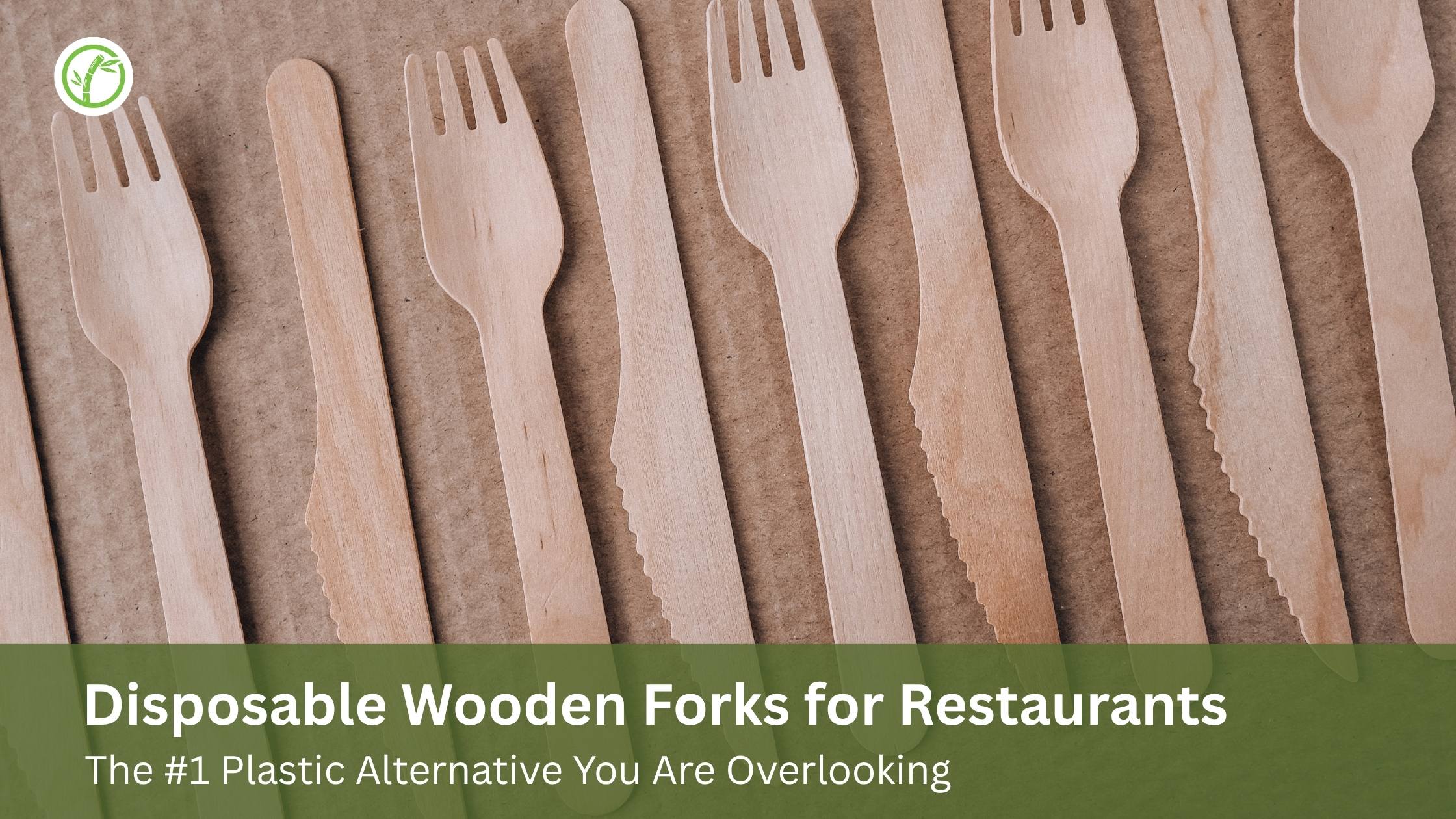
Here is a keyword that 1,900 people search for every month: “wood fork disposable.” And the keyword difficulty? Two out of a hundred. That tells you something important — there is massive demand and almost no quality content serving it.
But beyond the SEO opportunity, there is a practical business reason this search exists. Thousands of restaurant owners, catering managers, and food service buyers are actively looking for disposable wooden forks because they are the simplest, cheapest, most accessible way to eliminate plastic cutlery from their operations. Today.
This guide covers everything a buyer needs to know: what disposable wooden forks are made from, how they compare to plastic and bamboo alternatives, what sizes are available, what they cost at wholesale, and how to order them in bulk.
What Are Disposable Wooden Forks Made From?
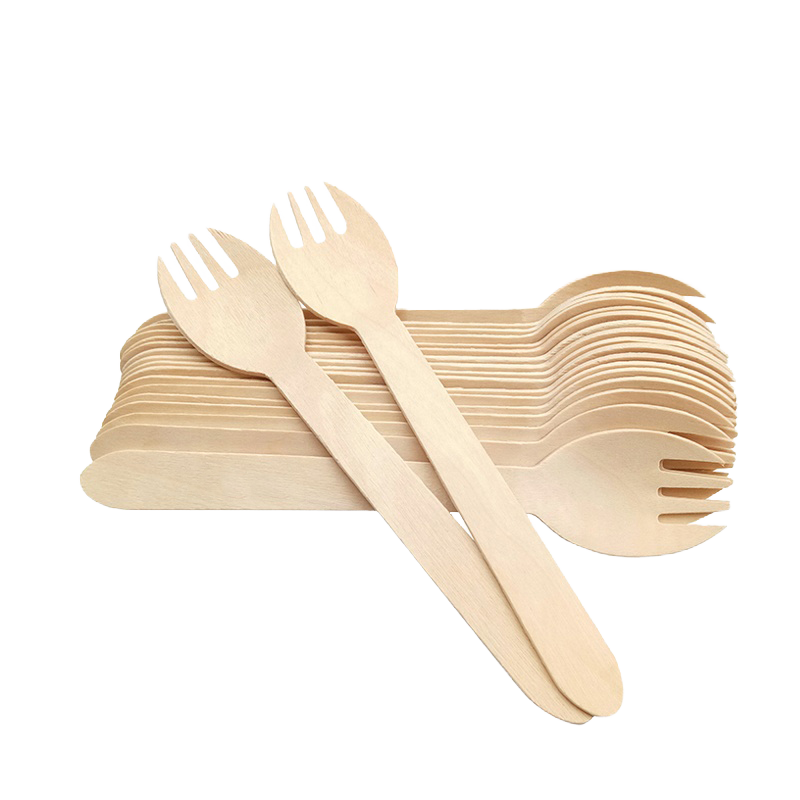
Most disposable wooden forks on the market are made from birchwood (Betula). Birch is the preferred species for several reasons: it is fast-growing, widely available, sustainably harvested, and produces a clean white grain with minimal knots or imperfections.
The manufacturing process is straightforward. Birch logs are peeled into thin veneers, die-cut into fork shapes, sanded smooth, and dried to a controlled moisture level. No chemicals, adhesives, or coatings are added. The result is a 100 percent natural, biodegradable, compostable fork.
Some suppliers also offer wooden forks made from poplar, pine, or willow. Birch is generally considered the best option for food service because it is harder, splinters less, and has a smoother finish than softer woods.
A less common but growing option is bamboo forks — made from bamboo rather than wood. We will compare the two materials later in this article.
Why Restaurants Are Choosing Wooden Forks Over Plastic
Three forces are driving the shift.
Cost. Disposable wooden forks are among the cheapest eco-friendly cutlery options available. At wholesale volumes, they are priced in the $0.01 to $0.03 range per unit — sometimes matching or even undercutting mid-range plastic forks. For price-sensitive operations like fast food chains, cafeterias, and high-volume takeaway restaurants, wooden forks remove the biggest objection to going plastic-free: “it costs too much.”
Compliance. Plastic cutlery bans are now in force across the EU, India, multiple US states, Australia, Canada, and the UAE. Wooden forks are compliant everywhere. They are biodegradable, compostable, and made from renewable resources. No regulatory risk.
Simplicity. Wooden forks require no change to your operations. They look like forks. They work like forks. They come in the same sizes as plastic forks. Your staff does not need training. Your customers do not need instructions. You simply swap the box in your supply closet and carry on.
Sizes and Specifications
Disposable wooden forks follow the same sizing conventions as other cutlery materials.
140mm (5.5 inches) is the small size, used for appetisers, desserts, tasting events, and kids’ meals.
160mm (6.3 inches) is a mid-range option that some suppliers offer. It provides slightly more reach than the 140mm without the full dimensions of a dinner fork. Popular for casual dining and food trucks.
170mm (6.7 inches) is the full-size dinner fork. This is the standard for main course meals, takeaway, and delivery. If you are ordering one size to cover all applications, this is it.
Thickness is typically 1.5mm to 2mm, which provides enough rigidity for standard food service use. Some premium-grade wooden forks are slightly thicker (2mm to 2.5mm) for added strength — these are more suitable for events and hotel dining where the perception of quality matters.
Wooden Forks vs Plastic Forks: The Real Comparison
On raw cost per unit, wooden and plastic forks are now nearly equal at wholesale volume. Polypropylene forks cost $0.01 to $0.02. Birch wooden forks cost $0.01 to $0.03. The difference is a fraction of a cent per fork.
On strength, wooden forks handle most standard foods well — salads, pasta, rice, soft meats, vegetables, and desserts. Polypropylene has more flex, which means it bends before it breaks. Wood is more rigid, which means it does not bend but can snap under extreme force. For normal eating, both work. For cutting tough meat, neither is ideal — that is what knives are for.
On food safety, wooden forks are chemical-free, non-toxic, and do not leach substances into food. Some plastics, particularly polystyrene, can release compounds when exposed to hot or acidic food.
On end-of-life, wooden forks biodegrade in months. Plastic forks persist for centuries and break into microplastics. There is no comparison.
On customer perception, wood looks and feels more natural, more intentional, and more premium than plastic. Even the cheapest wooden fork sends a better message than the most expensive plastic one.
Wooden Forks vs Bamboo Forks: Which Should You Choose?
Both are eco-friendly. Both are compostable. Both work well in food service. The difference comes down to density, aesthetics, and price.
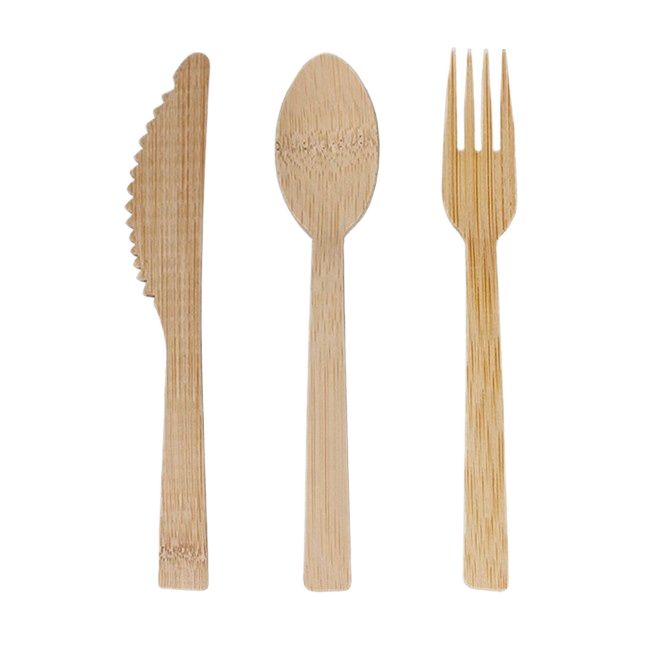
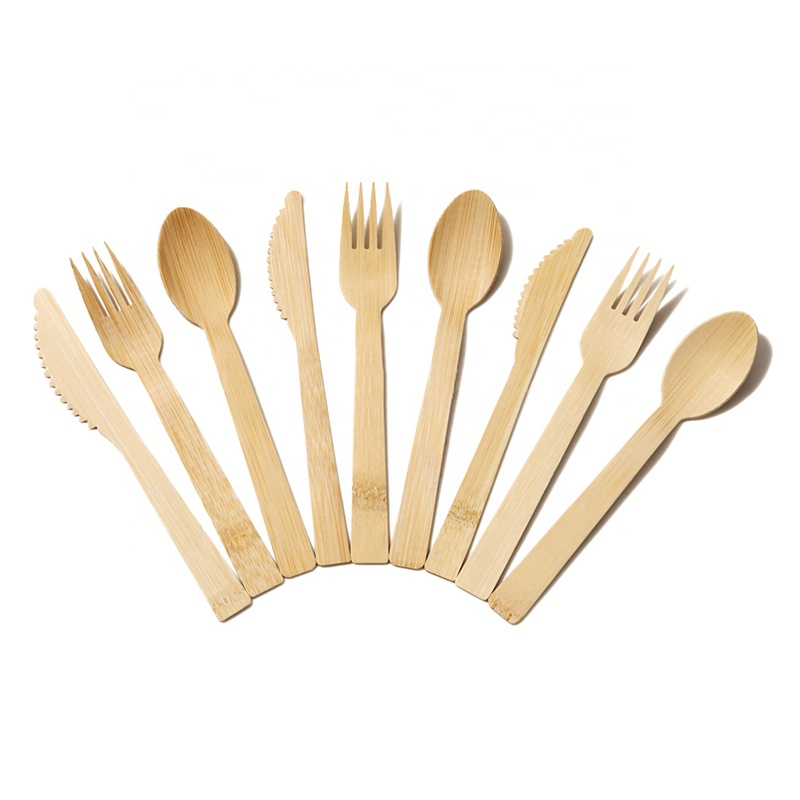
Bamboo is denser and harder than birchwood. A bamboo fork is less likely to snap under pressure when eating dense foods like grilled steak or thick pasta. It also has a smoother, more refined finish that looks premium on a table setting.
Wooden forks are lighter and slightly cheaper per unit. They work perfectly for everyday takeaway, fast-casual dining, and any application where functional performance matters more than premium aesthetics.
For high-volume, price-sensitive operations — QSR chains, cafeterias, food courts, school canteens — wooden forks are the practical choice. For premium restaurants, hotels, events, and branded delivery — bamboo forks are worth the small price premium.
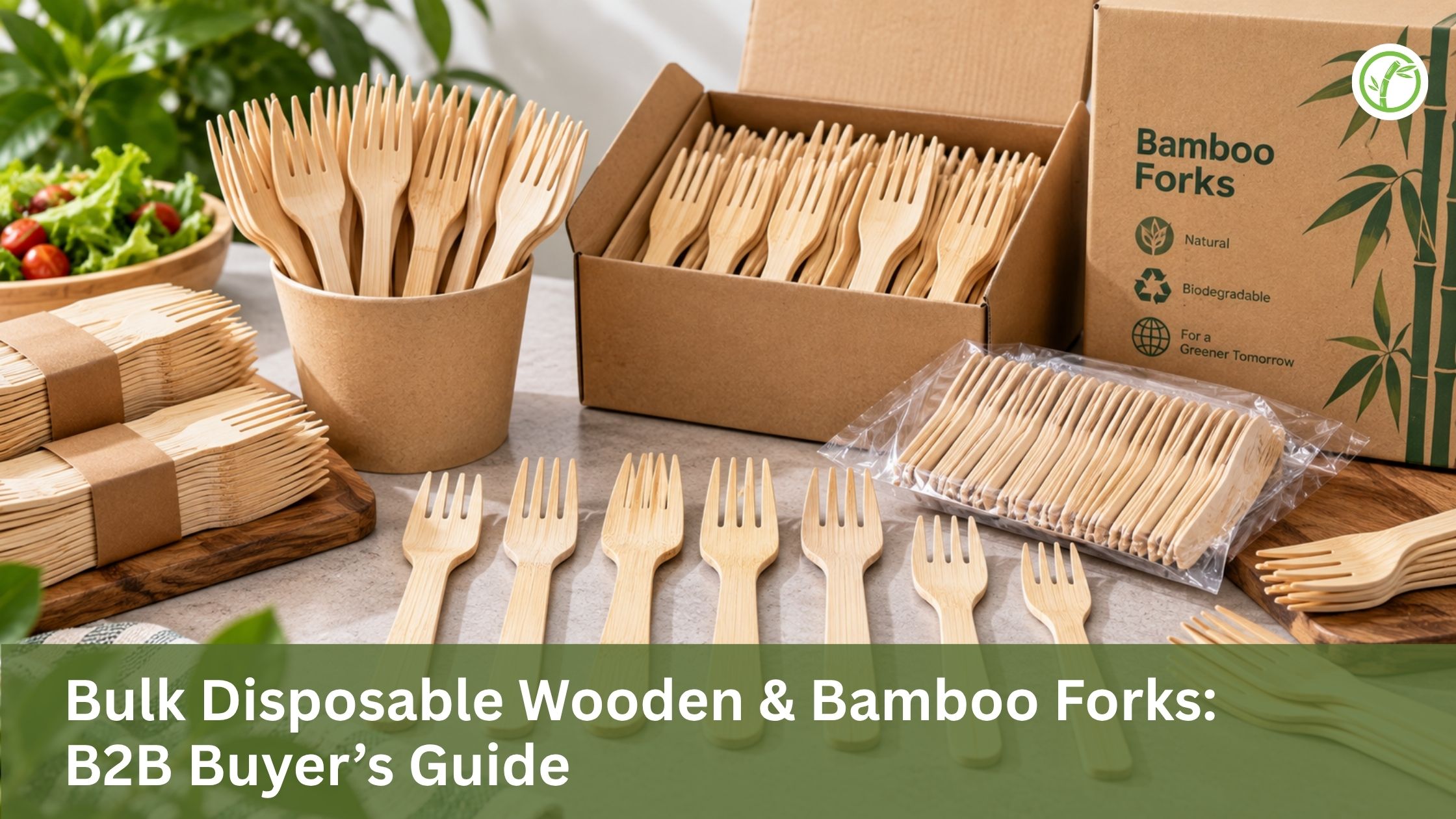
Many businesses stock both. Wooden forks for standard takeaway operations, bamboo forks for catering and branded orders. At FriendlyBamboo, we supply both materials, making it easy to source what you need from a single supplier.
Pricing at Wholesale Volume
Disposable wooden forks are one of the most affordable eco-friendly products available.
At wholesale volumes of 50,000 units or more, standard 170mm birch wooden forks cost approximately $0.01 to $0.03 per unit. Smaller sizes are slightly cheaper. Individually wrapped forks or forks in branded sets cost more due to packaging labour.
For a restaurant serving 400 takeaway orders per day, that translates to roughly $4 to $12 per day for forks — less than the cost of a single dish on your menu.
The pricing stability of wooden forks is another advantage. Unlike plastic, whose cost fluctuates with petroleum prices, wood pricing is driven by sustainable forestry supply chains, which are relatively stable.
How to Order in Bulk
Ordering disposable wooden forks is simple.
Define your specification: Size (140mm, 160mm, or 170mm), quantity, packaging format (bulk loose or individually wrapped), and any branding requirements.
Request samples: Test them with your actual menu items. Check for splinters, smoothness, and consistency across the sample batch.
Get a quote: Pricing depends on volume, size, packaging, and destination. A tailored quote gives you the accurate landed cost for your specific order.
Plan for lead times: Standard orders take 15 to 25 days for production, plus shipping to your location. Factor this into your procurement cycle.
Set a reorder schedule: Once you know your monthly consumption, establish a regular ordering cadence to avoid stockouts and potentially qualify for volume pricing.
The Bottom Line
Disposable wooden forks are the lowest-friction, lowest-cost way for any restaurant to start eliminating plastic from its takeaway operations. They match plastic on price, exceed it on sustainability, and send a better message to every customer who picks one up.
If you have been hesitating to make the switch because of cost concerns, this is the product that removes that excuse.