If you have ever wondered what those sturdy, off-white takeaway containers are made from — the ones that look like thick cardboard but hold hot curry without leaking or collapsing — the answer is probably bagasse.
Most people have never heard the word. But bagasse is quietly replacing plastic in restaurants, catering operations, and food delivery services across the globe. Understanding what it is, how it is made, and why it matters gives you a significant advantage when sourcing sustainable packaging for your business.
Bagasse: The Short Answer
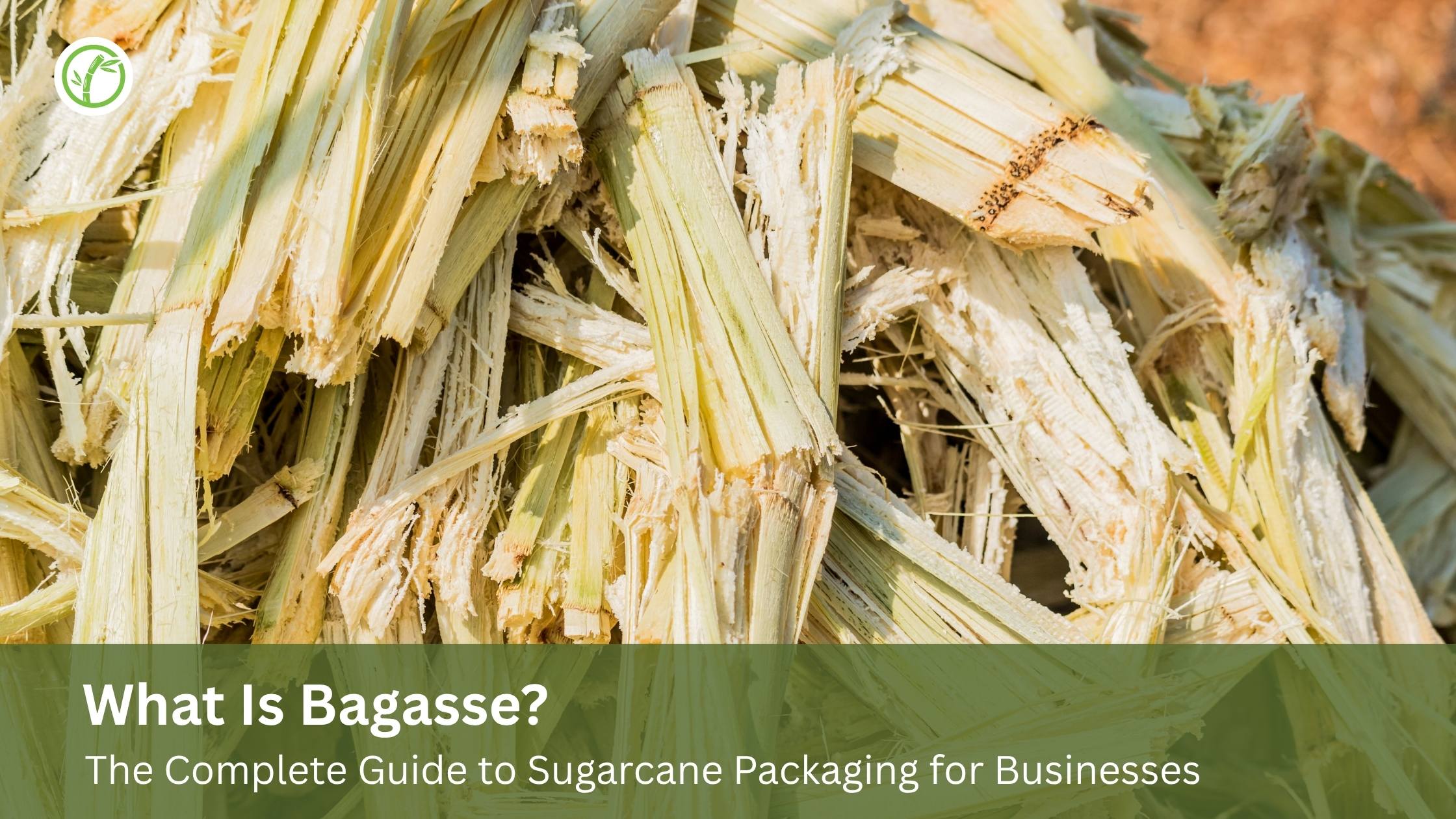
Bagasse is the dry, fibrous material left over after sugarcane stalks are crushed to extract their juice during sugar production. It is, essentially, sugarcane waste.
For decades, this waste was either burned as fuel in sugar mills or simply discarded. Today, manufacturers take that same fibre and mould it into plates, bowls, cups, food containers, trays, cutlery, and straws. The result is a range of food packaging products that are strong, heat-resistant, oil-proof, compostable, and made entirely from agricultural waste.
No trees are cut down. No petroleum is used. No synthetic chemicals are added. The raw material is a byproduct of an industry that already exists at enormous scale — approximately 1.2 billion tonnes of sugarcane are produced globally every year, generating roughly 100 million tonnes of bagasse.
How Bagasse Becomes Food Packaging
The manufacturing process is straightforward, which is part of what makes bagasse products cost-competitive.
It starts at the sugar mill. After sugarcane is harvested and processed, the fibrous residue — bagasse — is collected instead of being discarded or burned. This fibre is cleaned and sometimes bleached with chlorine-free methods to achieve a uniform colour.
The cleaned fibres are blended with water to create a pulp, similar in consistency to the wood pulp used in papermaking. This pulp is then poured into moulds and shaped under high heat and pressure through a process called thermoforming. The heat and pressure compress the fibres into dense, rigid structures — plates, bowls, clamshell containers, trays, cups — without the need for adhesives or chemical binders.
After moulding, the products are trimmed, dried, and inspected for quality. Some products receive a thin coating of PLA (a plant-based bioplastic) or a water-based barrier to improve grease and moisture resistance. Products intended for direct hot food contact are typically uncoated or coated with PFAS-free alternatives.
The entire process uses significantly less energy than plastic manufacturing. Where plastic production requires petroleum extraction, chemical refining, and energy-intensive polymerisation, bagasse production is essentially a mechanical process: collect, pulp, mould, dry.
What Bagasse Products Are Available
The range of products made from bagasse has expanded dramatically in recent years. Here is what you can source for food service and wholesale.
Bagasse plates are available in round, square, and compartmented formats across multiple sizes — from 6-inch appetiser plates to 10-inch dinner plates. They hold hot, oily, and saucy foods without bending or leaking.
Bagasse bowls come in sizes ranging from small sauce cups to large soup and salad bowls. They handle hot liquids well and are popular for poke bowls, ramen, soups, and salads.
Bagasse food containers and clamshells are the workhorse products for takeaway and delivery. Available in single-compartment and multi-compartment designs, they replace polystyrene and plastic clamshells for burgers, rice dishes, curries, and meal prep. Hinged-lid containers are especially popular for cloud kitchens and food trucks.
Bagasse cups serve hot and cold beverages. They are commonly used in cafes, corporate events, and outdoor catering as a replacement for polystyrene or plastic cups.
Bagasse trays are used for catering service, food presentation, and meat packaging. They are available in various depths and dimensions for different applications.
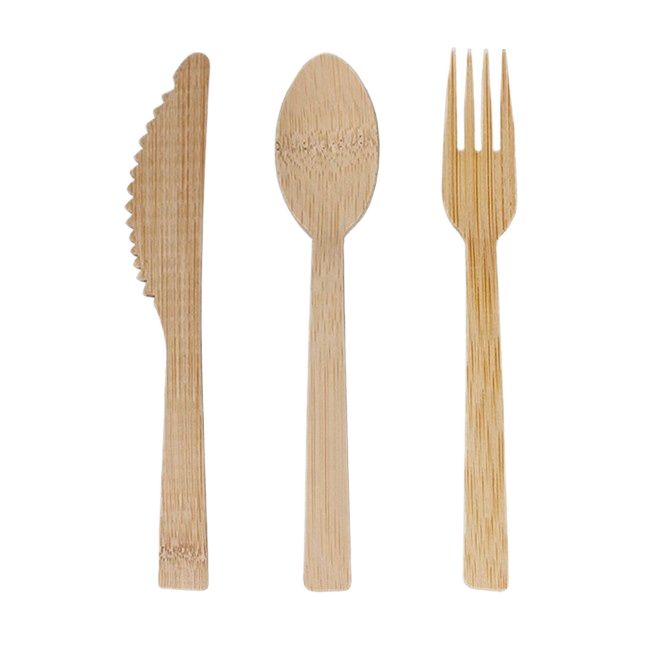
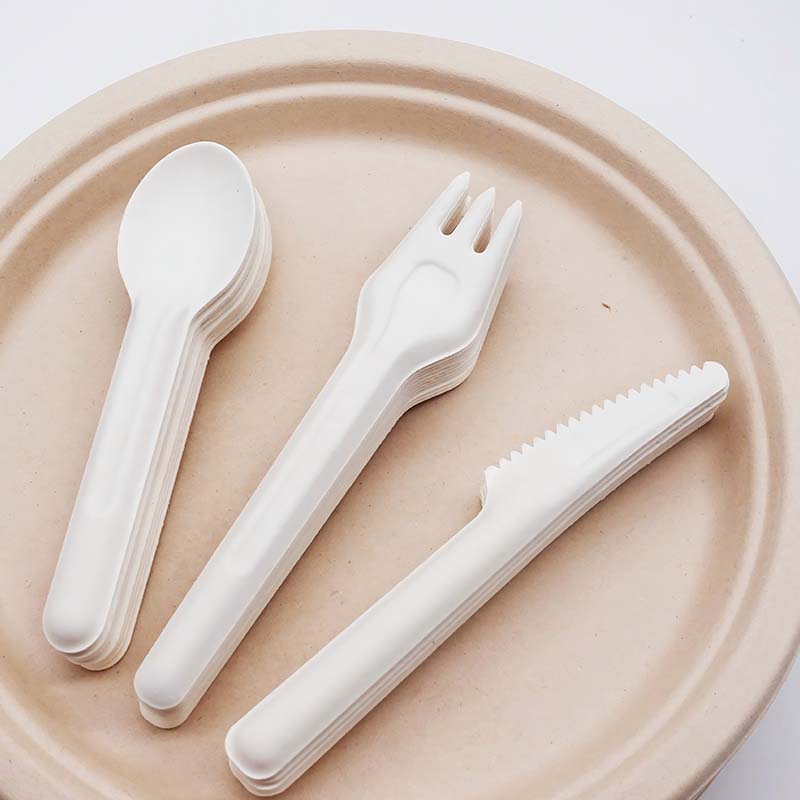
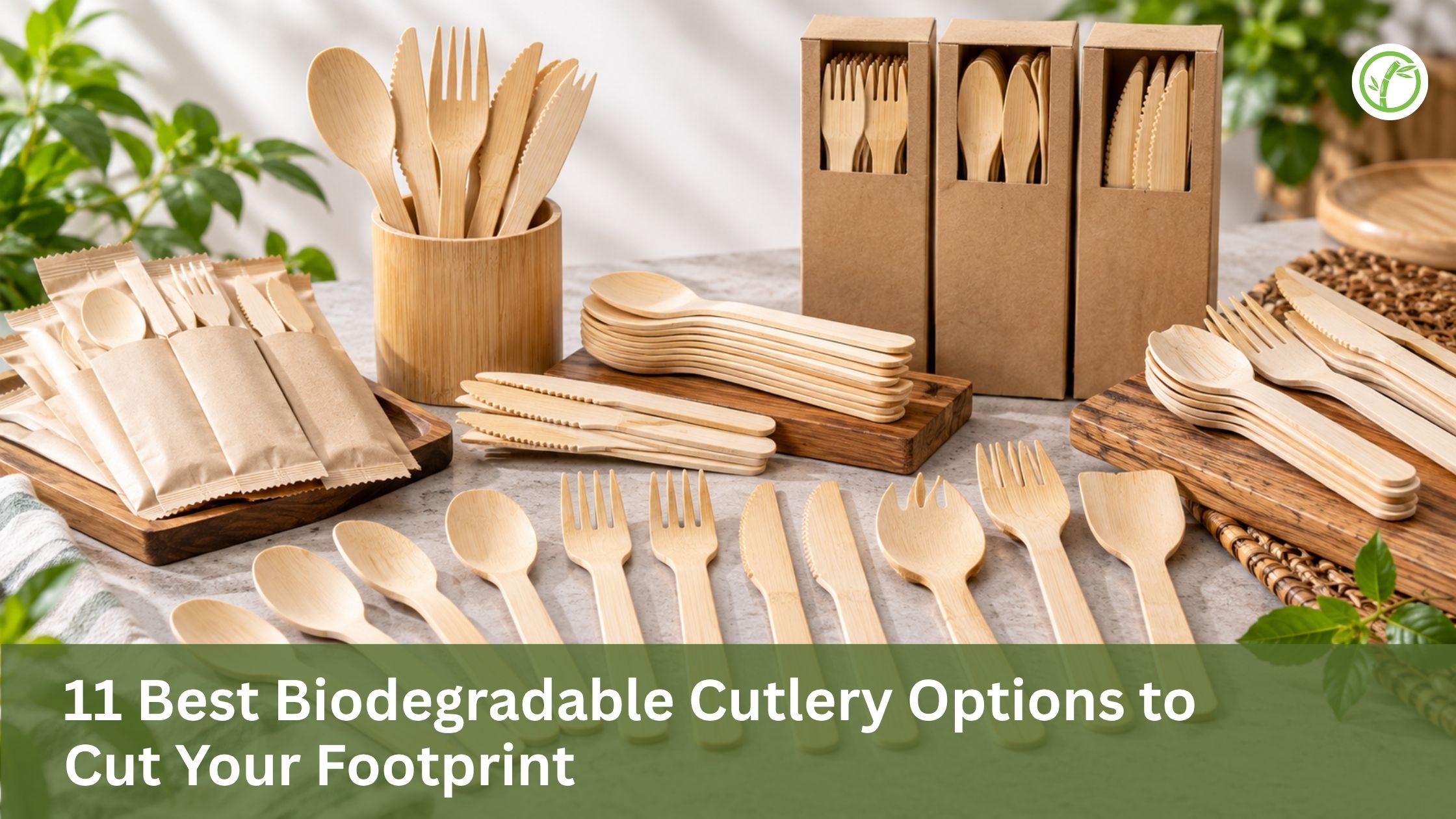
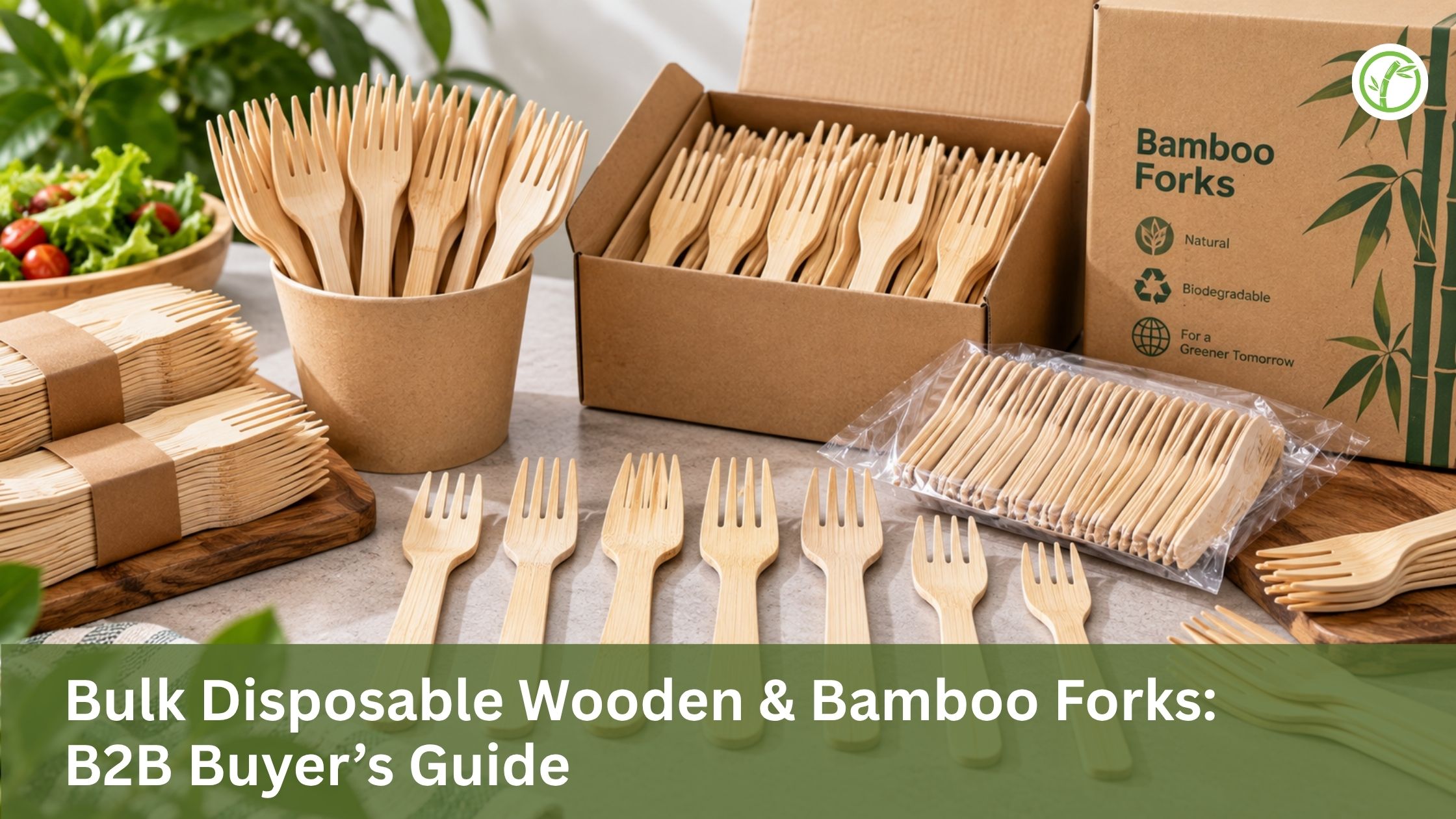
Bagasse cutlery — forks, spoons, and knives moulded from sugarcane fibre — is a newer product category. While less common than bamboo or wooden cutlery, bagasse cutlery offers another plastic-free option, particularly for businesses that want to source all their disposables from a single material family.
Bagasse straws provide a sturdy, compostable alternative to paper straws (which tend to go soft in liquids) and plastic straws (which are banned in most markets).
Why Businesses Are Switching to Bagasse
The switch is driven by three forces that are now impossible to ignore.
Regulation. Single-use plastic bans are spreading globally. The EU, India, multiple US states, Canada, Australia, and the UAE have all restricted or banned polystyrene containers, plastic plates, and other single-use plastic food packaging. Bagasse products are compliant everywhere these bans exist because they are plant-based and compostable.
Performance. Bagasse food containers are genuinely functional. They handle temperatures from freezer to microwave (up to around 120°C), resist grease and oil, hold liquid without leaking, and stack neatly for storage and transport. In blind performance tests, many food service operators find that bagasse outperforms polystyrene for hot and oily food because it does not sweat or create condensation.
Customer expectations. Diners increasingly expect sustainable packaging — especially in delivery and takeaway, where the packaging is the primary physical expression of your brand. A bagasse container communicates responsibility. A styrofoam container communicates indifference.
Bagasse vs Plastic: Key Differences
Bagasse and plastic differ fundamentally in origin, performance, end-of-life, and regulatory status.
Bagasse is made from agricultural waste. Plastic is made from petroleum. Bagasse composts in 60 to 90 days in commercial facilities. Plastic takes 400 to 1,000 years to decompose, breaking into harmful microplastics along the way.
Bagasse is naturally PFAS-free when uncoated. Many plastic and even some paper-based food containers use PFAS chemicals for grease resistance — a growing regulatory and health concern.
Bagasse is compliant with all current single-use plastic bans. Plastic is increasingly restricted or banned in major markets worldwide.
On cost, bagasse products are slightly more expensive than the cheapest plastic equivalents. But the gap has narrowed substantially as production volumes have scaled up. At current wholesale pricing, the premium for switching from polystyrene to bagasse containers is small enough that many businesses absorb it without raising prices.
Bagasse vs Bamboo: How They Compare
Both bagasse and bamboo are sustainable, compostable materials used in food service — but they serve different purposes.
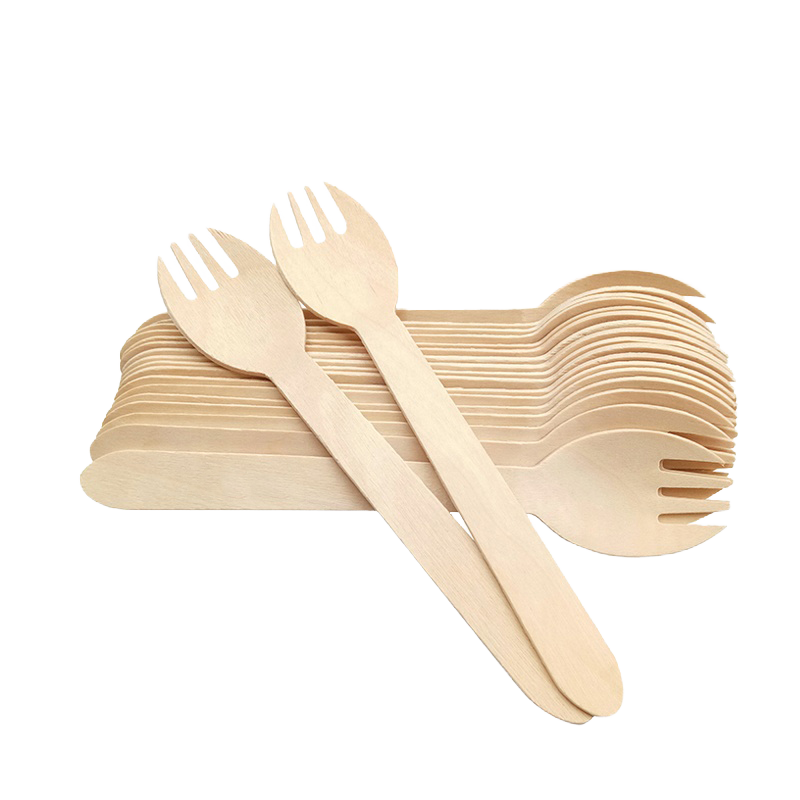
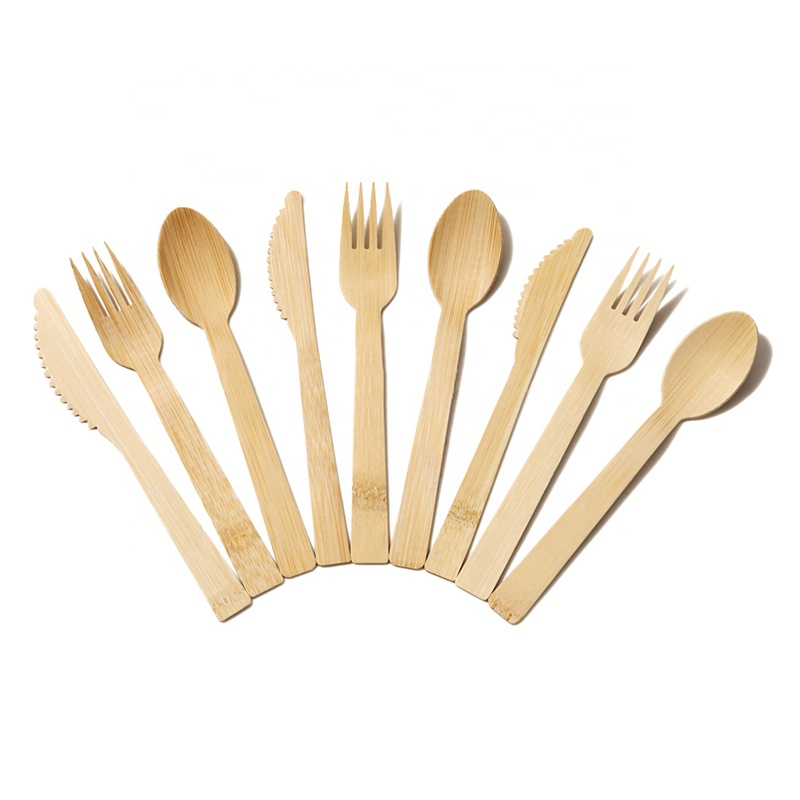
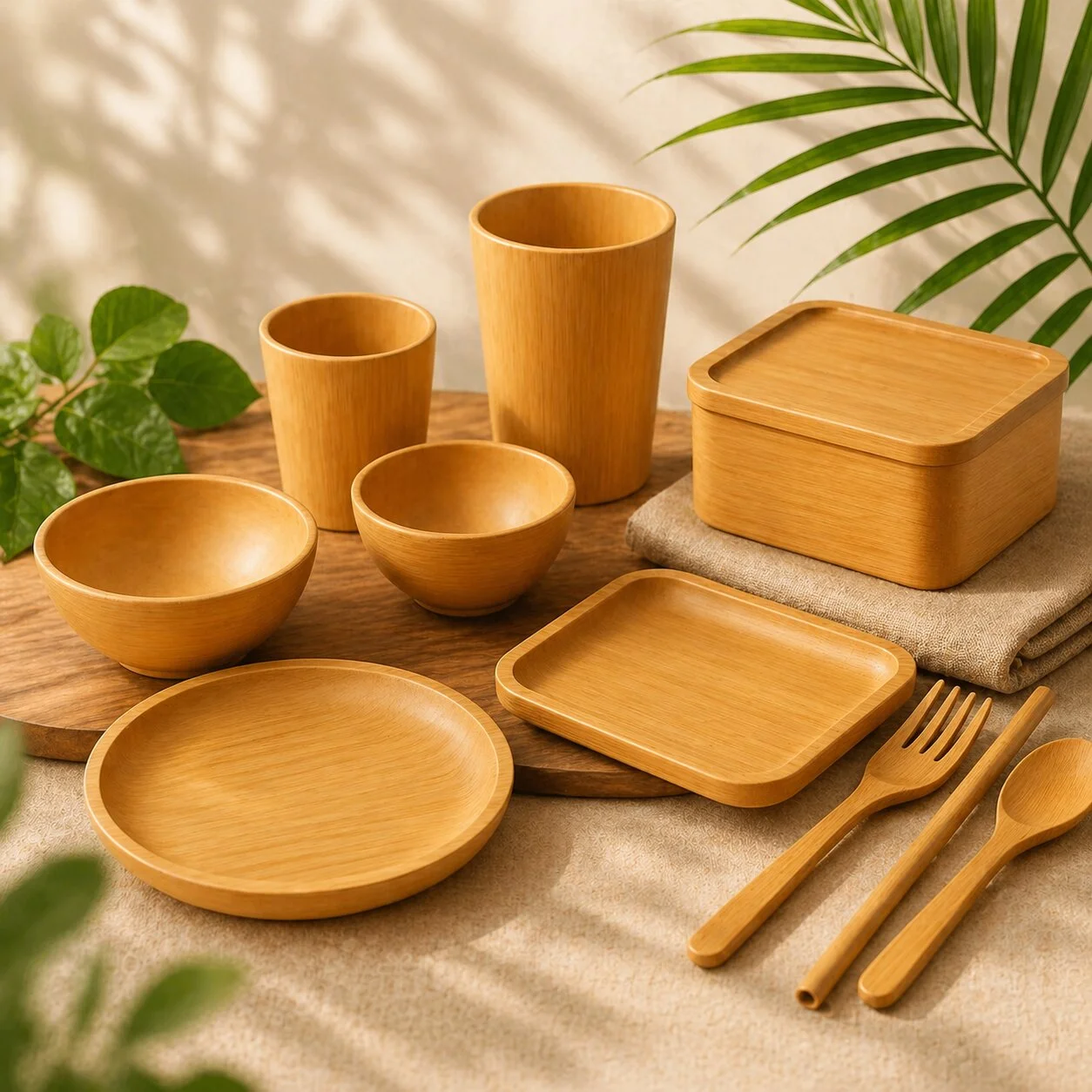
Bamboo excels in cutlery, chopsticks, skewers, straws, and tableware where rigidity and a premium natural appearance matter. Bamboo products are solid — cut and pressed from the bamboo stalk itself.
Bagasse excels in moulded packaging — plates, bowls, containers, cups, and trays — where you need hollow, lightweight, stackable structures. Bagasse is a pulp-moulded product, which means it can be shaped into complex forms that solid bamboo cannot.
Many businesses use both materials together: bamboo cutlery inside a bagasse clamshell container, for example. This combination gives you a fully compostable, plastic-free takeaway solution from a single eco-material strategy.
At FriendlyBamboo, we supply both bamboo and bagasse product lines, making it easy to source your complete sustainable disposables range from one supplier.
Certifications to Look For
When sourcing bagasse products, the following certifications verify quality and compliance.
BPI (Biodegradable Products Institute) confirms that the product composts in a commercial facility within the required timeframe. This is the primary compostability certification recognised in North America.
OK Compost / TUV Austria is the European equivalent, covering both industrial and home composting standards.
FDA compliance is required for any bagasse product that contacts food in the US market. Ask for the specific lab report, not just a website claim.
PFAS-free certification is increasingly important. Verify that any coated bagasse products are free from per- and polyfluoroalkyl substances.
FSC applies if the bagasse is processed alongside wood-based fibres, but pure sugarcane bagasse does not typically require FSC certification since it is an agricultural byproduct, not a forest product.
Frequently Asked Questions
Is bagasse microwave safe? Yes. Most bagasse containers are microwave safe up to around 120°C. Always check with your supplier for specific product ratings, as coated and uncoated products may differ.
Is bagasse waterproof? Bagasse products are moisture-resistant and hold hot, oily, and wet foods well for the duration of a meal. They are not designed for prolonged liquid immersion — you would not use a bagasse bowl as a permanent soup container, but it will hold soup perfectly for normal eating and delivery timelines.
How long does bagasse take to decompose? In commercial composting facilities, bagasse products typically break down in 60 to 90 days. In home composting conditions, it may take slightly longer. Even in a landfill, bagasse decomposes far faster than plastic.
Does bagasse have a taste or smell? No. Properly manufactured bagasse products are taste-neutral and odour-free. If you detect a papery or earthy smell, it usually dissipates once the product is unpacked and exposed to air.
Ready to Source Bagasse Products?
Whether you need plates, bowls, containers, trays, cups, or straws — FriendlyBamboo supplies the full range of bagasse products at wholesale pricing with global delivery.