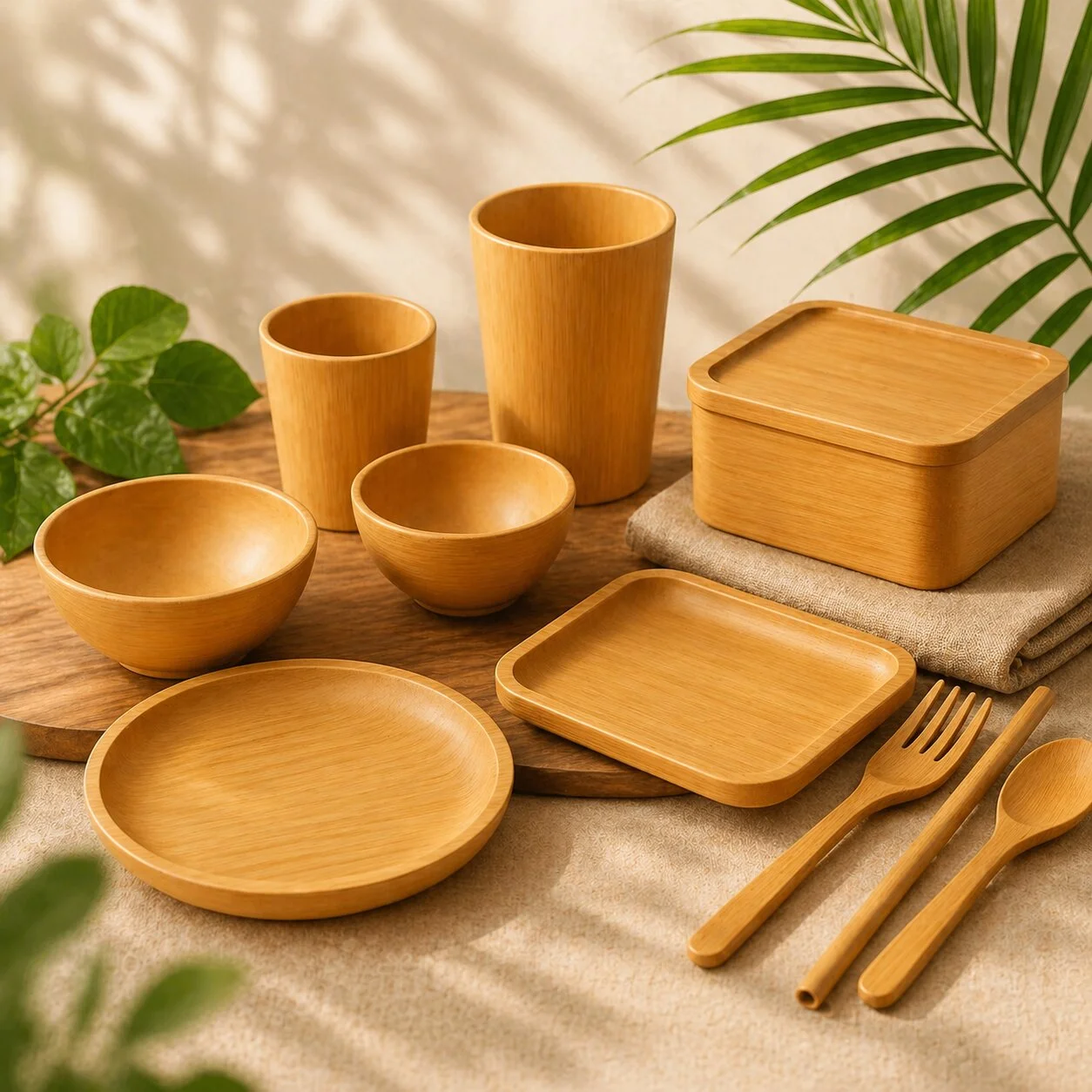
The Complete Bagasse Range — Every Disposable Product From Waste Sugarcane Every year, the global sugar industry produces over 1.2 billion tonnes of sugarcane. After the juice is extracted, what remains is bagasse — a dry, fibrous waste material that was historically burned or dumped. Today, that w
Wholesale Bamboo Pole Products – Bulk Supply & OEM Factory
From packaging and tableware to private label products, our catalog is designed to meet the needs of restaurants, hotels, event organizers, and distributors worldwide.
Showing(All)
All Bamboo Pole
Showing all 3 results
Your Wholesale Bamboo Pole Supplier
Bamboo poles are the most versatile product in the bamboo industry. A single pole can become a garden stake, a construction scaffold, a fencing post, an event decoration, a furniture component, or an architectural feature. The applications span agriculture, landscaping, construction, interior design, event management, and retail display — and every one of those industries needs reliable bulk supply.
FriendlyBamboo has supplied bamboo poles in bulk to landscapers, construction contractors, event companies, furniture makers, agricultural suppliers, and wholesale distributors across 30+ countries for over 12 years. Natural, green plastic-coated, carbonized black — every finish, every diameter, every length, sourced from mature Moso bamboo with FSC certification and consistent grading.
Available Types of Bamboo Poles
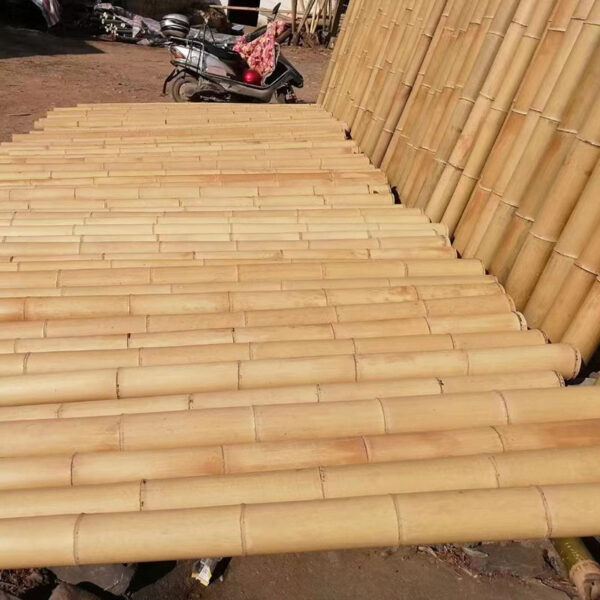
Natural Bamboo Poles — Raw, untreated bamboo poles in their natural golden-tan colour. The most versatile and widely used format. The surface retains bamboo’s natural texture, nodes, and grain pattern. Suitable for garden stakes, plant support, fencing, trellising, construction scaffolding, rustic décor, furniture making, and structural projects. Available in all diameters from 10mm to 100mm+ and lengths from 1 metre to 6 metres. Heat-treated (boiled and dried) to remove sugars and prevent insect infestation. The foundation product for most wholesale buyers.
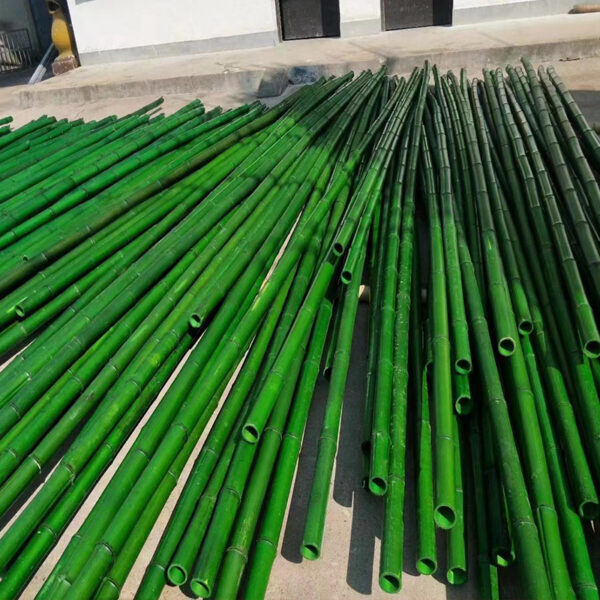
Green Plastic-Coated Bamboo Poles — Natural bamboo poles with a thin green plastic coating on the exterior. The coating serves two purposes: it blends visually with green foliage when used as plant stakes and garden supports, and it adds a moisture barrier that extends the pole’s outdoor lifespan. The most popular product for garden centres, nurseries, and agricultural suppliers. Standard sizes from 60cm to 210cm in lengths commonly used for tomato stakes, flower supports, climbing plant trellises, and general garden use. Diameter range: 8mm to 16mm for garden stakes.
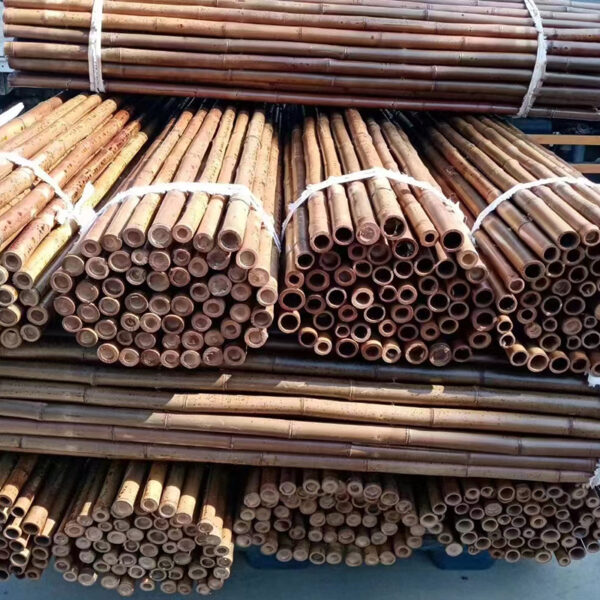
Carbonized Black Bamboo Poles — Natural bamboo poles that have been heat-carbonized to achieve a rich, dark brown-to-black colour throughout. The carbonization process uses high-temperature treatment (no chemical dyes) to darken the bamboo while also hardening the surface and improving rot resistance. The dark finish gives these poles a premium, contemporary aesthetic used in interior design, architectural features, luxury event décor, high-end fencing, furniture making, and themed retail displays. Available in all standard diameters and lengths.
Sizes & Specifications
| Diameter | Length Range | Wall Thickness | Best For |
|---|---|---|---|
| 8–16mm (thin) | 60cm – 210cm | 2–4mm | Garden stakes, plant supports, flower sticks, craft |
| 20–30mm (small) | 100cm – 400cm | 4–6mm | Trellising, light fencing, décor, display poles, furniture components |
| 30–50mm (medium) | 200cm – 500cm | 5–8mm | Fencing, pergola construction, event structures, architectural features |
| 50–80mm (large) | 300cm – 600cm | 8–12mm | Heavy fencing, construction scaffold, structural bamboo, furniture frames |
| 80–100mm+ (extra large) | 300cm – 600cm | 10–15mm | Structural columns, architectural elements, bridge components, large-scale décor |
How to choose your diameter and length: Match pole size to load and application. Thin poles (8–16mm) are flexible and designed for plant support and garden use — they hold plants upright but are not structural. Medium poles (30–50mm) handle moderate loads and work for fencing, pergolas, and event structures. Large poles (50mm+) are structural-grade and used in construction, heavy fencing, and architectural applications. Length depends on your project — garden stakes rarely exceed 210cm while construction and architectural poles often need 400–600cm. Custom diameters and lengths available at higher MOQs. Contact us with your project specification.
→ Request Custom Branding Quote
Wholesale Pricing of Bamboo Poles
| Product | Diameter | Volume | Price Per Pole |
|---|---|---|---|
| Natural poles (garden stake, thin) | 8–16mm | 5,000+ pcs | $0.30 – $0.80 |
| Natural poles (small–medium) | 20–50mm | 1,000+ pcs | $0.80 – $3.00 |
| Natural poles (large–extra large) | 50–100mm+ | 500+ pcs | $2.50 – $8.00 |
| Green plastic-coated (garden stake) | 8–16mm | 5,000+ pcs | $0.40 – $1.00 |
| Carbonized black poles (all sizes) | 20–100mm+ | 500+ pcs | $1.50 – $10.00 |
Bamboo pole pricing varies significantly based on diameter, length, finish, and treatment. Thin garden stakes at high volume are under a dollar per pole. Large structural poles and carbonized black poles carry higher pricing due to material volume and processing. Exact pricing depends on your specific diameter, length, finish, volume, and shipping destination.
Bamboo poles are heavy and voluminous — shipping costs are a meaningful part of total landed cost. We recommend CIF pricing to get an accurate delivered cost to your warehouse.
How Bagasse Tableware Products Are Made
The process starts in the field, not the factory. After sugarcane stalks are pressed for juice, the leftover fibre — bagasse — is collected rather than burned or landfilled. That waste stream is the entire raw material input for the range.
Step 1 — Fibre Cleaning. Raw bagasse is washed to remove residual sugar, dirt, and pith. Unwashed fibre ferments and smells; proper cleaning is what makes food-contact use possible in the first place.
Step 2 — Pulping. Cleaned fibre is broken down and blended with water into a wet pulp slurry, similar in principle to papermaking but without the chemical bleaching many paper products rely on.
Step 3 — Moulding. The pulp is pressed into heated steel moulds under high pressure. Heat and pressure simultaneously shape and dry the product in one step, which is what gives bagasse its rigidity compared to standard moulded paper.
Step 4 — Trimming and Inspection. Excess fibre is trimmed from the mould line and each batch is checked for thickness consistency, leak resistance, and surface finish before packing.
Step 5 — Packing. Finished pieces are stacked, counted, and cartoned to the buyer’s spec — bulk case pack or private-label retail-ready.
No plastic resin, no PFAS coating, and no synthetic binder enters the process at any stage. That single-material, single-process approach is also why the full range — from bagasse bowls to bagasse cutlery — composts as one waste stream rather than needing separate disposal instructions per product. For the fibre science behind why this process works the way it does, see our complete guide to bagasse.
Country Regulations
Food-packaging regulation is moving in one direction globally, and bagasse is positioned ahead of most of it rather than scrambling to catch up.
- European Union — A PFAS ban in food packaging takes effect August 2026, closing off the coated-paper and coated-fibre products many suppliers currently rely on for grease resistance.
- United States — State-level bans are leading federal action. Maine’s PFAS prohibition takes effect May 2026, with several other states following on similar timelines. Buyers supplying multi-state accounts increasingly standardize on PFAS-free packaging to avoid managing different specs per state.
- FDA compliance (US) — All products meet 21 CFR 177 food-contact standards, covering direct food contact across hot and cold use.
- Export markets generally — FSC fibre sourcing and ISO 14001 environmental management give procurement teams a certification set that satisfies most import and retail-compliance requirements without additional documentation per country.
Because every product in the range is inherently PFAS-free rather than reformulated to comply, there’s no re-qualification cycle each time a new regulation lands. Full certificate documentation is available on request — see Get all certificates or explore the compliance detail inside each category, starting with bagasse food boxes and bagasse cups.
The Complete Bamboo Range Premium Eco Tableware From One Supplier. Bamboo is the material that started the eco-disposable revolution. Before bagasse containers and wooden cutlery entered the mainstream, bamboo was already replacing plastic in restaurants, hotels, and events worldwide. It was first b
How Wholesale Bamboo Straws Are Made
Unlike moulded bagasse products, a bamboo straw isn’t formed — it’s cut from a naturally hollow stalk, which is why no two straws are ever perfectly identical.
Step 1 — Culm Selection. Mature Moso bamboo culms are selected specifically for straw production, chosen for the right internal bore diameter and wall thickness at each cutting point along the stalk.
Step 2 — Cutting to Length. Culms are cut into straw-length sections — typically 200mm or 230mm — with node placement checked so the straw’s natural internal diameter falls within the target range for its category (thin, standard, or wide).
Step 3 — Hollowing and Cleaning. Any internal membrane at the nodes is cleared so the straw is fully open end-to-end, then the interior is cleaned to remove pith and residue.
Step 4 — Heat Treatment. Straws undergo controlled heat treatment, which stabilises the fibre, sterilises the material, and — depending on temperature and duration — produces the natural, green, or yellow finish. None of these colours are dyed; they come from how the bamboo is heat-processed.
Step 5 — Sanding and Smoothing. Both the outer surface and the straw’s open ends are sanded smooth, removing any rough edge that could catch on a customer’s lip.
Step 6 — Sorting and Grading. Because internal diameter naturally varies by ±1mm from culm to culm, straws are sorted into diameter bands — 6mm, 8mm, 9mm, and 10–12mm — so each batch is consistent within its category even though no individual straw is machine-uniform.
Step 7 — Packing. Finished straws are packed loose in bulk bags, boxed for retail, or individually sleeved, depending on the order.
This is also why bamboo straws can be reusable rather than single-use only — there’s no coating or lining to break down in the wash, just solid bamboo fibre from end to end. For how this compares to other bamboo products in the range, see how bamboo cutlery is made.
Quality Standards
Every batch of straws is checked against the same standards before it ships:
- Diameter consistency within band — straws are sorted so a batch sold as 8mm stays within a tight tolerance of that target, even though bamboo is a natural material.
- Open-bore verification — every straw is checked to confirm the nodes are fully cleared, since a blocked straw is a functional failure, not a cosmetic one.
- Structural integrity in liquid — tested to hold shape for hours in hot coffee, iced drinks, and thick beverages without softening or collapsing, the core failure point of paper straws.
- Taste neutrality — verified against delicate applications like specialty coffee and fresh juice, where any woody or processing residue would be immediately noticeable.
- Surface finish — sanded and inspected for splinter risk on both the straw body and the open ends, since this is a product held directly to the mouth.
- Certified sourcing and food-contact compliance — FSC-sourced bamboo, FDA 21 CFR 177 compliance, and ISO 9001 / ISO 14001 manufacturing controls apply to every diameter and colour in the range.
The same quality bar applies whether the order is natural bamboo straws, wide bubble-tea diameters, or custom laser-branded straws for a hotel or café chain.
Sustainability
Bamboo poles carry the same renewable-material advantage as the rest of the range, at a scale where it matters even more given how much material a structural or construction order involves.
- Fast-growing, regenerative source. Moso bamboo grows up to 91cm a day and reaches harvestable maturity in three to five years, regenerating from its own root system without replanting — a groves keeps producing indefinitely rather than requiring new land or new stock each cycle.
- No chemical treatment for colour. Carbonized poles achieve their dark finish entirely through thermal processing — no dyes or stains — and even the boiling treatment used for pest control involves no synthetic chemicals.
- Long service life reduces replacement volume. Properly treated poles last 2-8 years outdoors depending on finish, which lowers the total material turnover compared to shorter-lived alternatives in fencing, staking, and event structures.
- FSC-certified sourcing. Poles are harvested from responsibly managed, independently audited forests, giving landscaping and construction buyers documentation for ESG and sustainable-sourcing reporting.
- Structural alternative to non-renewable materials. In scaffolding, fencing, and architectural applications, bamboo poles substitute directly for steel and treated lumber, both of which carry a heavier environmental footprint to produce.
For agricultural buyers, our green plastic-coated garden stakes extend outdoor lifespan without the material trade-offs of plastic-only stakes. See the broader material case in Why Bamboo Is Outpacing Plastic.
Treatment & Processing
Heat Treatment (Boiling) — All our natural and carbonized poles undergo heat treatment where bamboo is boiled at high temperatures to remove natural sugars, starches, and proteins. This process kills insect larvae and fungal spores, and prevents future pest infestation during storage and use. Heat-treated poles are the industry standard for any application where the bamboo will be exposed to outdoor conditions.
Carbonization — A specialized high-temperature heat process that darkens the bamboo to a deep brown-to-black colour. Carbonization also increases surface hardness and improves rot resistance compared to natural poles. No chemical dyes or stains are used — the colour change is achieved entirely through thermal treatment. Carbonized poles are preferred for indoor design, premium outdoor applications, and any project where a dark, contemporary aesthetic is required.
Green Plastic Coating — A thin layer of green PE (polyethylene) is applied to the exterior of natural bamboo garden stakes. The coating provides a colour match with garden foliage and adds a moisture barrier that extends outdoor life by 1–2 years compared to uncoated poles. The coating does not affect the structural integrity of the bamboo.
Drying and Moisture Control — All poles are dried to a moisture content of 10–14% before shipment. Proper moisture control prevents warping, cracking, and mould development during storage and transit. Poles are graded and sorted by diameter, straightness, and surface quality before packaging.
Grading & Quality
Not all bamboo poles are equal. Quality varies dramatically between suppliers, and the difference matters for your project outcome.
Straightness — We grade all poles for straightness. Slight natural curvature is normal in bamboo, but excessive bowing makes poles unusable for fencing, construction, and display. Our grading standards keep curvature within acceptable tolerances for each application.
Node Spacing — Even node spacing indicates a well-grown, mature bamboo culm. Irregular or very tight node spacing can indicate immature or stressed bamboo with lower structural strength.
Surface Quality — Poles are inspected for cracks, splits, insect holes, and surface damage. Damaged poles are rejected before packaging. The surface should be clean, smooth between nodes, and free from mould or discolouration.
Wall Thickness — Thicker walls mean stronger poles. We measure and sort by wall thickness to ensure you receive poles that match your structural requirements.
Applications by Industry
Agriculture and Gardening — Tomato stakes, plant supports, climbing trellises, flower stick supports, vineyard poles, and nursery stakes. Green plastic-coated poles are the standard for garden use. High-volume recurring supply for garden centres, nurseries, and agricultural suppliers.
Landscaping — Bamboo fencing, privacy screens, garden borders, decorative garden features, water feature accents, and zen garden elements. Natural and carbonized poles for residential and commercial landscaping projects.
Construction and Scaffolding — Bamboo scaffolding is standard practice in many Asian countries, particularly Hong Kong and mainland China. Large-diameter poles (50mm+) with thick walls provide the structural strength needed for temporary scaffold structures. Also used for temporary formwork, concrete support, and site fencing.
Events and Décor — Bamboo arches, canopy structures, wedding backdrops, festival installations, themed stage sets, and retail display features. Natural poles for rustic themes. Carbonized black poles for contemporary and luxury events. Designers and event companies order project-specific quantities.
Furniture and Interior Design — Bamboo pole furniture frames, headboards, shelving, curtain rods, wall features, ceiling treatments, and room dividers. Carbonized black poles are most popular in interior design for their premium dark aesthetic. Furniture makers need consistent diameter and straight poles for production.
Retail Display and Visual Merchandising — Store window displays, in-store feature walls, product stands, and brand activation installations. Bamboo poles create a natural, sustainable visual identity for eco-conscious retail brands.
Certifications
| Certification | What It Verifies |
|---|---|
| FSC | Bamboo sourced from responsibly managed forests |
| ISO 9001 | Consistent manufacturing quality and grading standards |
| ISO 14001 | Environmental management at factory and forest level |
| Phytosanitary Certificate | Heat-treated to ISPM 15 standards — pest-free for international export |
Note: FDA certification is not applicable for bamboo poles as they are not food contact products. Phytosanitary certification is critical for international shipping — it confirms the bamboo has been heat-treated to eliminate pests and complies with import regulations in destination countries.
How to Order
Step 1 — Choose your pole type (natural, green coated, carbonised), diameter, and length.
Step 2 — Submit the bulk quote form with quantities, grading requirements, and delivery destination.
Step 3 — We send your tailored proposal within 24 hours, including pricing, MOQ, shipping options, and phytosanitary documentation.
Bamboo poles are bulky — container loading and shipping logistics are a significant factor. We optimise container packing to maximise pole count per shipment and minimise your per-unit freight cost.
→ Request My Bulk Quote Now
Frequently Asked Questions
What is the minimum order for wholesale bamboo poles? Standard MOQ is 5,000 pieces for thin garden stakes (8–16mm diameter). For medium and large poles (20mm+), MOQ starts at 500 to 1,000 pieces depending on diameter and length. Custom sizes may require higher MOQs. Container loading capacity — typically a 20ft container holds 3,000–8,000 poles depending on size — often determines the practical minimum order.
How much do bamboo poles cost in bulk? Thin garden stakes (8–16mm) cost $0.30 to $0.80 per pole. Medium poles (20–50mm) cost $0.80 to $3.00. Large structural poles (50–100mm+) cost $2.50 to $8.00. Carbonized black poles carry a 30–50% premium over natural. Green-coated garden stakes cost 20–30% more than uncoated. Shipping is a significant cost factor — request CIF pricing for accurate landed cost.
What is the difference between natural and carbonized bamboo poles? Natural poles retain bamboo’s golden-tan colour and are the most versatile and affordable option. Carbonized poles have been heat-treated at higher temperatures to achieve a dark brown-to-black colour. Carbonization also increases surface hardness and rot resistance. No chemical dyes are used — the colour change is entirely thermal. Carbonized poles are preferred for interior design, premium outdoor projects, and contemporary aesthetics. They cost 30–50% more than natural.
How long do bamboo poles last outdoors? Natural untreated bamboo poles last 2–5 years outdoors depending on climate, ground contact, and moisture exposure. Green plastic-coated poles last 3–7 years due to the moisture barrier. Carbonized poles last 4–8 years due to increased rot resistance. Poles in direct ground contact deteriorate faster than those elevated above soil. Applying a natural sealant or keeping poles above ground level extends lifespan significantly.
Are bamboo poles treated for insects and pests? Yes. All our bamboo poles undergo heat treatment (boiling at high temperatures) that kills insect larvae, fungal spores, and bacteria. This eliminates the risk of pest infestation during storage and use. Every shipment includes a phytosanitary certificate confirming ISPM 15 heat treatment compliance, which is required for international import in most countries.
Can bamboo poles be used for construction scaffolding? Yes. Large-diameter bamboo poles (50mm+ with thick walls) have been used as construction scaffolding for centuries, particularly in Hong Kong and across Asia. Bamboo has a tensile strength comparable to steel and a compressive strength exceeding many hardwoods. For construction applications, specify structural-grade poles with minimum diameter and wall thickness requirements, and ensure your project complies with local building codes.
Do bamboo poles crack or split? Bamboo can develop surface checking (small cracks along the grain) as it dries and ages. This is a natural characteristic of bamboo, not a defect. Proper heat treatment and controlled drying during manufacturing minimises cracking. For structural applications, minor surface checking does not affect load-bearing strength. For decorative applications where appearance matters, select premium-grade poles with tighter quality tolerances.
What sizes are bamboo poles available in? Diameters from 8mm to 100mm+. Lengths from 60cm to 600cm (6 metres). Thin poles (8–16mm) are for garden stakes. Medium poles (20–50mm) for fencing and décor. Large poles (50–100mm+) for construction and structural applications. Custom diameters and lengths available at higher MOQs.
How are bamboo poles shipped? Bamboo poles are bundled, wrapped, and loaded into standard shipping containers. A 20ft container holds approximately 3,000–8,000 poles depending on diameter and length. A 40ft container holds roughly double. We optimise container loading to maximise pole count and minimise per-unit shipping cost. Sea freight is standard (20–35 days). Phytosanitary documentation is included with every shipment.
Do you ship bamboo poles internationally? Yes. We deliver to 30+ countries. Bamboo poles require phytosanitary certification (ISPM 15 compliance) for international import. We handle this documentation as standard — it is included with every shipment at no extra charge. Sea freight is the standard shipping method for poles due to their length and weight. CIF pricing available to give you a clear landed cost.
You May Also Need
Cocktail Picks → Bamboo Skewers → Bamboo Fruit Forks → Bamboo Fruit Sticks → Bamboo Toothpicks → Bamboo Pole → Bamboo Cutlery → Bamboo Chopsticks → Bamboo Straws → Bamboo Plates → Bamboo Toothpicks →
Guides & Resources
The Complete Guide to Bamboo Cutlery → Bamboo vs Plastic Cutlery → Bamboo Spoons vs Wooden Spoons → Disposable Wooden Forks → Are Bamboo Utensils Safe for Food → Custom Branded Bamboo Cutlery →