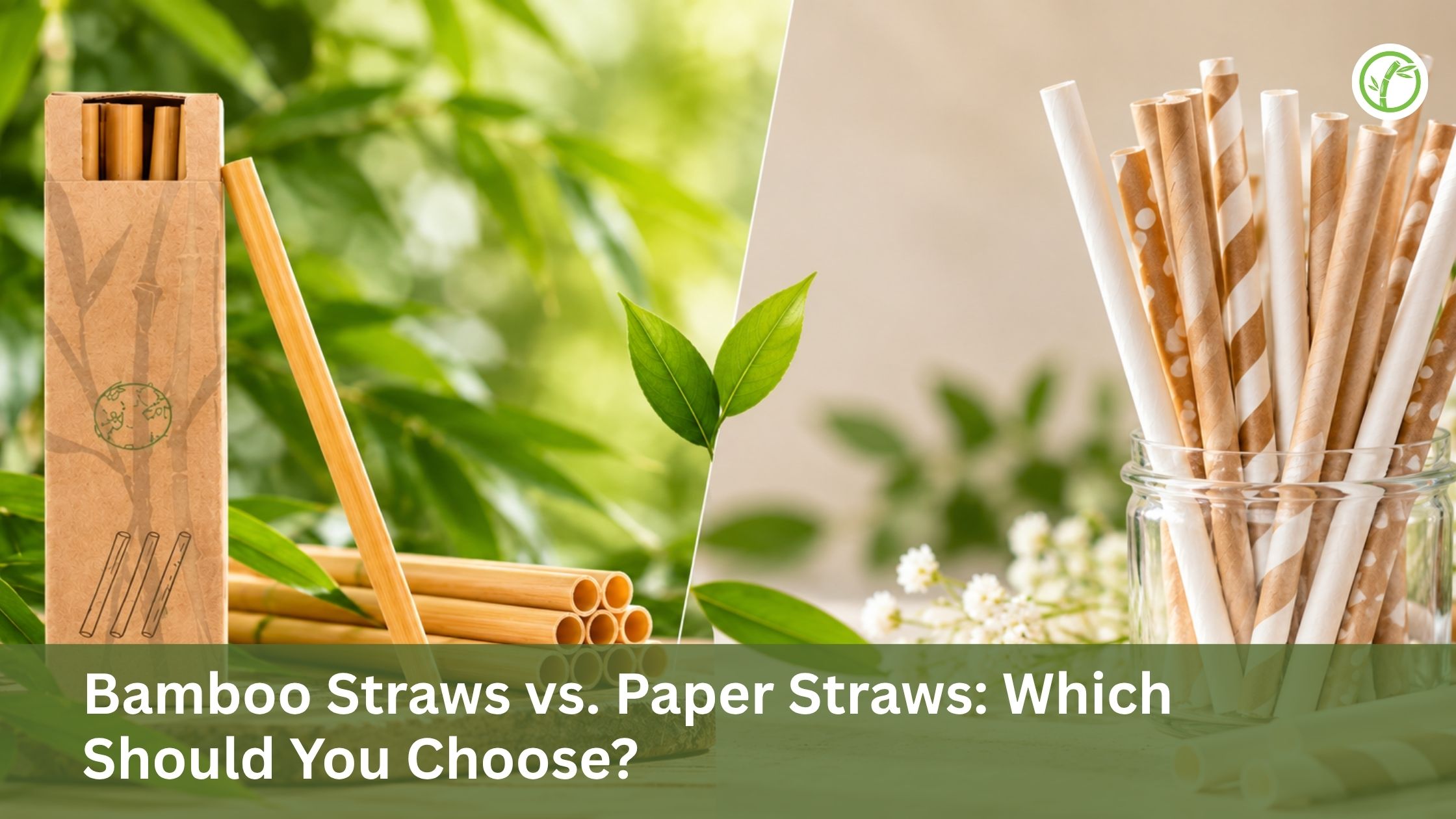
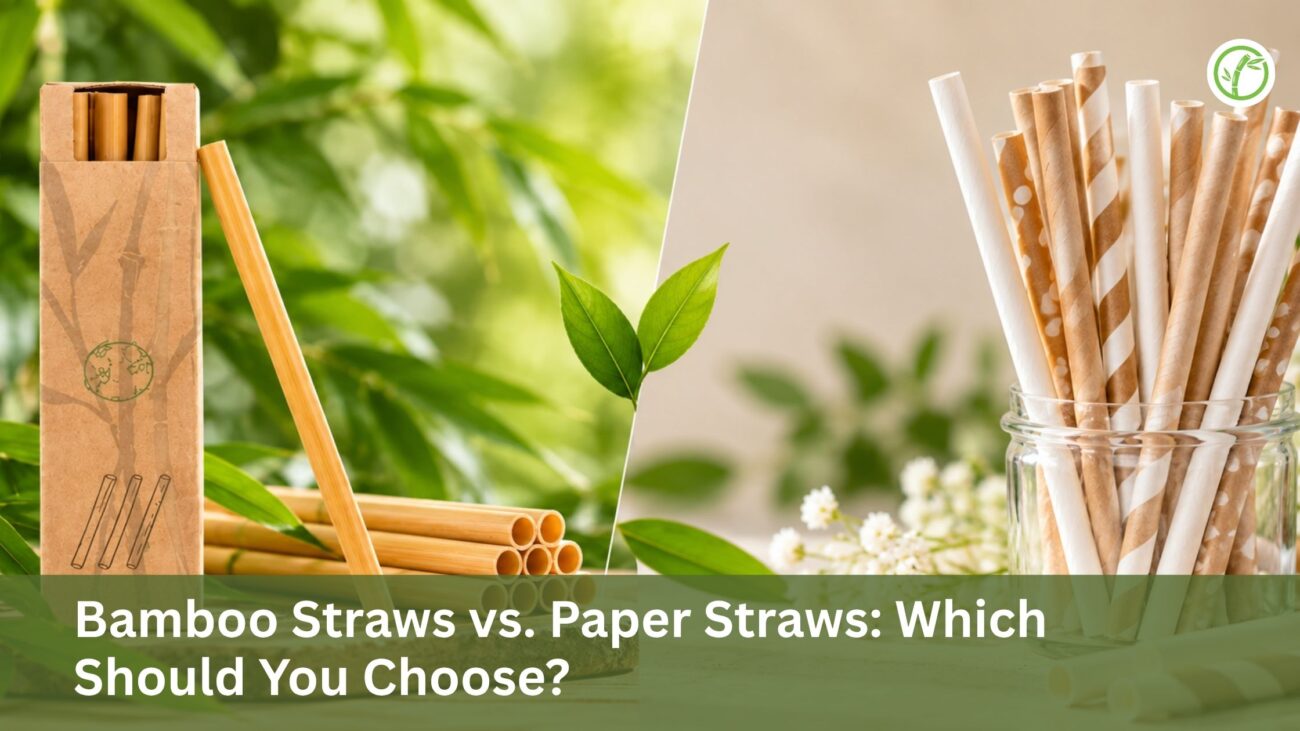
Bamboo straws hold their shape in a drink far longer than paper, and a reusable bamboo straw costs less per use if your venue can wash it. Paper straws still make sense for takeaway drinks with lids and for venues where reusable straws would go missing.
Neither material is automatically safer or greener. Both can contain PFAS, both need the right disposal route, and the better choice depends on how you serve your drinks.
Key takeaways
- Paper straws absorb about 30% of their weight in liquid within 10–30 minutes, according to two independent lab studies.
- In a 2025 study, straws made from wound bamboo slices had 4.36 times the wet strength of paper straws.
- A 2023 University of Antwerp study found PFAS in 90% of paper straw brands and 80% of bamboo straw brands tested. Ask any supplier for a PFAS test on the exact product.
- Reusable bamboo straws suit dine-in venues with dishwashing. Single-use paper or bamboo suits takeaway and events.
- “Bamboo straw” covers three different products: reusable whole-stem, single-use, and bamboo-fiber composite. Check which one you’re buying.
- Plastic straws have been banned across the EU since July 2021. Both paper and bamboo are compliant replacements.
How do bamboo and paper straws compare?
| Factor | Paper straws | Bamboo straws |
| Strength in liquid | Softens as it absorbs liquid; quality varies widely by brand | Stays rigid through a full drink |
| Uses per straw | One | Reusable whole-stem: many washes. Single-use bamboo: one |
| Unit price | Low | Higher per straw, especially for reusable |
| Cost per use | Same as the unit price every time | Falls with every wash for reusable straws |
| Hygiene | New straw every drink | Reusable straws need brushing, washing and full drying |
| PFAS risk | Found in most brands tested in one 2023 study | Found in most of a smaller sample in the same study |
| Loss and theft | Not an issue | Reusable straws can walk out with customers |
| Wide drinks (smoothies, bubble tea) | Wide paper straws soften faster under heavy use | Available in wider diameters, such as 6–12 mm |
| EU compliance | Compliant replacement for plastic | Compliant replacement for plastic |
| Branding | Printed colors and patterns | Laser engraving on the straw |
| After use | Compost or general waste, depending on local rules | Compost or general waste, depending on local rules |
The short version: bamboo wins on performance and long-run cost in dine-in venues. Paper wins on simplicity where every straw leaves with the customer.
Do paper straws really get soggy?
Yes, and lab tests have measured it. How fast depends heavily on the paper, the glue, and the drink.
- A North Carolina State University study published in BioResources found commercial paper straws absorbed liquid at about 30% of their weight after 30 minutes.
- A 2026 study from Guangdong University of Technology and China University of Petroleum-Beijing found paper straws can absorb up to 30% of their weight in water after just 10 minutes.
The same 2026 study found something useful for cafés. When drinks had open-ended lids, customers rated paper straws almost as highly as PLA straws, because the lid masked the straw’s weaknesses.
Paper straw manufacturers argue that sogginess comes from poor production, not the material itself. Straw quality does vary widely, so a better-made paper straw can last a full drink. Test samples in your own drinks before ordering.
Bamboo behaves differently because it is solid plant fiber rather than layers of paper glued in a spiral. In a 2025 study in the Journal of Bioresources and Bioproducts, straws made from wound bamboo slices absorbed far less water than paper straws and had 4.36 times their wet strength.
What types of bamboo straws are there?
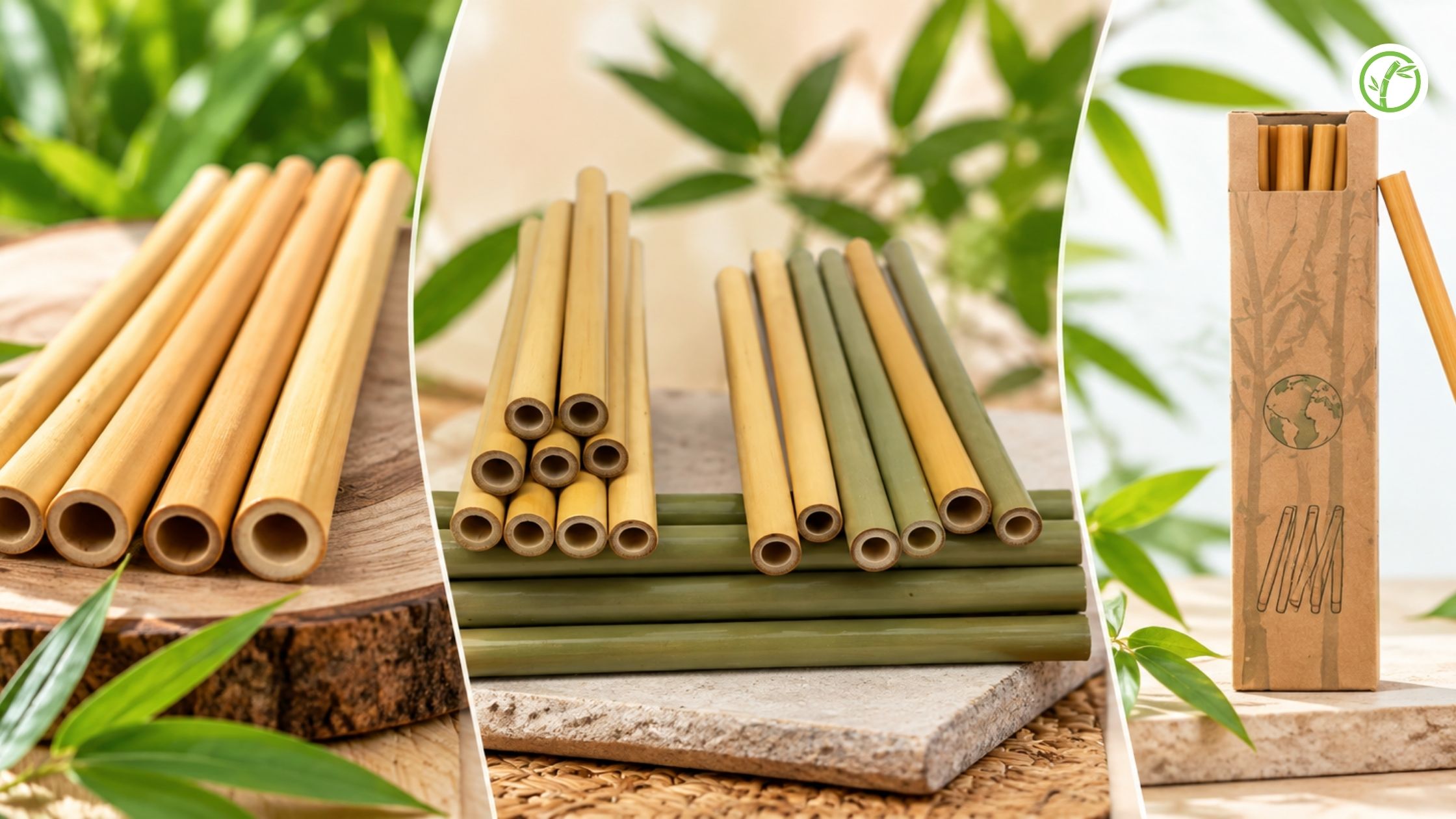
“Bamboo straw” is used for three different products. Know which one a supplier is quoting before you compare prices.
- Reusable whole-stem straws. Cut from a naturally hollow bamboo stem, then cleaned, sanded, and finished. They last through many washes and come in diameters from about 6 mm for cocktails to 12 mm for smoothies and bubble tea. Colors range from natural tan to green to heat-treated yellow and darker carbonized finishes.
- Single-use bamboo straws. Thinner straws designed for one drink, including the wound-slice type tested in the 2025 study. They avoid the washing question while keeping bamboo’s wet strength.
- Bamboo-fiber composite straws. Powdered bamboo mixed with a binder and molded. These are not the same as solid bamboo. Ask what the binder is: if it is a plastic, including PLA, the straw counts as plastic under the EU Single-Use Plastics Directive.
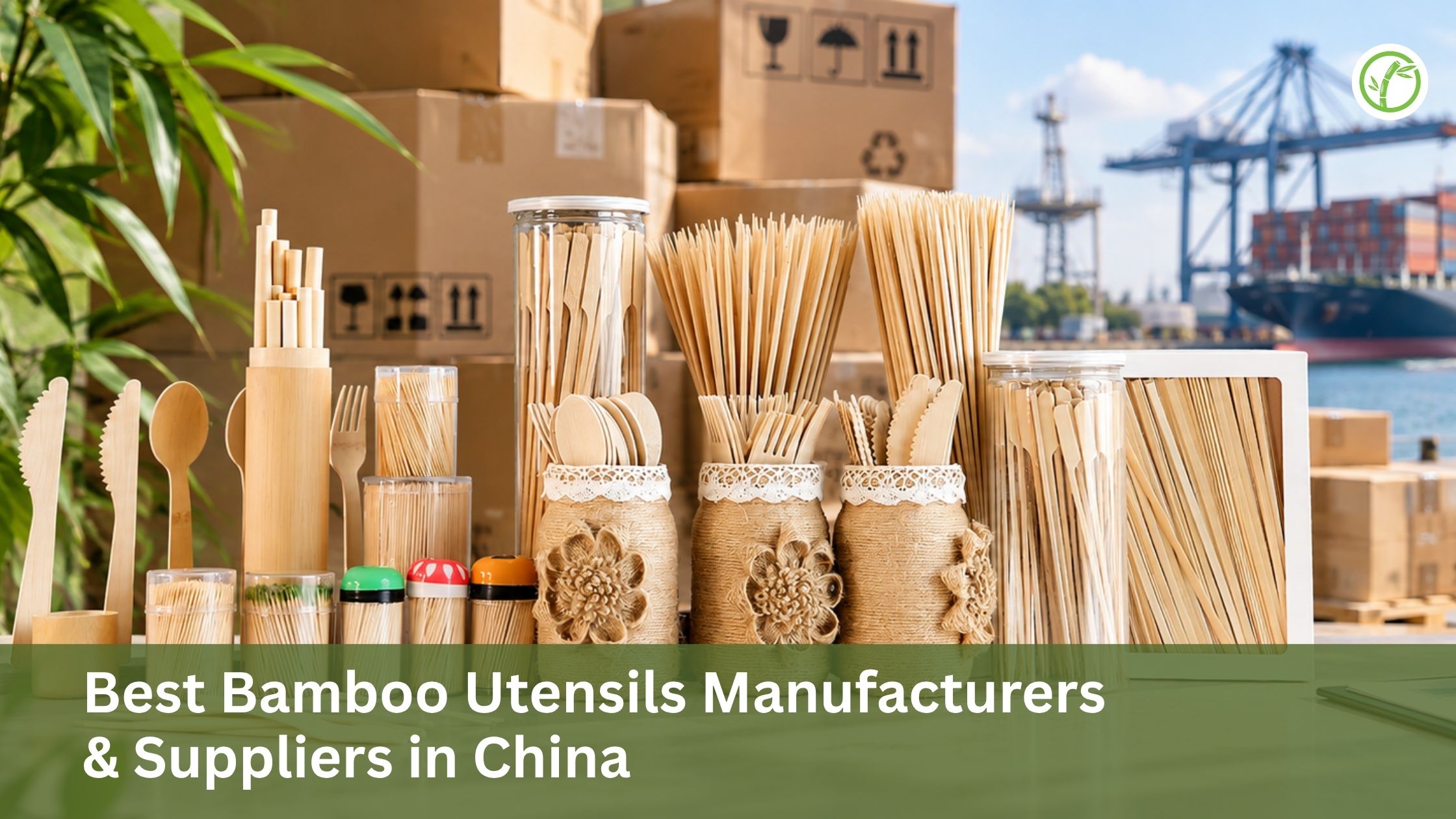
For a full breakdown of formats, finishes, and factory options, see our guide to bamboo straw manufacturers in China.
Which is better for the environment?
A reusable bamboo straw that actually gets reused beats any single-use straw. Between single-use paper and single-use bamboo, the gap is smaller, and coatings, glue, and packaging decide most of it.
- Reuse matters most. One reusable straw replaces many disposables. That only holds if it comes back to be washed rather than going home with a customer or into the bin after one drink.
- Raw material. Paper straws are made from wood pulp. Bamboo straws come from a fast-regrowing grass. For either, FSC certification shows the raw material comes from responsibly managed sources.
- Breakdown after use. In the 2026 soil test, uncoated paper straws showed clear signs of biodegradation within 30 days, while PLA straws barely changed. Solid bamboo is a natural fiber that breaks down too, though a dense stem takes longer than thin paper.
- Coatings and glue. Water-resistant coatings and adhesives can affect whether a paper straw composts cleanly. Ask what is used.
- Packaging. Individually plastic-wrapped paper straws undo part of the benefit. Paper sleeves or bulk boxes avoid this for both materials.
Words like “biodegradable” and “compostable” on straw packaging have legal meanings in some markets. Our guide to bio-based, biodegradable and compostable claims explains which claims need certification.
Do bamboo or paper straws contain PFAS?
Some do. The most-cited study found PFAS in most paper and bamboo straw brands it tested, so the material alone doesn’t guarantee a PFAS-free straw.
Researchers at the University of Antwerp tested 39 straw brands, and their results were published in Food Additives & Contaminants in 2023:
| Straw material | Brands tested | Brands with PFAS detected |
| Paper | 20 | 18 (90%) |
| Bamboo | 5 | 4 (80%) |
| Plastic | 4 | 3 (75%) |
| Glass | 5 | 2 (40%) |
| Stainless steel | 5 | 0 |
Source: Boisacq et al., 2023, via ScienceDaily
Three points put these results in context:
- Concentrations were low. The researchers said the health risk is likely limited because people use straws only occasionally.
- The bamboo sample was small. Five brands can’t represent the whole bamboo straw market.
- Results vary by brand. PFAS may come from coatings, glues, processing or contaminated raw material, so one supplier can differ sharply from another.
The practical step is the same for both materials: ask for a recent PFAS test report on the exact straw you plan to buy, from an accredited lab.
- Friendly Bamboo: PFAS testing for our straws can be arranged on request for a specific order.
Are reusable bamboo straws hygienic?
Yes, if they are cleaned and dried properly every time. The risk isn’t the bamboo itself but moisture left inside a straw that is stored wet.
Mold is a known issue with natural bamboo. Even the researchers behind the 2025 bamboo straw study treated their bamboo specifically to address mold susceptibility.
A simple care routine for venues:
- Rinse straight after use. Sugary and milky drinks dry fast inside a narrow tube.
- Brush the inside. Use a straw brush with hot, soapy water. A dishwasher alone doesn’t reliably reach the full length of a narrow straw.
- Go easy on high heat. One bamboo straw brand notes that repeated high-heat dishwasher drying eventually cracks bamboo straws. Where possible, skip the heated dry cycle.
- Dry completely. Stand straws upright or on a rack with airflow until fully dry before storing them.
- Inspect and retire. Discard any straw with cracks, dark spots, splinters or a lingering smell.
Check with your local food safety authority on rules for reusable serveware. Some venues use reusable bamboo for dine-in and single-use straws for takeaway to keep things simple.
Friendly Bamboo: documentation on drying and mold-control steps can be provided on request for a specific order.
Which costs less per use?
Per straw, paper is cheaper. Per drink served, a reusable bamboo straw usually costs less once it has been used a few dozen times, as long as it doesn’t go missing.
Use this formula with your own quotes:
Cost per use = (straw price ÷ uses before it is lost or retired) + washing cost per use
Example calculation
This is a hypothetical example. Replace every number with your own supplier quotes and records.
| Single-use paper | Reusable bamboo | |
| Price per straw | $0.02 | $0.30 |
| Uses before lost or retired | 1 | 40 |
| Straw cost per use | $0.020 | $0.0075 |
| Washing cost per use | $0 | $0.01 |
| Total cost per use | $0.020 | $0.0175 |
In this example, bamboo comes out slightly ahead. The result swings on two numbers you can control:
- Loss rate. If reusable straws only last 10 uses because customers take them, the bamboo cost per use rises to $0.04, double the paper straw.
- Washing cost. A venue already brushing and washing glassware adds little extra cost. A venue without dishwashing adds a lot.
Track how many reusable straws you replace each month for the first quarter. That gives you your real loss rate.
Which straw suits your venue?
| Venue | Better choice | Why |
| Takeaway café with lidded cups | Paper, or single-use bamboo | Every straw leaves with the customer, and the lid masks most softening |
| Cocktail bar | Reusable bamboo, or single-use bamboo for busy nights | Drinks are sipped slowly, and a collapsing straw reflects on the drink’s price |
| Bubble tea and smoothie shop | Wide bamboo straws | Thick drinks put heavy suction on the straw, and bamboo stays rigid |
| Hotel, resort or pool bar | Reusable bamboo | Dishwashing is on site and guests sip drinks slowly |
| Restaurant, dine-in | Reusable bamboo | Straws come back with the glassware for washing |
| Events and festivals | Single-use paper or bamboo | No way to collect and wash straws reliably |
| Retail and e-commerce | Boxed reusable bamboo sets with a cleaning brush | Customers buy them to keep |
Many venues mix both: reusable bamboo for dine-in and a single-use option for takeaway.
Must read –
bio-based vs biodegradable vs compostable
ESG in the Food Service Industry
What should you ask a straw supplier before ordering?
The same questions apply to paper and bamboo straws. Get answers in writing.
- Which type is this? Reusable whole-stem, single-use bamboo, bamboo-fiber composite or paper, and if composite, what binder is used.
- PFAS test report: a recent report from an accredited lab on the exact product, not just the raw material.
- Food-contact documents: FDA or LFGB test reports, depending on your market.
- Coatings, glue and dyes: what is used and whether it is food-safe. For bamboo, confirm whether color is natural or added.
- Mold control: how straws are dried and treated before packing, and how moisture is kept out in shipping.
- Raw material certification: FSC or equivalent for wood pulp or bamboo.
- Packaging: bulk, paper-sleeved or plastic-wrapped.
- MOQ, lead time and samples: test samples in your own drinks for at least as long as your slowest customer takes to finish one.
- Branding options: printing for paper, laser engraving for bamboo, and the minimums for each.
Friendly Bamboo supplies natural, green and yellow bamboo straws in several diameters and lengths, with laser engraving for custom logos. See the full range on our wholesale bamboo straws page.
Friendly Bamboo supplies single-use bamboo straws in natural, green and yellow, plus sugarcane bagasse, wheat straw and reed straws. Our straws are not sealed, coated or dyed, use FSC-certified sourcing, and are tested to FDA, LFGB and EN 13130 food-contact requirements. The minimum order is 10,000 units, and logos can be laser-engraved. See the full range on our wholesale bamboo straws page.
Looking for straws that last the whole drink? Friendly Bamboo manufactures single-use bamboo straws in natural, green and yellow, as well as sugarcane bagasse, wheat straw and reed straws, with custom laser engraving and bulk supply from 10,000 units. See our bamboo foodservice products guide or browse our wholesale bamboo disposable products.
Frequently asked questions
For dine-in drinks, usually yes. Bamboo stays rigid for the whole drink, and reusable bamboo costs less per use when straws are washed and returned. For takeaway drinks with lids, paper is simpler and often good enough.
It depends on the brand. Lab studies found paper straws absorbed about 30% of their weight in liquid within 10 to 30 minutes, which is when many start to soften. Better-made paper straws last longer, so test samples in your own drinks.
Many times, if it is brushed, washed and fully dried after each use. Retire it when you see cracks, dark spots, splinters or a lingering smell.
Yes, but repeated high-heat drying can crack them over time. Brush the inside first, skip the heated dry cycle where possible and air-dry the straws upright.
In the EU, single-use plastic straws have been banned since July 2021, including bioplastic straws. In the US, rules vary by state and city. A February 2025 executive order directed federal agencies to stop buying paper straws, but it covers federal operations and does not override state or local plastic-straw rules.