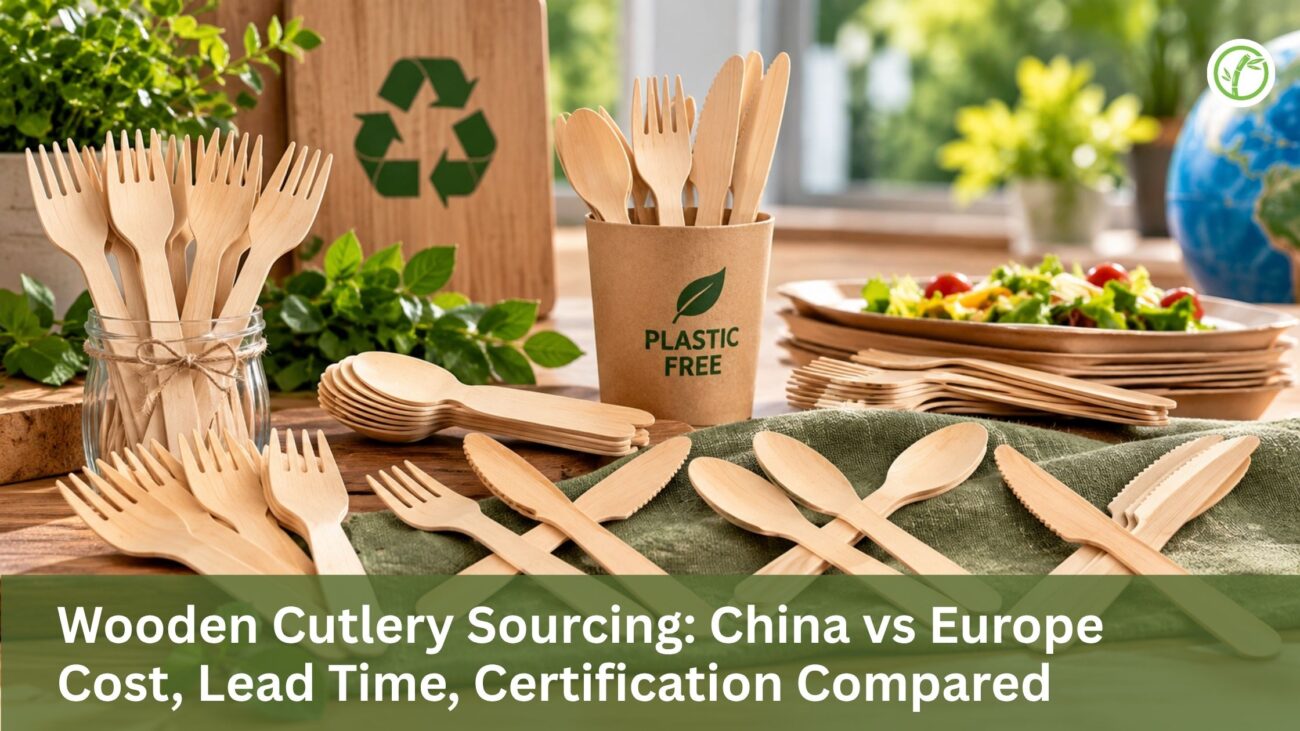
Wooden Cutlery Sourcing – China-sourced wooden cutlery typically costs 3–4 times less than European-made equivalents, comes with lower minimum order quantities, and carries the same FSC, FDA, and BRC certifications buyers need for the US and EU markets; the main trade-off is a longer 20–35-day sea-freight lead time versus a shorter regional shipping window for European-made stock. For most wholesale buyers outside the EU, and for many inside it, the cost and MOQ advantage outweighs the shipping time difference.
Quick Comparison Table
| Factor | China Sourcing | Europe Sourcing |
| Unit cost vs. Europe | Baseline (3–4x cheaper) | 3–4x higher than China |
| Typical MOQ | 10,000–50,000 pcs | Often higher, varies by mill |
| Global export share (HS 4419 wood tableware) | ~61–65% | Smaller, regionally concentrated |
| Lead time to non-EU markets | 20–35 days sea freight, 3–7 days air | Varies widely by destination |
| Lead time within EU | Longer transit for non-EU shipments | Shorter, regional distribution |
| Certifications available | FSC, FDA, LFGB, BRC, ISO 9001, ISO 14001 | FSC, LFGB, EU food-contact standards |
| Customization/OEM flexibility | High — fast quote turnaround, frequent order changes accommodated | Lower — more rigid production schedules |
| Supply chain structure | Vertically integrated regional clusters | Often more fragmented across countries |

What’s the Real Difference Between China and Europe Wooden Cutlery Sourcing?
Both regions manufacture genuinely certified, food-safe wooden cutlery. The difference is less about whether the product meets standards and more about cost structure, order flexibility, and how the supply chain is organized.
- China has built a concentrated, vertically integrated wooden and bamboo cutlery manufacturing base, largely centered in provinces like Anhui, Liaoning, and Guangdong. Raw material sourcing, cutting, sterilizing, pressing, sanding, and packaging often happen within the same regional cluster, which keeps both cost and lead time for quote/sample turnaround low.
- Europe has a smaller, more established wooden cutlery and flatware production base, concentrated in countries with strong food-service regulations such as Germany, France, and the UK. Under HS code 4419, which covers wood tableware and kitchenware, China accounted for roughly 61% of global export value in 2024, and about 65% the year before, which gives a sense of how concentrated the category is outside Europe.
Also read – Bagasse vs Bamboo Tableware
China Sourcing: Best for Cost, Scale, and Order Flexibility
China’s wooden and bamboo cutlery manufacturers operate at large scale, with certified factories offering FSC, FDA, LFGB, and BRC documentation as standard. FriendlyBamboo, for example, sources FSC-certified birchwood and Moso bamboo, processes it through steaming, hot-pressing, and sanding without adhesives or coatings, and ships wooden and bamboo cutlery to 30+ countries.
Available China-sourced cutlery types:
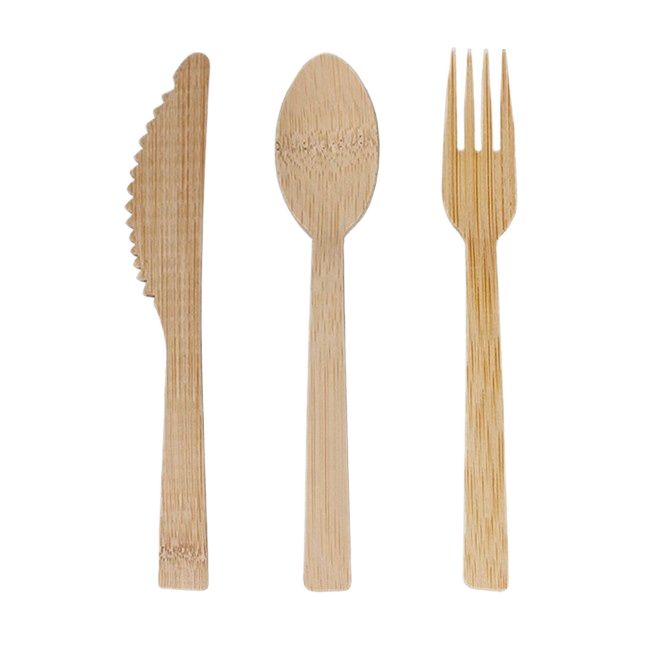
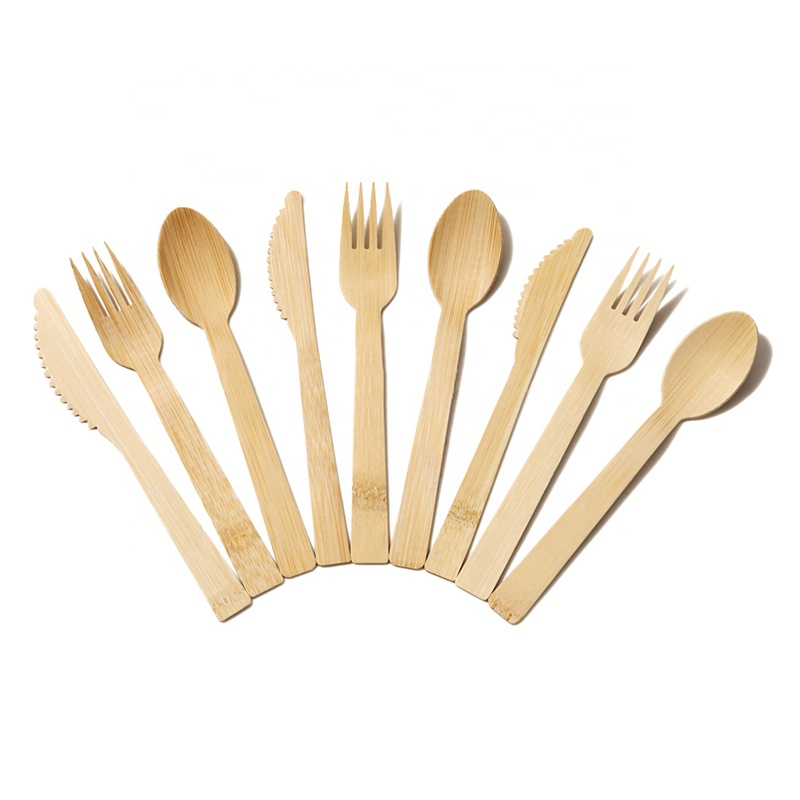
- Bamboo Forks, Knives, and Spoons — Hot-pressed from Moso bamboo at 5+ years maturity, sold in 140mm and 170mm sizes, with tines sturdy enough to pierce grilled meat without snapping.
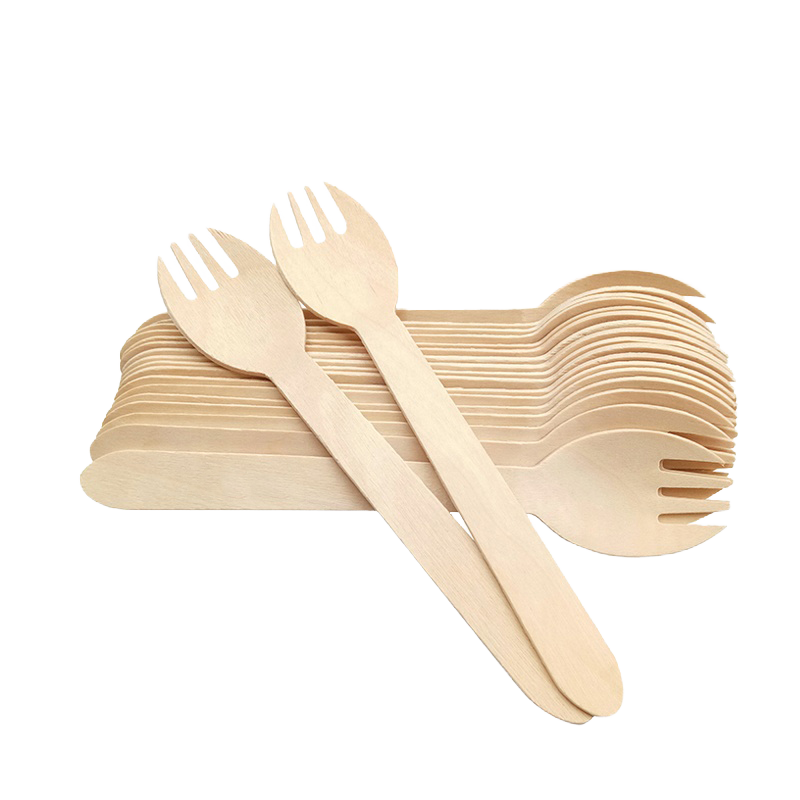
- Birchwood Cutlery — The most common wood base for disposable cutlery, denser and less prone to splintering than softer woods.
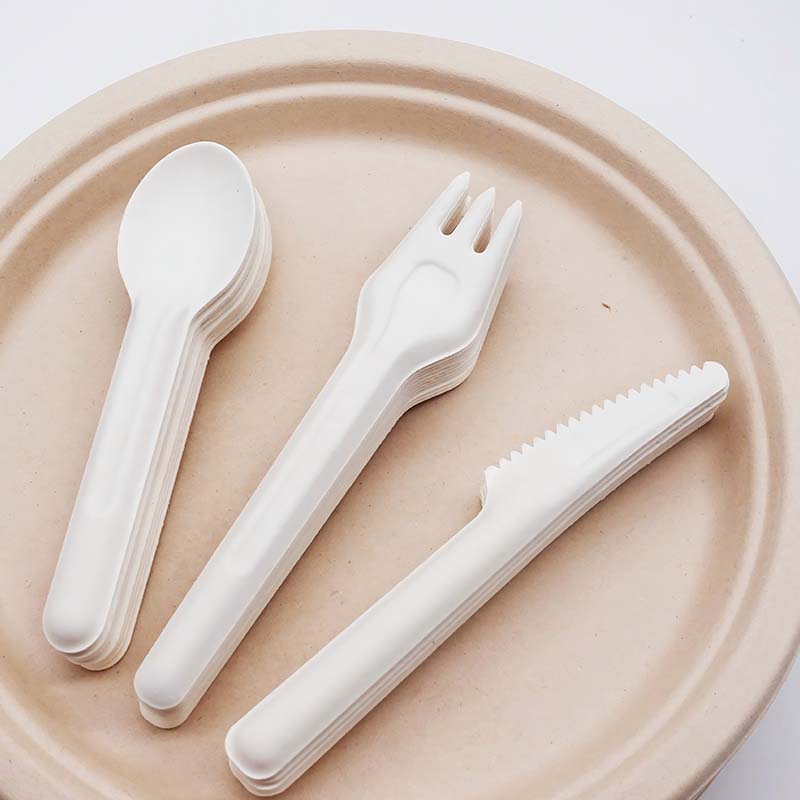
- Cutlery Sets and Sporks — Combined fork-spoon and 3-in-1 fork/knife/spoon kits, individually wrapped for takeaway and delivery.
- Custom-Branded Cutlery — Laser-engraved logos, printed wrappers, and full private-label packaging programmes.
Pros of China Sourcing
- 3–4x lower manufacturing cost than Europe, driven by lower labor, raw material, and regulatory overhead — the single biggest factor for wholesale buyers working on thin per-unit margins.
- Lower minimum order quantities, typically starting around 10,000 pieces versus higher thresholds common at European mills, which makes it accessible to smaller distributors and businesses testing a new product line.
- Faster quote and sample turnaround — Chinese manufacturers are frequently cited for accommodating last-minute artwork changes and rush sample requests within the same production cycle, versus more rigid scheduling common at European facilities.
- Full certification stack available, including FSC (sustainable forestry), FDA 21 CFR 177 (US food contact), LFGB (EU/German food contact), BRC, and ISO 9001/14001 — covering the compliance requirements of both the US and EU markets from a single supplier.
- Vertically integrated regional clusters mean raw material, cutting, sterilization, and packaging often happen within one supply chain relationship, reducing the coordination overhead of managing multiple vendors.
- Global logistics infrastructure built for B2B scale — sea freight (20–35 days) and air freight (3–7 days) options, with FOB and CIF pricing and export documentation handled by the supplier.
Cons of China Sourcing
- Longer shipping lead time to reach export markets, particularly for buyers outside Asia-Pacific, so order planning needs to account for the 20–35 day sea-freight window rather than assuming regional next-week delivery.
- Requires more active logistics coordination — freight forwarding, customs clearance, and import documentation — since the manufacturer is not already inside the buyer’s regulatory zone.
Buyers sourcing wooden or bamboo cutlery from a certified China-based factory can browse the full range on FriendlyBamboo’s bamboo cutlery wholesale page, which includes manufacturing process details, decomposition timelines, and downloadable certification documents. FriendlyBamboo also supplies wooden plates and the wider bagasse tableware range for buyers building a complete eco-disposables programme from one supplier.
Europe Sourcing: A Regional Option With a Shorter Transit Window
European wooden cutlery and flatware production is smaller in scale than China’s but carries strong regional brand recognition, particularly in countries like Germany, associated with manufacturing tradition.
Pros of Europe Sourcing
- Shorter shipping transit time for buyers located within the EU, avoiding the multi-week sea-freight window required from Asia.
- Regional certification alignment, since EU-based mills are built around local food-contact standards like LFGB from the outset.
- Some buyers and end customers place a premium on regional or “Made in Europe” sourcing for marketing purposes.
Cons of Europe Sourcing
- 3–4x higher unit cost than China for comparable certified product, which is the single largest factor pushing even European brands to manufacture overseas a well-documented pattern in the wider cutlery and flatware industry, not unique to wooden products.
- Less production flexibility — European mills tend to operate on more fixed schedules, with less capacity to absorb last-minute design changes or rush orders compared to the faster-turnaround model common at Chinese factories.
- Higher minimum order quantities relative to price in many cases, which raises the upfront capital commitment for smaller buyers.
- More fragmented supply chains — raw material, tooling, and finishing can be split across different countries within Europe, adding coordination complexity that a single vertically integrated Chinese factory cluster avoids.
- Smaller share of global wooden tableware production, meaning fewer suppliers to choose from and less competitive pricing pressure than in China’s concentrated manufacturing base.
For Further Reading:
eco friendly products for restaurant
eco friendly food packaging for small business
eco friendly products for hotels
eco friendly products for hospitals
eco friendly products for catering services
China vs Europe: Side-by-Side Performance
| Factor | China | Europe |
| Unit cost | Lowest | 3–4x higher |
| MOQ | Lower, more accessible | Often higher |
| Quote/sample turnaround | Fast, flexible | Slower, more rigid |
| Certifications | FSC, FDA, LFGB, BRC, ISO | FSC, LFGB, EU standards |
| Shipping to non-EU markets | 20–35 days sea, 3–7 days air | Varies, often longer outside EU |
| Shipping within EU | Longer transit | Shorter, regional |
| Supply chain structure | Vertically integrated clusters | More fragmented |
Which Should You Choose?
- Choose China sourcing if cost per unit, MOQ flexibility, and production agility are the priority which covers the majority of wholesale buyers, including many based in Europe who source from Chinese factories specifically because of the cost and scale advantage.
- Choose Europe sourcing if your operation is entirely within the EU, transit time is a hard constraint, and “Made in Europe” carries marketing value your customers will pay a premium for.
- Many EU-based distributors do both — sourcing bulk, certified product from China while maintaining a regional buffer stock for time-sensitive orders.
Frequently Asked Questions
Yes. Established Chinese manufacturers hold FSC, FDA, and LFGB certifications alongside ISO 9001 and ISO 14001, covering the documentation required for both US and EU compliance.
Cost is the primary driver — producing in China can run 3–4 times cheaper than in Europe due to lower labor, raw material, and regulatory overhead, alongside a more concentrated, vertically integrated supply chain that shortens quote and sample turnaround.
China-based suppliers typically quote 20–35 days by sea freight or 3–7 days by air to reach markets outside Asia-Pacific. European-made cutlery generally reaches EU destinations faster, but the cost and MOQ advantage of China sourcing often outweighs the extra transit time for wholesale buyers.
Standard orders typically start around 10,000 to 50,000 pieces depending on the supplier and product type, generally lower than the thresholds common at European mills.