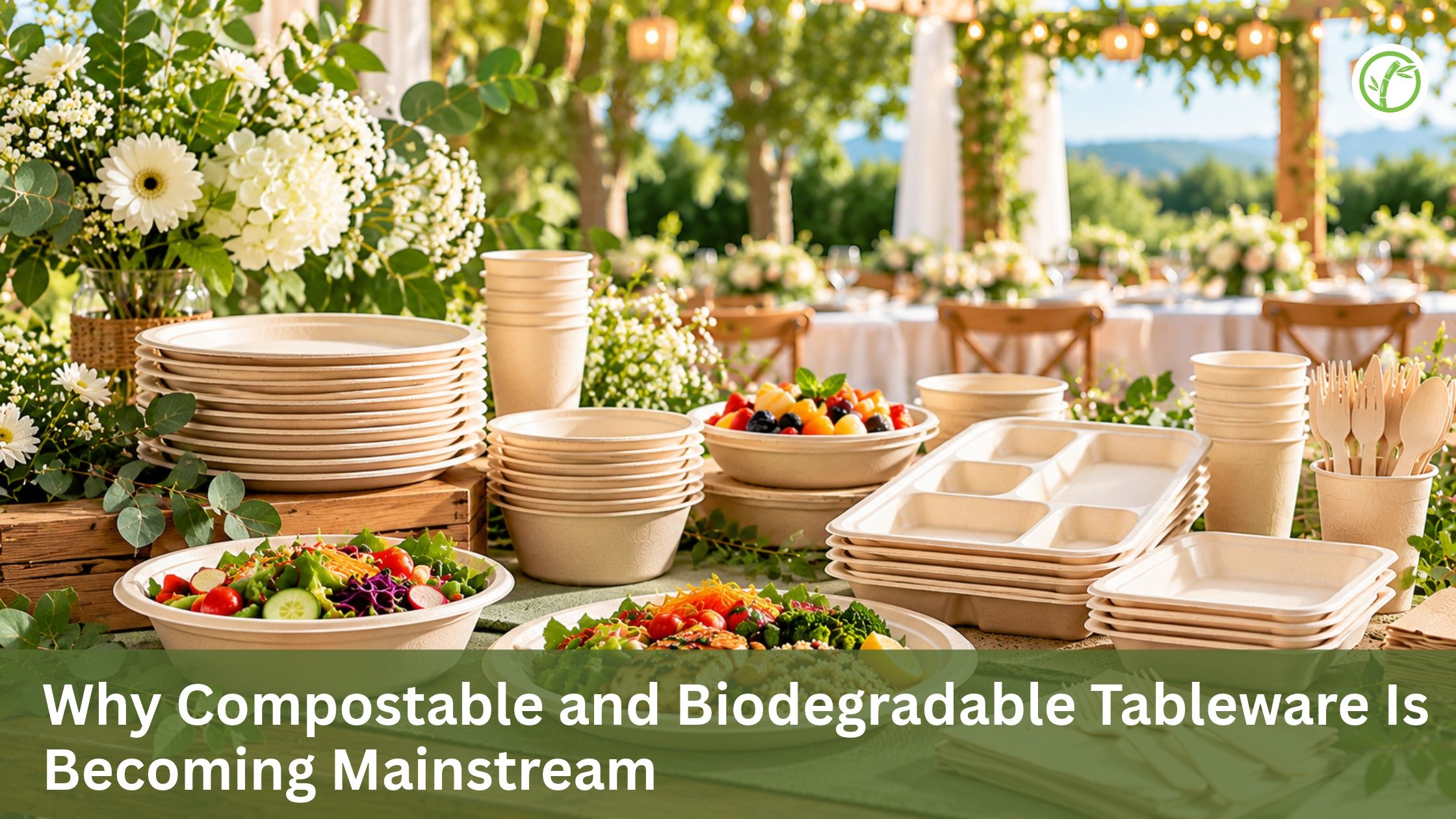
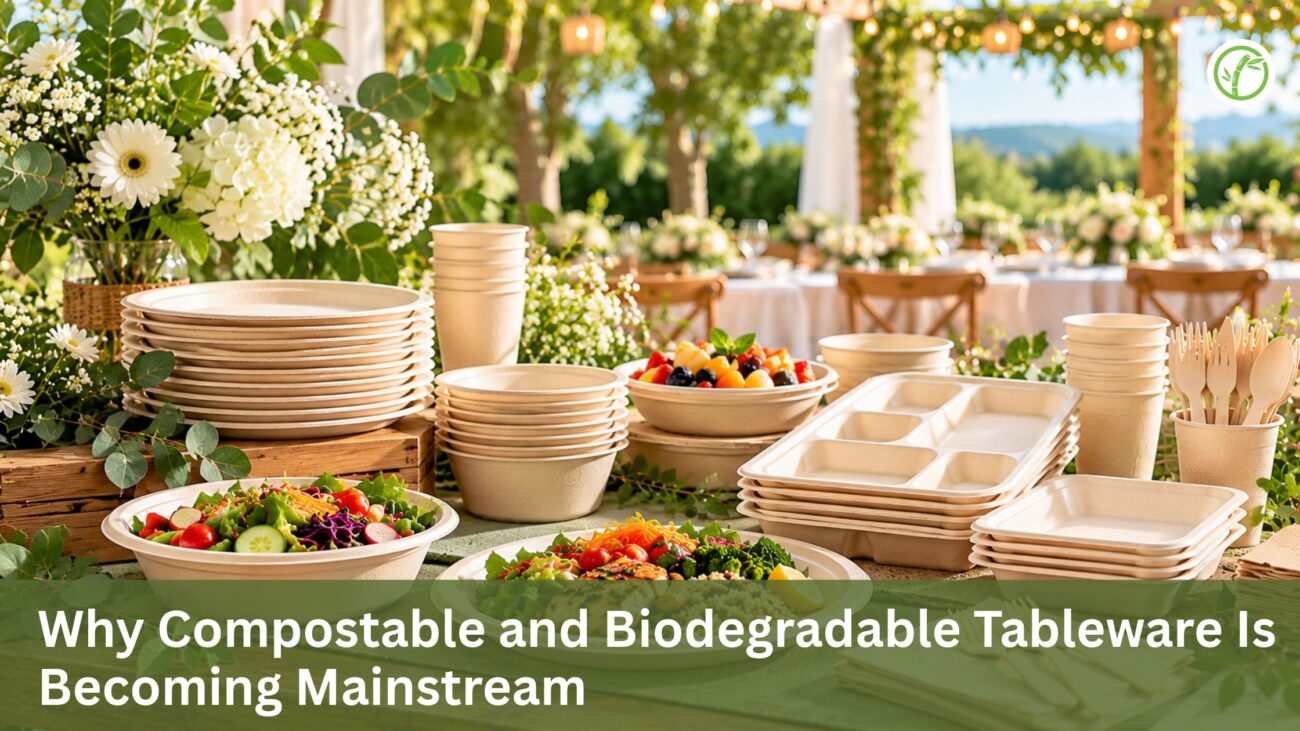
Compostable and biodegradable tableware is becoming mainstream mainly because governments have banned the plastic versions of plates, cutlery and straws in the EU, UK, India, China and Canada. Better plant-fiber products and rules on chemicals such as PFAS are doing the rest.
But “mainstream” doesn’t mean every eco-labeled product is welcome everywhere. Countries define banned items differently, and that decides what a buyer can sell where.
Key takeaways
- Bans on single-use plastic tableware now cover most major markets, including the EU since 2021, India since 2022 and Canada, where a court upheld the rules in January 2026.
- Countries treat bioplastics differently. The EU bans PLA cutlery and plates as plastic, while India exempts compostable plastic items from its ban.
- Plant-fiber tableware is accepted almost everywhere. Bamboo, wood, bagasse and uncoated paper are the safest choice for buyers selling across borders.
- Product quality has caught up. Molded bagasse handles hot, greasy food without a plastic lining.
- PFAS rules are reshaping fiber products. Buyers now ask for PFAS-free test reports as standard.
- Barriers remain: limited composting access, a price gap with plastic, and policy reversals such as the 2025 US federal order on paper straws.
What is Driving the Shift to Compostable Tableware or Biodegradable Tableware Is Becoming Mainstream
Four forces are pushing in the same direction at once. Any one of them alone would have moved the market more slowly.
- Plastic bans. Many major markets have banned single-use plastic plates, cutlery, and straws outright, so buyers have to replace them with something.
- Chemical rules. PFAS, once used to make paper and fiber grease-resistant, are being pushed out of food packaging. In the US, the FDA announced in February 2024 that PFAS grease-proofing substances are no longer sold for food contact use, and EU PFAS limits for food-contact packaging apply from August 2026. This favors fiber products that resist grease without chemical coatings.
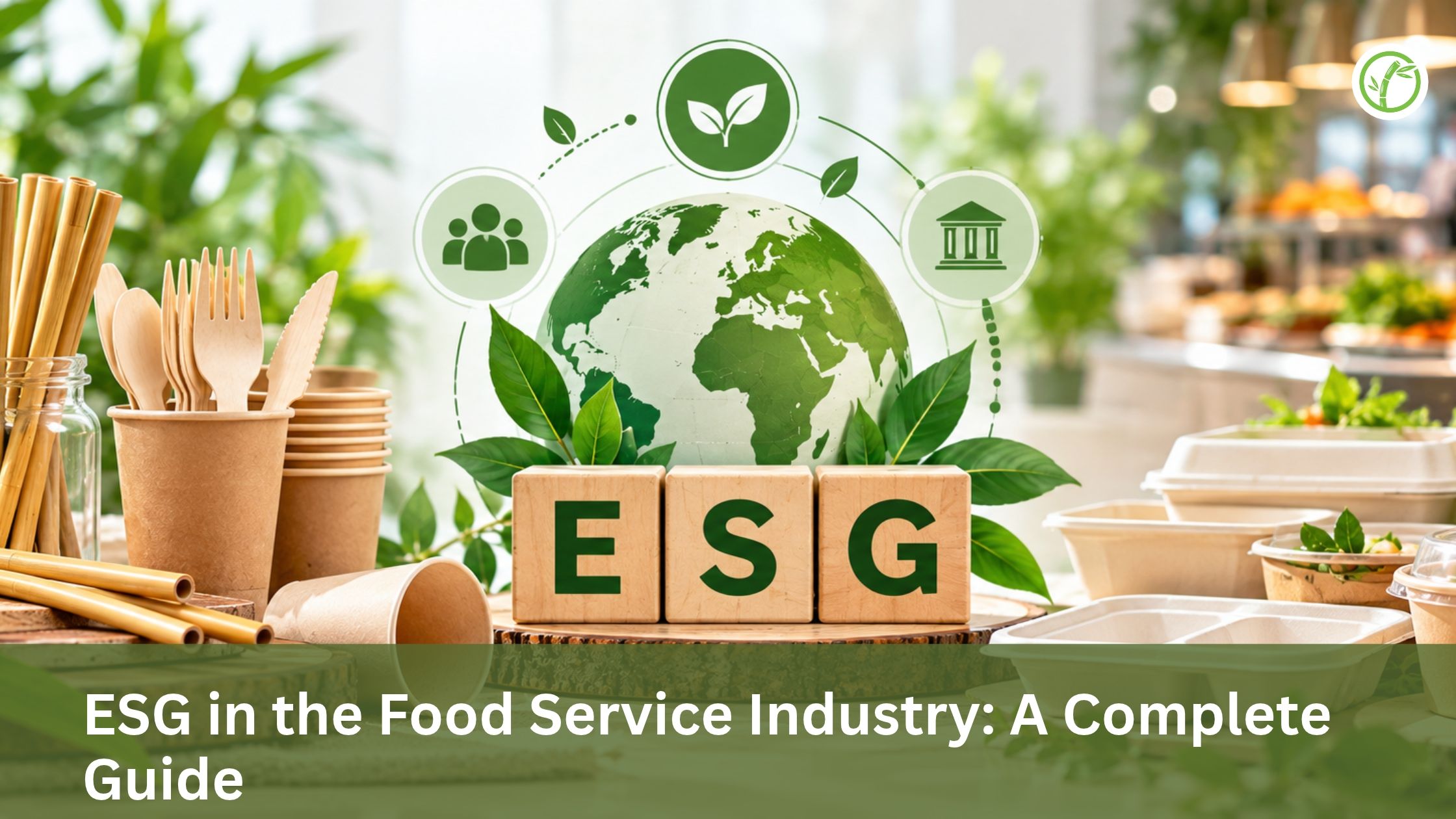
- Customer and client expectations. In PwC’s 2024 survey of more than 20,000 consumers, eco-friendly packaging was the second most influential sustainability factor in purchasing, cited by 38%. Corporate clients add pressure through supplier ESG questionnaires, covered in our guide to ESG in food service.
- Better products. Early compostable items bent, leaked, or softened. Today’s molded bagasse and hot-pressed bamboo handle hot and greasy food well enough for mainstream food service.
The first two drivers are the strongest, because they remove choice. A restaurant can ignore a trend, but not a ban.
How do plastic tableware bans differ by country?
Every major ban targets the same items, but each defines “plastic” differently. That difference decides whether compostable plastics such as PLA are allowed.
| Market | What’s banned | Are compostable plastics (PLA, CPLA) allowed? |
| European Union | Single-use plastic plates, cutlery, straws and stirrers since July 2021 | No. Bio-based and biodegradable plastics count as plastic under the Single-Use Plastics Directive |
| England | Single-use plastic plates, bowls, trays and cutlery supplied to the public since October 2023 | No. The ban covers all plastics, including biodegradable and compostable |
| India | Plastic plates, cups, glasses, cutlery, straws, trays and stirrers since 1 July 2022 | Yes. The rules do not apply to compostable plastic items |
| China | Non-degradable plastic straws in catering since the end of 2020; non-degradable tableware for dine-in in cities, extended to counties by the end of 2022 | Yes. The rules target non-degradable plastic |
| Canada | Six categories including cutlery, straws, stir sticks and certain takeout containers; the Federal Court of Appeal upheld the rules on 30 January 2026 | Depends on the item; the rules target specific problem plastics |
| United States | No federal ban; rules vary by state and city | Varies. Several states regulate “compostable” labeling and PFAS |
What this means for buyers
A certified compostable PLA fork can be sold in Mumbai but not in Madrid. A bamboo or wooden fork is legal in both.
For a distributor or chain selling across more than one market, plant-fiber products remove the need to track which kinds of “eco” plastic each country accepts.
Why is plant fiber becoming the default instead of bioplastic?
Because it clears the most hurdles at once. Bioplastics solve the “made from plants” question but not the “is it plastic?” question that regulators increasingly ask.
- It’s accepted in every major market. Bamboo, wood, bagasse and uncoated paper aren’t plastics, so single-use plastic bans don’t apply to them.
- It breaks down more readily outside industrial facilities. In a 2026 soil burial test, paper straws showed clear biodegradation within 30 days while PLA straws barely changed. Solid plant fiber doesn’t depend on an industrial composter as heavily as PLA does.
- The raw materials are by-products or fast-growing. Bagasse is the fiber left after sugarcane is crushed for juice. Bamboo is a fast-regrowing grass. Birch wood can come from FSC-certified forests.
- It avoids the labeling problem. A plant-fiber plate doesn’t need to explain which composting standard it meets just to be legal, although compostability claims still need certificates.
Three caveats
- Plastic linings change the category. A paper plate or cup with a PLA or PE lining counts as plastic under the EU rules.
- “Bamboo fiber” composites are different. Some bamboo tableware is molded from bamboo powder with a melamine resin binder. It isn’t compostable and isn’t the same as solid bamboo.
- Fiber can carry PFAS. Some fiber products have used fluorinated grease barriers, so ask for a test report.
For the full breakdown of these material terms, see our guide to bio-based, biodegradable and compostable plastics.
Have compostable tableware products actually improved?
Yes, particularly in molded fiber and solid bamboo.
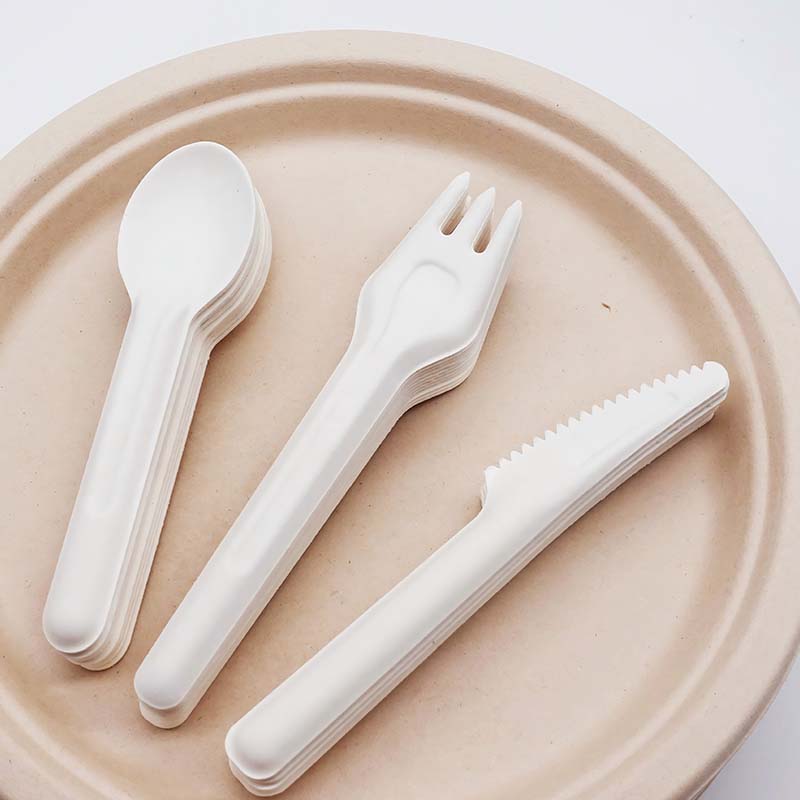
- Bagasse plates and bowls. Pulp is molded and dried under heat and pressure in one step, which makes the finished item rigid. Friendly Bamboo’s bagasse tableware gets its grease resistance from fiber density rather than a coating, and is rated microwave-safe up to 120°C.
- Bamboo straws. In a 2025 study, straws made from wound bamboo slices had 4.36 times the wet strength of paper straws, which addresses the most common complaint about plastic-straw replacements. See our comparison of bamboo straws vs paper straws.
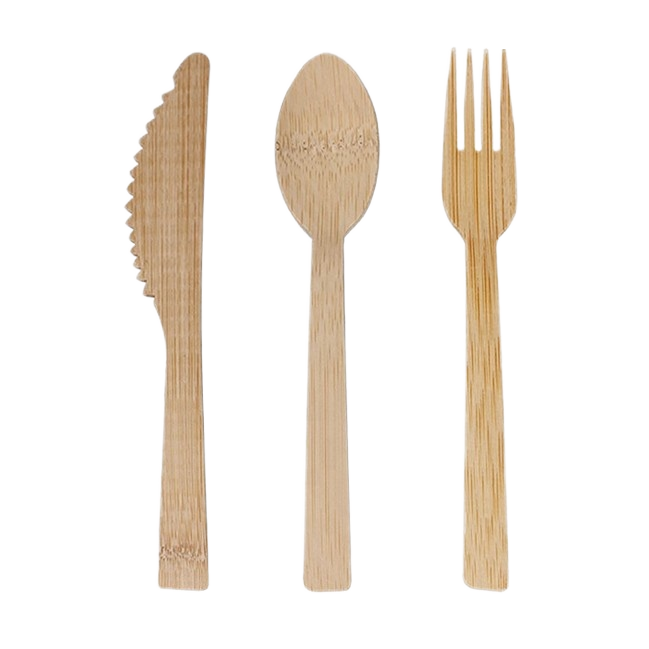
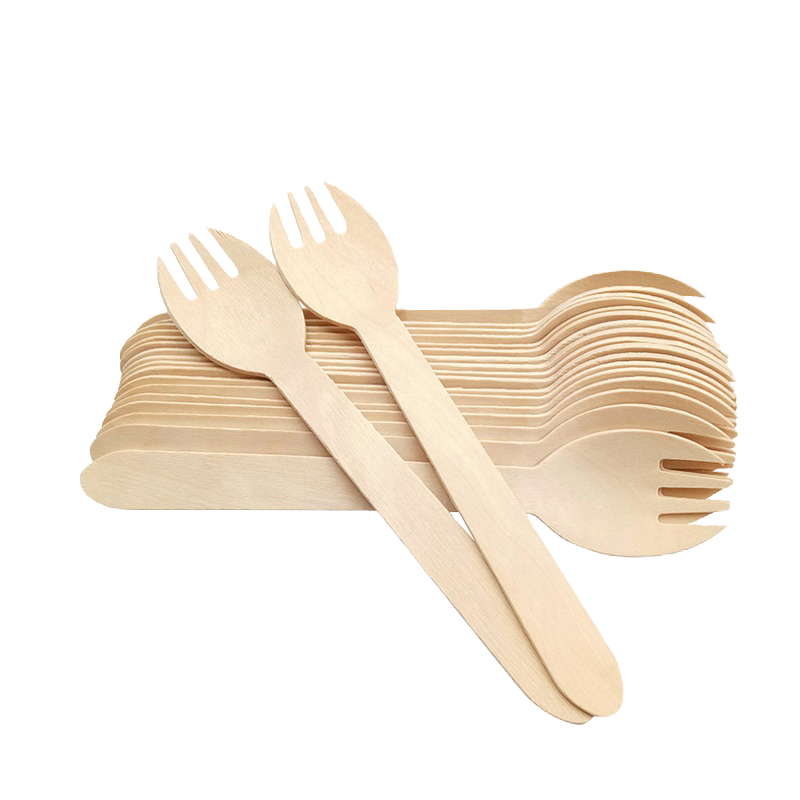
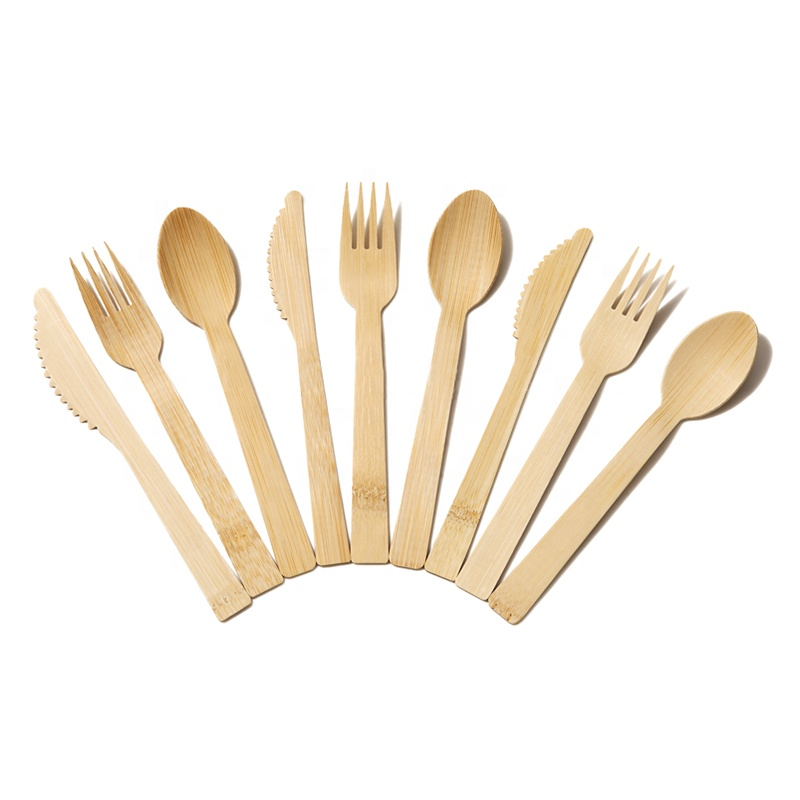
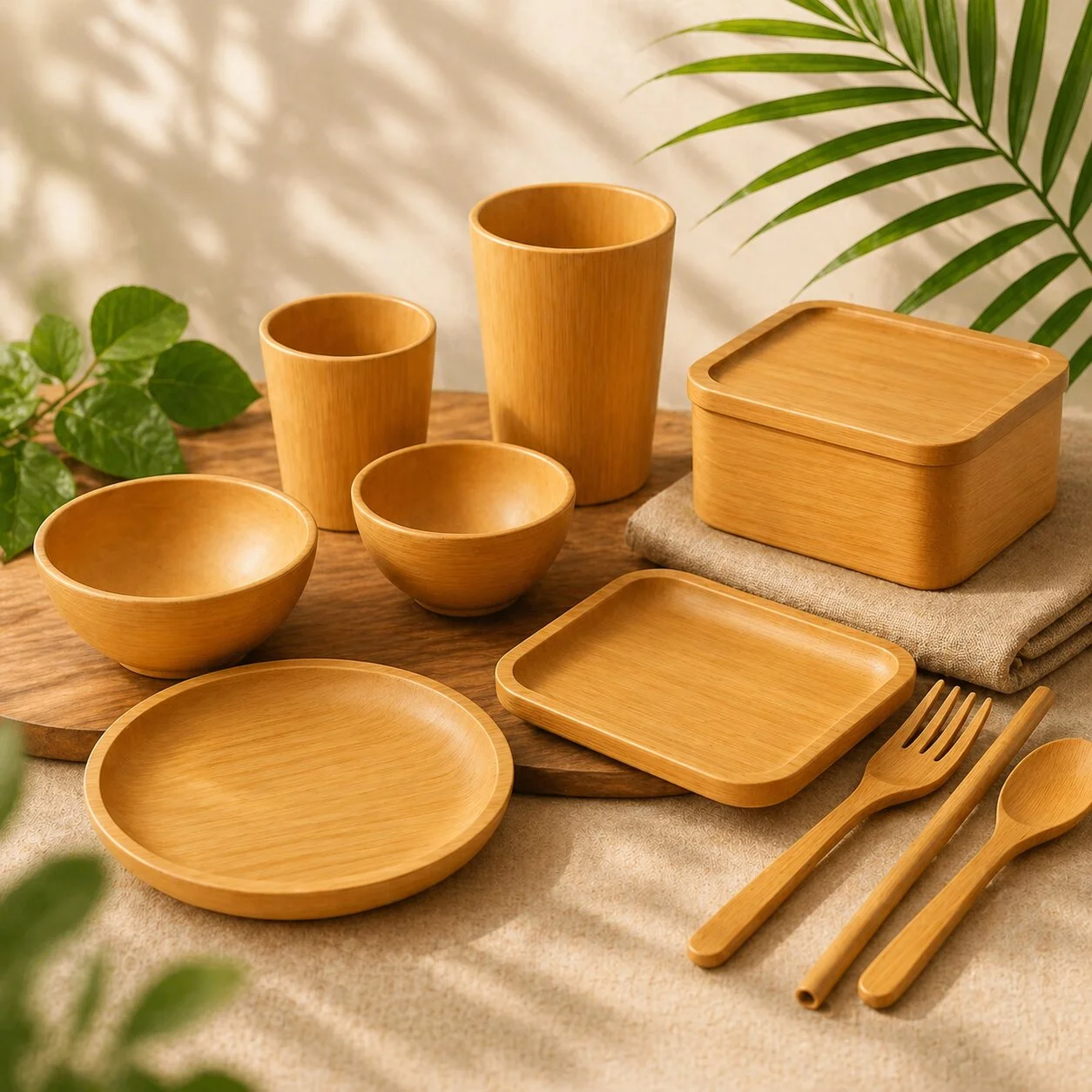
- Bamboo and wooden cutlery. Hot-pressed bamboo cutlery is formed by heat and pressure without a resin binder, and is stiff enough for firm food.
- Grease barriers without PFAS. As fluorinated coatings leave the market, manufacturers are relying on fiber density and alternative barriers instead.
Performance still varies by supplier. Before switching a menu, test samples with your hottest, wettest and heaviest dishes, over your longest delivery or service time.
What’s still holding compostable tableware back?
Four barriers slow adoption, and none of them is going away this year.
- Composting access. A compostable item only composts if someone collects it. A California Assembly analysis found that most compostable plastic material is still sorted out and landfilled, and many composters avoid PLA because it looks like conventional plastic.
- Price. Plant-fiber items usually cost more per unit than the cheapest plastic, although the gap narrows at wholesale volumes and disappears where plastic is banned.
- Policy reversals. Direction isn’t one-way. In February 2025, a US executive order directed federal agencies to stop buying paper straws. It covers federal operations only, but it signals that some governments are pulling back.
- Label confusion. “Biodegradable” and “compostable” mean different things, and some markets restrict them. California, for example, limits “compostable” claims to certified products.
There’s also a longer-term shift to watch. EU packaging rules increasingly favor reuse and recyclability for packaging, which will limit how far single-use compostables grow in some categories.
Also read –
ESG in the Food Service Industry
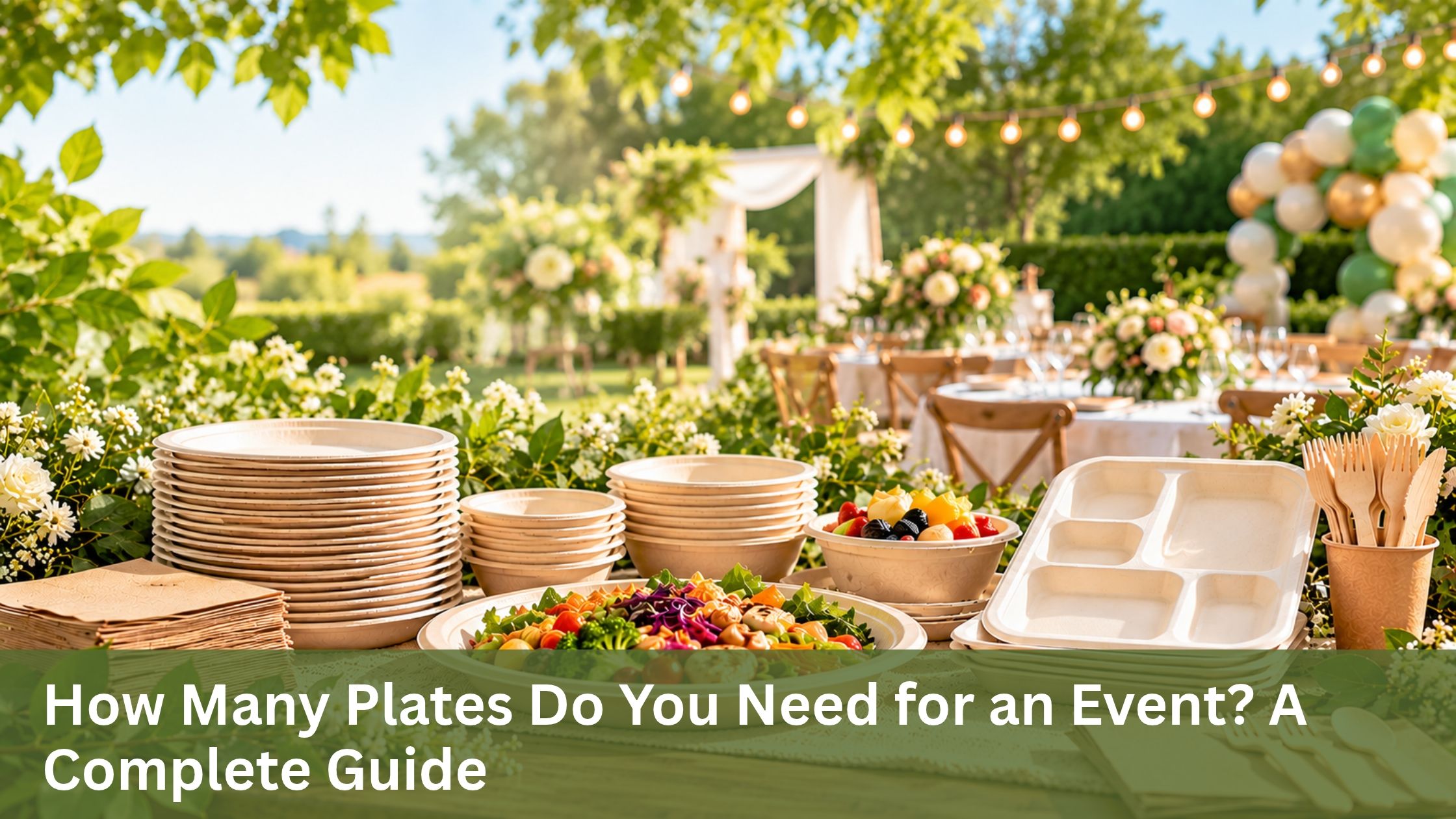
How Many Plates Do You Need for an Event
Where does compostable tableware fit in each food service segment?
Adoption looks different in each part of food service, because each has different food, volumes and waste systems.
| Segment | What drives the switch | Best-fit products |
| Quick service and takeaway | Plastic bans on cutlery, straws and containers; delivery volumes | Bagasse clamshells and bowls, bamboo or wooden cutlery, bamboo or paper straws |
| Events and catering | Client expectations; single-use is unavoidable at scale | Bagasse plates and bowls, bamboo cutlery, wooden or bamboo plates for premium events |
| Hotels and resorts | Sustainability targets and guest perception | Reusables for dine-in; bamboo straws and cutlery for pool bars, room service and events |
| Institutions (schools, hospitals, offices) | Procurement rules and cost control | Compartment bagasse trays and plates, wooden cutlery |
| Retail and e-commerce | Shoppers replacing plastic partyware at home | Boxed bagasse plate packs, bamboo cutlery and straw sets |
The common pattern: single-use items that leave with the customer are switching to plant fiber, while dine-in service is moving toward reusables where dishwashing is available.
How should buyers choose a compostable tableware range for 2026–2027?
Start with where the products will be sold and thrown away, then choose materials and documents to match.
- List your destination markets. Note which single-use plastic rules apply in each, using the country table above.
- Default to plant fiber for banned categories. Bamboo, wood, bagasse and uncoated paper for plates, cutlery, straws and stirrers work across all the markets above.
- Avoid hidden plastic. Check for PLA or PE linings on paper items and melamine binders in “bamboo fiber” products.
- Match claims to local law. Only print “compostable” with a certificate for the exact product, and avoid “biodegradable” where it is restricted.
- Collect the documents. Food-contact test reports (FDA or LFGB), PFAS test reports, FSC certificates for wood and bamboo, and compostability certificates where you make that claim.
- Test samples in real service. Use your hottest, wettest and heaviest dishes.
- Plan for reuse where it fits. For dine-in service with dishwashing, reusables may beat any single-use option.
If you’re sourcing from overseas, our guide to bagasse packaging manufacturers in China covers factory checks, and our wholesale bamboo disposable products guide covers the bamboo range.
Frequently Asked Questions – Biodegradable Tableware Is Becoming Mainstream
Mainly because single-use plastic tableware is banned in the EU, UK, India, China and Canada. Rules on PFAS, client expectations and better plant-fiber products have added to the shift.
It depends on the country. The EU and England treat PLA as plastic and ban it for single-use cutlery. India exempts compostable plastic items from its ban.
Plant fiber: bamboo, wood, bagasse, and uncoated paper. These aren’t plastics, so single-use plastic bans don’t cover them.
Usually, per unit. The gap is smaller at wholesale volumes, and where plastic items are banned, the comparison no longer applies.
Only where it is collected with food waste and processed by a facility that accepts it. Elsewhere, it usually goes to landfill, so check local collection before making disposal claims.