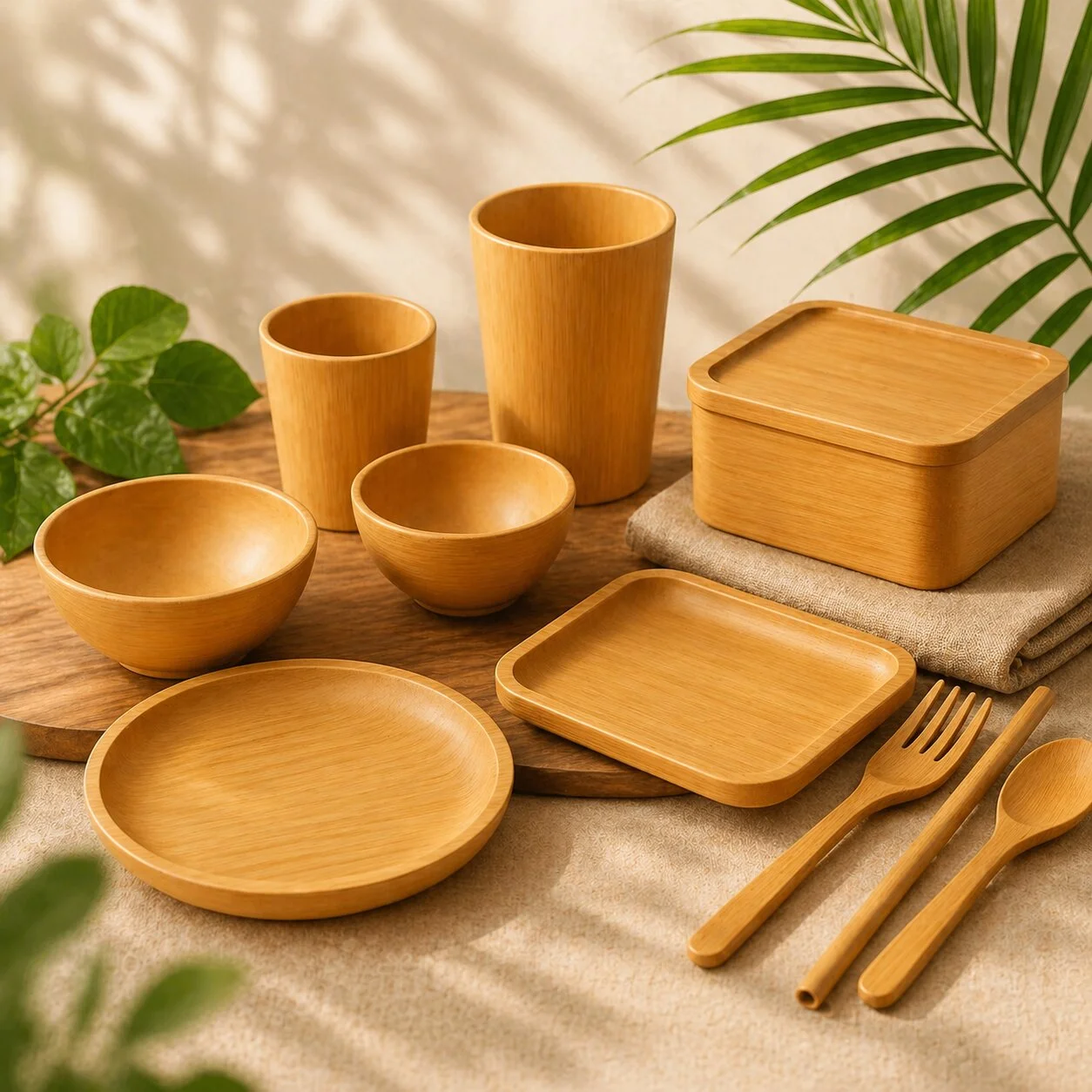
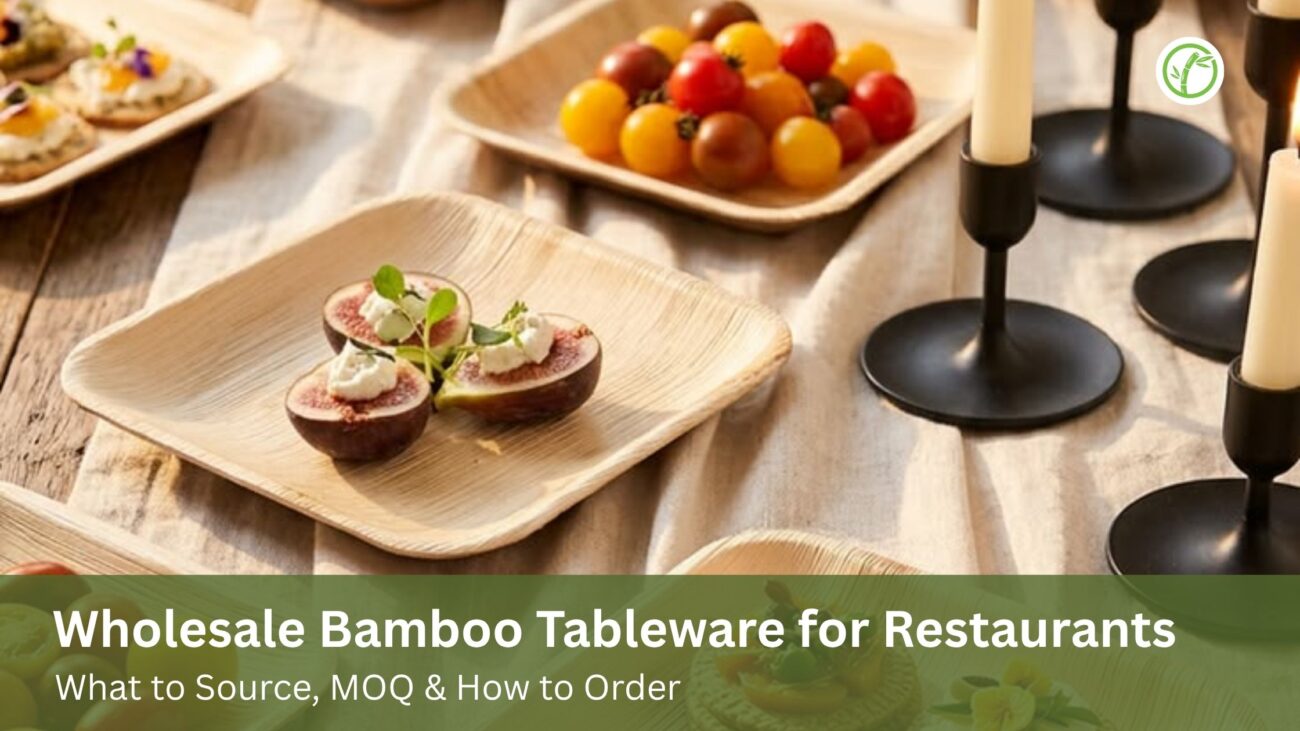
Restaurants typically source five core bamboo tableware categories: plates for mains, boards for sharing menus, bowls for Asian-style concepts, cutlery sets for the table, and cups or picks for the bar, with MOQs starting around 2,000–5,000 pieces for plates, bowls, and boards, and 10,000 sets for cutlery. Ordering is straightforward once you know your menu’s serving formats: match each course or service style to a product category, request samples before committing, and place your first order sized to roughly 2–3 months of covers rather than a full year of stock.
What to Source, By Menu Type
Match your product list to how the menu is actually served, not to a generic “eco tableware” checklist:
| Menu / Service Style | What to Source | Why |
| Mains and entrées | Bamboo plates (round or square) | Heat-resistant to 200°C, handles grilled and saucy dishes without softening |
| Sharing / small plates menus | Bamboo boards and cheese board sets, serving boats | Flat serving surface suits charcuterie, tapas, and shared-plate formats |
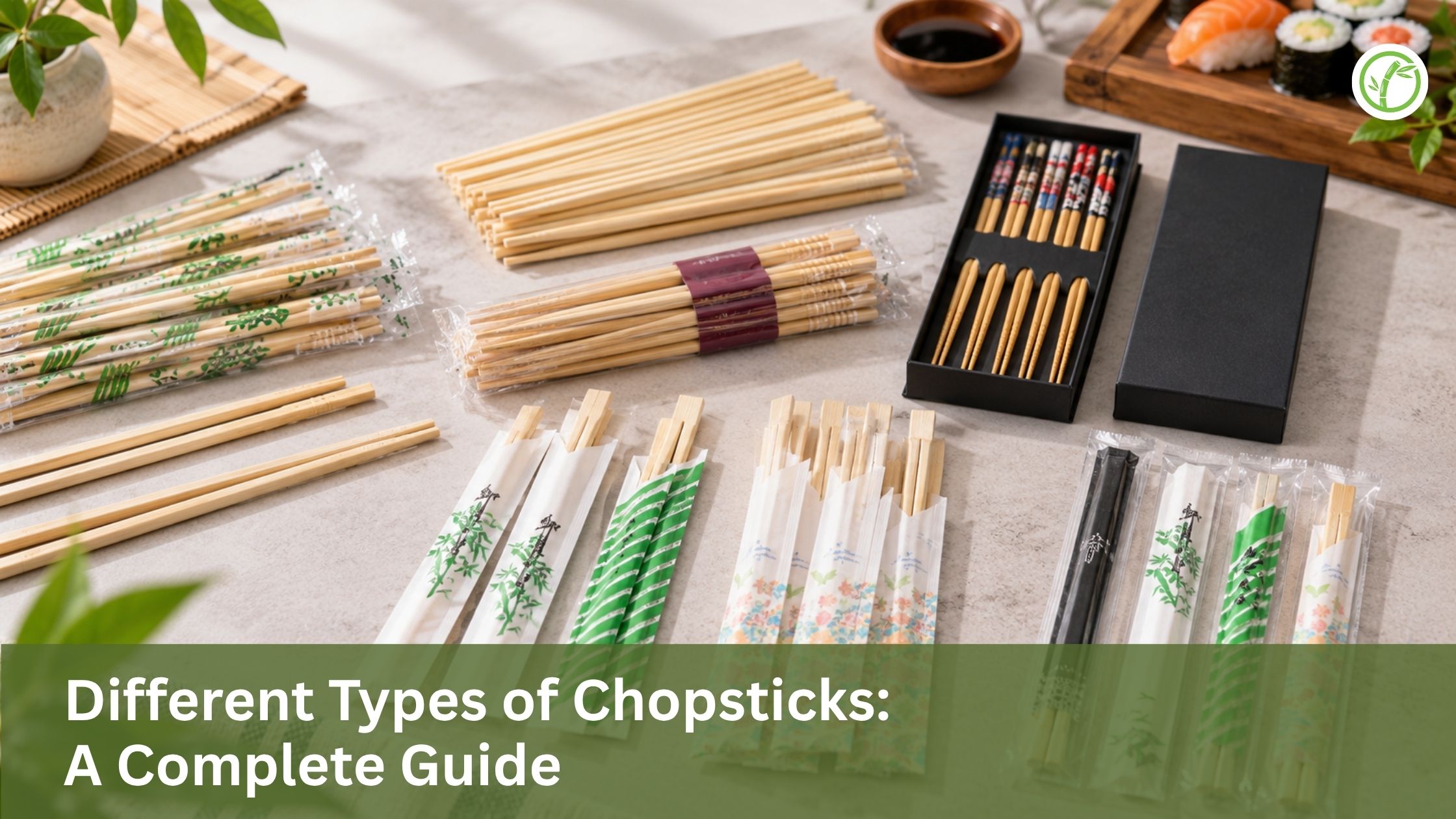
| Asian, poke, or rice-bowl concepts | Bamboo bowls, bamboo chopsticks, sushi-style chopsticks | Deep profile for rice, ramen, and poke; chopsticks match cuisine expectation |
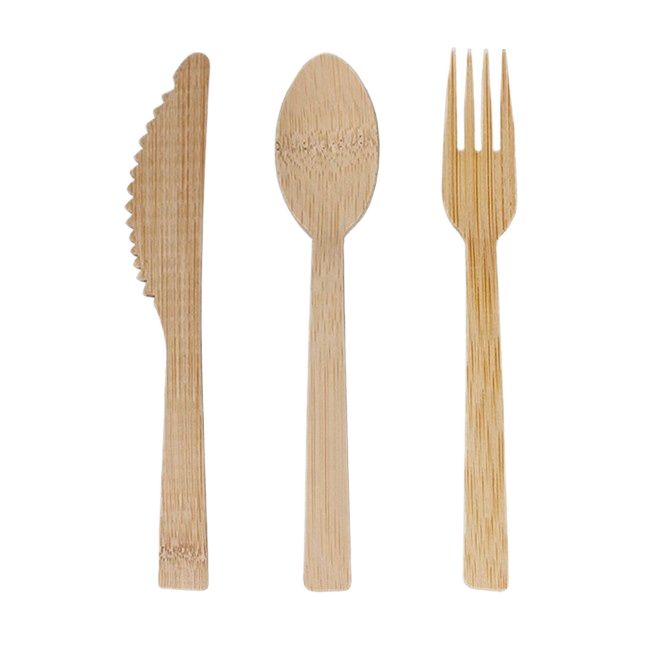
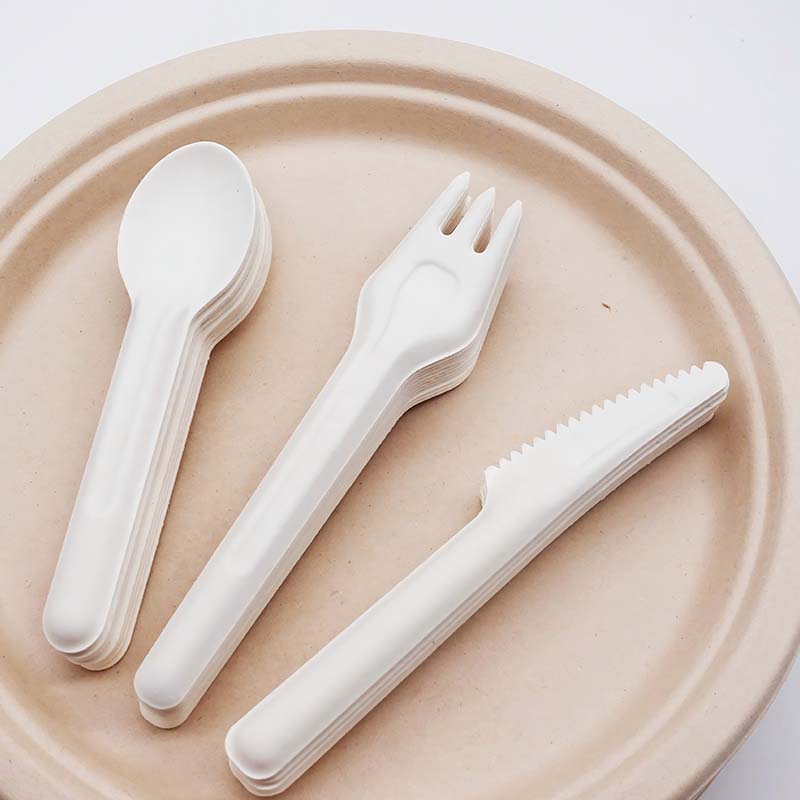
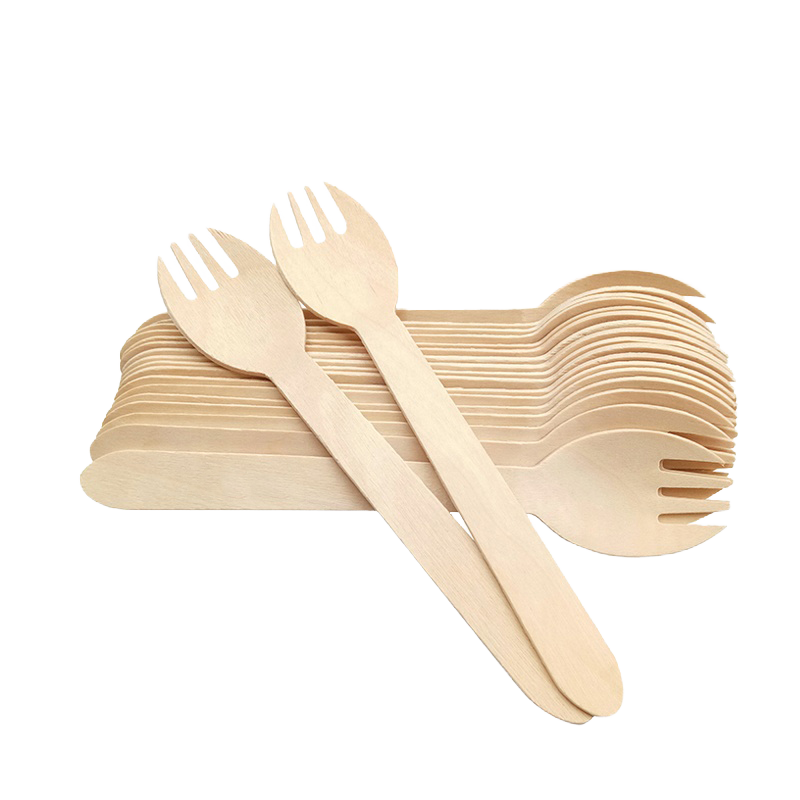
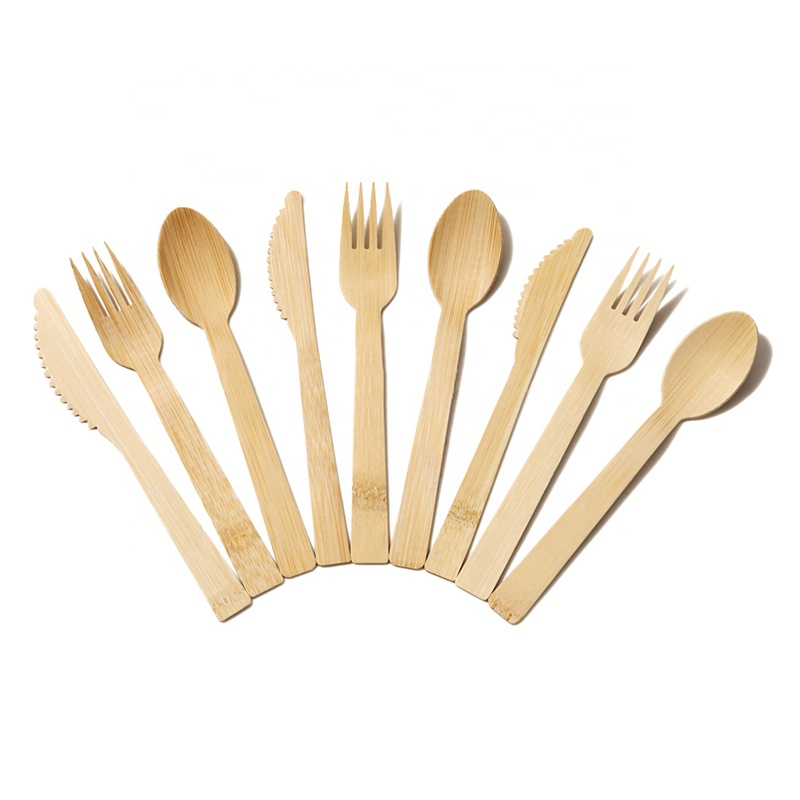
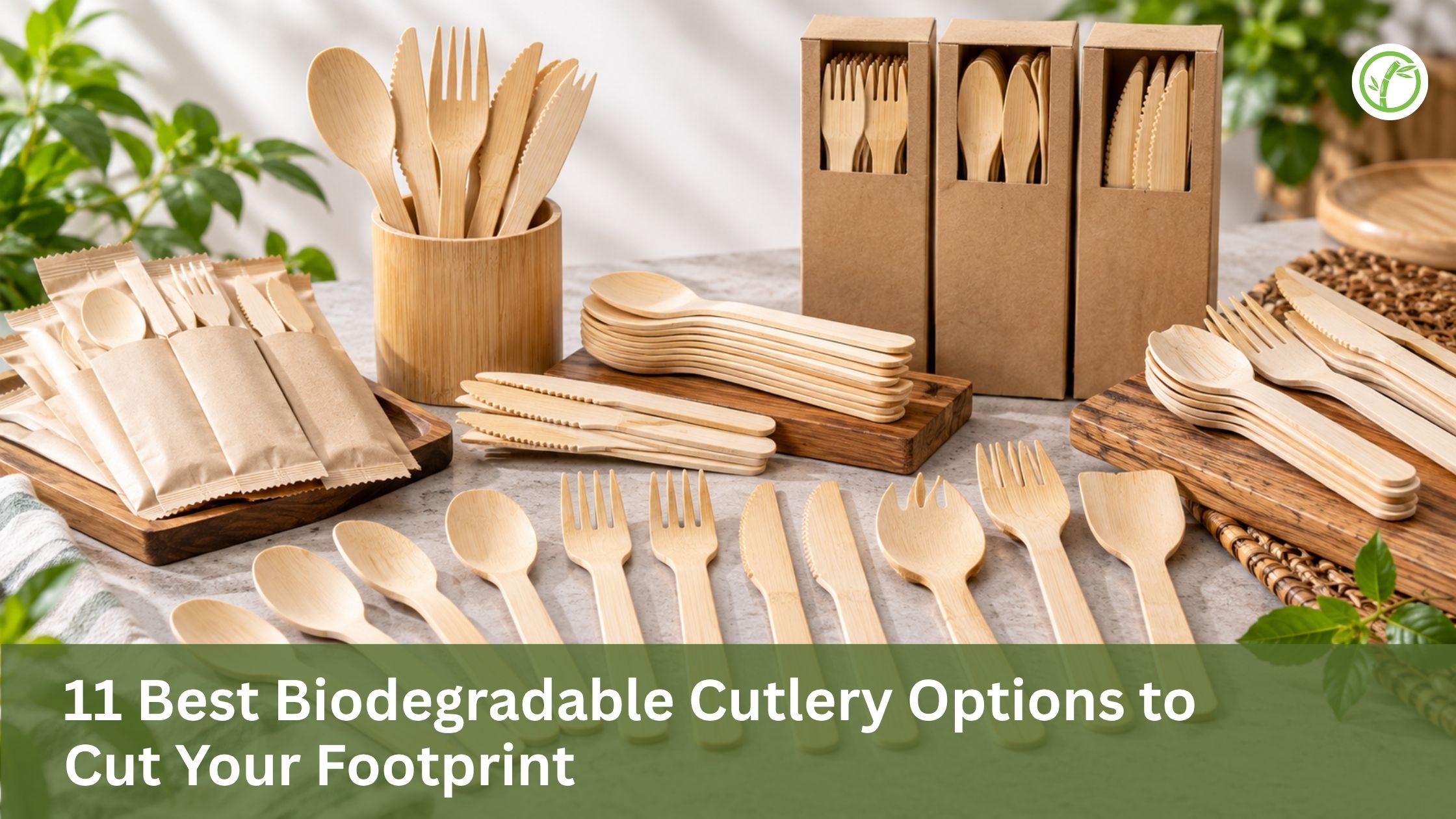
| Table settings (all concepts) | Bamboo cutlery sets | Fork, knife, spoon sets for eco-conscious table settings |
| Bar and cocktail service | Bamboo coffee stirrers, cocktail picks and skewers via party and cocktail supplies | Garnish picks, stirrers, and straws for drinks service |
| Pizza and flatbread service | Bamboo pizza boards | Purpose-shaped serving surface with juice groove |
| Beverages (bubble tea, smoothies, cocktails) | Bamboo straws | Wide-diameter option handles thick drinks; reusable for dine-in |
| Kitchen prep and back-of-house | Bamboo cutting boards, kitchen accessories | Prep surfaces and utensils to match front-of-house branding |
Most restaurants source 3–4 of these categories to start, rather than the full range, and expand once the initial products are proven in service.
Also read – Private Label Bamboo & Bagasse Tableware
MOQ and Pricing by Product
| Product | Typical MOQ | Wholesale Price Range |
| Bamboo plates (disposable) | 5,000 pcs | $0.08–$0.35/pc |
| Bamboo plates (reusable/hospitality-grade) | 5,000 pcs | $0.35–$1.20/pc |
| Bamboo bowls | 5,000 pcs | $0.30–$1.00/pc |
| Cutlery sets | 10,000 sets | $0.08–$0.25/set |
| Serving boards and trays | 2,000 pcs | $1.20–$4.50/pc |
| Bamboo cups | 2,000–5,000 pcs | $0.80–$2.50/pc |
| Bamboo chopsticks | 10,000+ pairs | $0.03–$0.08/pair |
| Bamboo straws | 10,000 pcs | $0.05–$0.15/pc |
| Custom branding (any product) | Same as base MOQ | +$0.10–$2.00/pc, depending on method |
Reusable, hospitality-grade bamboo tableware (solid pressed bamboo, designed for repeat washing) sits at a meaningfully higher price point than disposable bamboo plates and bowls; the two are different products serving different service styles, not tiers of the same item, so it’s worth confirming which one a quote is actually for before comparing prices across suppliers.
Disposable vs. Reusable: Which Fits Your Service Style?
- Disposable bamboo tableware suits takeaway, delivery, high-turnover casual dining, and events where washing isn’t practical. Lower unit cost, single use.
- Reusable bamboo tableware suits dine-in service where the plate or board is part of the table presentation — sharing boards, cheese boards, and premium plates that get washed and returned to service like ceramic or wood dinnerware. Higher unit cost, amortized over hundreds of uses.
Many restaurants run both: reusable boards and plates for dine-in tables, disposable bowls and cutlery for takeaway and delivery orders from the same kitchen.
How to Order: Step by Step
- Map your menu to product categories using the table above, rather than ordering generically — a restaurant with a sharing-plates concept has very different needs from a poke or ramen concept.
- Request physical samples before committing to a bulk order. Photos and spec sheets don’t show how a plate feels loaded with food, or how a board looks under your actual lighting and table settings.
- Decide disposable vs. reusable per category — it’s common to mix, for example, reusable boards for dine-in and disposable bowls for delivery from the same menu.
- Confirm certifications relevant to your market: FDA 21 CFR 177 for food-contact safety in the US, FSC for sourcing claims, and BPI or EN 13432 if disposable items need to be marketed as compostable.
- Size your first order to 2–3 months of covers, not a full year — this limits capital tied up in inventory while you confirm the products perform as expected in daily service, and gives you room to adjust the product mix before the next order.
- Set a reorder trigger before you run out. Sea freight typically runs 20–35 days from China-based manufacturers, so reorder when stock hits roughly 6–8 weeks of remaining supply, not when the shelf is nearly empty.
- Consider custom branding once volume is proven. Laser-engraved logos on plates, boards, and cutlery are common once a restaurant has validated a product in service and wants it to visibly carry the brand.
Custom Branding for Restaurant Table Settings
Bamboo’s natural surface takes laser engraving well, which is why it’s a common choice for restaurant branding specifically — a logo engraved into a serving board or plate reads as a deliberate design choice rather than a printed sticker, and doesn’t wear off with repeated washing. Branding MOQs generally start at 10,000–20,000 pieces depending on the method, so most restaurants introduce branding after their initial unbranded order has proven out in service, rather than on a first trial order.
Sourcing for Your Menu
Restaurant demand for compostable and reusable tableware continues to grow — the National Restaurant Association’s own packaging guidance notes that consumer expectations around sustainable packaging are a growing factor in off-premise and dine-in service alike. FriendlyBamboo supplies the full range restaurants typically need from one factory — plates, bowls and tableware, cutlery, chopsticks, straws, cheese boards, and pizza boards — with FSC, FDA, and LFGB certification and custom branding available once volume is proven. Restaurants sizing a first order can request a bulk quote with sample support before committing.
Frequently Asked Questions
Plates, bowls, and boards typically start at 2,000–5,000 pieces; cutlery sets start around 10,000. Trial quantities are often available for operators testing bamboo tableware for the first time, which is worth asking about explicitly if you’re not ready to commit to a full standard MOQ.
It depends on service style. Dine-in tables generally suit reusable, hospitality-grade bamboo plates and boards; takeaway and delivery suit disposable bamboo bowls, cutlery, and plates. Many restaurants use both across different parts of the same menu.
Sea freight from China-based manufacturers typically takes 20–35 days; air freight, usually reserved for samples or urgent small orders, takes 3–7 days but at a significantly higher per-unit cost.
For food-contact safety in the US, look for FDA 21 CFR 177 compliance — see the FDA’s own guidance on food contact material compliance for how this is determined. For sourcing claims, FSC certification with a checkable license number is the standard to request.