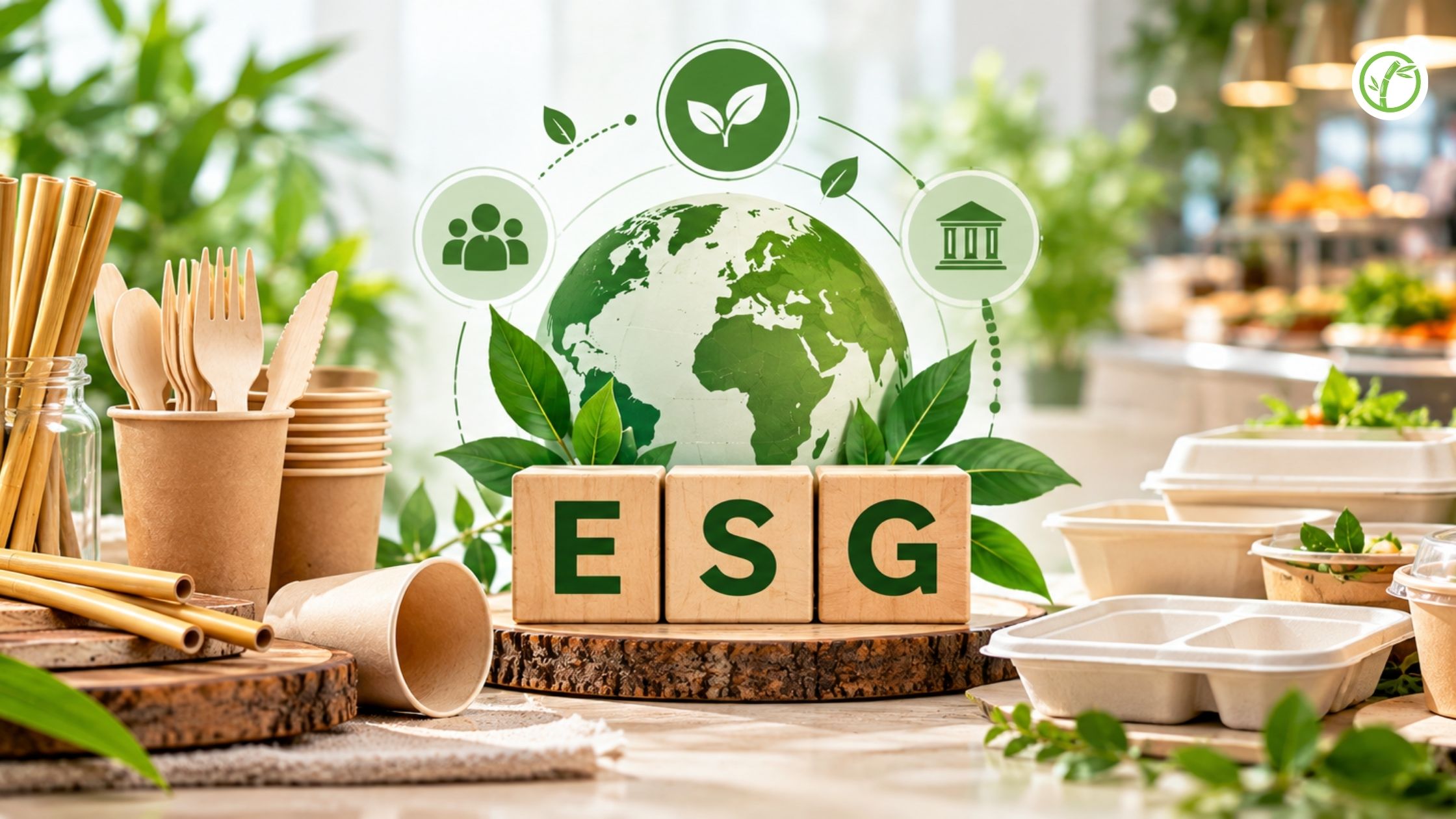
ESG in food service is how a restaurant, caterer or hotel kitchen measures and manages its environmental footprint, its treatment of people and the honesty of its records, alongside its financial results. Most operators aren’t legally required to report on it, but they are increasingly asked for ESG data by large customers, landlords and supply-chain partners who are.
The practical work sits in places kitchens already manage: food waste, packaging, staff training, supplier files and the claims printed on menus and boxes.
Key takeaways
- E, S and G in food service mean waste, packaging, energy and sourcing; wages, safety and food safety; and records, compliance and honest claims.
- Mandatory reporting now reaches only the largest companies. The EU’s CSRD applies to firms with more than 1,000 employees and €450 million turnover, and California’s SB 253 to US companies with over $1 billion in revenue.
- Smaller suppliers are protected from excessive requests in the EU. Companies under 1,000 employees can decline CSRD data requests that go beyond the voluntary SME standard (VSME).
- Packaging you buy counts in your customers’ Scope 3 emissions, which is why disposables are one of the first things ESG questionnaires ask about.
- The USDA estimates 30–40% of the US food supply is wasted, making a waste audit the most useful first step for most kitchens.
- Keep supplier certificates, audit reports and test results on file. They answer most ESG questionnaires and protect you from greenwashing claims.
What does ESG mean in food service?
ESG stands for environmental, social, and governance. In a kitchen, each pillar turns into specific, measurable routines rather than abstract commitments.
| Pillar | What it covers in food service | Example actions | What to measure |
| Environmental (E) | Food waste, packaging, energy, water, sourcing, refrigerants | Waste audits, compost collection, certified disposables, efficient equipment | Kg of food waste per cover, % of disposables with a verified end-of-life route, kWh per trading day |
| Social (S) | Wages, scheduling, workplace safety, training, food safety, allergens, community | Food-handler certification, allergen protocols, predictable rotas, surplus food donation | Staff turnover, training hours, food safety audit scores, kg donated |
| Governance (G) | Compliance, traceability, supplier standards, accurate claims, data quality | Supplier certificate file, traceability records, reviewed marketing claims | % of suppliers with current certificates, number of unverified claims removed |
Food businesses feel all three pillars at once. A single kitchen produces organic waste daily, employs people in a safety-critical setting and operates under food safety, labor and packaging rules at the same time.
The environmental pillar gets most attention because it is the most visible. The USDA estimates that 30–40% of the US food supply is wasted, and the EPA reports that food is the most common material sent to US landfills.

Why does ESG matter to a food business that doesn’t have to report?
Because the companies you sell to, lease from or supply often do. Their reporting duties turn into questions for you.
- Corporate customers ask for supplier data. A large company measuring its supply-chain emissions needs figures from the businesses it buys from. Contract caterers, hotel groups and corporate canteens are common points where these questionnaires land. Smaller suppliers receive sustainability questions even when no reporting law covers them.
- Packaging rules apply regardless of size. EU single-use plastic bans, the Packaging and Packaging Waste Regulation, US state PFAS bans and compostability labeling laws apply to a single café as much as a chain.
- Guests notice packaging in particular. In PwC’s 2024 survey of more than 20,000 consumers across 31 countries, respondents said they would pay 9.7% more on average for sustainably produced or sourced goods. Eco-friendly packaging ranked second among incentives that would most change purchasing, cited by 38%, behind waste reduction and recycling at 40%.
- Waste is a direct cost. Every kilo of food thrown away was bought, stored, prepped and then paid for again in disposal fees.
Survey willingness to pay is not the same as actual spending, so treat the 9.7% figure as a signal of preference rather than a pricing guide.
Which ESG reporting rules apply to food service in 2026?
Only the largest food companies face mandatory ESG reporting, and several headline rules have been delayed, narrowed or paused. Status below is as of 30 September 2026.
| Rule | Who it covers | Current status |
| US SEC climate disclosure rules | US-listed companies | Never took effect. The SEC proposed rescinding them in full on 29 May 2026; the rules remain stayed |
| California SB 253 | US companies with more than $1 billion in revenue doing business in California | First Scope 1 and 2 reports now due 10 November 2026, after a three-month extension; Scope 3 reporting to follow from 2027 |
| California SB 261 | Companies with more than $500 million in revenue | Climate-risk reporting paused by a Ninth Circuit injunction while the appeal continues |
| EU CSRD (after the Omnibus Directive) | EU companies with more than 1,000 employees and €450 million turnover; non-EU groups with €450 million EU turnover and a large EU subsidiary or branch | Thresholds raised in February 2026, removing most mid-sized companies from scope |
| US FSMA 204 food traceability rule | Businesses handling foods on the FDA Food Traceability List | Enforcement will not begin before 20 July 2028 |
| EU Packaging and Packaging Waste Regulation | All businesses placing packaging on the EU market | Applying since 12 August 2026, with further packaging requirements phased in from 2028 |
The EU rule that protects smaller suppliers
The Omnibus Directive added a value-chain cap. Companies reporting under the CSRD cannot request information from partners with fewer than 1,000 employees beyond what the voluntary SME standard (VSME) covers.
For most restaurants, caterers and packaging suppliers, VSME is the useful benchmark. Prepare those data points once and reuse them for every customer request.
Which ESG topics matter most for restaurants?
Focus on the topics that affect your costs and risks most, not every ESG issue in existence. The SASB standard for restaurants, now maintained by the ISSB, names seven: energy, water, food and packaging waste, food safety, nutritional content, labor practices, and supply chain and food sourcing.
| Topic | Why it matters to an operator | A simple starting measure |
| Food waste | Paid for twice: once to buy, once to dispose of | Kg of food waste per week, split into prep, spoilage and plate waste |
| Packaging | Bans, fees and labeling rules; the item guests see | % of disposables with a certificate and a local end-of-life route |
| Energy and water | Among the larger utility costs in a kitchen | kWh and liters per trading day |
| Food safety | Your license to operate | Audit scores, temperature log completion, staff certification rate |
| Labor practices | Turnover is expensive and affects service | Annual turnover rate, training hours per employee |
| Supply chain and sourcing | Supplier impacts count in your customers’ Scope 3 | % of spend with suppliers holding current certificates |
| Nutritional content | Menu labeling rules and guest expectations | % of menu items with allergen and nutrition information |
Start with the two or three rows where your data is weakest or your costs are highest. For most kitchens, that means food waste and packaging.
Where does packaging fit in food service ESG data?
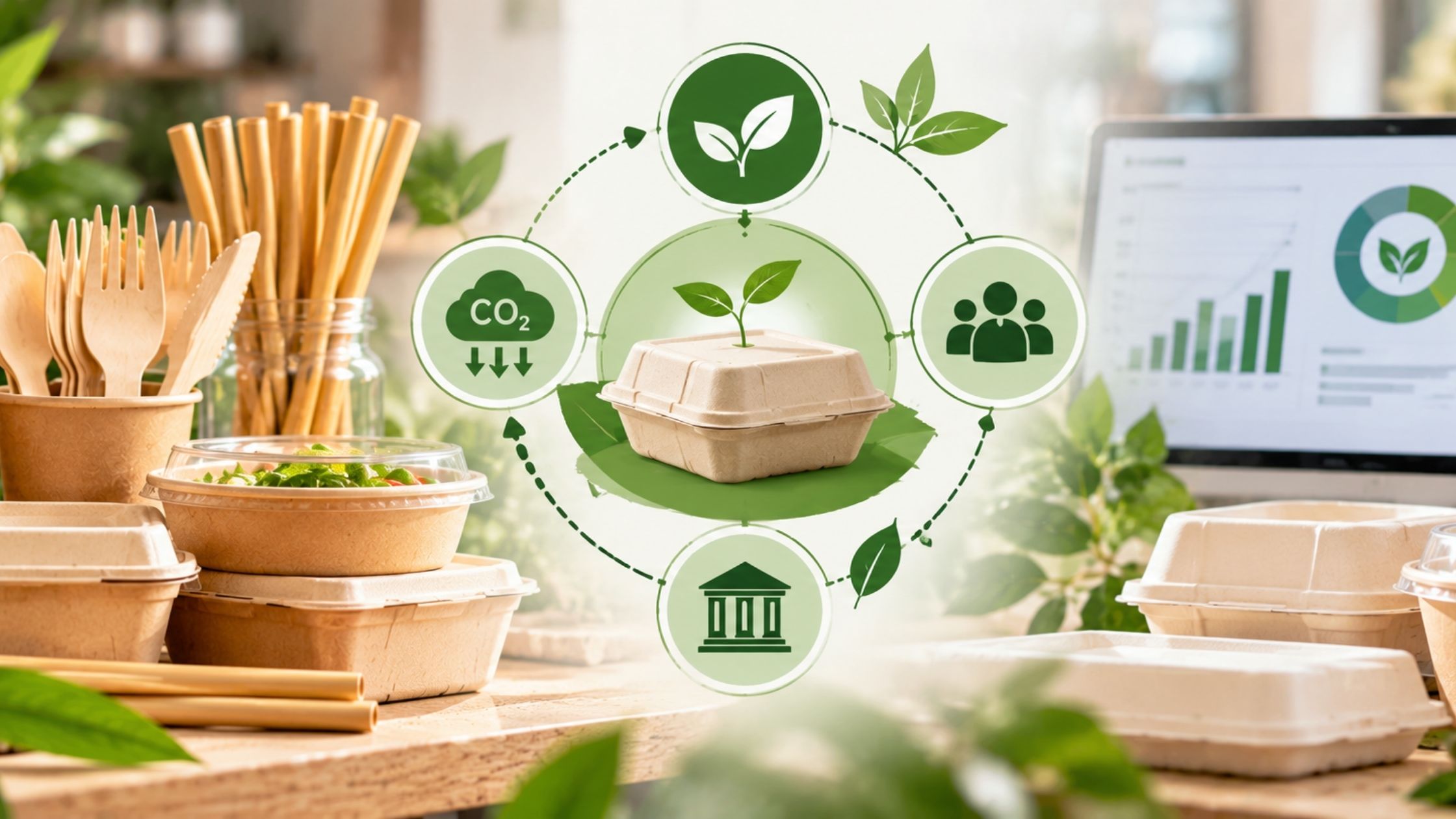
Packaging sits mainly in Scope 3, the emissions in your value chain rather than your own kitchen. It is also one of the easiest Scope 3 items to measure and change.
Under the GHG Protocol, a restaurant’s emissions split into three scopes:
| Scope | What it includes for a restaurant | Examples |
| Scope 1 | Direct emissions from sources you own or control | Gas ranges and fryers, refrigerant leaks, owned delivery vehicles |
| Scope 2 | Purchased energy | Grid electricity for lighting, refrigeration and extraction |
| Scope 3 | Everything else in the value chain | Food and packaging you buy, their transport, waste from operations, and the disposal of takeaway packaging after customers use it |
For a typical restaurant, Scope 3 is the largest share, and purchased food is usually the biggest item within it. Packaging is smaller but stands out for three reasons:
- It’s easy to quantify. Every carton has a unit count, weight and material, so suppliers can give you data quickly.
- It’s easy to change. Switching a container takes one purchase order. Changing a menu or a farm supplier takes far longer.
- It’s visible. Guests, inspectors and corporate clients see the packaging directly, and packaging laws cover it.
To start measuring, ask each disposables supplier for the unit weight, material and certificates of every item you buy. Multiply unit weight by annual volume to get tonnes of packaging by material. That single table answers most packaging questions in an ESG questionnaire.
Avoid writing packaging claims into ESG answers that you can’t prove. Our guide to bio-based, biodegradable and compostable claims explains which words need certification.
- Per-product carbon footprint data is available on request.
What documents should you ask your disposables supplier for?
Ask for the documents that answer questions from your own customers and inspectors. Keep them in one folder per supplier and check expiry dates every year.
Environmental
- Material specification: material, unit weight and any coating or lining for each item
- End-of-life certificates: EN 13432, ASTM D6400 or OK compost for items sold as compostable
- Responsible sourcing: FSC chain-of-custody certificate for wood, bamboo or paper items
- Carbon data: product carbon footprint or at least the data to estimate one
Social
- Factory social audit: a recent BSCI, SMETA (Sedex) or equivalent audit covering wages, hours and safety
- Supplier code of conduct: a signed commitment covering forced labor and child labor
Governance
- Food-contact compliance: FDA, LFGB or EU food-contact test reports for the market you sell in
- PFAS test report: from an accredited lab, on the finished product
- Traceability: batch or lot codes on cartons, so a problem can be traced to a production run
- Claim review: written confirmation of which claims the supplier supports for each product
Two checks save trouble later. First, confirm the certificate names the exact product and factory you are buying from. Second, verify certificate numbers with the issuing body; most publish online databases.
If you buy from overseas factories, our guide to bagasse packaging manufacturers in China covers what to check before placing a first order.
What Friendly Bamboo can provide
- FSC chain of custody: certificate RR-COC-003046, covering our bamboo and wood product lines. You can verify it in the FSC public certificate database.
- Factory social audit: amfori BSCI.
- Food-contact testing: FDA, LFGB and EN 13130 test reports.
- Carbon data: per-product carbon footprint figures on request.
How can a food service business start ESG in 90 days?
Measure first, then fix the easiest wins, then document. That order keeps the program cheap and gives you real numbers before anyone asks.
Days 1–30: measure
- Run a one-week waste audit. Weigh food waste daily in three bins: prep trimmings, spoilage and plate waste. The split tells you whether to fix ordering, storage or portions.
- List every disposable you buy. Record item, supplier, material, unit weight and annual volume.
- Pull 12 months of utility bills. Note kWh, gas and water by month.
- Gather people data you already hold. Headcount, turnover, training certificates and any safety incidents.
Days 31–60: fix the easy wins
- Put waste bins where the waste happens. Separate bins at prep stations and the dish area get used; bins across the kitchen get skipped during a rush.
- Adjust ordering or portions based on the biggest category from your audit.
- Replace disposables that have no end-of-life route in your area, or that carry claims you can’t prove. Match materials to local collection: recyclable where recycling works, certified compostable where compost collection exists.
- Set up surplus food donation with a local food rescue organization, where food safety rules allow.
Days 61–90: document
- Build the supplier folder using the checklist above.
- Write short policies on food safety, allergens, supplier standards and environmental claims. One page each is enough.
- Create a one-page ESG profile with your baseline numbers, aligned to the VSME data points if you have EU customers.
- Review every claim on menus, packaging and your website against the evidence in your files.
For material ideas by food type, see our guide to eco-friendly food packaging for small businesses.
Must read –
bio-based vs biodegradable vs compostable
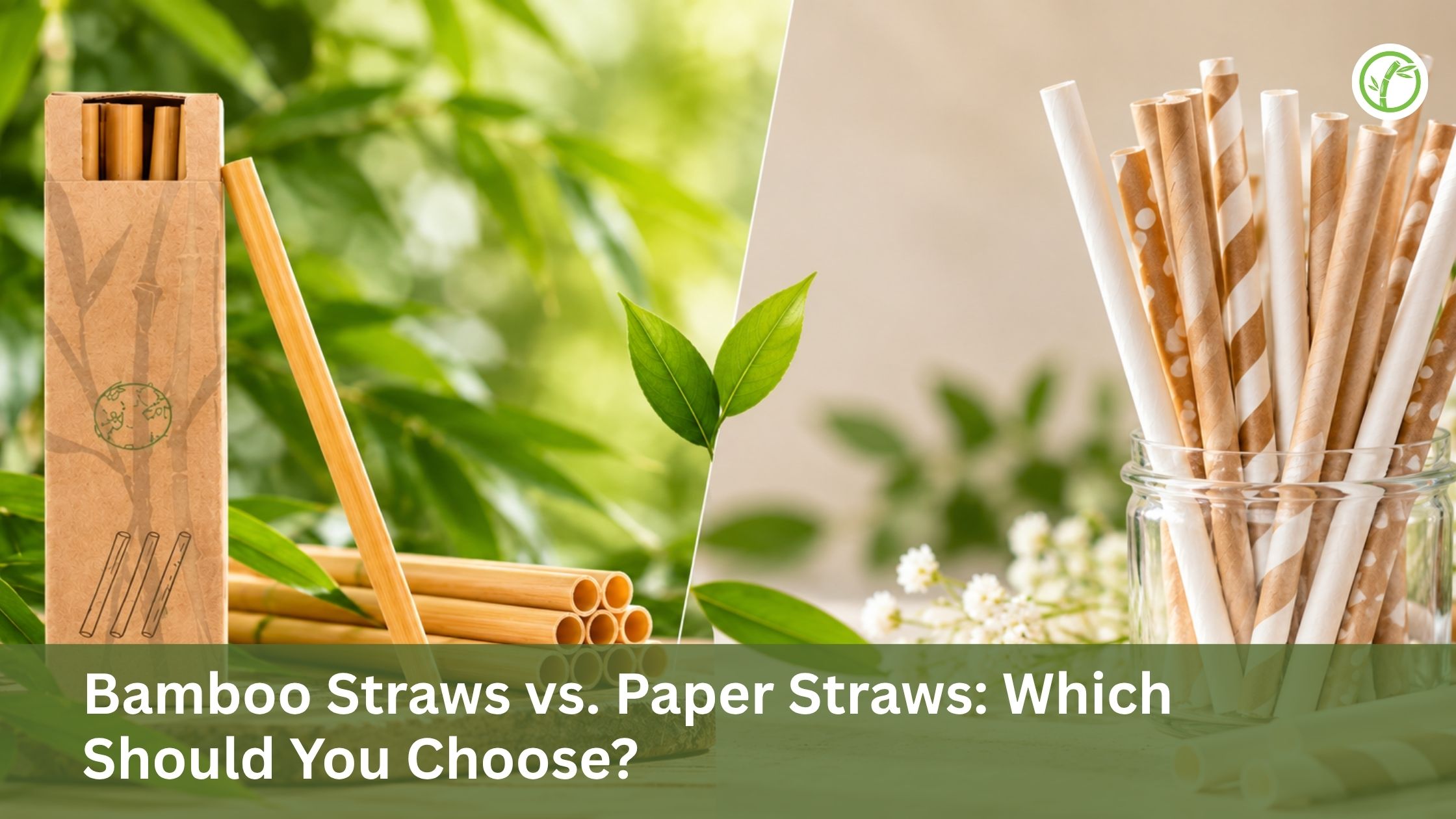
Bamboo Straws vs. Paper Straws
Does ESG pay off for small food businesses?
Parts of it pay for themselves quickly, and parts cost money up front. Knowing which is which keeps the program going.
Usually pays back:
- Food waste reduction, because every kilo saved is food you don’t buy twice
- Energy efficiency in refrigeration and lighting
- A reusable ESG profile, which saves time on every questionnaire and helps win contracts that require one
Usually costs more at first:
- Certified packaging, which can cost more per unit than conventional items
- Staff time to set up separation, audits and records
- Certifications and audits, if you pursue them
The evidence for small operators is mixed. A 2026 study of small European restaurants found that sustainability practices don’t produce uniformly positive results in the short run, and that owners face real trade-offs while rules are still emerging.
The practical conclusion is to start with actions that cut costs and to add costlier steps when a customer, a law or a clear guest benefit justifies them. Questionnaire fatigue is also real: smaller suppliers can struggle to answer long questionnaires as quickly as large ones. A single, reusable ESG profile reduces that burden.
Need supplier documents for your next ESG questionnaire?
Friendly Bamboo manufactures bagasse tableware, bamboo cutlery and straws, and birch wood disposables for food service buyers in 50+ countries. We can share our amfori BSCI audit, FSC chain-of-custody certificate (RR-COC-003046) and FDA, LFGB and EN 13130 test reports with buyers. See our bamboo foodservice products guide, or compare bamboo straws vs paper straws.
Frequently asked questions
Environmental, social and governance. In food service it covers waste, packaging, energy and sourcing; staff wages, safety and food safety; and compliance, traceability and honest claims.
In most cases, no. Mandatory reporting applies to large companies, such as those covered by California’s SB 253 or the EU’s CSRD. Small operators are more likely to receive ESG questions from larger customers or partners who report.
Scope 3 covers emissions in the value chain rather than the restaurant itself. It includes purchased food and packaging, transport of those goods, waste from operations and the disposal of takeaway packaging.
A one-week food waste audit. It costs almost nothing, shows where money is being lost and gives you the first number most ESG questionnaires ask for.
Only make claims you can support with a document on file, such as a certificate, test report or measured figure. Avoid vague words like “eco-friendly” on their own, and specify conditions, for example “industrially compostable where facilities exist.”