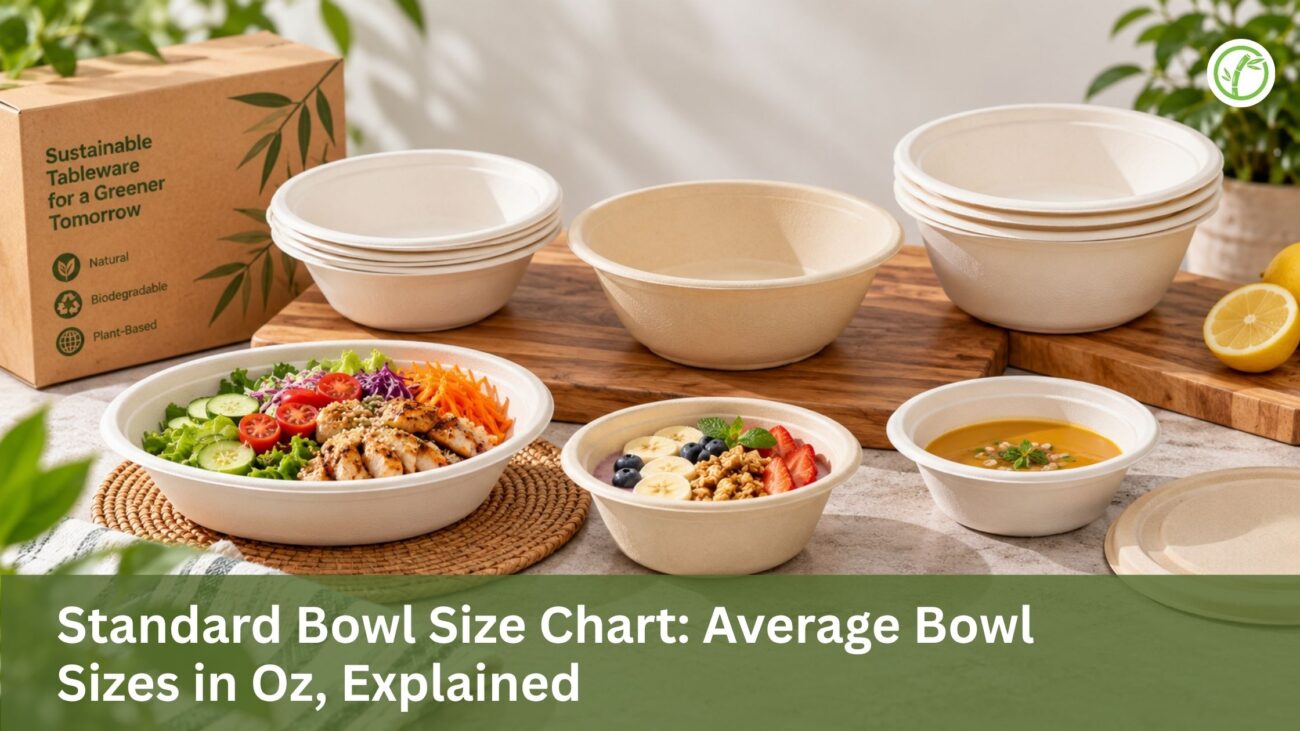
Standard bowl size runs from about 8 oz for small sides and snacks up to 32 oz and larger for full entrées and takeout meals, with 12–16 oz covering the most common everyday uses: soups, salads, rice bowls, and cereal. Picking the right size isn’t just about how much food fits; it affects presentation, spill risk, and how well a bowl travels for takeout and delivery. Below is the full breakdown by ounce size, food type, and use case.
Standard Bowl Size Chart (Quick Reference)
| Size (oz) | Best For | Typical Diameter | Typical Height | Why This Size |
| 8–10 oz | Small sides, snacks, desserts | ~4–4.5 in (10–11.5 cm) | ~1.5–2 in (4–5 cm) | Portion control, minimal waste, easy handling |
| 12–16 oz | Soups, salads, rice bowls, cereal | ~5–6 in (12.5–15 cm) | ~2–2.5 in (5–6.5 cm) | Balanced portions, fits most everyday meals |
| 20 oz | Larger meals, hearty salads, pasta, poke | ~6–7 in (15–18 cm) | ~2.5–3 in (6.5–7.5 cm) | Room for toppings and sauce without crowding |
| 32 oz+ | Main entrées, noodles, grain bowls, takeout | ~7–8 in (18–20 cm) | ~3–4 in (7.5–10 cm) | Prevents spills, lid-friendly, built for delivery |
Bowl Sizes by Use Case
8–10 oz — small sides and snacks. These compact bowls suit light portions: fruit, ice cream, yogurt, dips, or a kid’s serving. Their main advantage is portion control — small enough to keep servings visually generous without over-plating, and light enough to handle easily.
12–16 oz — the everyday workhorse size. This is the most commonly stocked bowl size across both home and foodservice, because it fits the widest range of everyday meals soup, salad, rice bowls, cereal without feeling under- or over-filled.
20 oz — larger, mixed meals. Once a meal includes toppings, sauce, or mixed ingredients a hearty salad, pasta, or a poke bowl the extra room in a 20 oz bowl keeps everything contained without crowding the rim.
32 oz and larger — full entrées and takeout. Designed specifically for meals that need to travel: noodles, grain bowls, and full takeout orders. The larger diameter and height combination is what makes these bowls compatible with tight-fitting lids and stable enough for a delivery bag.
Quick tip: if the food includes a lot of broth, sauce, or toppings, size up rather than sticking to the “expected” bowl for that food category. Extra headspace reduces spill risk and keeps presentation looking generous rather than crammed.
Choosing Bowl Size by Food Type
Soups and broths: 12–16 oz covers everyday soup servings without feeling oversized. For heartier soups, ramen, or stews with noodles and toppings, step up to 20–32 oz for extra depth and reduced spill risk, especially for takeout.
Salads and grain bowls: These need room to toss. 16–32 oz gives enough space to layer ingredients and add dressing without ingredients spilling over the rim as the bowl gets tossed or carried.
Snacks and desserts: 8–12 oz keeps lighter portions fruit, yogurt, pudding, side snacks looking neat and proportionate, and works well for kids’ meals or tasting portions.
Specialty foods, as a quick reference:
- Ice cream: 8–12 oz for a single scoop, 16 oz for a sundae
- Pasta: 20–32 oz to handle sauce volume without crowding
- Ramen and noodles: 20–32 oz with a secure lid for the broth
- Kids’ portions: 8–10 oz for easy handling and less waste
Also read – how many oz is 1.5 cups
Bowl Size for Takeout and Delivery
Size matters more once food is traveling rather than being eaten immediately. A bowl that’s too small risks overflowing in transit; one that’s too large lets food shift around and spill even if it started out well within capacity. For takeout and delivery specifically:
- Choose bowls with tight-fitting lids, especially for soups, noodles, or anything saucy; a secure lid is the single biggest factor in reducing leaks during transport.
- Favor slightly deeper bowls for stability in a delivery bag, since a shallow, wide bowl shifts and spills more easily than a deeper one holding the same volume.
- Consider stacking, since bowls that nest well are easier for kitchen staff and delivery drivers to handle without tipping.
Getting this right protects food quality on arrival and directly affects how a customer’s order looks when they open the bag, a genuinely underrated factor in repeat delivery business.
Bowl Materials and Eco Notes
Bowls in this size range are commonly made from kraft paper, bagasse (molded sugarcane pulp), or bamboo, and the material affects strength and heat performance as much as the size does:
- Kraft paper bowls are durable and grease-resistant, a solid choice for hot foods at the lighter end of the size range.
- Bagasse (compostable pulp) bowls are sturdier at larger sizes, holding their shape well under the weight of a full 20–32 oz entrée or a broth-heavy noodle bowl, and are typically microwave-safe for reheating.
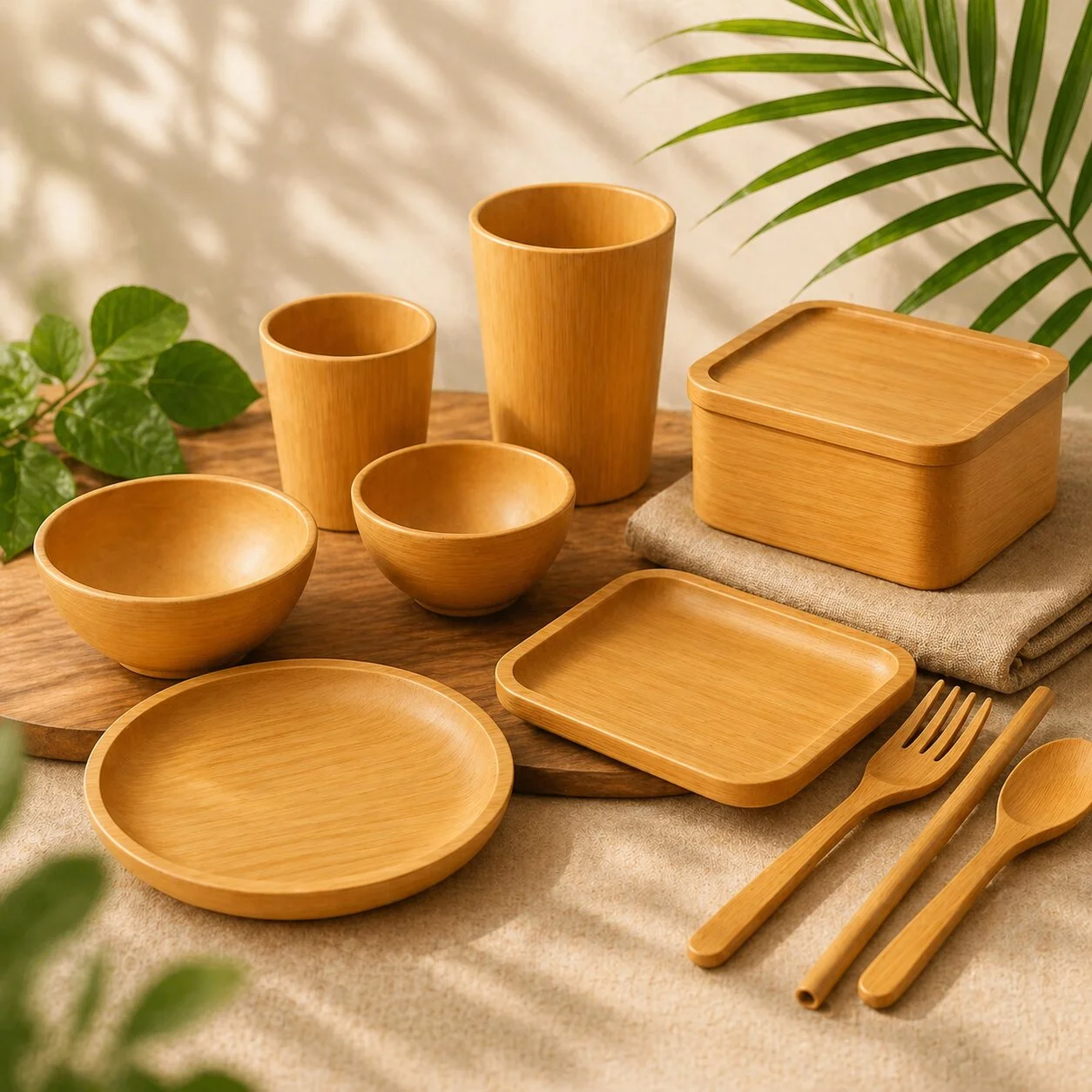
- Bamboo bowls bring a more premium, rigid structure and a warmer visual presentation, generally used where the bowl is part of the dine-in table setting rather than a delivery container.
Many bowls in this range are now both leak-resistant and genuinely compostable, which lets a menu serve generous portions without defaulting to plastic — worth checking specifically if sustainability messaging matters to your brand, since not every “eco” bowl on the market is actually certified compostable.
Buying Tips for Choosing the Right Bowl Size
- Match size to menu: smaller bowls for sides and snacks, larger ones for full meals. Stocking one size for everything usually means over-portioning smaller items or under-portioning larger ones.
- Plan portions deliberately: consistent sizing controls food cost and reduces waste on both ends; too-large bowls encourage over-serving, too-small ones create spillage and complaints.
- Think about storage: bowls that nest and stack efficiently save meaningful space in a kitchen or storage room, which matters more than it seems once you’re stocking three or four sizes at once.
- Buy in bulk where the volume supports it: larger orders generally bring the per-unit cost down meaningfully for restaurants and event caterers running through bowls quickly.
- Consider custom branding: a printed logo on the bowl or its packaging adds a professional, recognizable touch, particularly valuable for a delivery-heavy business where the bowl is often the only physical brand touchpoint a customer sees.
Also read – how many cups are in 32 oz
Sourcing Bagasse and Bamboo Bowls in the Right Size
Getting the size chart right on paper doesn’t help if your actual supplier only stocks two sizes, or if the bowl that looks sturdy in a spec sheet turns out to sag under a saucy 32 oz entrée in real service. That gap — between the size chart and what actually holds up on a delivery bike for twenty minutes is where a lot of restaurants end up re-ordering mid-season after a supplier’s “large” bowl doesn’t perform the way a proper 32 oz format should.
Bagasse bowls are built specifically to hold their shape under hot, saucy, or broth-heavy portions at every size in this chart, and are microwave- and freezer-safe for meal-prep and delivery use. For dine-in presentation instead of takeout, bamboo bowls and tableware bring the sturdier, more premium option covered above. Menus expanding their delivery footprint should lock in reliable sizing before peak season rather than discovering a supplier’s bowls can’t handle a 32 oz noodle order mid-rush. Request a bulk quote across sizes to compare pricing and confirm which formats fit your actual menu before committing to a full order.
Frequently Asked Questions – Standard Bowl Size Chart
Yes — 32 oz sits at the large end of the standard range, built for full entrées, noodle bowls, and takeout meals rather than sides or snacks. At roughly 7–8 inches in diameter and 3–4 inches deep, it’s sized to handle sauce, broth, and toppings without crowding.
20 oz is a mid-to-large size — bigger than the everyday 12–16 oz range but a step below the 32 oz+ entrée category. It’s the size most commonly used for hearty salads, pasta, and poke bowls that need room for mixed toppings without being a full main-meal container.
A 6-inch diameter sits toward the larger end of the mid-size range — typically in the 12–20 oz capacity zone depending on depth, suited to soups, salads, or rice bowls rather than small sides. It’s not a “small” bowl in the way an 8 oz, 4-inch bowl is.
An 8-inch diameter bowl generally falls in the 32 oz+ large category, typically deep enough to hold a full entrée, grain bowl, or noodle dish — closer to a takeout main-meal bowl than a side-dish size.
Paper and compostable bowls are typically available in 8, 12, 16, 20, 26, and 32 oz sizes and larger, covering everything from snacks to full takeout meals.
Standard sizing generally breaks into small (about 8–12 oz) for sides and snacks, medium (12–16 oz) for everyday soups and salads, and large (20–32 oz+) for full meals and takeout portions.
A 2.3-quart bowl holds about 75 oz — well beyond individual-serving sizes, more suited to meal prepping, serving family-style portions, or storing larger batches of food.
Size by volume (ounces) first, then match that to the food type — smaller bowls for snacks and sides, larger ones for soups, entrées, and anything with heavy toppings or sauce that needs extra headspace.
For Further Readings:
are bamboo chopsticks reusable
Bamboo vs. bagasse vs. wood
How long do bamboo disposable products last in storage before use?
bamboo vs plastic cutlery
wholesale bamboo disposable products
bamboo and wooden tableware certifications
bamboo foodservice products