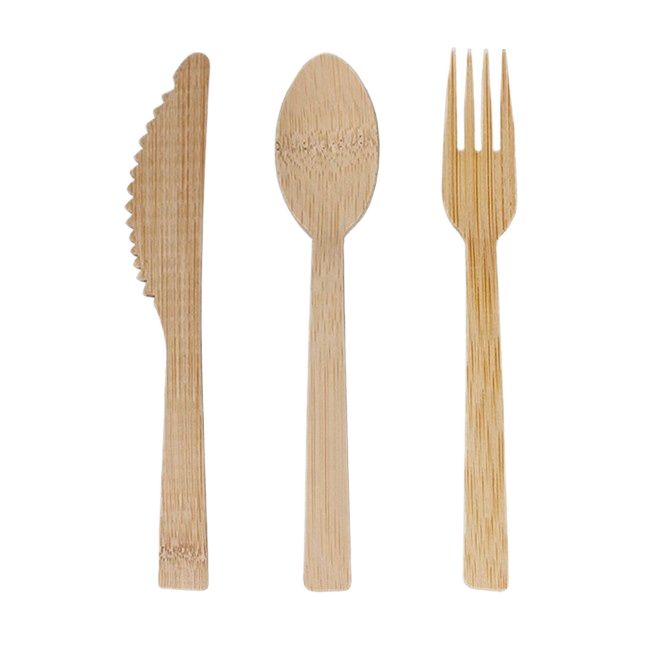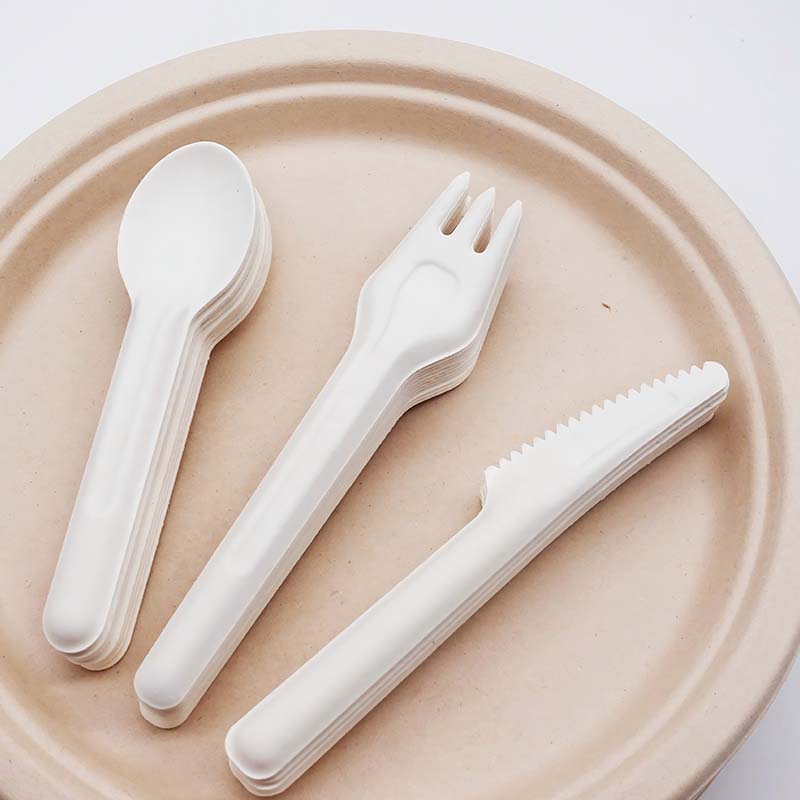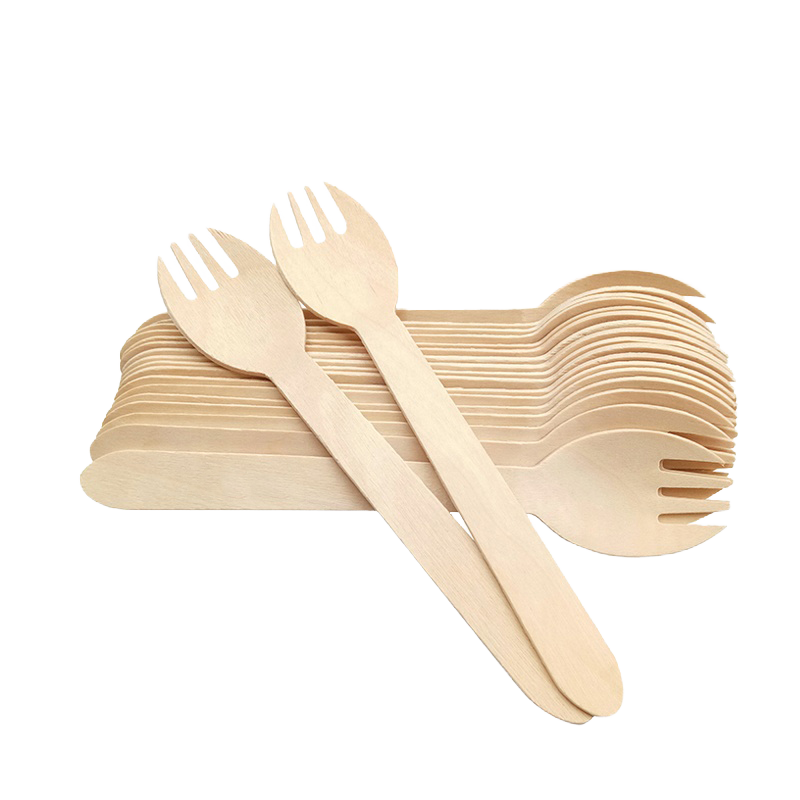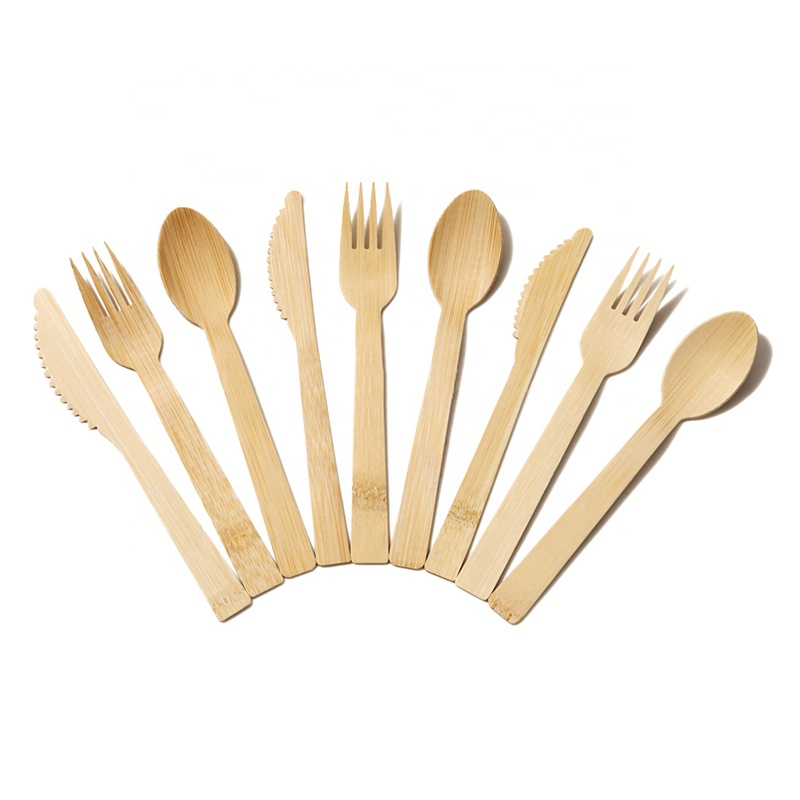
Starting an eco-friendly tableware distribution business involves seven core steps: research your target market, choose a product and material range, find a certified manufacturer, confirm MOQs and logistics, secure the right certifications, set up sales channels, and build inventory systems before you scale. Global single-use plastic bans and rising green procurement standards are driving steady growth in the category; industry estimates put annual market growth in the high-single to mid-double-digit percentage range through 2030, depending on the region and product segment, which makes this one of the more accessible entry points in wholesale distribution right now, but success depends on getting sourcing and certification right from day one.
Step 1: Research Your Target Market
Before sourcing a single product, identify who you’re selling to and why they need what you’re offering.
- Identify your buyer segments: restaurants and cafés, hotels and event caterers, institutional food service (schools, hospitals), retail and grocery chains, or direct-to-consumer eco-conscious households. Each buys differently: restaurants want reliability and price; hotels want presentation; retailers want packaging and shelf appeal.
- Check local and regional regulations: single-use plastic bans (like the EU’s SUP Directive) create forced demand in specific product categories at specific times, which is a reliable signal for where to focus first.
- Assess local competition: many regions still lack a reliable, certified eco-tableware distributor, which leaves room for a newcomer with a stronger sourcing and logistics strategy even in a market that already has players.
Also read – EU Single-Use Plastics Directive 2026
Step 2: Choose Your Product and Material Range
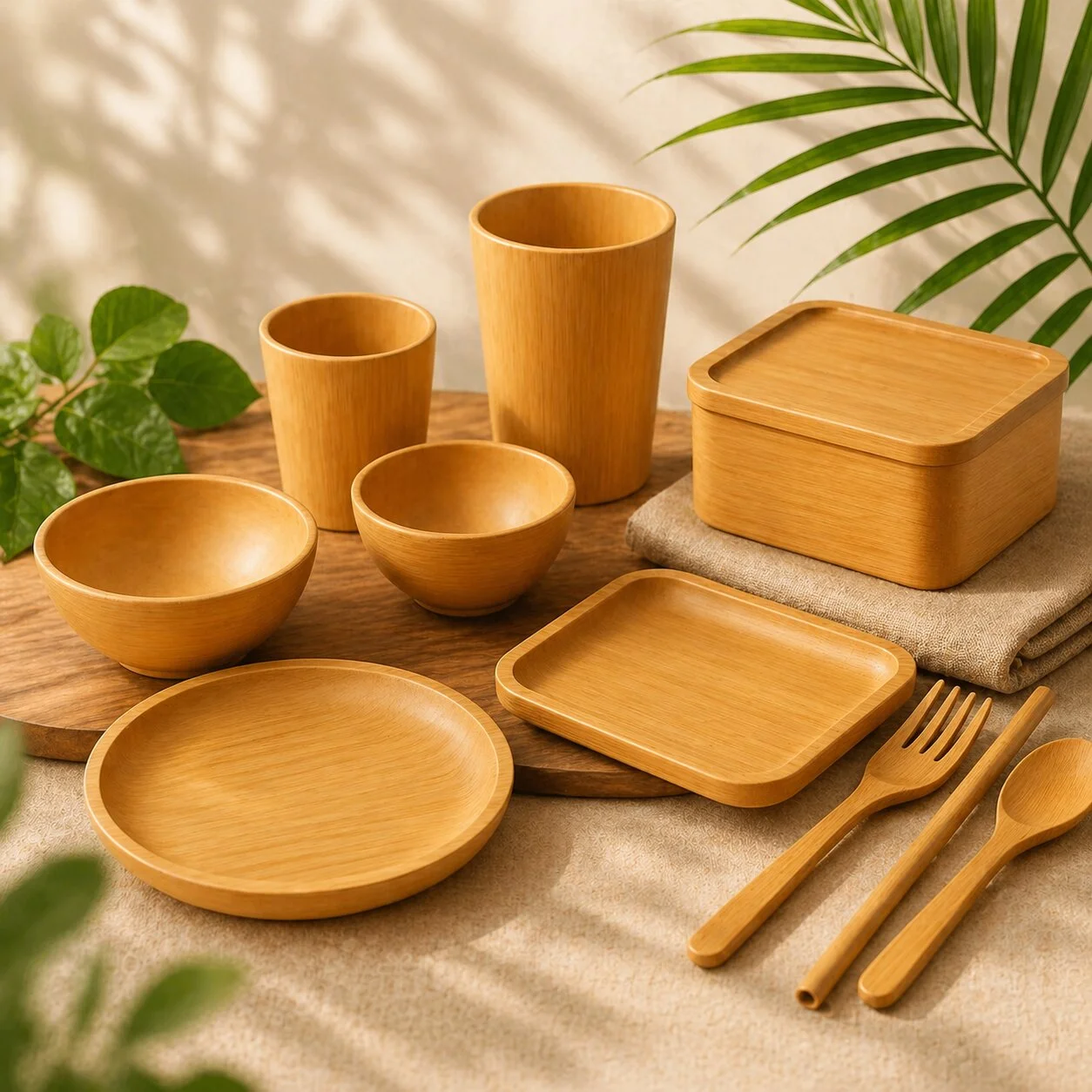
Your product range is the foundation of the business. The main material categories and where each performs best:
| Material | Best For | Price Position |
| Bamboo | Premium presentation, reusable formats, hotels, events | Mid-to-premium |
| Bagasse (sugarcane pulp) | High-volume takeaway, institutional food service | Budget |
| Wood (birch, etc.) | Cutlery, mid-tier presentation | Mid-range |
| Molded fiber | Mass-produced disposable packaging | Budget |
| Reed/wheat straws | Standard-viscosity drinks, cost-driven straw programs | Budget |
Most new distributors start with 2–3 core categories, commonly plates, cutlery, and straws, rather than a full catalog, since a narrower range is easier to source, certify, and market credibly before expanding.
Step 3: Find a Certified Manufacturer
This is the step that determines whether the rest of the business works. Look for:
- A manufacturer, not just a trading company — direct factory relationships mean better pricing, more control over customization, and faster resolution when something goes wrong.
- Documented certifications per product line: FSC (sourcing), FDA and LFGB (food-contact safety in the US and EU), BPI or OK Compost/EN 13432 (compostability), and increasingly, independent PFAS-free lab testing.
- Sample availability before commitment — request physical samples, not just spec sheets, and test them under your own conditions (hot food, liquid, stacking weight).
- Transparent MOQs and pricing tiers — most bamboo and bagasse tableware carries MOQs from 10,000 to 50,000 pieces depending on the product and supplier, with per-unit pricing dropping meaningfully above 50,000–100,000 pieces.
- Export experience — ask specifically about Incoterms offered (FOB, CIF, DDP), typical lead times, and whether they handle export documentation or leave that to you.
Step 4: Confirm Logistics, Lead Times, and Landed Cost
Unit price alone is misleading — calculate landed cost, which includes freight, duties, and any local certification or labeling requirements.
- Sea freight typically runs 20–35 days from major Chinese ports to US or EU destinations; air freight runs 3–7 days at a significantly higher cost per unit, usually reserved for urgent or sample orders.
- Build in buffer time for customs clearance and inspection, especially for first-time shipments where documentation gets scrutinized more closely.
- Decide your Incoterm early: FOB (you arrange shipping) gives more control and usually lower total cost if you have freight relationships; DDP (supplier handles everything to your door) is simpler for a first-time importer but carries a cost premium.
Step 5: Secure Certifications and Compliance Documentation
Even if your supplier is certified, you as the distributor need to hold and be able to produce the right paperwork for your own customers and for customs:
- Request the actual certificate numbers (FSC, BPI, OK Compost) and verify them against the issuing body’s public database before listing a product as certified.
- Keep an EU food-contact declaration (EC 1935/2004) and/or LFGB documentation on file for any EU-bound shipments.
- If marketing into the EU, avoid generic claims like “eco-friendly” or “biodegradable” without a specific certification backing them — this is a compliance requirement under the EU Green Claims Directive, not just good practice.
Step 6: Set Up Sales Channels
Most eco-tableware distributors run more than one channel simultaneously rather than picking just one:
| Channel | Best For | Notes |
| Direct wholesale to restaurants/hotels | Recurring bulk orders | Highest margin, requires sales outreach |
| Regional sub-distributors | Faster market expansion | Lower margin per unit, faster geographic reach |
| B2B marketplaces (Alibaba, Faire) | Discovery and smaller buyers | Good for testing demand before major investment |
| E-commerce (Shopify, WooCommerce) | Brand-building, smaller businesses, DTC | Useful for retail-packaged or branded product lines |
| Trade shows | Relationship-building, larger contracts | Higher upfront cost, strong for institutional buyers |
Roughly a third of US tableware buyers now order online rather than through traditional sales channels, which makes at least a basic e-commerce or B2B marketplace presence worth setting up even for a primarily wholesale-focused business.
Step 7: Build Inventory and Operations Systems
Two problems sink new tableware distributors more often than sourcing does: stockouts and supply chain overdependence on one factory.
- Use inventory management software for real-time stock tracking, especially once you’re running multiple SKUs across several material categories.
- Diversify suppliers where possible, or at minimum maintain buffer stock on your highest-velocity items, since sea freight lead times leave little room to react to a stockout with a rush order.
- Consider a just-in-time model for lower-velocity SKUs to avoid tying up capital in slow-moving inventory, while keeping safety stock on your core, high-turnover products.
Also read – Eco-Friendly Tableware Certifications Explained
Common Startup Challenges and How to Handle Them
| Challenge | Solution |
| Thin margins in a price-sensitive market | Order in bulk for volume discounts; differentiate on certification and reliability rather than competing purely on price |
| Supply chain disruption or material shortages | Work with more than one certified supplier; keep buffer stock on core SKUs |
| Standing out in a crowded market | Focus on a niche (e.g., premium bamboo, custom-branded bagasse, or a specific regional market) rather than competing as a generalist from day one |
| Verifying supplier certification claims | Request certificate numbers and check them against the issuing body’s public registry before listing any product as certified |
| Balancing sustainability with affordability | Build a tiered product range — a premium bamboo line and a budget bagasse or wheat-straw line — rather than a single price point |
Estimated Startup Costs (Indicative)
Actual costs vary significantly by region, order volume, and whether you’re building a branded product line or reselling under a supplier’s existing certifications, but a rough first-order budget typically includes:
- Initial inventory / first MOQ order: often the single largest upfront cost, since most certified suppliers require 10,000+ pieces per SKU.
- Certifications and compliance documentation: usually covered by the manufacturer’s existing certificates, but budget for independent lab verification (e.g., PFAS testing) if building a private-label brand.
- Freight and customs: varies by Incoterm; budget for both sea freight cost and customs clearance/brokerage fees.
- Branding and packaging: custom printing, laser engraving, or private-label packaging adds a per-unit premium but supports higher margins in retail and hospitality channels.
- Website/e-commerce setup and initial marketing: a modest ongoing cost relative to inventory, but necessary for the growing share of buyers who source online.
Sourcing Your Product Range
The sourcing step is where most new distributors either build a durable business or run into trouble later — certification gaps and unreliable MOQs are hard to fix after your first bulk order has shipped. FriendlyBamboo manufactures FSC-certified, FDA- and LFGB-compliant bamboo, wood, and bagasse tableware, cutlery, straws, and chopsticks, with per-product certificate documentation, private-label and custom-branding support, and export experience across 50+ countries. Distributors building a starter product line can browse bamboo cutlery, bamboo and bagasse plates, straws, and bamboo chopsticks to compare MOQs and wholesale pricing before placing a first order.
Frequently Asked Questions
Market signals point to continued growth, driven by tightening plastic regulation (like the EU’s Packaging and Packaging Waste Regulation applying from August 2026) and rising green procurement standards among restaurants, hotels, and retailers. Estimates on the exact growth rate vary by source and region, but the underlying regulatory and consumer trend is consistent.
The main variable is your first inventory order — most certified bamboo, bagasse, or wood tableware carries MOQs starting around 10,000 pieces per SKU. Starting with 2–3 core products rather than a full catalog keeps the initial capital commitment lower while you validate demand.
You need to hold and be able to produce your supplier’s certificate documentation for your own customers and for customs, and verify it’s genuine and current. If you build a private-label brand, some certifications (like PFAS-free testing) may need to be repeated or verified independently under your own product listing.
Most established distributors work with more than one certified supplier, or at minimum maintain buffer stock, specifically to avoid the disruption risk of depending on a single factory for their entire catalog.