As of 2026, single-use plastic plates, cutlery, straws, stirrers, balloon sticks, cotton buds, and expanded polystyrene (EPS) food and beverage containers remain banned from sale across the EU under Directive (EU) 2019/904, and this year adds two new compliance pressures: Member States must show measurable consumption reductions against 2022 baseline levels, and the new EU Packaging and Packaging Waste Regulation (PPWR) starts applying from 12 August 2026 with further restrictions. For importers and distributors, the practical takeaway is the same it has been since 2021: replace banned plastic formats with certified bamboo, wood, or bagasse alternatives, but 2026 also raises the bar on what counts as a valid sustainability claim.
What’s Already Banned (In Force Since 2021)
These single-use plastic items have been banned from the EU market since 3 July 2021, and remain banned in 2026:
| Banned Item | Compliant Alternative |
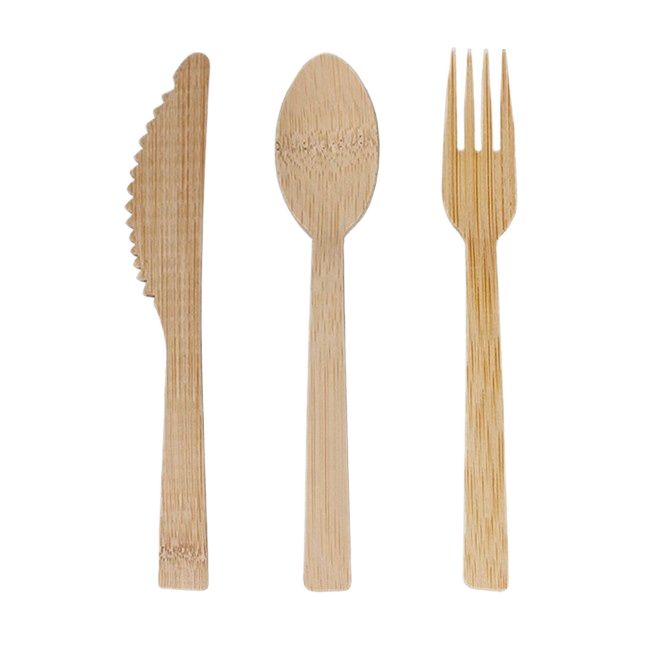
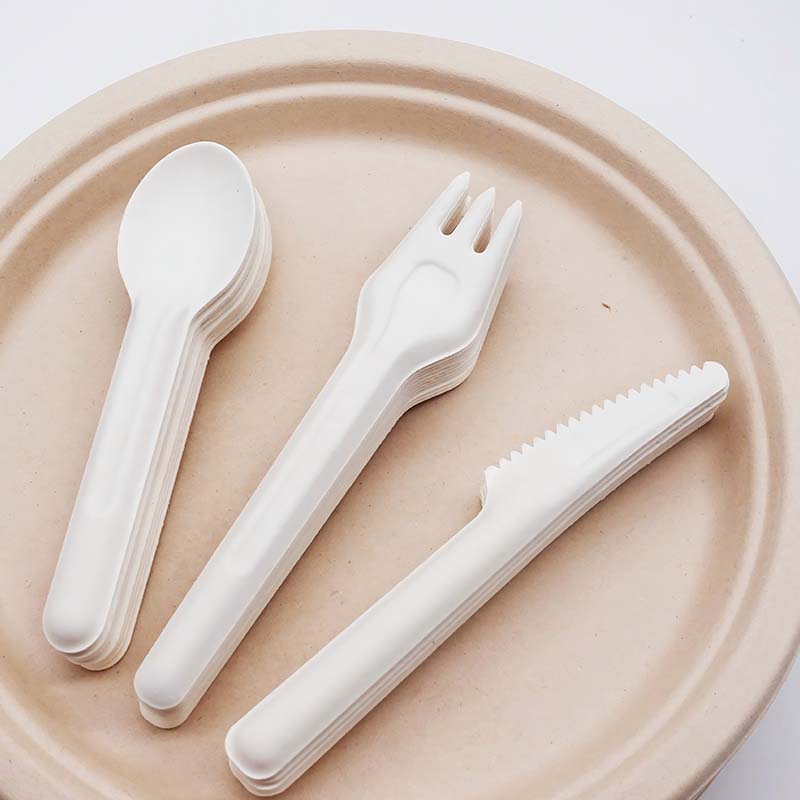
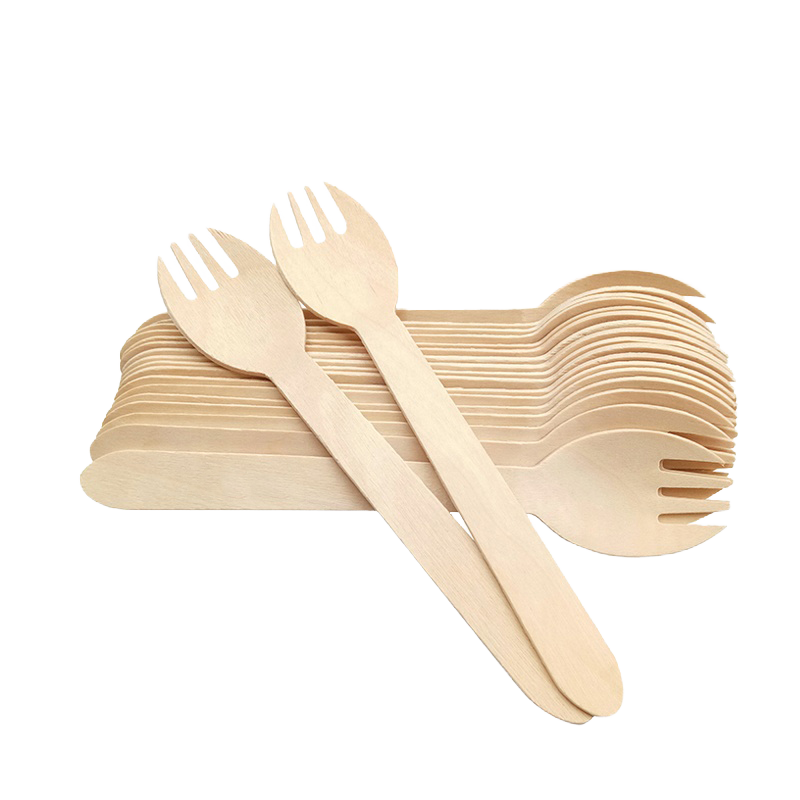
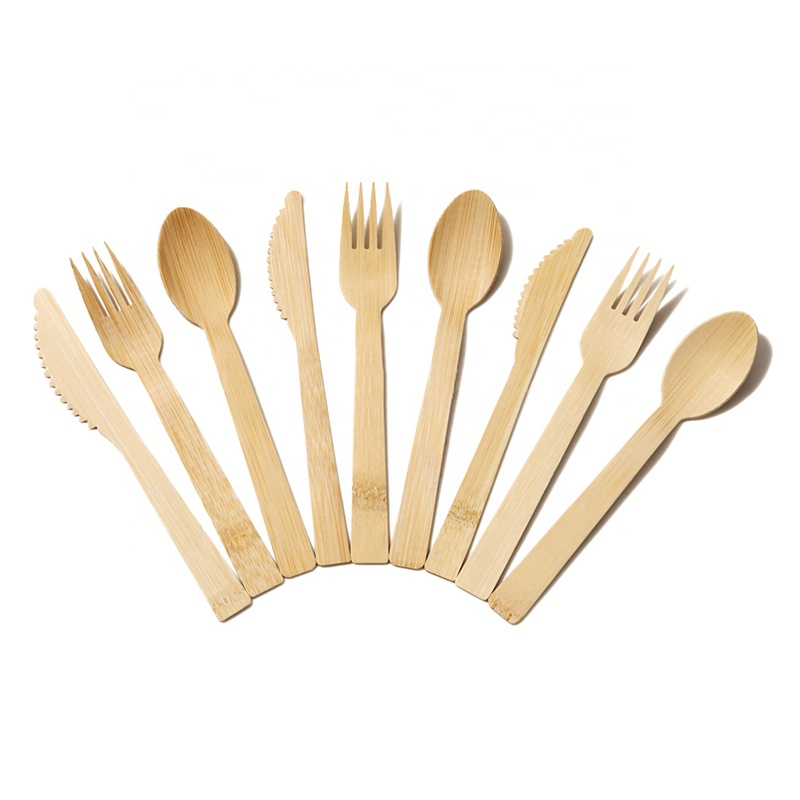
| Plastic cutlery (forks, knives, spoons) | Bamboo cutlery |
| Plastic plates | Bamboo plates, wooden plates, bagasse plates |
| Plastic straws | Bamboo straws, reed straws, wheat straws |
| Plastic stirrers | Bamboo or wood stirrers |
| Balloon sticks | Paper or bamboo sticks |
| Cotton bud sticks | Paper-stemmed swabs |
| EPS (expanded polystyrene) food and beverage containers, including cups | Bagasse or bamboo fiber containers and cups |
| Oxo-degradable plastic products (all formats) | Genuinely compostable or reusable materials |
This ban only applies where an “affordable and easily available” alternative exists — which, for tableware and cutlery, the European Commission has determined is the case, which is why this category was banned outright rather than just restricted.
What’s New in 2026
1. Consumption Reduction Targets Take Effect
2026 is the year Member States must demonstrate a measurable reduction in consumption of key single-use plastic products, benchmarked against 2022 levels. This applies even to plastic product categories not banned outright (like plastic-lined cups), which means demand for plastic-free alternatives is set to rise as national governments tighten enforcement to hit these targets.
2. The New Packaging and Packaging Waste Regulation (PPWR) Begins Applying
Regulation (EU) 2025/40 entered into force in February 2025 and starts applying from 12 August 2026. It sits alongside the original SUP Directive and adds new restrictions, including:
- A ban on single-use plastic packaging for food and drinks consumed on-premises in hotels, bars, and restaurants.
- A ban on single-use plastic packaging for pre-packed fresh fruit and vegetables under 1.5kg.
- A ban on single-use plastic packaging for individual condiment, sauce, creamer, and sugar portions.
- A ban on single-use plastic miniature toiletries in hotels.
- A cap on very lightweight plastic carrier bags, with Member States free to require these be compostable.
A further wave of packaging-format restrictions under the PPWR’s Annex V is scheduled for 2030, so importers building a multi-year sourcing strategy should plan for compostable and reusable formats now rather than transitioning twice.
3. The Green Claims Directive Changes What You Can Say, Not Just What You Can Sell
From 2026, generic sustainability language — “eco-friendly,” “biodegradable,” “natural,” “sustainable” — without independently verified backing becomes a compliance risk under the EU Green Claims Directive. This doesn’t restrict which products can be sold, but it does mean an importer’s own marketing and packaging need to lean on specific, certified claims (EN 13432 compostability, FSC sourcing, PFAS-free lab results) rather than unverified green language. See the certification checklist below for the documentation this requires.
4. The SUP Directive Itself Is Under Formal Review
The European Commission is required to complete a full evaluation of the SUP Directive by July 2027, and opened a public consultation running into March 2026 to gather evidence. This doesn’t change current obligations, but it signals that further tightening — rather than any loosening — is the likely direction once the review concludes.
Also read – Wooden Cutlery Sourcing
Full Timeline: Key SUP Directive and PPWR Dates
| Date | Milestone |
| 3 July 2021 | SUP Directive enters into force; cutlery, plates, straws, stirrers, balloon sticks, cotton buds, EPS containers, and oxo-degradable plastics banned |
| 3 July 2024 | Bottle caps must remain attached to containers |
| 2025 | 77% separate collection rate required for plastic beverage bottles; 25% recycled content required in PET bottles |
| 2026 | Member States must show measurable consumption reduction vs. 2022 baseline; Green Claims Directive implementation begins; PPWR public consultation period on SUPD evaluation runs to March 2026 |
| 12 August 2026 | PPWR (Regulation 2025/40) begins applying — new restrictions on on-premises food packaging, pre-packed produce, condiment portions, hotel toiletries |
| 2029 | 90% separate collection target for plastic beverage bottles EU-wide; deposit return systems required |
| 2030 | 30% recycled content required in all plastic bottles; further PPWR Annex V packaging-format prohibitions begin |
| July 2027 | European Commission completes its formal evaluation of the SUP Directive |
What to Source Instead: Category by Category
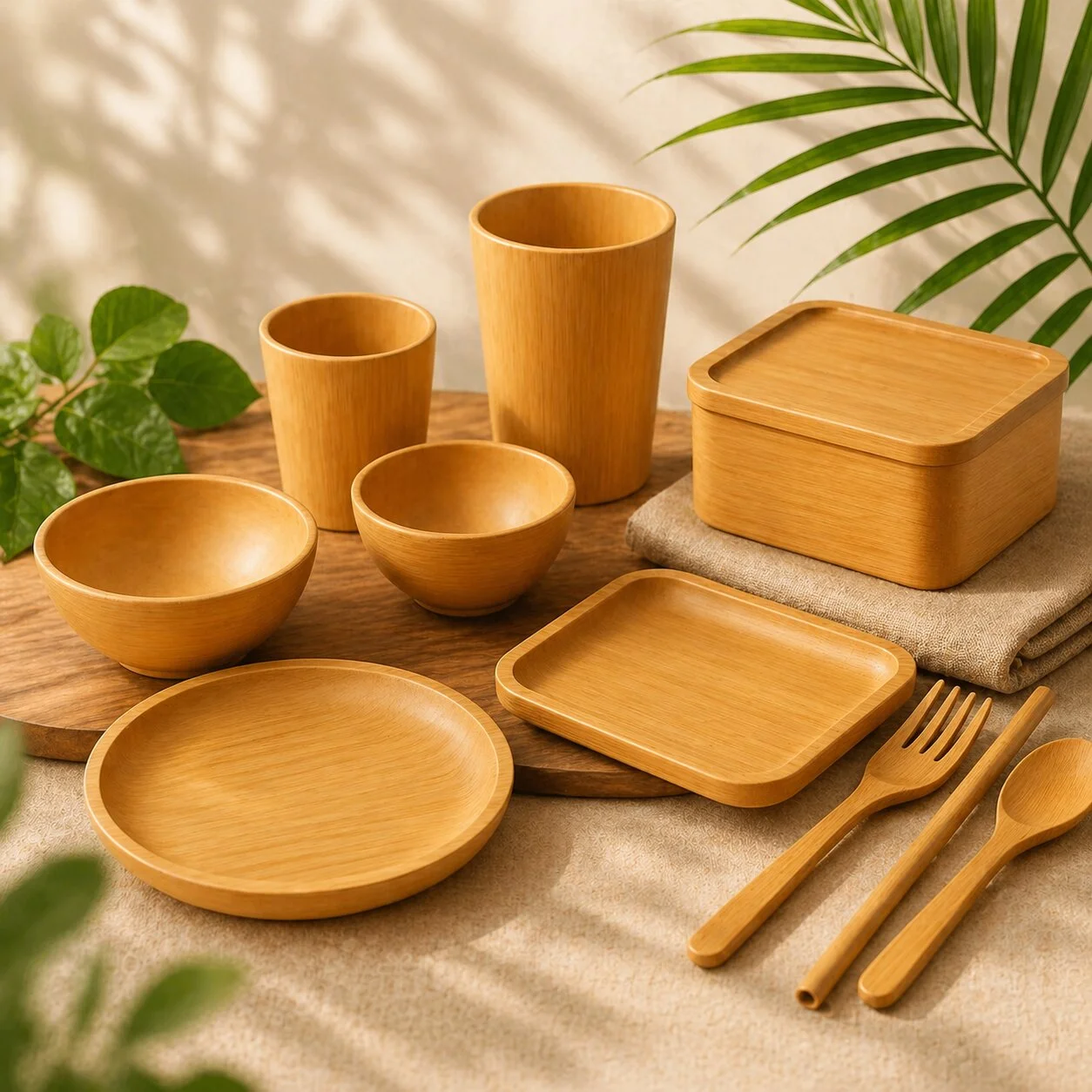
Cutlery: Bamboo cutlery is the most widely stocked compliant replacement, typically FSC and FDA/LFGB certified, priced around $0.02–$0.05 per unit at wholesale volumes above 50,000 pieces. Browse bamboo cutlery.
Plates: Bamboo plates suit premium, branded hospitality settings with heat resistance up to 200°C; bagasse plates suit high-volume takeaway at a lower price point. Browse bamboo plates and bagasse plates.
Straws: Bamboo straws are the only reusable, wide-diameter option suited to bubble tea and thick drinks; reed and wheat straws are lower-cost single-use options for standard beverages. Browse bamboo straws.
Chopsticks and sushi-service items: Bamboo chopsticks remain outside the core SUP ban list but are frequently sourced alongside compliant tableware by the same distributors for a unified certified product line. Browse bamboo chopsticks.
Certification Checklist for EU-Bound Shipments
Given the Green Claims Directive’s tightening of what marketing language is defensible, importers sourcing for the EU market in 2026 should request:
- EN 13432 or OK Compost Industrial certification for compostability claims the standard actually referenced in EU packaging law.
- FSC or FSC Mix certification with a checkable license number for any wood or bamboo sourcing claim.
- LFGB or EU food-contact declaration (EC 1935/2004) for food-safety compliance.
- PFAS-free test results from an accredited lab, since several jurisdictions are moving to restrict fluorinated coatings in food packaging.
- A supplier able to document all of the above per product line, not just at the company level; certification scope matters as much as certification existence.
Also read – Eco-Friendly Tableware Certifications Explained
Sourcing Certified Alternatives for the EU Market
Meeting both the SUP Directive and the incoming PPWR requirements means every plastic item on the banned list needs a genuinely certified replacement — not just a product marketed as “eco-friendly.” FriendlyBamboo manufactures FSC-certified, FDA- and LFGB-compliant bamboo, wood, and bagasse tableware, cutlery, straws, and chopsticks, with certificate documentation available per product line for EU import and Green Claims Directive compliance. The full range — bamboo cutlery, bamboo and bagasse plates, straws, and chopsticks — ships to 50+ countries with private-label and custom-branding options for distributors building an EU-compliant product line from a single supplier.
Frequently Asked Questions
No. Single-use plastic cutlery has been banned from sale across all EU Member States since 3 July 2021, and this remains unchanged in 2026.
The SUP Directive (2019/904) is the original law banning specific single-use plastic items like cutlery and straws. The Packaging and Packaging Waste Regulation (2025/40), which starts applying from 12 August 2026, sits alongside it and adds broader restrictions on plastic packaging formats — including on-premises food packaging, pre-packed produce, and condiment portions — that go beyond the original 10-item list.
Not automatically. The claim needs to be backed by EN 13432 certification (or an equivalent recognized standard) to hold up under the Green Claims Directive’s requirement for verified, substantiated environmental claims, which begins affecting marketing language from 2026.
The PPWR schedules further packaging-format restrictions under its Annex V from 2030, and the European Commission’s formal evaluation of the SUP Directive, due by July 2027, is expected to inform whether additional items are added to the existing ban list.