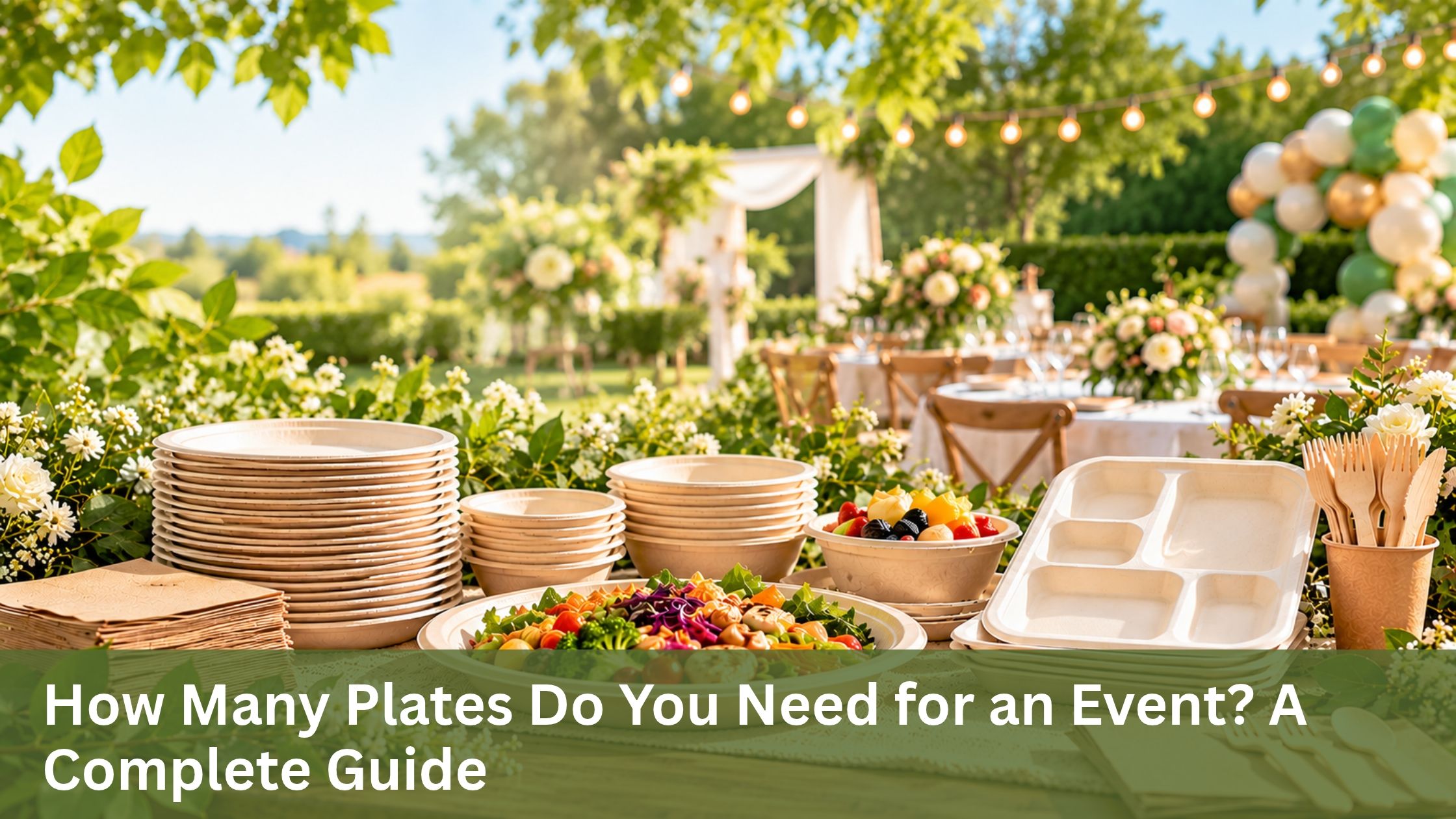
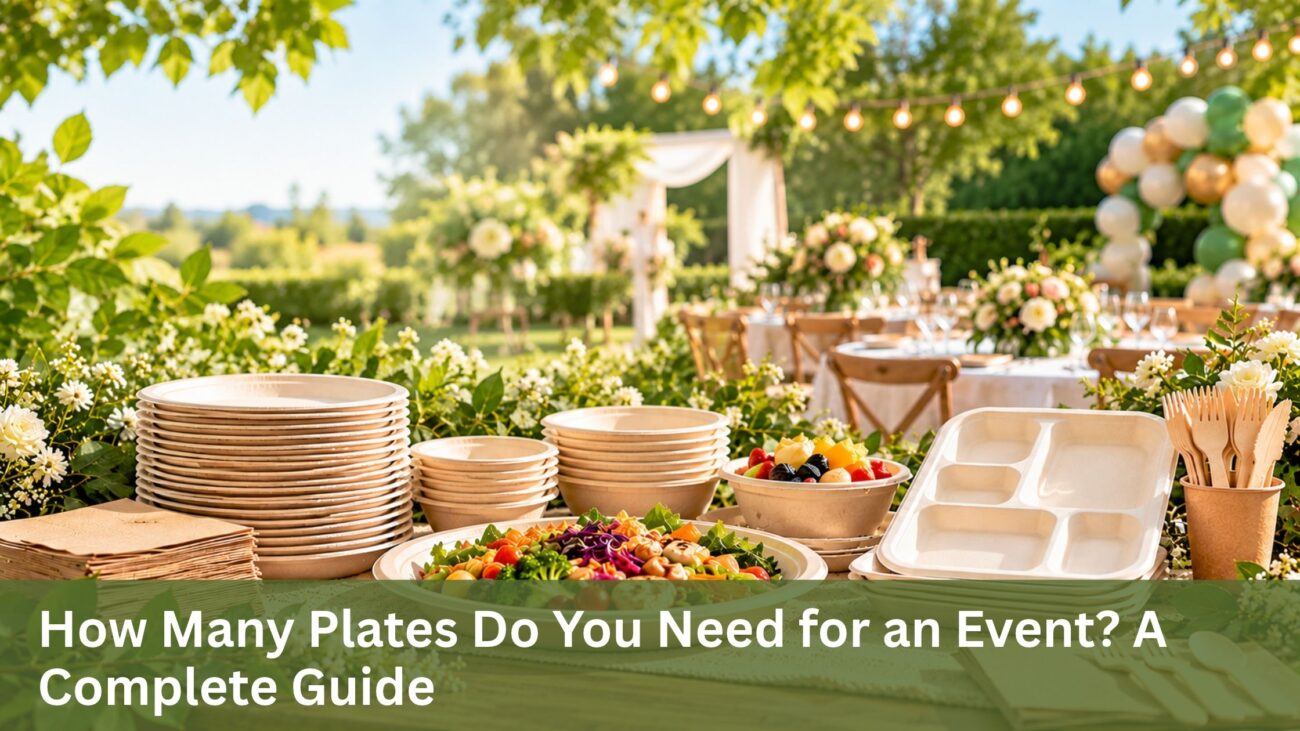
Plan on about 3 plates per guest for most events with a main course and dessert, then add 10–15% extra. A plated dinner with no seconds can run on less, while a buffet with several trips or a long cocktail reception may need more.
Published guides give answers from 1.25 to 6 plates per guest because they assume different menus and service styles. The formula below lets you work out the right number for your own event.
Key takeaways
- Plated dinner: 1 plate per course, usually 3 per guest (starter, main, dessert).
- Buffet: about 2 dinner plates plus 1 dessert plate per guest, because many guests go back for seconds.
- Cocktail reception: about 1 small plate per guest per hour.
- Add 10–15% extra for drops, extra guests and staff or vendor meals.
- Buffets need a clean plate for every trip. The FDA Food Code, adopted by many US states, bars self-service guests from using soiled plates to get more food.
- Match plate size to the course: 6–7″ for appetizers and dessert, 9″ for lunch or salad, 10″ or larger for mains.
How many plates per guest do you need for each type of event?
Use this table as a starting point, then adjust with the formula in the next section. Figures are per guest, before the 10–15% buffer.
| Event style | Small plates (6–7″) | Dinner plates (9–10″) | Dessert plates (7″) | Total per guest |
| Plated dinner, 3 courses | 1 (starter) | 1 | 1 | 3 |
| Buffet, main meal + dessert | 0 | 2 | 1 | 3 |
| Buffet with a starter or salad station | 1 | 2 | 1 | 4 |
| Cocktail reception, 2 hours | 2 | 0 | 0 | 2 |
| Cocktail reception, 4 hours | 4 | 0 | 0 | 4 |
| BBQ or casual party | 0 | 2 | 1 | 3 |
| Wedding: cocktail hour + buffet + cake | 1 | 2 | 1 | 4 |
| Office lunch drop-off | 0 | 1 | 0–1 | 1–2 |
The two columns people most often forget are dessert plates and small plates for a cocktail hour before the meal. Count them separately, because they are usually a different size.
Why do plate guides give such different numbers?
Because each one assumes a different event. Three examples show the spread:
- A party rental company suggests 1.25 plates per guest for smaller buffets, rising to 2–2.5 for larger ones with several mains and sides.
- An event planning guide recommends 2.5 dinner plates, two appetizer plates and 1.5 dessert plates per guest for a buffet dinner, which adds up to 6.
- On a wedding forum, most people planning a 40–45 guest buffet were told to double the plate count to cover seconds.
The gap comes from four variables:
- Courses. Every separate course served on its own plate adds one plate per guest.
- Service style. Plated service controls portions. Buffets let guests return.
- Seconds rate. Heavier menus and longer events bring more return trips.
- Clean-plate rules. Where every buffet trip needs a fresh plate, each return trip adds a plate.
Once you know these four for your event, the right number follows.
How do you calculate how many plates you need?
Work out each plate size separately, then add a buffer. This formula works for any event:
Plates of one size = (guests + staff and vendor meals) × plates of that size per person × 1.15
The 1.15 adds a 15% buffer. Use 1.10 for a plated dinner with a confirmed headcount and 1.20 for an outdoor or open-invitation event.
Worked example: 100-guest wedding
A wedding with a one-hour cocktail reception, a buffet dinner and cake, plus 8 vendor meals (photographer, band, planner and others):
- Headcount: 100 guests + 8 vendors = 108
- Small plates (6–7″): 108 × 1 × 1.15 = 124.2, round up to 125
- Dinner plates (10″): 108 × 2 × 1.15 = 248.4, round up to 249
- Dessert plates (7″): 108 × 1 × 1.15 = 124.2, round up to 125
- Total: 499 plates in three sizes
Quick reference: buffet with dessert
These figures assume 2 dinner plates and 1 dessert plate per guest, with a 15% buffer. Add staff and vendor meals to the guest count first.
| Guests | Dinner plates | Dessert plates | Total plates |
| 50 | 115 | 58 | 173 |
| 100 | 230 | 115 | 345 |
| 250 | 575 | 288 | 863 |
| 500 | 1,150 | 575 | 1,725 |
Round up to the nearest full pack or carton. Leftover plates keep for the next event; running out mid-service does not.
Do buffet guests need a new plate for seconds?
In most US jurisdictions, yes, when a licensed caterer or food business runs the buffet. Section 3-304.16 of the FDA Food Code, which states adopt into their own food rules, says self-service guests may not use soiled tableware, including disposable plates, to get more food from the buffet.
State codes repeat the rule almost word for word. Virginia’s retail food regulations state that self-service consumers may not use soiled tableware, including single-service articles, to take more food. California’s version goes further and requires that guests be told to use clean tableware when returning to buffets and salad bars.
The reason is cross-contamination. A used plate carries saliva and food residue back to shared serving utensils and dishes.
For planning, this means:
- Count plates per trip, not per guest. If you expect most guests to go back once, budget 2 dinner plates each.
- Put a small sign at the buffet asking guests to take a fresh plate for seconds.
- Keep stacks visible and restocked at the start of the line, so guests don’t return with their old plate.
- Set out a clear drop point for used plates away from the buffet.
Rules outside the US differ, so caterers should check local food safety guidance. A private host serving friends at home isn’t bound by food codes, but the hygiene reason still applies.
Also read –
Bamboo Straws vs. Paper Straws
ESG in the Food Service Industry
What plate sizes do you need for each course?
Match the plate to the portion. A plate that’s too small gets overloaded, and one that’s too large takes up table space and costs more per plate.
| Plate size | Best for | Notes |
| 5–6″ | Canapés, bread, single desserts | Easy to hold with a drink in the other hand |
| 7″ | Appetizers, cake, dessert, cocktail hour | The most common second size to order |
| 8–9″ | Salads, lunch portions, lighter buffets | Good for office catering and afternoon events |
| 10″ | Main courses, standard dinner buffets | The default dinner plate for most events |
| 11–12″ | Heavy buffets, BBQ, combination plates | Useful when guests load mains and sides together |
| Compartment plates | BBQ, school and institutional meals | Keeps sauces and sides from running together |
Most events need two sizes: a 10″ dinner plate and a 7″ plate for dessert and appetizers. Add a third only when a separate course calls for it.
Bagasse plates from Friendly Bamboo come in 5 to 12 inches, in round, oval, square, heavy-base and 3-compartment styles.
- Our bamboo plates come in 7, 9 and 10 inches, and our wooden plates in 6, 8, 9 and 10 inches.
Does plate material change how many you need?
Yes. Weak plates get doubled up, and plates that bend or leak get abandoned half-full. Either way, you use more than you planned.
| Material | Strength with heavy or wet food | Typical use | After the event |
| Thin paper | Low; can bend or soak through | Snacks, cake, dry food | Often not recyclable once food-soiled |
| Coated or heavy paper | Moderate | General party use | Depends on the coating |
| Bagasse (sugarcane fiber) | Rigid; resists grease and moisture | Buffets, BBQ, hot mains | Compostable where facilities accept it |
| Bamboo | Rigid, smooth surface | Premium catering, corporate events | Natural material; check local disposal |
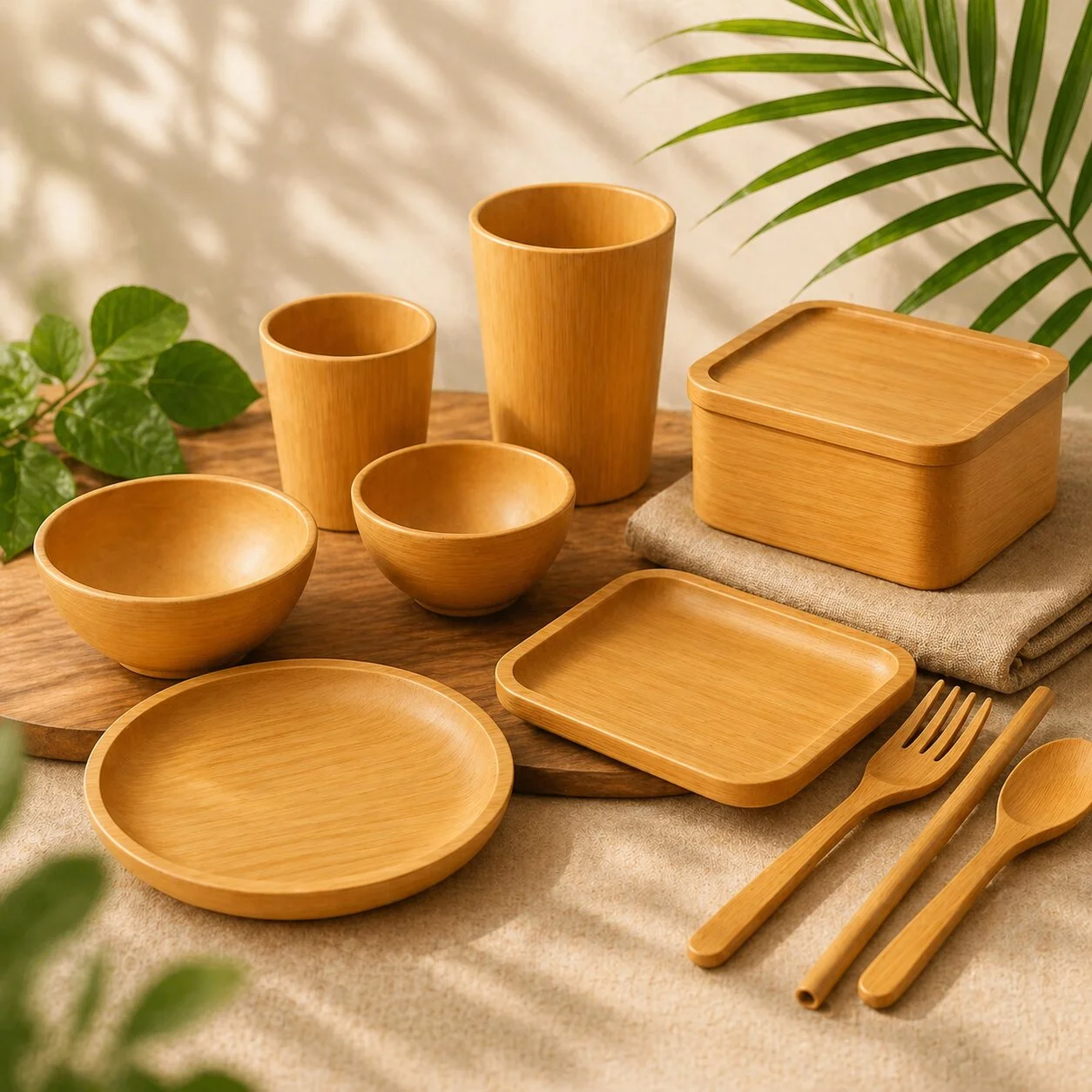
| Wood | Rigid and heavy | Rustic and premium events | Natural material; check local disposal |
If you use thin paper plates for a heavy main course, plan for guests stacking two together. That can nearly double your dinner-plate count. A rigid plate avoids that, though it costs more per unit.
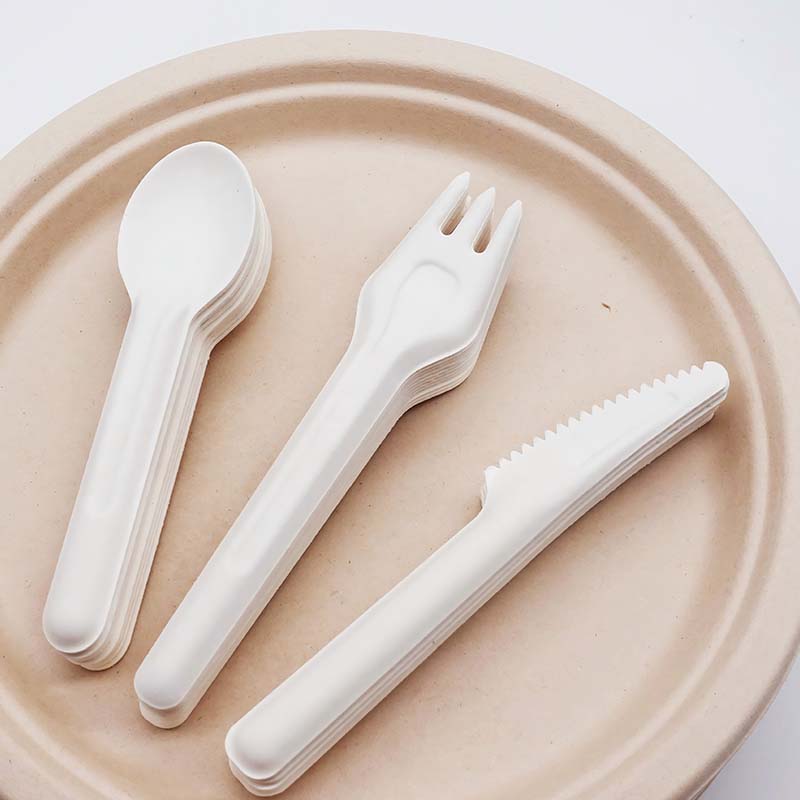
Friendly Bamboo’s bagasse plates are molded under heat and pressure, which gives them the rigidity to hold a full meal one-handed. For premium events, see our bamboo plates and wooden plates.
- Friendly Bamboo’s bagasse plates are molded under heat and pressure into a rigid plate, including heavy-base and compartment styles for fuller meals. For premium events, see our bamboo plates and wooden plates.
If you plan to label plates as compostable at your event, check which claims need certification in our guide to bio-based, biodegradable and compostable materials.
How many forks, napkins and cups should you order with your plates?
Scale everything else from your plate count. These are planning rules of thumb, so adjust them to your menu.
| Item | How many | Why |
| Forks | 1 per plate, including dessert plates | Guests take a new fork with each fresh plate |
| Knives | 1 per dinner plate | Skip for finger food and cocktail receptions |
| Spoons | 1 per guest for each soup or spooned dessert | Only when the menu needs them |
| Napkins | 2–3 per guest | More for BBQ, ribs or messy finger food |
| Cups | 2 per guest for the first hour, then 1 per guest per extra hour | Guests set cups down and lose track of them |
| Straws and stirrers | 1 per drink that needs one | Order for the drinks that need them, not every guest |
For the 100-guest wedding example above, 499 plates means about 499 forks and 249 knives.
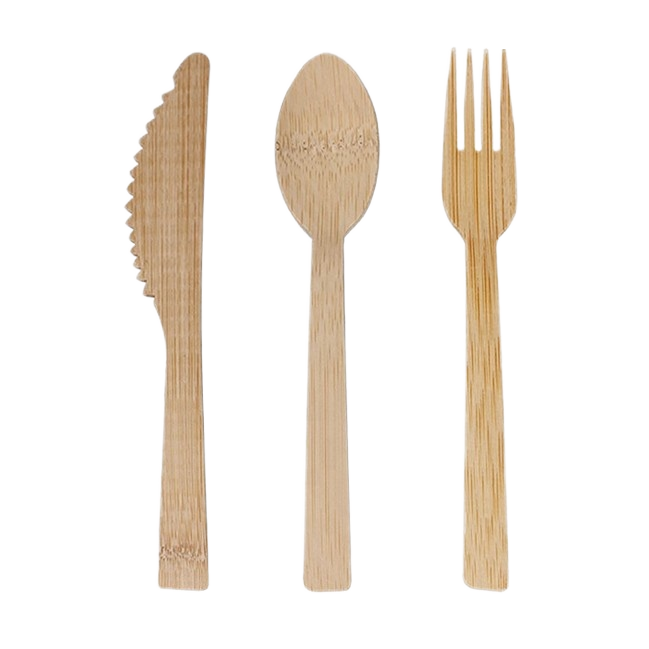
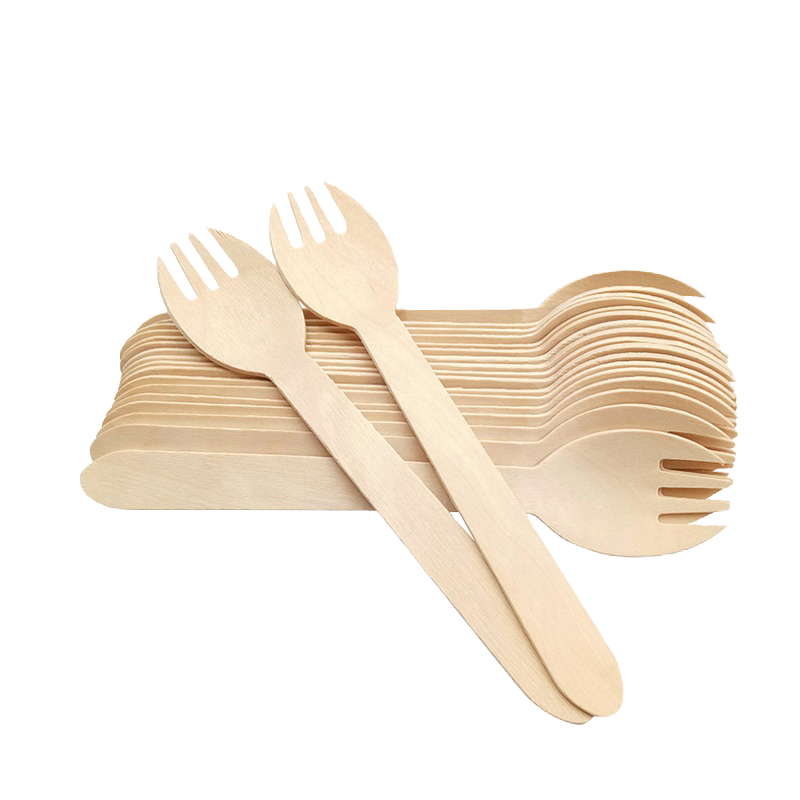
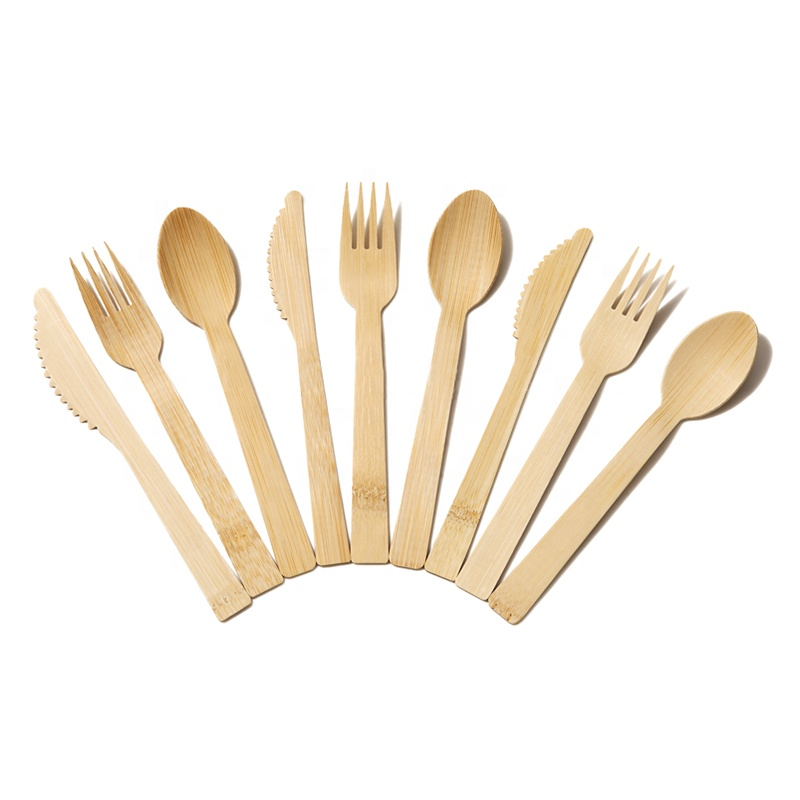
Friendly Bamboo supplies bamboo and birch wood cutlery, straws and stirrers alongside its plates, so the full table setting can come from one order. See our bamboo foodservice products guide for the range.
How do you turn a plate count into a bulk order?
Caterers, venues and distributors buy plates by the carton, not by the plate. Convert each size separately:
Cartons to order = plates needed ÷ plates per carton, rounded up
Then check the total against the supplier’s minimum order.
Example: a caterer’s monthly order
This is a worked example. Friendly Bamboo packs bagasse plates at 500 or 1,000 plates per carton depending on size, so check the product catalog for each item before ordering.
| Plate | Needed per month | Plates per carton (example) | Cartons |
| 10″ dinner | 920 | 500 | 2 (1.84 rounded up) |
| 7″ dessert | 460 | 1,000 | 1 (0.46 rounded up) |
That’s 3 cartons a month. Ordering a quarter at once (9 cartons) usually lowers the unit price and reduces the risk of running short between deliveries.
Friendly Bamboo’s bagasse plates are listed with a minimum order of 10 cartons.
Friendly Bamboo packs bagasse plates at 500 or 1,000 per carton, depending on size, with a minimum order of 10 cartons. Samples are free; the buyer covers the shipping cost.
Frequently asked questions
For a buffet with dessert, about 345 plates: 230 dinner plates and 115 dessert plates, including a 15% buffer. For a three-course plated dinner, about 330 plates: 110 each of starter, dinner and dessert plates, with a 10% buffer.
About 2 dinner plates and 1 dessert plate per person, plus a 10–15% buffer. Add a small plate per person if there’s a separate appetizer or salad station.
About 1 small plate per guest per hour. A two-hour reception for 80 guests needs around 160 small plates, plus a buffer.
Add 10–15% for most events. Go up to 20% for outdoor events, open invitations or buffets with heavy menus.
Yes, for most events. Guests rarely want cake on a plate used for the main course, and a 7″ dessert plate costs less than a dinner plate.