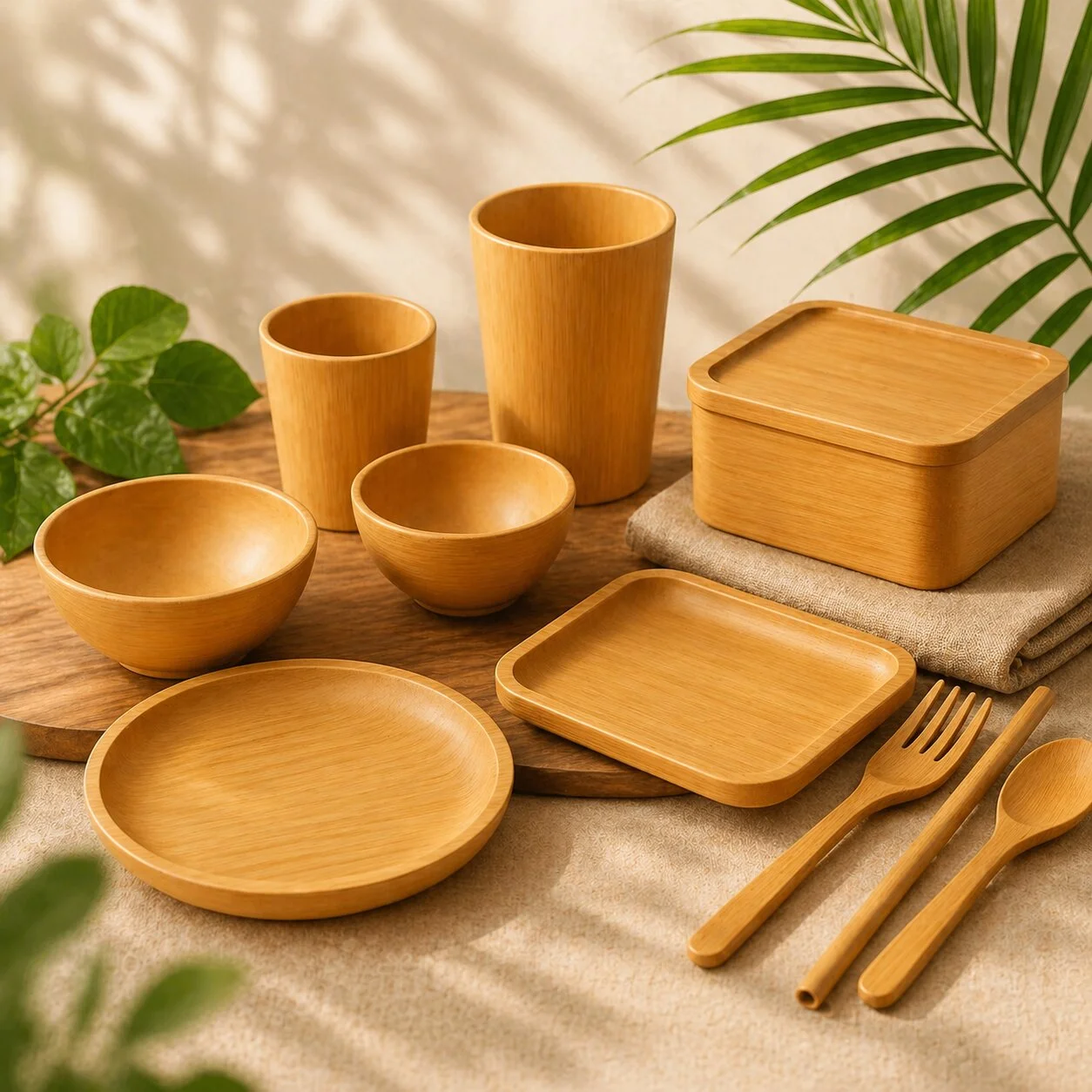
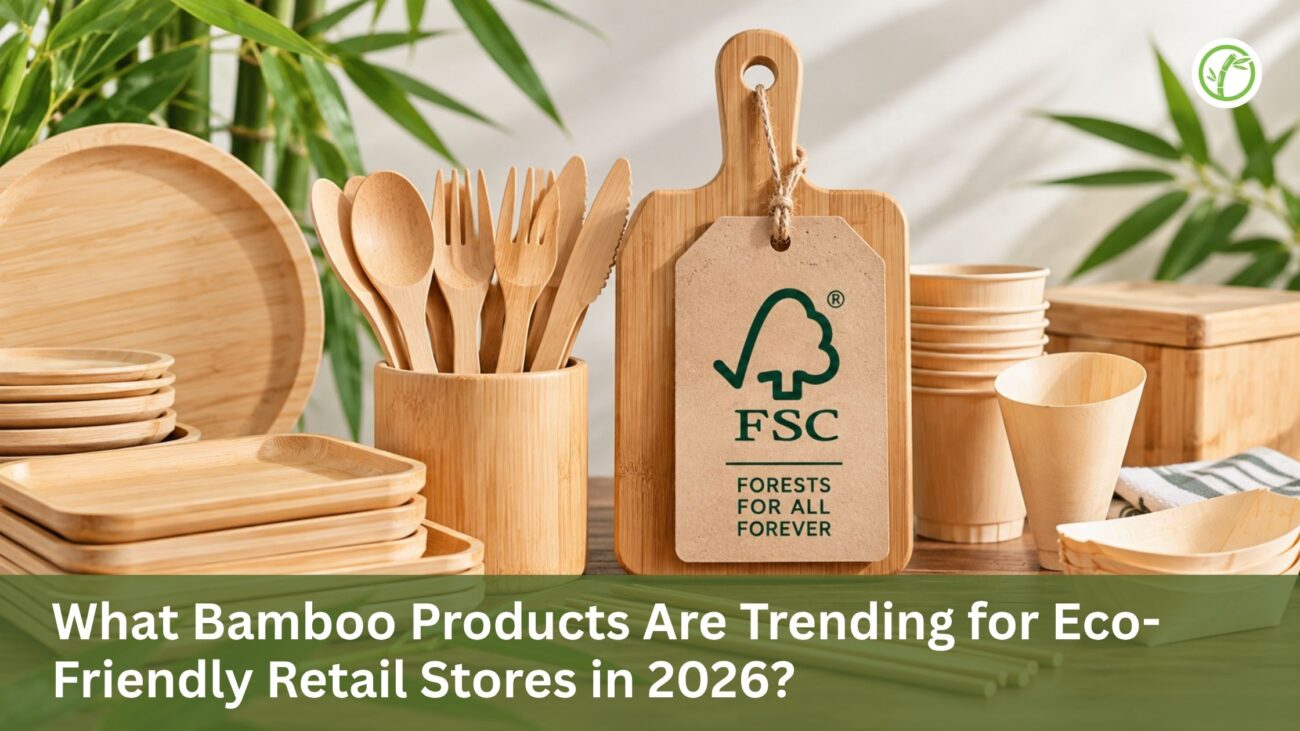
tableware, bamboo straws and cocktail picks, kitchen utensils, toothbrushes, home décor items, and bamboo-fiber textiles, all driven by plastic bans, rising consumer sustainability awareness, and a global market now valued at over USD 87 billion.
The bamboo product market is not a niche anymore. It is a mainstream retail category growing at a steady 5–10% annually, with furniture and personal care products leading search demand and disposable bamboo tableware riding a wave of regulatory tailwinds worldwide. For eco-friendly retail stores in 2026, knowing which categories are accelerating and why is the difference between stocking what customers want and chasing yesterday’s trend.
The 2026 Bamboo Market: What the Numbers Say
The global bamboo products market is valued at approximately USD 87.12 billion in 2026, and is projected to reach USD 150 billion by 2036, growing at a CAGR of 5.6%. A separate market study puts the broader bamboo and bamboo products market at USD 78.9 billion in 2026, expected to reach USD 160.7 billion by 2033 at a faster 10.7% CAGR the variance reflects different scope definitions, but the direction is unambiguous.
For retail stores specifically, the most relevant data points are: online retail now accounts for 36.8% of bamboo product sales (the dominant and fastest-growing channel), furniture holds the largest single product-type share at ~29%, and consumer goods like personal care, kitchenware, and tableware are the fastest-growing segments in unit volume.
| Product Category | Key Markets | 2026 Demand |
|---|---|---|
| Bamboo Tableware & Disposables | Food service, delivery, events | High — driven by plastic bans |
| Bamboo Straws & Picks | Bars, restaurants, retail kits | Very High — straw bans expanding |
| Bamboo Kitchenware | Home cooks, gifting, retail | High — cutting boards #1 seller |
| Bamboo Personal Care | Wellness, zero-waste shoppers | Very High — toothbrushes leading |
| Bamboo Home Décor | Interior design, gifting | High — furniture fastest CAGR |
| Bamboo Textiles | Apparel, bedding, towels | Growing — hospitality & fashion |
| Bamboo Cleaning Tools | Eco households, retail | Steady growth |
1. Bamboo Tableware and Disposable Serviceware
This is the category with the strongest structural tailwind for retailers in 2026: plastic bans are now active or expanding in the EU, UK, US states, Canada, India, and dozens of other markets. Every ban creates an immediate, non-optional buying event for businesses and consumers alike.
What’s Selling
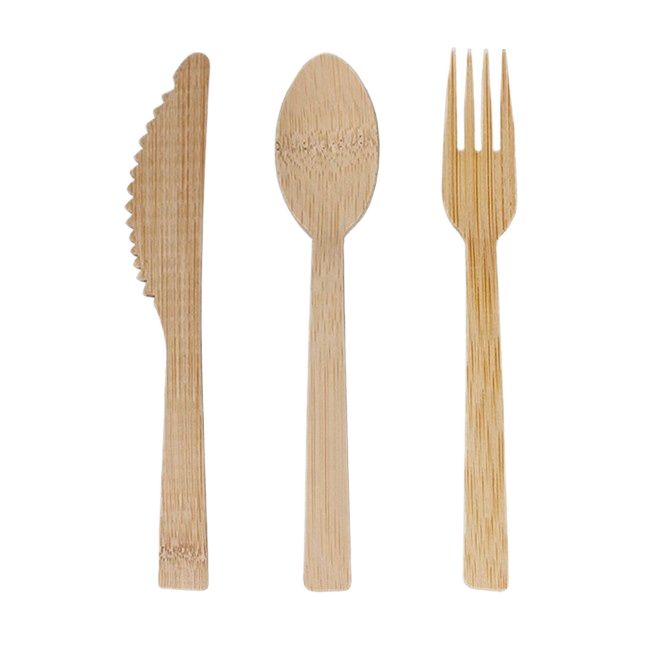
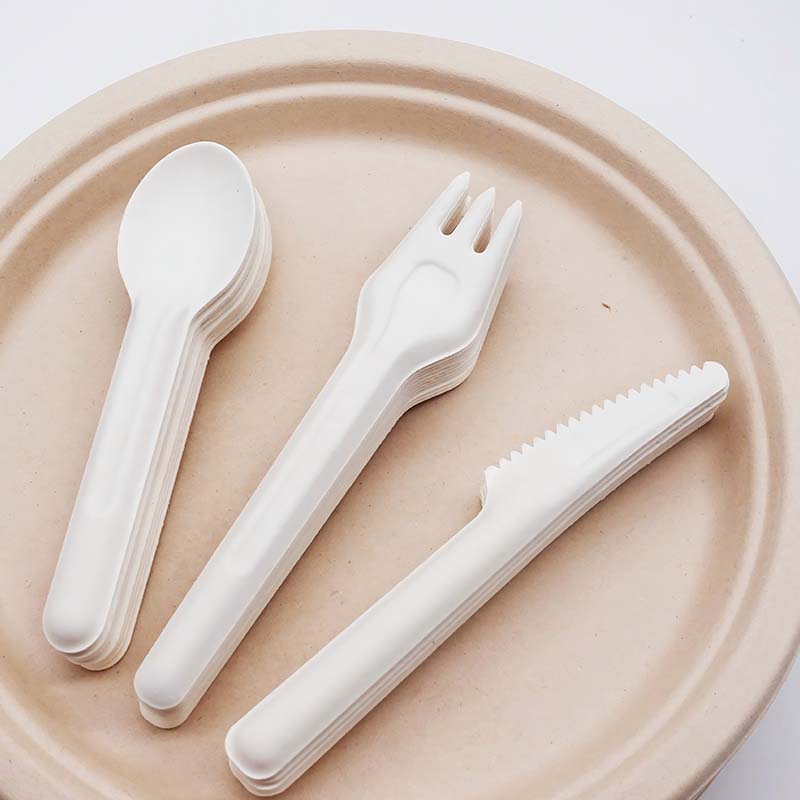
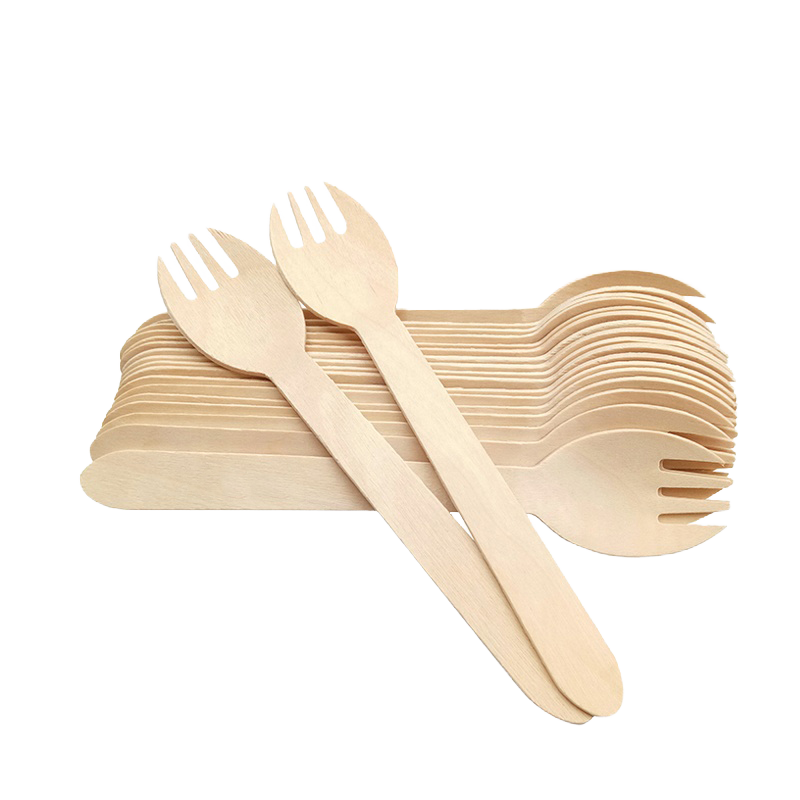
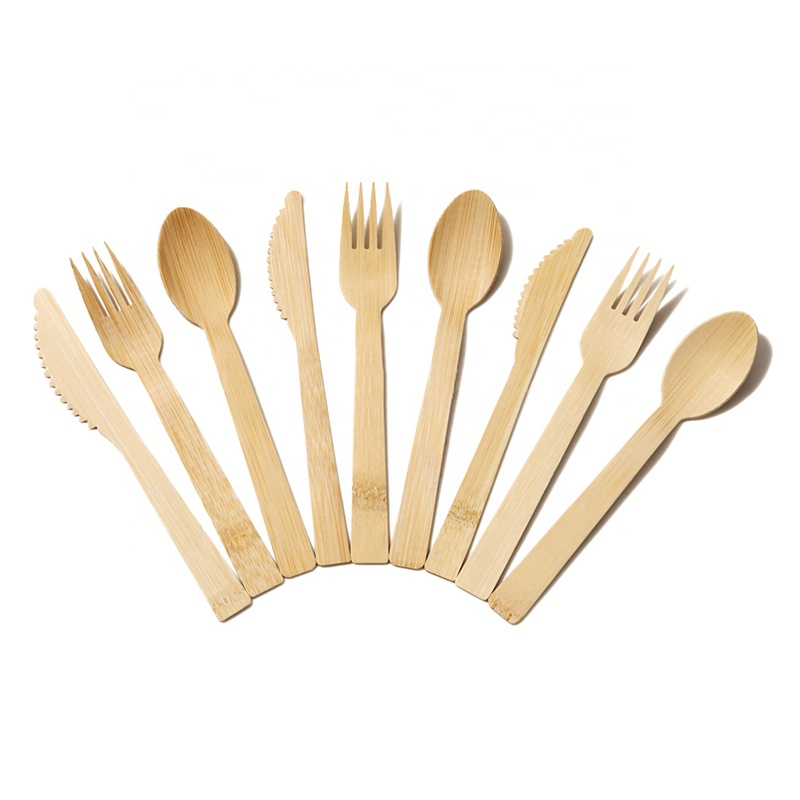
Bamboo disposable plates, bamboo cups, chopsticks, and cutlery sets are consistent movers in eco-retail stores. Customers buying for events, outdoor dining, meal prepping, and gifting all land in this category. Bundle pack a plate, fork, knife, spoon, and straw in a kraft paper sleeve perform particularly well as sustainable gift sets and zero-waste starter kits.
- Bamboo disposable plates — lightweight, biodegradable, and aesthetically superior to paper or foam alternatives. Bamboo disposable plate manufacturers in China offer factory-direct pricing for retail buyers sourcing at volume.
- Bamboo tableware sets — complete cutlery sets for dine-in or takeout. Friendly Bamboo’s range of wholesale bamboo tableware covers everything from basic sets to premium boxed gift options.
- Bamboo and twin chopsticks — a staple for Asian-cuisine stores, sushi retailers, and zero-waste kitchen sections. Tensoge bamboo chopsticks and twin chopsticks are strong wholesale movers.
Also read – How to source bamboo kitchenware wholesale for distribution
Why It’s Trending
Beyond plastic bans, the ‘eco-gifting’ trend is pushing bamboo tableware sets into retail gift sections. A bamboo picnic set or a boxed bamboo kitchen starter kit is a consistent seller around holidays, housewarmings, and zero-waste lifestyle launches. It has the visual appeal of a premium product at an accessible price point.
2. Bamboo Straws, Cocktail Picks, and Skewers
Plastic straw bans have been in effect across the EU since 2021 and across growing parts of the US and Asia. That regulatory pressure has created one of the most durable replacement markets in the sustainable products space. Bamboo straws are now a permanent fixture in eco-retail stores, not a seasonal trend.
Bamboo Straws
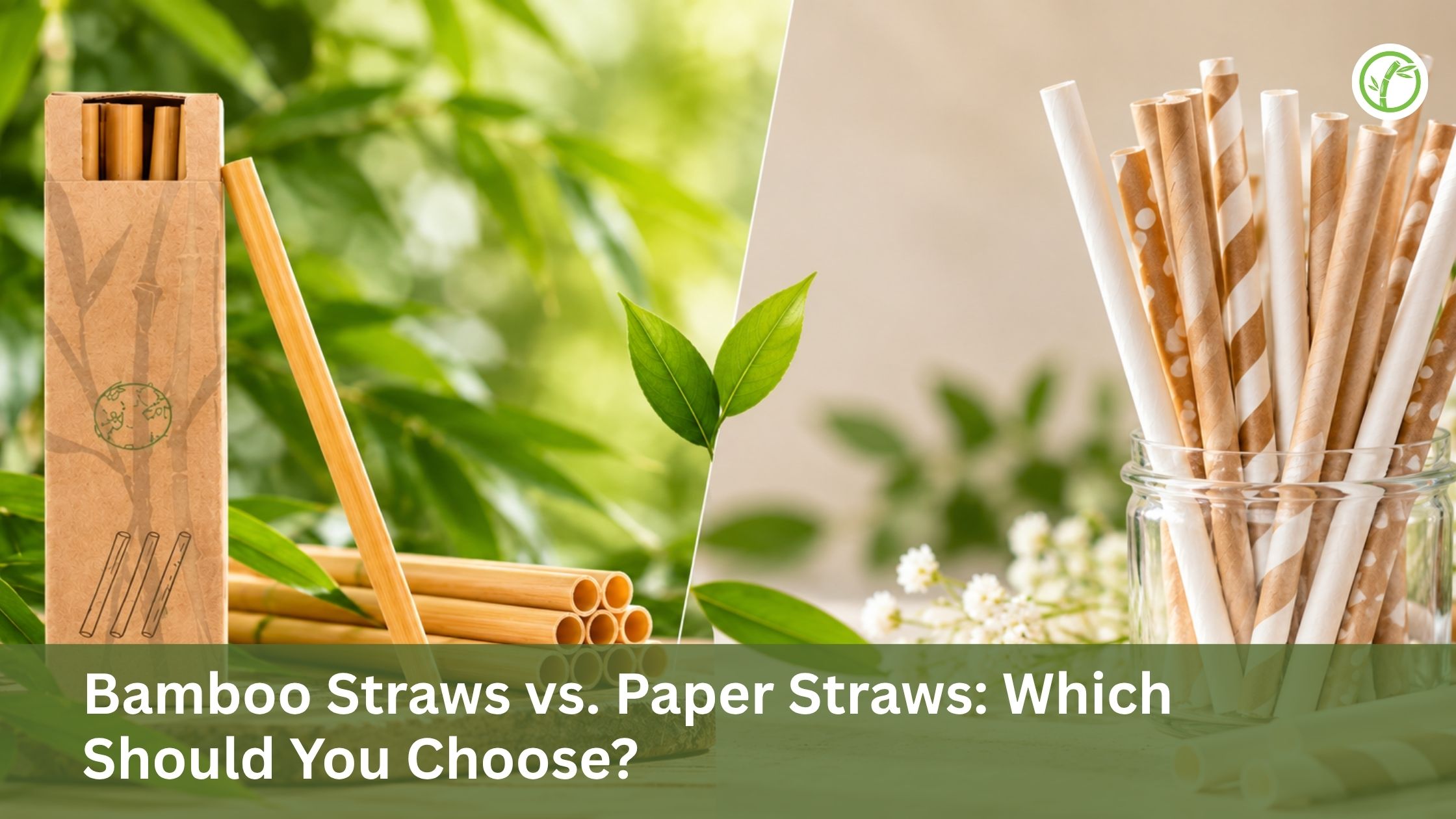
Bamboo straws are reusable, naturally antimicrobial, and biodegradable at the end of life. Unlike paper straws, which have suffered a severe consumer backlash for going soggy, bamboo straws hold their structure through long drinks and are used by bars, cafés, and home consumers alike. Retailers often stock them in sets of 6 or 12, sometimes paired with a cleaning brush and a linen pouch for the gift market. Friendly Bamboo’s bamboo straw manufacturers’ guide is a useful reference for buyers sourcing at wholesale volumes. Reed straws and wheat straws are also gaining ground as complementary SKUs — see wholesale reed straws and wheat straws wholesale for sourcing options.
Bamboo Cocktail Picks and Food Picks
This is an underrated growth category that smart eco-retailers are increasingly adding to their bar and entertaining sections. The craft cocktail movement has created genuine demand for premium-looking, sustainable cocktail garnish tools — and bamboo delivers the aesthetic at a fraction of the cost of metal alternatives.
Knotted picks, flag picks, sword picks, paddle picks, and flat skewers all serve different food and beverage presentation purposes. Bamboo cocktail picks (wholesale), bamboo knot cocktail picks, and bamboo flag picks are popular SKUs for retailers serving the bar, catering, and entertaining market. Bamboo umbrella picks — the classic tiki drink garnish — are also seeing a resurgence with the rise of tropical and craft cocktail culture; browse wholesale bamboo umbrella picks for options.
Flat Bamboo Skewers
Flat bamboo skewers have a grip advantage over round ones for holding food and are popular for BBQ, appetizer trays, and charcuterie boards — a category that has exploded in home entertaining culture. Flat bamboo skewers wholesale are a natural pairing with cheese boards and entertaining kits for eco-retail stores.
Retailer insight: Bundling bamboo straws, cocktail picks, and flat skewers into a ‘sustainable bar kit’ or ‘eco entertaining set’ is a high-margin gifting product that requires no special product development — just thoughtful packaging.
3. Bamboo Kitchen Products
Kitchen products are the number one search category for bamboo products globally, with bamboo furniture the only segment consistently outperforming it. Bamboo cutting boards in particular have been Amazon bestsellers across multiple years and show no signs of slowing. The ‘GREENER CHEF 20 inch Bamboo Cutting Board’ has been a persistent top seller, reflecting the combination of durability, sustainability messaging, and the natural aesthetic that bamboo brings to a kitchen.
What’s Moving in Eco Retail Kitchenware
- Bamboo cutting boards — the anchor product of any eco kitchenware section. Multi-piece sets and reversible designs with juice grooves are the highest-performing SKUs.
- Bamboo cooking utensils — cooking spoons, spatulas, ladles, and tongs. Bamboo’s heat resistance and non-scratch properties make it genuinely superior for non-stick cookware.
- Bamboo dish racks and drying mats — a growing category as consumers replace plastic kitchen accessories with natural alternatives.
- Bamboo salad bowls and serving sets — popular as gift items and in the ‘natural kitchen aesthetic’ interior trend.
- Bamboo bed trays and breakfast boards — a rising lifestyle product that bridges kitchenware and home décor.
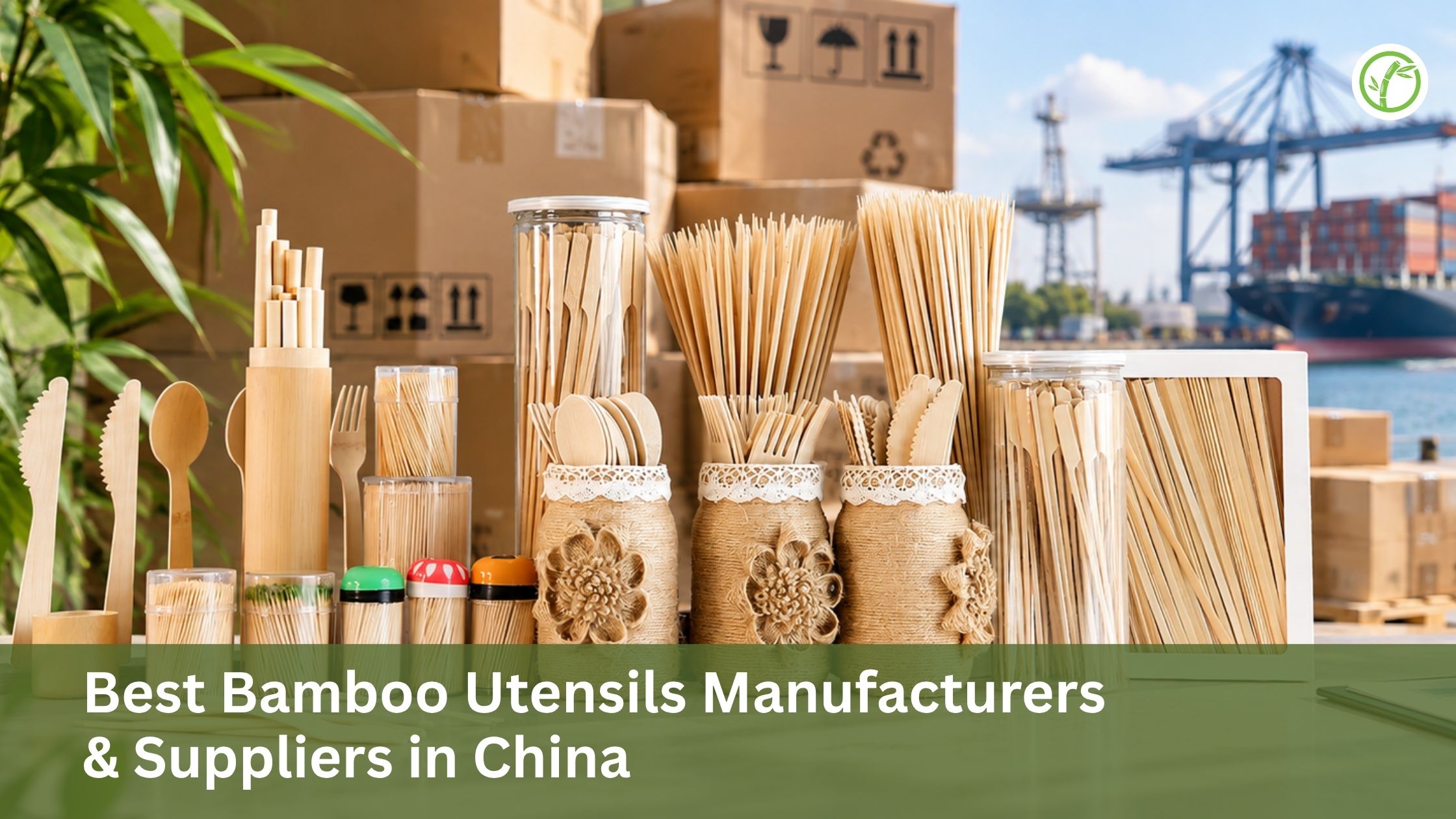
For retailers sourcing bamboo utensils at wholesale, Friendly Bamboo’s guide to bamboo utensils manufacturers in China covers verified suppliers with factory-direct pricing and customization options.
4. Bamboo Personal Care Products
The personal care segment is one of the most dynamic in the entire bamboo retail market. Bamboo toothbrushes are the single best-selling bamboo product on Amazon by volume, with the global bamboo toothbrush market valued at USD 40.76 billion in 2025 and growing at a 10% CAGR. That growth trajectory makes toothbrushes one of the safest category bets for any eco retailer.
Bamboo Toothbrushes
Kids’ variants with softer bristles and playful designs are a fast-expanding sub-category. Adults’ packs of 4–10 in kraft-paper packaging perform well both online and in zero-waste retail. Subscription box programs built around bamboo toothbrush replenishment have also proven a viable DTC model that some retailers are emulating with loyalty programs.
Bamboo Hairbrushes and Combs
After toothbrushes, bamboo hairbrushes and wide-tooth combs are the next most consistently purchased personal care items. The natural look fits the bathroom sustainability aesthetic that was identified as a top bathroom trend for both 2025 and 2026 by multiple interior design publications.
Bamboo Cleaning Brushes
Kitchen dish brushes, bottle brushes, and vegetable scrubbers with bamboo handles are seeing strong sales growth. These are natural add-ons for a zero-waste bathroom and kitchen section, especially when displayed near bamboo kitchen utensils or personal care bundles.
Other Rising Personal Care SKUs
- Bamboo-handle safety razors — reusable, durable, and popular with zero-waste communities
- Bamboo cotton swabs with paper stems — driven by cotton-bud plastic bans in the EU and UK
- Bamboo tongue scrapers — a rising wellness category alongside oil pulling and other oral hygiene routines
5. Bamboo Home Décor and Furniture
Furniture holds the largest single product-type share of the bamboo products market at approximately 29%, and the furniture segment is forecast to grow at the fastest CAGR through 2033. For eco-friendly retail stores, large furniture pieces may be out of scope, but smaller bamboo home décor items are highly accessible and perform extremely well in both gifting and lifestyle categories.
Smaller Décor Items for Retail
- Bamboo photo frames and wall art — a perennial gift category with natural aesthetic appeal
- Bamboo storage baskets and desk organizers — functional and visually aligned with the ‘natural minimalism’ home trend of 2026
- Bamboo bathroom shelves and accessories — explicitly named in 2026 bathroom design trends as a leading sustainable material
- Bamboo candle holders and lanterns — the craft and home-fragrance section has adopted bamboo as a natural companion material
- Bamboo plant pots and garden accessories — aligns with the houseplant trend that has shown no sign of fading
The unifying trend across all bamboo décor categories is ‘eco-luxury’ — the idea that sustainable materials can be premium, beautiful, and aspirational rather than simply virtuous. In 2026, affluent consumers are choosing bamboo, natural stone, and organic textiles over plastic and synthetic materials specifically because they project intentionality and taste alongside sustainability.
Also read – Which bamboo exporter offers private label packaging
6. Bamboo Textiles and Apparel
Bamboo fiber textiles are one of the fastest-growing segments globally. As of late 2025, there were 245 active Shopify stores specializing in bamboo clothing, with the US as the dominant market. Mainstream retailers, including Uniqlo and H&M Conscious Collection, are piloting bamboo-blend lines, signaling that this category is moving from niche to mainstream.
What’s Selling in Bamboo Textiles
- Bamboo socks — 138 Shopify stores selling bamboo socks at average prices of $12.99–$71. High repeat-purchase rate makes this ideal for eco-retail subscription or loyalty programs.
- Bamboo bedding and sheets — viral on TikTok for breathability and comfort. Hotel groups, including Marriott and Hilton, are transitioning to bamboo bedding, citing 30–40% lower laundering energy use.
- Bamboo activewear — moisture-wicking, antibacterial, and UV-absorbing properties make bamboo fabric ideal for gym wear, yoga, and outdoor activities.
- Bamboo baby clothing — hypoallergenic and soft properties drive strong parental demand in the baby and toddler segment.
- Bamboo towels — growing in the hospitality gifting segment and zero-waste bathroom category.
Important note for retailers sourcing bamboo textiles: A German retailer was fined €50,000 in 2024 for labeling bamboo viscose towels as ‘100% organic bamboo.’ Under EU law, viscose — a regenerated cellulose fiber — cannot be labeled ‘organic.’ Eco-retailers should ensure product descriptions are technically accurate to avoid regulatory penalties and maintain consumer trust.
7. Bamboo Stationery and Tech Accessories
A growing niche that eco-retailers are finding profitable because of its strong gifting appeal and relatively low competition. Bamboo has moved from kitchens and bathrooms into desks and gadgets.
- Bamboo phone cases — a consistent eco-gifting product with good margins
- Bamboo wireless charging pads — the natural material contrasts well with electronic products and appeals to sustainability-focused tech consumers
- Bamboo notebooks and journals — particularly popular in zero-waste office and school sections
- Bamboo pens and pencils — lower-cost gifting items that bundle well with notebooks
- Bamboo desk organizers and pen holders — bridge the office and home décor categories
How Should Eco Retailers Source Bamboo Products in 2026?
The quality and certification gap in the bamboo market is real. Not all bamboo products marketed as ‘eco-friendly’ are certified compostable or responsibly sourced. For retail stores that stake their brand on sustainability, product sourcing standards are non-negotiable.
Key Certifications to Require
- FSC (Forest Stewardship Council) — confirms responsible bamboo sourcing and forest management practices
- OEKO-TEX Standard 100 — for bamboo textiles, confirms no harmful substances in the finished product
- BPI or OK Compost — for disposable bamboo tableware and packaging, confirms genuine industrial compostability
- FDA and LFGB food safety — for any bamboo product that contacts food, especially cutlery, plates, and picks
Sourcing from China: What Retailers Need to Know
China is the world’s dominant producer of bamboo products, and factory-direct sourcing significantly reduces unit costs compared to buying through middlemen. For retailers and distributors considering direct import, Friendly Bamboo’s resources cover the full process: how to import eco-friendly products from China, cost breakdown for importing bamboo products, and how to find wholesale bamboo suppliers for distributors.
For retailers wanting to explore bulk factory pricing, the guide on where to buy bulk bamboo products at factory prices is a practical starting point.
Bamboo Product Retail Strategy: Category Priorities for 2026
| Category | Entry Price Point | Best Format | Key Selling Angle |
|---|---|---|---|
| Straws & Picks | Low | Gift sets, retail multi-packs | Plastic bans, bar trend |
| Tableware | Low–Medium | Sets, event packs | Plastic replacement, events |
| Kitchen Utensils | Medium | Individual + sets | Durability, non-toxic |
| Toothbrushes | Low | Family packs, subscriptions | Plastic-free oral care |
| Home Décor | Medium–High | Single items + bundles | Eco-luxury aesthetic |
| Textiles | Medium–High | Sets, subscriptions | Comfort + sustainability |
| Tech Accessories | Medium | Gift sets | Eco-gifting, office |
Frequently Asked Questions
Based on Amazon sales data and global market research, the consistent top sellers are: bamboo toothbrushes (leading by volume), bamboo cutting boards (dominant in the kitchen category), bamboo cooking utensils (spoons and spatula sets), bamboo bedding and sheets (viral growth via TikTok and hospitality adoption), and bamboo disposable tableware (plates, cups, and cutlery sets). In the food service channel specifically, bamboo straws, cocktail picks, and chopsticks are the most consistently ordered wholesale categories.
Virtually any bamboo product has eco credentials compared to its plastic equivalent, but the most genuinely eco-friendly bamboo products are those that are certified compostable or biodegradable, responsibly sourced (FSC-certified), and produced without hazardous chemical coatings. The best categories include bamboo disposable tableware (plates, cutlery, straws), bamboo toothbrushes and personal care items, bamboo kitchen utensils, and bamboo textiles certified under OEKO-TEX standards. Bamboo as a raw material is inherently sustainable it grows fully in 3–5 years, sequesters carbon as it grows, requires no pesticides, and regenerates from its own root system without replanting.
Demand is substantial and growing. The global bamboo products market is valued at approximately USD 87 billion in 2026 and is projected to exceed USD 150 billion by 2036. The fastest-growing demand segments are consumer goods (personal care, kitchenware, tableware) and bamboo fiber textiles. Online retail is the dominant and fastest-growing sales channel, accounting for nearly 37% of total bamboo product sales globally. Consumer surveys consistently show that 67% of shoppers prioritize eco-friendly materials, and Gen Z and Millennial buyers will pay a 15–20% premium for genuinely sustainable products, making bamboo a commercially compelling category for eco-retail stores.
In India, one of the world’s largest bamboo producers, Chhattisgarh, is officially called the ‘Bamboo State of India’, accounting for approximately 20–25% of India’s total bamboo production. Chhattisgarh’s bamboo forests in Bastar, Dhamtari, Bilaspur, and Raigarh are the backbone of India’s bamboo industry. Madhya Pradesh holds the largest bamboo-bearing area nationally at 18,394 sq km, while Assam grows about 51 species of bamboo and is especially known for traditional bamboo crafts and construction. Bamboo is considered an integral part of Assamese culture and livelihood. Maharashtra, Odisha, and Arunachal Pradesh also contribute significantly. In the US context, states like Georgia, Florida, and Alabama have been exploring bamboo cultivation as a sustainable crop, though China and India remain the dominant global production centers.