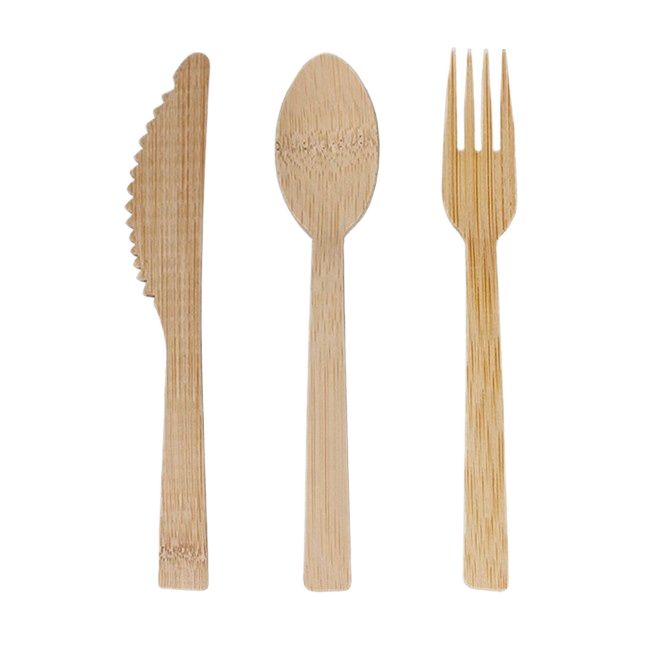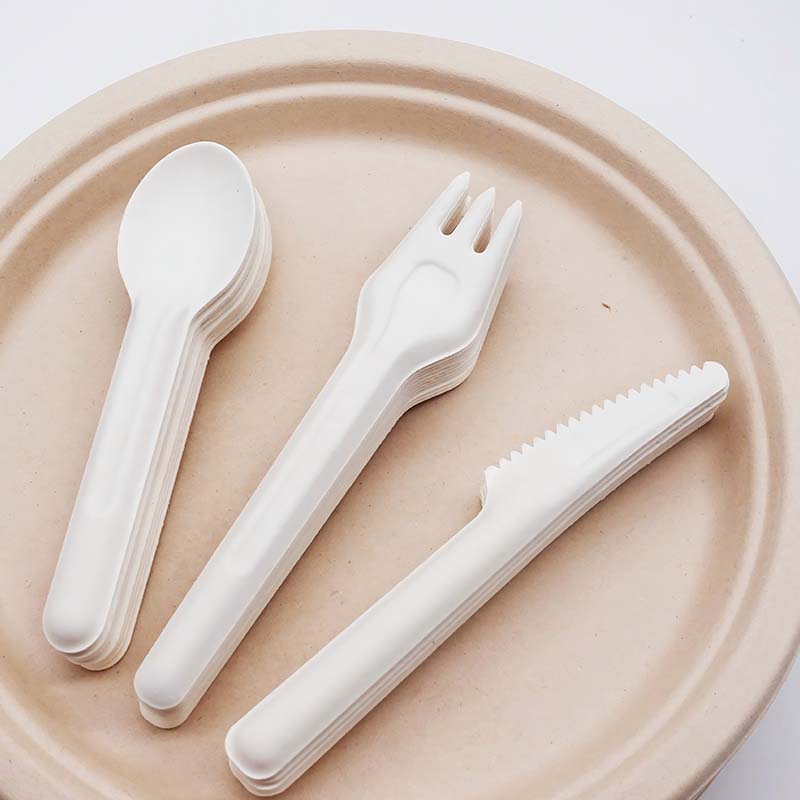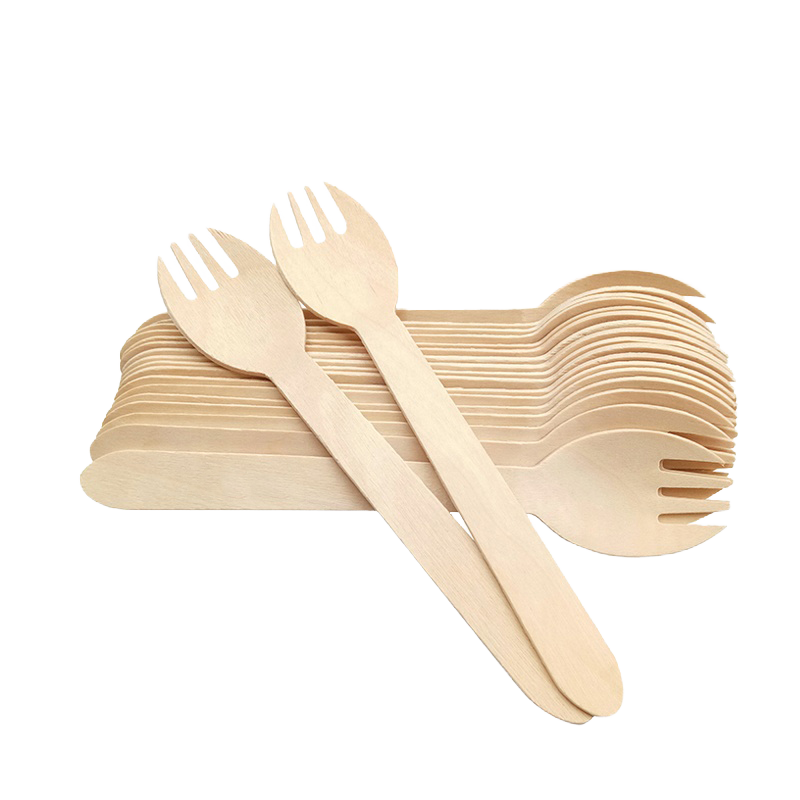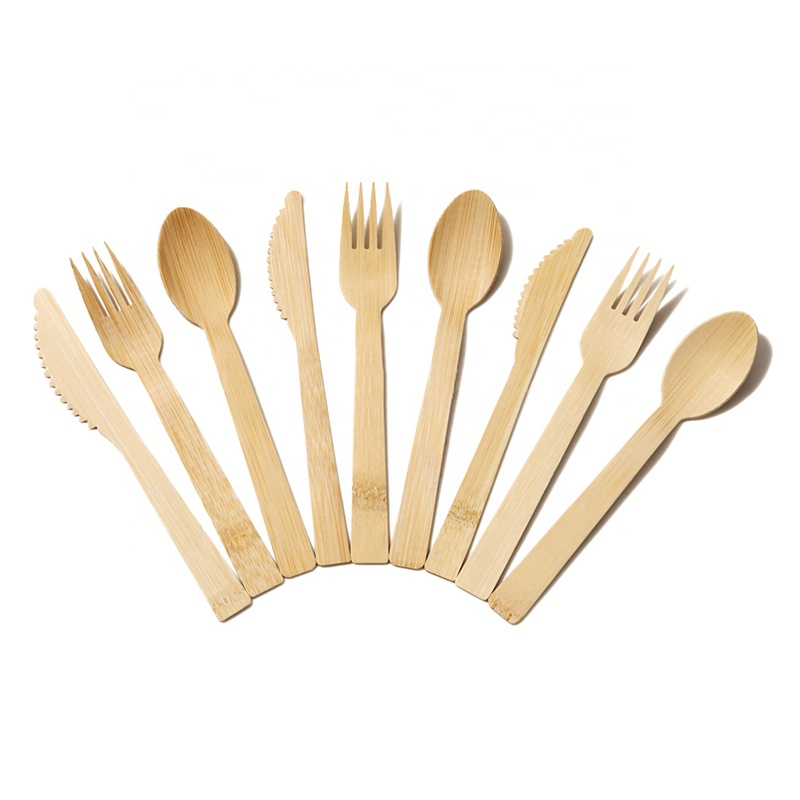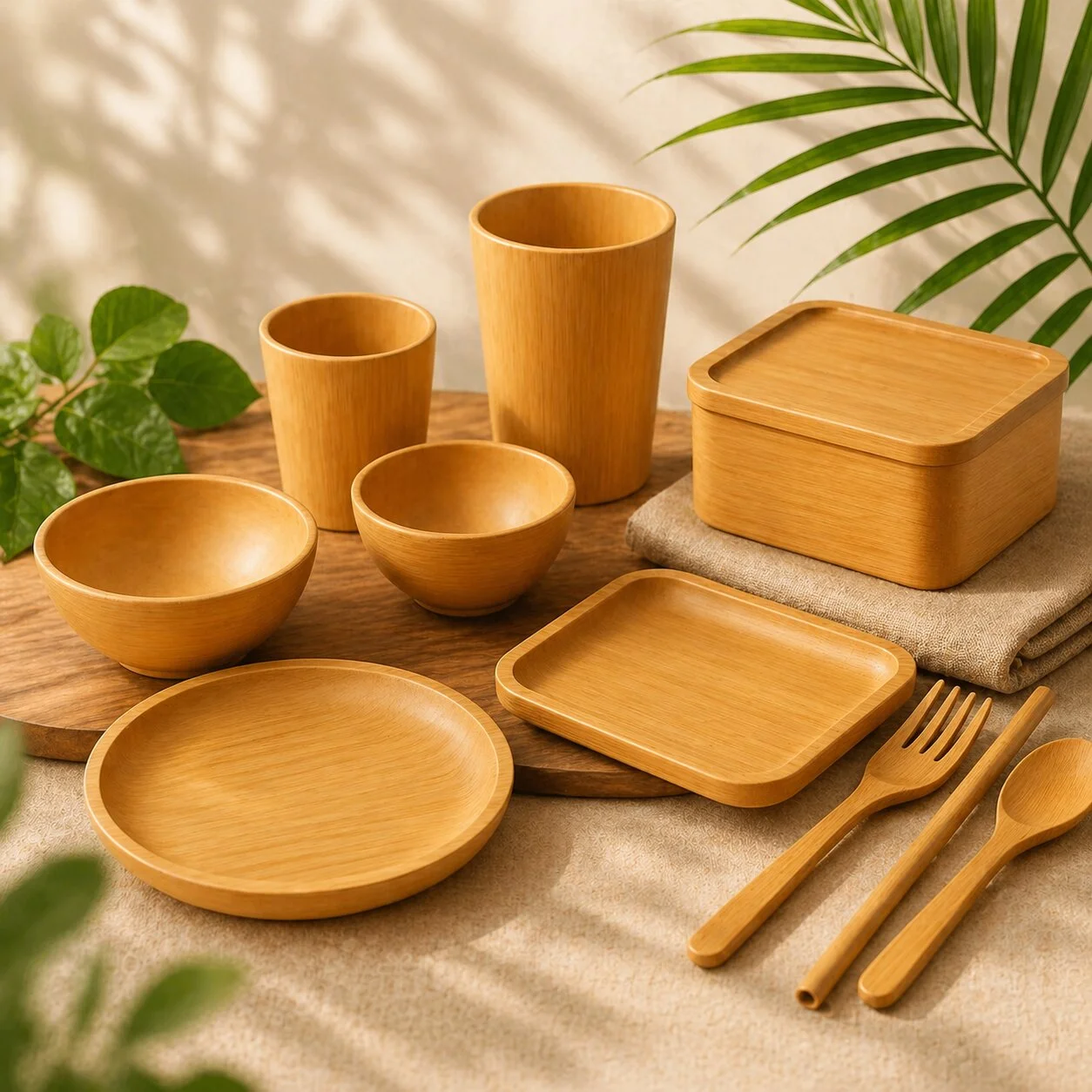
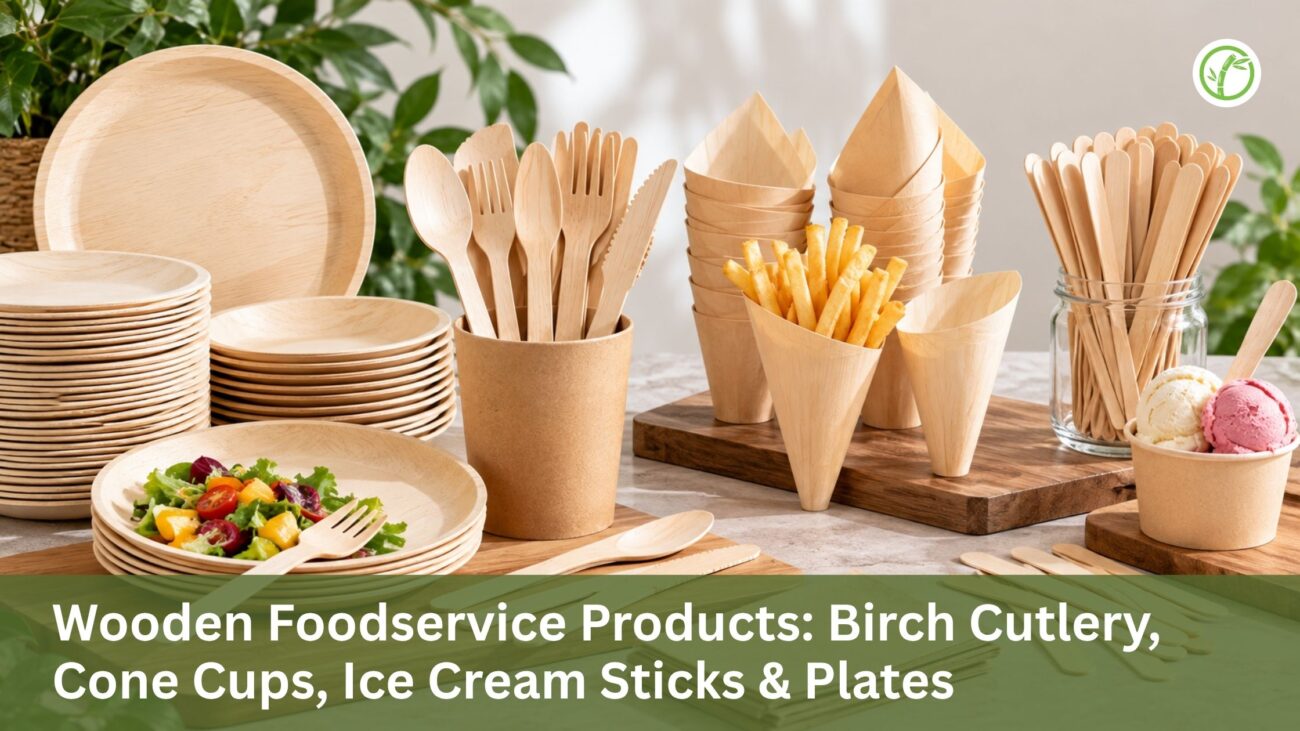
Wooden foodservice products – cutlery, cone cups, ice cream sticks, and plates – are made almost exclusively from birch, the industry-standard species for food-contact wood, and they compost across more waste streams than compostable plastic alternatives while offering a premium rustic aesthetic bamboo and bagasse don’t quite replicate. The questions restaurants, event companies, and food brands ask most about wooden products tend to fall into three groups: what they’re made from and whether that matters, where each format actually gets used, and how they compare to plastic and other compostable materials. This guide works through all three.
What Wood Species Are Used for Wooden Cutlery – Birch, Poplar, or Beech?
Birch is the wood used for premium wooden cutlery, and it’s the industry standard for good reason: it’s light-colored, fine-grained, smooth-surfaced, and strong enough to hold up to real food service use without splintering or flexing under normal pressure. Poplar shows up in some lower-cost alternatives on the market, but it’s generally a step down in both finish and strength, which is why birch remains the preferred choice for quality wholesale supply rather than just the default option. If a wooden cutlery quote doesn’t specify the wood species, it’s worth asking directly – the difference in feel and durability between birch and a lower-grade softwood is noticeable in actual use, even if it’s hard to tell from a photo.
Also read – bamboo foodservice products for restaurants
What’s the Difference Between Wooden Cutlery and Compostable Plastic Cutlery?
This is a distinction worth understanding clearly, because “compostable” gets used loosely for both, and they don’t behave the same way. Wooden cutlery – birch or bamboo – comes from a renewable biological source and decomposes in industrial composting conditions. Compostable plastic, typically PLA (polylactic acid) made from corn starch, technically meets compostability standards on paper, but it requires industrial composting facilities specifically to break down; it does not decompose in home composting or general waste disposal the way wood does.
That gap matters in two practical ways. First, in any region without accessible industrial composting infrastructure, PLA cutlery that ends up in general trash behaves essentially like plastic – it just sits there. Wood, by contrast, breaks down across a wider range of disposal conditions even without industrial composting access. Second, consumers and regulators tend to view wooden cutlery more favorably specifically because it’s visibly, obviously natural, whereas PLA looks and feels like ordinary plastic and requires a label to communicate that it’s anything different – a trust and perception gap that matters for a restaurant or brand using the material as part of its sustainability messaging.

Are Wooden Ice Cream Sticks and Popsicle Sticks Food-Safe and Splinter-Free?
Yes. Certified wooden ice cream sticks are 100% food-safe and compliant with international food safety standards, including FDA and EU regulations. Sanding to a smooth, splinter-free finish is a standard part of the manufacturing process, and it’s not optional for products going into direct mouth contact — food-safety compliance specifically requires it. If evaluating a supplier, it’s reasonable to ask how their sanding and quality control process works, since a rough or inconsistently finished stick is both a comfort issue and, at the extreme, a safety issue for a product used directly in the mouth.
What Are Wooden Cone Cups Used For, and Who Buys Them?
Wooden cone cups are small, cone-shaped cups with a few distinct use cases: water dispensing at water cooler stations, sampling cups at food events and retail tastings, and condiment portions at fast-casual restaurants. The buyer profile is correspondingly varied – office supply distributors sourcing water cooler cups, event companies running sampling programs, food manufacturers doing product tastings and demos, and healthcare facilities are among the primary purchasers. It’s a narrower, more specialized product than cutlery or plates, but one with genuinely reliable, repeat demand within those specific channels.
Are Wooden Plates Suitable for Hot and Cold Food Service?
Yes – wooden plates handle both hot and cold food well, and they bring a premium rustic aesthetic that’s become a common choice for restaurants, catering events, and charcuterie presentations specifically. The one meaningful limitation is with wet or soupy food: wooden plates are generally best suited to dry or lightly moist dishes rather than anything genuinely liquid, since wood doesn’t have the same structural moisture resistance as bagasse or bamboo for a plate that needs to hold standing liquid. For a charcuterie board, a bread basket, or a dry appetizer course, wood is a strong fit; for a soup or a saucy main, bamboo or bagasse tableware is generally the better-suited material.
Also read – bamboo foodservice products
Can Wooden Products Be Custom-Printed or Laser-Engraved With Branding?
Yes. Logo engraving on wooden products is part of standard custom branding service, with private label options available across the range. Laser engraving is particularly effective on birch wood surfaces specifically – the fine, light-colored grain takes a clean, legible engraved mark, which is why it’s a popular branding method for premium cutlery, coffee stirrers, and serving boards where a printed sticker or ink stamp would look less deliberate. For products like cone cups where engraving isn’t practical at that scale, printed packaging and custom labeling are the more common branding route instead.
Choosing Wood for Your Product Line
Wood earns its place in a foodservice product line specifically where two things matter together: dry or lightly moist food, and a presentation that benefits from a natural, rustic look – charcuterie boards, bread service, sampling cups, and premium cutlery are the clearest fits. For anything wet, saucy, or requiring maximum structural strength, bamboo generally outperforms wood, and for high-volume, budget-driven disposable packaging, bagasse tends to be the more cost-effective choice. Many restaurants and event companies use wood alongside both – wooden cutlery paired with bamboo plates, for example, or wooden cone cups for sampling stations alongside a bagasse takeaway line – rather than choosing one material to cover every use case.
Sourcing Your Wooden Product Line
Restaurants, event companies, and food brands evaluating birch wood products can review the range directly: cutlery, ice cream sticks, cone cups, and plates are all manufactured from birch to the same food-safety standard discussed above, with custom branding and private label options across the line. For a closer look at how birch cutlery compares specifically to bamboo cutlery on strength and cost at scale, see our wooden cutlery sourcing guide, and for the full three-way material comparison including bagasse, see bamboo vs. bagasse vs. wood. For the equivalent buyer’s FAQ on the other two materials, see our guides to bamboo foodservice products and bagasse packaging. Buyers ready to source can request a bulk quote across wood, bamboo, and bagasse in a single enquiry.
Frequently Asked Questions
Birch generally sits close to or slightly below bamboo in price at standard volumes, and tends to become more cost-competitive than bamboo specifically at very high order volumes, which is why it’s common in large-scale catering and events where cost per unit matters more than the added strength bamboo offers.
Yes — look for FDA and EU food-contact compliance documentation the same way you would for any other foodservice product, and confirm the sanding/finishing process specifically, since splinter risk is the main safety consideration unique to wood compared to bamboo or bagasse.
Untreated wooden products generally compost across a wider range of conditions than PLA plastic, which needs industrial composting facilities specifically. That said, home composting speed and outcome still vary by local conditions, so checking any specific compostability certification on the product is worth doing rather than assuming all wood composts identically.