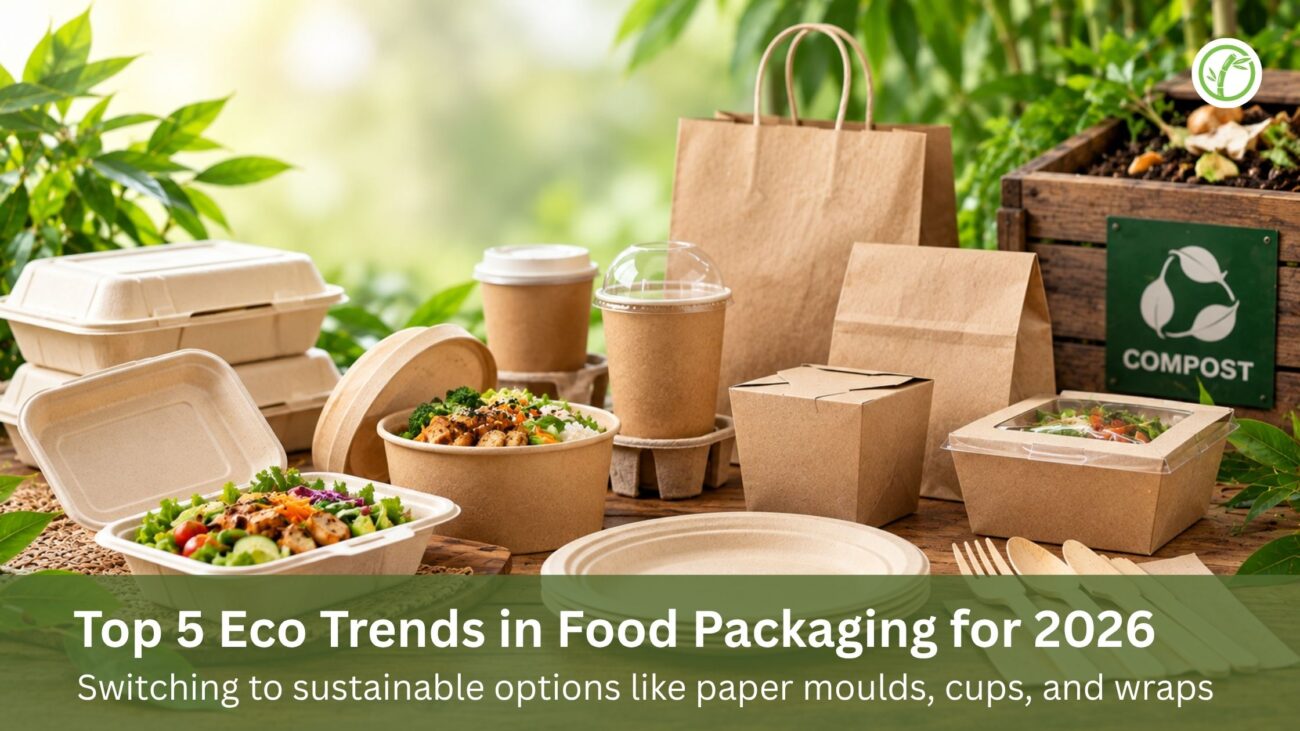
Every year, someone publishes a food packaging trends article filled with vague predictions and recycled talking points. “Sustainability is growing.” “Consumers want greener options.” “Regulations are tightening.”
You already know all of that. It has been true for five years.
What is actually new in 2026 is the speed, specificity, and enforceability of the changes happening right now. This is not the year of vague sustainability promises. This is the year sustainability moved from marketing department to legal department — and that changes everything about how you should source, brand, and deploy your food packaging.
Here are the five trends that will define eco-friendly food packaging in 2026, with the specific data and regulatory context you need to make procurement decisions, not just dinner conversation.
Trend 1: The PFAS Reckoning Is Here — And It Is Reshaping Supply Chains Overnight
If there is one acronym that every food service procurement manager needs to understand in 2026, it is PFAS.
PFAS (per- and polyfluoroalkyl substances) — often called “forever chemicals” — have been used for decades as grease-proofing agents in food packaging. They make paper plates hold oily food, pizza boxes resist grease, and takeaway containers stay dry. The problem is that they never break down. Not in the environment. Not in your body. Not ever.
In 2026, the regulatory hammer finally dropped.
The European Union’s Packaging and Packaging Waste Regulation (PPWR) bans PFAS in food contact packaging above defined thresholds from August 12, 2026. The limits are strict: 25 parts per billion for individual PFAS compounds, 250 ppb for the sum of targeted PFAS. This applies to all food packaging placed on the EU market, regardless of where it was manufactured.
In the United States, enforcement is state-driven but accelerating fast. California banned PFAS in plant-fibre food packaging in 2023. Maine’s prohibition takes effect in May 2026 with a 100 ppm total organic fluorine threshold. Minnesota, Washington, New York, Illinois, Oregon, Vermont, and Connecticut have all enacted or proposed similar restrictions. The US EPA is expected to finalise its revised PFAS reporting rule by mid-2026.
What this means for your business: If your current food packaging — plates, bowls, containers, pizza boxes, wraps — uses paper or moulded fibre with PFAS-based grease resistance, you have a compliance problem that is measured in months, not years.
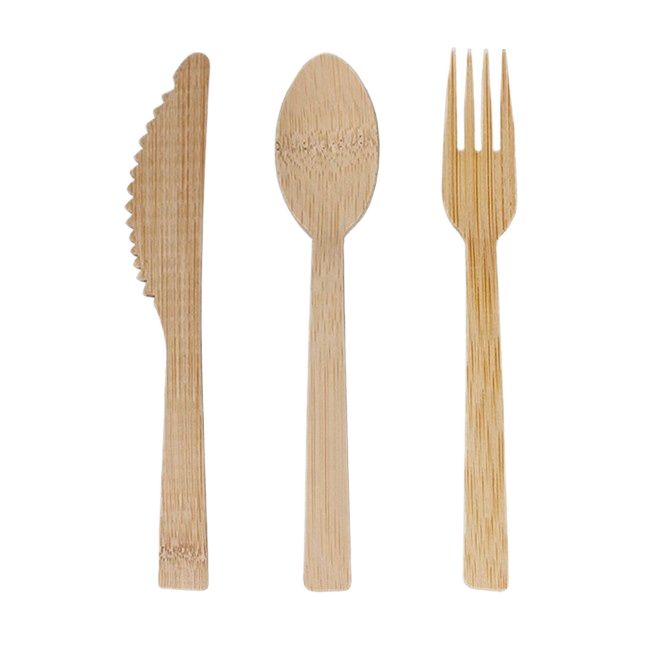
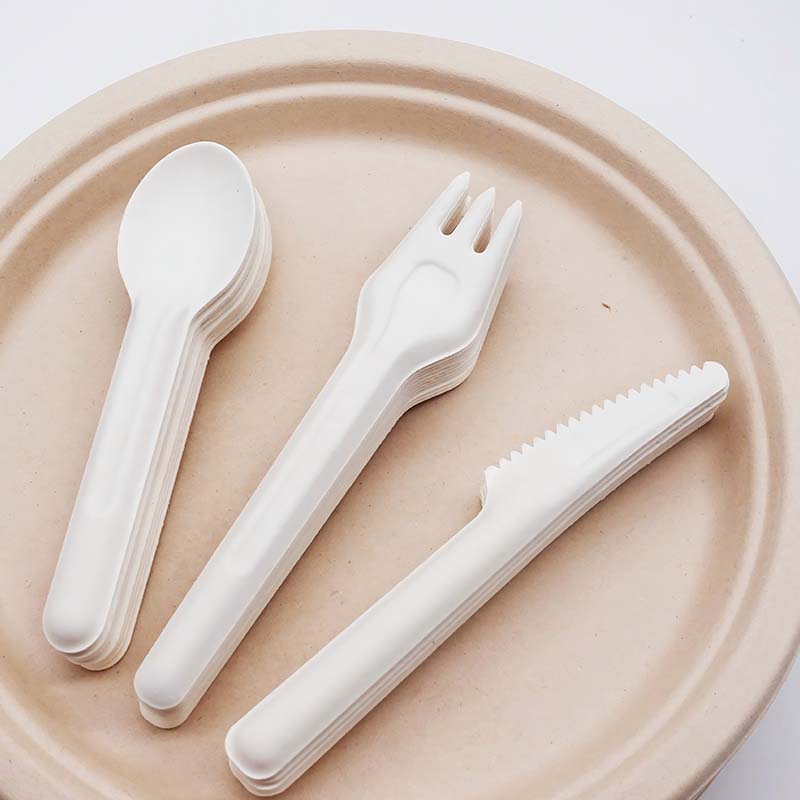
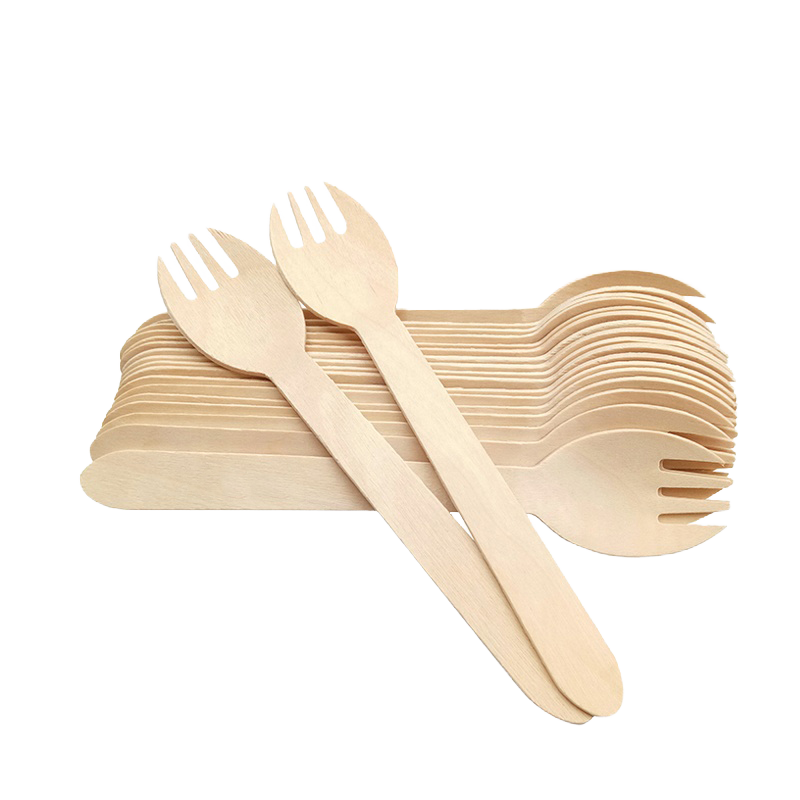
The compliance path is straightforward. Bamboo cutlery is inherently PFAS-free because it requires no coatings. Bagasse containers manufactured with plant-based bio-coatings or AKD sizing agents instead of PFAS achieve grease resistance without forever chemicals. Solid wooden products are naturally PFAS-free.
The procurement action: Request PFAS-free Certificates of Compliance from every paper and fibre-based packaging supplier in your chain. Do not rely on marketing language — “PFAS-free” is not a regulated term. Demand lab reports. If your current supplier cannot provide documentation, switch now. Customs agencies are increasing random testing on imported moulded fibre products, and a failed test means your entire shipment is seized at your expense.
Insight: This trend is not just about avoiding penalties. It is about market access. Businesses that can demonstrate PFAS-free supply chains are gaining preferred supplier status with major hotel chains, QSR brands, and retail accounts that require verified compliance for their own ESG reporting. The PFAS ban is creating a new competitive moat for suppliers who adapted early.
Consider the downstream impact. A restaurant chain that cannot prove its takeaway containers are PFAS-free may lose a corporate catering contract with a client whose own ESG policy requires PFAS-free food service. A wholesale distributor whose bagasse containers test positive for fluorine at a US port loses the entire shipment and the customer relationship. A hotel brand that discovers PFAS in its room-service packaging faces reputational risk in an era where consumer watchdog groups routinely test products and publish results.
The risk is asymmetric. The cost of switching to verified PFAS-free materials is modest — often zero, since bamboo and properly manufactured bagasse are inherently PFAS-free. The cost of getting caught with PFAS-contaminated packaging is severe — regulatory fines, shipment seizures, lost contracts, and public relations damage.
This asymmetry is why the PFAS trend is moving so fast in 2026. The business case for compliance is not just about doing the right thing. It is about protecting revenue, supply chain continuity, and brand equity.
Trend 2: Moulded Fibre Packaging Goes Mainstream in Food Service
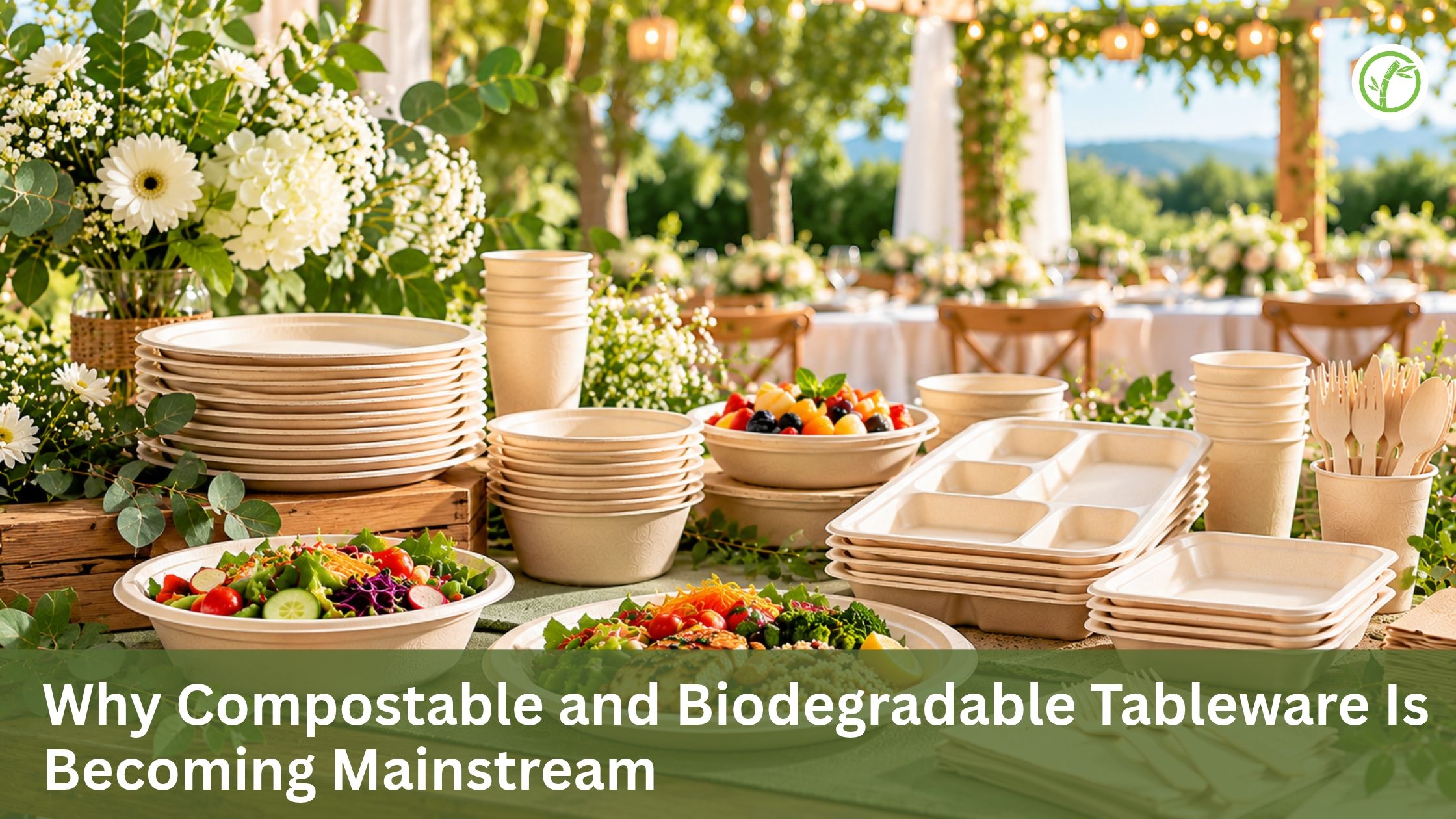
For years, moulded fibre packaging — plates, bowls, clamshells, and trays made from sugarcane bagasse, bamboo pulp, or recycled paperboard — was the “alternative” option. In 2026, it is becoming the default.
The eco-friendly food packaging market was valued at approximately $200 billion in 2024 and is growing at a pace that outstrips the broader packaging market. Within this segment, moulded fibre products are experiencing some of the fastest adoption, driven by the simultaneous pressure of plastic bans and PFAS restrictions on coated paper products.
Quick-service restaurants are leading the shift. When a QSR chain serves millions of meals per week, the packaging decision is an industrial-scale materials choice. Bagasse clamshells and bowls are now price-competitive with polystyrene at scale, they handle hot and greasy food without leaking, they stack efficiently for storage and transport, and they are compliant with every plastic ban currently in force.
The performance gap that once existed between plastic and moulded fibre has effectively closed. Modern bagasse containers are heat-resistant up to 120°C, microwave and freezer safe, oil and grease proof (without PFAS when sourced correctly), and strong enough to handle meals from burgers to curries without structural failure.
What this means for your business: If you are still using polystyrene or non-recyclable plastic clamshells for takeaway, you are sourcing a material category that is being systematically eliminated from major markets. Moulded fibre (bagasse) is the replacement that the industry has converged on — not because it is trendy, but because it works, it is compliant, and it is now affordable at volume.
Insight: The smartest operators are not just switching materials — they are switching suppliers. A single eco-product supplier who offers bamboo cutlery, bagasse containers, and wooden accessories eliminates the complexity of managing three separate vendor relationships. Supply chain consolidation around eco-materials is itself a 2026 trend, driven by procurement teams who learned during the pandemic that simpler supply chains are more resilient.
The adoption curve is following a pattern familiar from other material transitions. Early movers — typically sustainability-focused brands and chains operating in heavily regulated markets like the EU — switched first and absorbed a modest cost premium. The middle market is switching now, finding that moulded fibre pricing has already dropped to near-parity with plastic as production volumes have scaled globally. Laggards will switch last, under regulatory pressure, paying rush pricing for emergency sourcing.
If your business is in the middle market category, the window to switch at competitive pricing — rather than emergency pricing — is open right now. By late 2026 and into 2027, demand pressure from accelerating bans will tighten supply and potentially push prices up for businesses that waited.
Trend 3: Branded Compostable Packaging Becomes a Marketing Channel
Here is a trend that the sustainability conversation usually misses: packaging is not just a compliance requirement. It is a marketing surface.
In 2026, the businesses getting the most value from their eco-packaging switch are the ones treating every compostable plate, wrapper, and cutlery set as a branded touchpoint.
This shift is most visible in the delivery and takeaway segment. When a customer orders food online, they never see your restaurant. They never see your kitchen, your decor, or your team. The only physical brand experience they have is the bag, the container, and the cutlery. In the delivery economy, your packaging IS your storefront.
Bamboo cutlery sets with printed wrappers featuring your logo. Bagasse containers with branded stickers. Kraft paper bags with sustainability messaging and a QR code linking to your rewards programme. Every item a customer touches becomes a conversation about your brand’s values.
The numbers support this. Industry surveys indicate that 68 percent of delivery customers notice branded packaging elements. 43 percent of consumers say sustainable packaging influences their purchasing decisions. And the cost? A branded bamboo cutlery wrapper adds roughly $0.02 to $0.04 per set. A branded sticker on a bagasse container costs less than a cent.
Compare that to the cost of a social media ad impression — and consider that the packaging touchpoint happens at the exact moment the customer is eating your food and forming their opinion about reordering.
What this means for your business: If you are switching to eco-packaging but not branding it, you are paying for the material upgrade without capturing the marketing value. The branding premium is negligible. The perception impact is significant.
Custom branding options now span the full spectrum: laser engraving on bamboo cutlery, printed kraft wrappers, branded bagasse container stickers, custom packaging boxes for retail, and full private-label programmes for distributors. At FriendlyBamboo, we offer all of these at MOQs designed for businesses at every stage.
Insight: Cloud kitchens and virtual restaurant brands were the first to fully exploit this trend because they had no choice — without a physical location, their packaging was their only brand surface. Traditional restaurants are now catching up, realising that their takeaway and delivery packaging deserves the same brand attention as their dine-in experience.
Trend 4: The Shift from “Eco-Friendly Claims” to Verified Certifications
Greenwashing is dying. Not slowly — rapidly. And 2026 is the year it becomes genuinely dangerous for businesses that have been relying on vague sustainability language instead of verified certifications.
The EU’s Green Claims Directive, expected to be finalised and enforced from 2026, will require businesses to substantiate any environmental claim with independent verification. Saying “eco-friendly” or “green” without evidence will be a compliance violation, not just a marketing faux pas.
Consumers are also getting more sophisticated. The era when a green leaf on the label was enough to satisfy eco-conscious buyers is ending. Procurement managers at hotel chains, restaurant groups, and corporate clients now ask for specific certifications as a condition of supplier qualification.
The certifications that matter in food packaging are:
FSC (Forest Stewardship Council) for bamboo and wood-based products — verifies sustainable sourcing from responsibly managed forests.
BPI (Biodegradable Products Institute) for compostability — confirms the product breaks down in commercial composting facilities within the required timeframe.
FDA compliance for food contact safety — verified through laboratory migration testing, not self-declaration.
PFAS-free documentation — ideally backed by independent lab reports showing total organic fluorine levels below applicable thresholds.
ISO 9001 and ISO 14001 for manufacturing quality and environmental management — demonstrates that the supplier has systematic processes, not just good intentions.
What this means for your business: If your current eco-packaging supplier provides certifications, verify them independently. If they do not provide certifications at all, that is a risk you cannot afford in 2026. The regulatory environment is moving toward mandatory substantiation, and the reputational cost of a greenwashing allegation can undo years of brand building.
Insight: Certification is increasingly becoming a competitive differentiator, not just a compliance checkbox. Suppliers who hold FSC, FDA, ISO, and BPI certifications can charge a modest premium because their documentation saves procurement teams time, reduces audit risk, and simplifies ESG reporting. At FriendlyBamboo, every product line carries FSC, FDA, and ISO certification — documentation that we provide proactively, not on request.
The shift is also being driven by purchasing platforms. Major procurement platforms and sustainability rating systems — like EcoVadis, which rates suppliers on environmental performance — are weighting verified certifications heavily in their scoring. A supplier without FSC or ISO certification does not just miss a checkbox — they score lower in the systems that corporate procurement teams use to shortlist and qualify vendors.
For food service businesses, the message is simple: the “eco-friendly” label on its own no longer creates value. A stack of verified certifications does. When choosing between two suppliers at similar pricing, the one with documented FSC, FDA, and BPI certification will win the contract every time — because they remove risk from the buyer’s decision.
Trend 5: Plant-Based Materials Win — But the Winner Is Not Who You Expected
When people think “plant-based packaging,” they often think PLA (polylactic acid) — the corn-starch-derived bioplastic that looks and feels like conventional plastic. PLA has received enormous investment and media attention over the past decade.
But in 2026, PLA is not the plant-based material winning the food service market. Bamboo and bagasse are.
The reason is infrastructure. PLA requires industrial composting facilities to decompose. These facilities operate at specific temperatures (55-60°C) for extended periods (60-180 days). In most regions of the world — including large parts of the United States, Europe, and virtually all of Asia and Africa — industrial composting infrastructure does not exist at sufficient scale. When PLA enters the general waste stream, it ends up in a landfill where it behaves essentially like conventional plastic.
PLA also has a heat limitation. Standard PLA softens above 60°C, making it unsuitable for hot food and beverages without crystallisation treatment (CPLA), which adds cost and manufacturing complexity.
Bamboo and bagasse have neither of these problems. Bamboo cutlery composts in home and commercial settings within 90 to 180 days. Bagasse containers compost in 60 to 90 days in commercial facilities and are also home-compostable in most cases. Both handle temperatures well above 100°C. Neither requires specialised disposal infrastructure.
The market data confirms the shift. The global bamboo market is projected to grow from $79 billion in 2025 to $115 billion by 2030. Moulded fibre (primarily bagasse) packaging is experiencing double-digit annual growth in the food service segment. Meanwhile, PLA’s share of the compostable packaging market has plateaued as operators realise that a “compostable” label means nothing if the product never actually gets composted.
The PLA infrastructure problem is not going away soon. Building a commercial composting facility costs millions of dollars, requires years of permitting, and depends on local government waste management strategy. Even in the EU and North America — the most developed waste management markets in the world — industrial composting coverage is patchy. In Asia-Pacific, the Middle East, Latin America, and Africa, it is virtually non-existent outside of a handful of pilot programmes.
This means PLA works in theory but fails in practice for most food service operations worldwide. A café in Dubai, a restaurant chain in Mumbai, a catering company in São Paulo, a hotel in Bangkok — none of these businesses have access to the industrial composting facilities that PLA requires. Bamboo and bagasse work in all of these markets because they compost under a wider range of conditions, including home composting and standard commercial composting.
The practical takeaway is clear. When evaluating plant-based materials for your food service operation, ask two questions. First: will this product actually compost in the waste infrastructure available where I operate? Second: will it perform with hot food? If the answer to either question is no, the material is not ready for your business — regardless of what the label says.
What this means for your business: If you are evaluating plant-based packaging alternatives, look beyond the material label and ask: “Will this actually compost in my market’s waste infrastructure?” For bamboo and bagasse, the answer is almost always yes. For PLA, it depends on your local composting access — and in most cases, the answer is no.
Insight: The smartest product strategy for food service operators in 2026 is a bamboo + bagasse combination. Bamboo for cutlery, chopsticks, skewers, straws, and stirrers. Bagasse for plates, bowls, containers, cups, and trays. This pairing covers every disposable touchpoint in a food service operation with materials that are genuinely compostable, PFAS-free, and certified. At FriendlyBamboo, this is exactly the product portfolio we have built — because we saw this convergence coming years ago.
Bonus Trend: Digital Transparency Enters the Packaging
One emerging development worth watching is the integration of digital information into food packaging. The EU’s Digital Product Passport (DPP) framework, while currently focused on electronics and textiles, signals a future where every product — including packaging — carries traceable, verifiable sustainability data.
In food service, this is already appearing in simplified forms. QR codes on branded packaging that link to a supplier’s certification page. Scannable wrappers that show the customer where the bamboo was sourced, how the product was manufactured, and how to compost it properly. Some forward-thinking restaurants are using QR codes on their cutlery wrappers to link directly to their sustainability page, loyalty programme, or review platform — turning a disposable into a digital touchpoint.
This is not a compliance requirement yet. But the businesses implementing it now are building a transparency infrastructure that will be standard within three to five years. And the cost is negligible — a QR code costs nothing to generate, and printing it on a wrapper adds no cost to the production run.
For food service brands that want to lead rather than follow, adding a QR code to your branded bamboo cutlery wrapper is the lowest-effort, highest-impact digital transparency move you can make in 2026.
What These Trends Mean Together
Each of these five trends is significant individually. Together, they represent a structural shift in how food packaging is sourced, specified, and deployed.
PFAS bans are eliminating the chemical shortcuts that made cheap paper packaging functional. Moulded fibre is filling the gap with performance that matches plastic. Branded packaging is turning compliance cost into marketing value. Certification requirements are raising the bar for suppliers and killing greenwashing. And the plant-based materials that are actually winning are bamboo and bagasse, not the bioplastics that received the most hype.
For procurement managers, the action plan is clear.
Audit your current packaging for PFAS compliance — immediately. Source PFAS-free alternatives with documented certification. Consolidate your eco-packaging supply chain with a single certified supplier who covers bamboo, bagasse, and wooden products. Brand everything that touches your customer’s hands. And verify every certification independently before signing a purchase order.
The businesses that execute on these five trends in 2026 will not only be compliant — they will be positioned as leaders in a market that rewards sustainability with customer loyalty, premium pricing, and competitive advantage.
The businesses that wait will be scrambling to catch up under regulatory pressure, paying premium prices for emergency sourcing, and explaining to their customers why they were the last to switch.
The choice is straightforward.