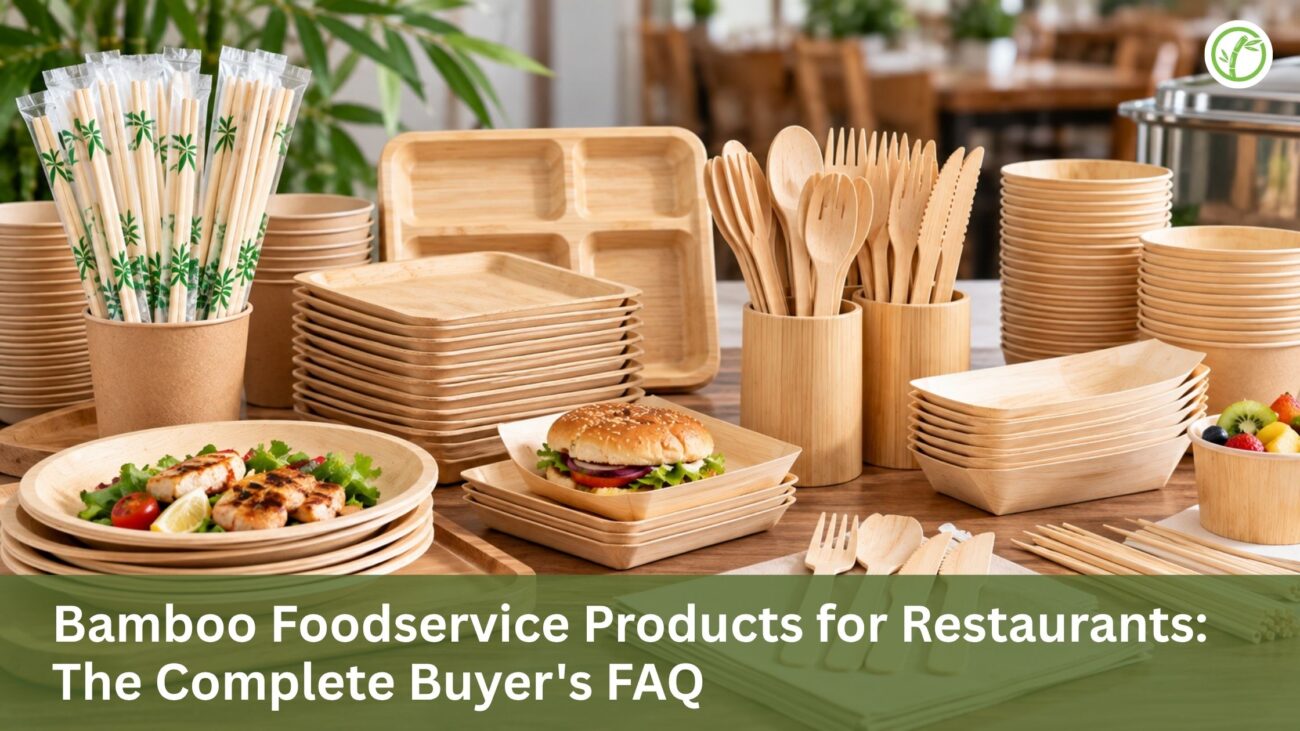
Bamboo foodservice products for restaurants covers eleven core categories cutlery, straws, chopsticks, toothpicks, coffee stirrers, ice cream sticks, tableware and plates, BBQ skewers, party and cocktail picks, bamboo poles, and bamboo sticks and nearly every performance question restaurants and caterers ask about them comes down to the same fact: bamboo is structurally stronger and more heat- and moisture-resistant than the paper, plastic, or softwood alternatives it’s replacing. This guide answers the questions that come up most often when a restaurant, caterer, or hotel is deciding whether to switch a specific item cutlery, skewers, straws, chopsticks, or plates over to bamboo.
What Bamboo Products Does a Manufacturer Like Friendly Bamboo Actually Make?
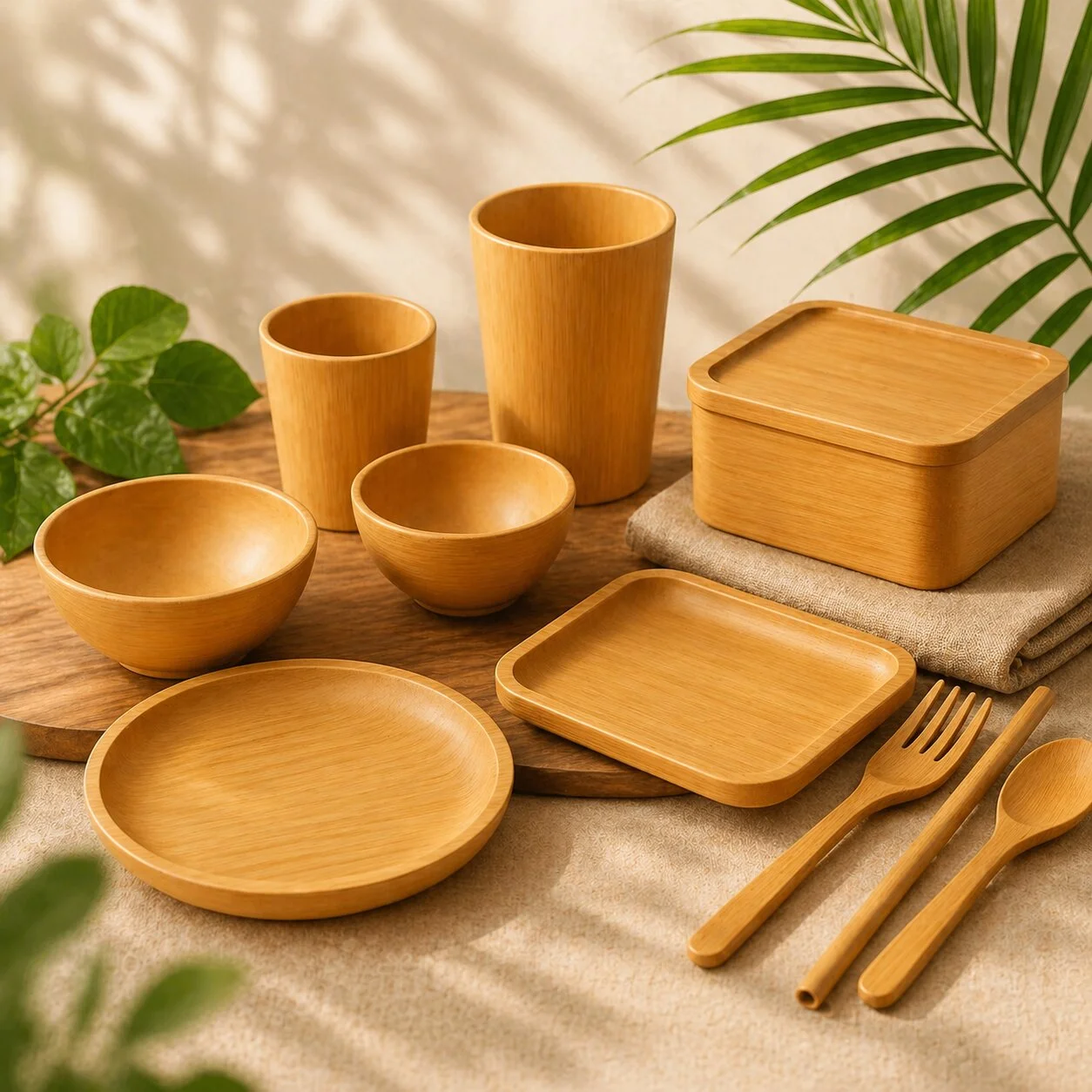
The bamboo range spans eleven core categories: cutlery, straws, chopsticks, toothpicks, coffee stirrers, ice cream sticks, tableware and plates, BBQ skewers, party and cocktail picks, bamboo poles, and bamboo sticks for flower and garden use. For a restaurant or caterer, this means a single supplier can typically cover front-of-house tableware, bar and cocktail garnish, and back-of-house prep tools without switching materials or vendors between categories worth knowing if you’re currently sourcing cutlery from one supplier and skewers from another and want to consolidate.
Is Bamboo Cutlery Heat-Resistant Enough for Hot Soups and Takeaway Meals?
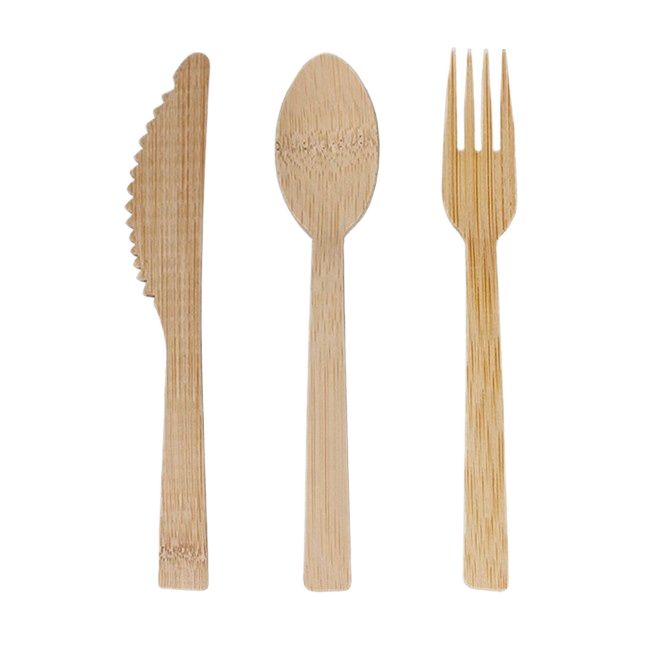
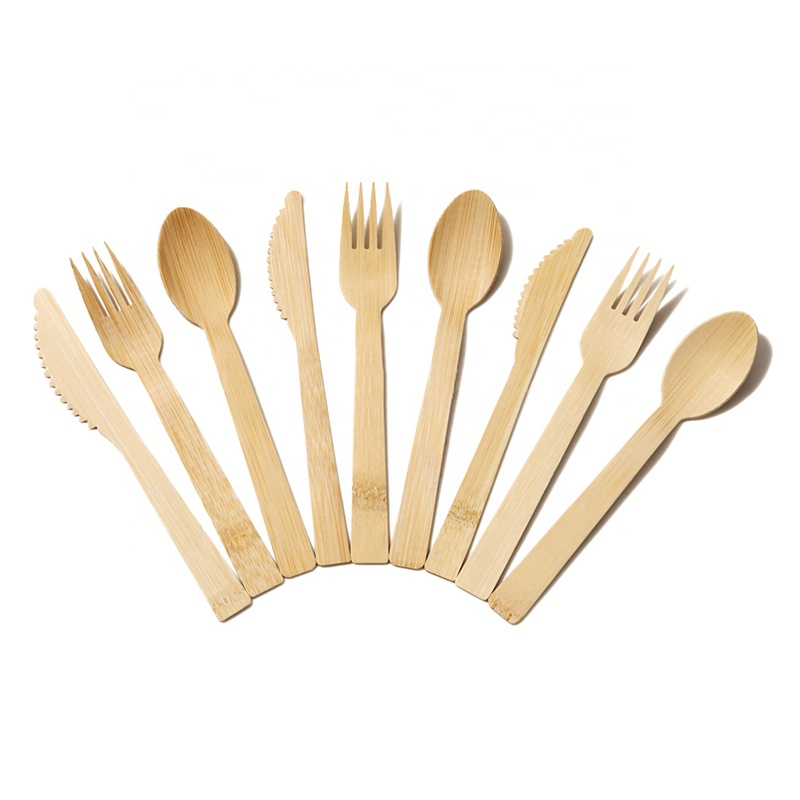
Yes. Bamboo cutlery is naturally heat-resistant and handles hot food comfortably, typically up to the 85–100°C range, without warping or softening the way plastic cutlery can when left sitting in a hot soup, stew, or warm takeaway container. This is one of the more practical differentiators for delivery and takeaway operations specifically — a plastic fork left in a styrofoam container of hot noodles can visibly deform before the customer even opens the lid, while bamboo holds its shape through that same window. Certified bamboo cutlery is tested and approved for direct contact with hot food, which is worth confirming with any supplier rather than assuming from the material alone.
Bamboo Cutlery vs. Wooden Cutlery: Which Is Stronger?
Bamboo has a higher tensile strength than most softwoods and even many hardwoods, strong enough that it’s sometimes referred to informally as “plant steel” for its strength-to-weight ratio. Bamboo cutlery is generally lighter, smoother-surfaced, and more resistant to moisture absorption than most wooden alternatives, which matters for anything sitting in a sauce or soup for an extended period.
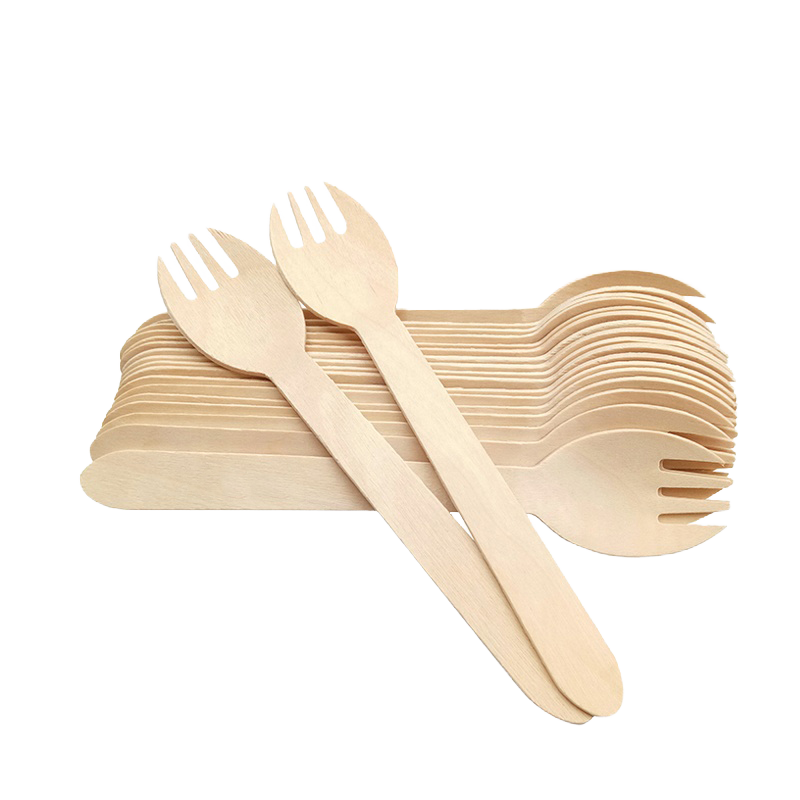
Birch wood cutlery is a strong second choice and remains widely used across single-use catering, particularly at very high order volumes where birch tends to be more cost-competitive. The practical takeaway: bamboo holds the durability edge, birch holds a cost edge at scale, and many operations use both — bamboo where performance and presentation matter most, birch where volume and price are the deciding factor.
Also read – bamboo foodservice products
How Long Are Bamboo Skewers, and Can You Order Custom Sizes?
Bamboo skewers typically come in standard lengths from 15cm to 40cm, with 20cm, 25cm, and 30cm the most common sizes ordered. Tip styles vary too — pointed single tip, double-pointed, and knotted are the standard configurations, each suited to slightly different use cases (a knotted tip, for example, helps hold food in place better on a vertical grill setup than a plain pointed tip). Custom lengths and tip configurations can be ordered for private label or specific catering applications, which is worth requesting directly if your menu calls for something outside the standard size range — a skewer built for a specific plating style, for instance, rather than a generic size pulled from a catalog.
Should Bamboo Skewers Be Soaked Before Grilling, and Can They Be Reused?
Soaking bamboo skewers in water for 20–30 minutes before grilling is standard practice, and it meaningfully reduces the risk of charring or catching fire on open grill grates. Once used, bamboo skewers are a single-use product reusing them after grilling isn’t recommended for food safety reasons, since the skewer absorbs fats and juices from the food during cooking, which makes it very difficult to clean thoroughly enough for reuse on a different dish.
Are Bamboo Straws Better Than Paper Straws?
On durability, yes, clearly. Paper straws are notorious for going soggy within 15–30 minutes in cold drinks — the single most common consumer complaint about the paper straw switch — while bamboo straws maintain their structure for the full duration of a drink. Bamboo also carries a neutral taste, unlike paper straws which can pick up a faintly papery note in some drinks, and unlike single-use paper straws, bamboo straws are genuinely reusable with proper washing. For event and restaurant service specifically, bamboo brings a premium natural aesthetic on top of the performance advantage, which is part of why it’s become a common upgrade for bars and hospitality venues moving away from both plastic and paper straws.
Bamboo Chopsticks vs. Wooden Chopsticks for Restaurant Use
Bamboo chopsticks are lighter, smoother-surfaced, and more resistant to splintering than most wooden chopsticks, which is a large part of why bamboo has become the standard choice across Asian restaurants globally. The smooth surface is genuinely easier to keep clean for reusable formats, and it reads as a more refined texture for guests using disposable ones. Wooden chopsticks tend to have a rougher surface that can feel less polished in a premium dining setting, but remain a lower-cost option that’s well suited to very high-volume catering where the texture difference matters less than the price per pair.
Are Bamboo Chopsticks Available for Bulk Restaurant and Catering Supply?
Yes — bamboo chopsticks are supplied in bulk wholesale quantities specifically for restaurant and catering use, in two standard formats. Individually wrapped pairs in paper sleeves are the standard format for dine-in and takeaway restaurant service, where each guest gets a sealed, hygienic pair. Bulk catering formats packed in polybags, without individual wrapping, are available for high-volume kitchens and catering operations where individual sleeves aren’t necessary — for example, a buffet-style service where chopsticks are dispensed from a communal container rather than handed out individually.
Are Bamboo Plates Sturdy Enough for Hot, Saucy, or Greasy Food?
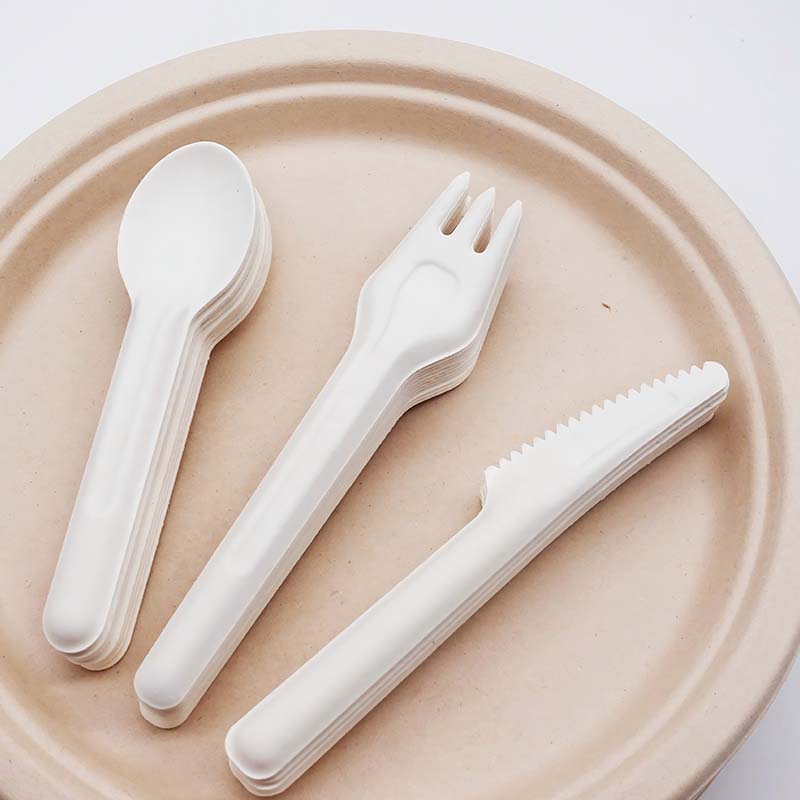
Yes. Bamboo plates designed for foodservice use handle hot food, sauces, and oily or greasy meals without warping or leaking, and they’re significantly more rigid than paper plates — the difference is especially noticeable with a fully loaded plate carried one-handed at a buffet, where a paper plate will visibly sag and a bamboo plate holds flat. Bamboo plates generally hold their structure better than most other single-use tableware alternatives across the course of a full meal, not just at the moment of serving.
Can Bamboo Cocktail Picks and Party Skewers Be Custom-Branded?
Yes, logo engraving on bamboo products is a standard part of custom branding and private label service, and cocktail picks and party skewers are commonly laser-engraved with brand logos. This is a particularly popular choice for cocktail bars, hotels, and catering brands, since a garnish pick is one of the smallest, most visible branding surfaces available in a drinks service; a logo on the pick sitting in a customer’s glass gets noticed in a way a logo on a napkin or coaster often doesn’t.
Also read – bamboo and wooden tableware certifications
Putting It Together: Matching Products to Your Operation
A restaurant or caterer evaluating bamboo generally doesn’t need to switch every category at once. A common starting sequence is cutlery and straws first, since both have the clearest heat- and durability-performance case over their plastic or paper equivalents, followed by chopsticks for Asian-cuisine concepts, and skewers or cocktail picks last, once the core tableware switch has proven out in service. Custom branding, whether laser-engraved logos on picks and cutlery or private label packaging, is usually introduced after the base product has been validated, rather than on a first trial order.
Exploring the Full Range
Each product category covered in this guide has its own detailed sourcing information — MOQ, pricing tiers, and branding options in particular vary meaningfully between categories. Restaurants and caterers can browse bamboo cutlery, bamboo straws, bamboo chopsticks, bamboo plates and tableware, BBQ skewers, and party and cocktail picks directly, or request a bulk quote covering multiple categories in a single enquiry.
Frequently Asked Questions
Look for FDA 21 CFR 177 food-contact certification (or the equivalent standard for your market, such as LFGB in the EU) and confirm the manufacturer tests for direct hot-food contact specifically, since not every “food-safe” claim explicitly covers sustained heat exposure.
Yes, most operations phase in bamboo category by category rather than switching an entire disposables line at once, commonly starting with cutlery and straws before moving to chopsticks, skewers, and picks.
Generally yes, on a straight per-unit basis versus plastic or paper, though the price gap narrows significantly at wholesale volume. The performance and regulatory-risk factors covered in each product-specific guide linked below are usually the deciding factor for restaurants, not price alone.