










Eco-friendly disposable tableware for restaurants saves money when food leaves the building, when you can’t wash dishes, or when washing costs more than replacing: takeaway and delivery, off-site catering, pop-ups, dishwasher breakdowns, boil-water advisories and high-loss outdoor settings. For steady dine-in service with a working dish pit, reusables usually cost less.
Key takeaways
- Dine-in with a dishwasher: reusables usually win. Clean Water Action’s ReThink Disposable program reports small food businesses saving $3,000 to $22,000 a year after switching dine-in service to reusables.
- Takeaway, delivery and off-site events: eco-friendly disposable tableware for restaurants is the practical and cheaper choice, because nothing comes back to wash.
- No water or no dishwasher: health departments recommend single-service tableware during boil-water advisories.
- Compare cost per cover, not unit price: include dishwashing labor, water, energy, chemicals, breakage and losses.
- Most restaurants need both: reusables for dine-in, disposables for takeaway, events and emergencies.
Do disposables or reusables cost restaurants less?
For regular dine-in service, the published evidence favors reusables. Clean Water Action’s ReThink Disposable program has documented the switch at dozens of small food businesses:
- Small food businesses save $3,000 to $22,000 a year by serving dine-in food on reusables, after dishwashing and purchase costs.
- Hang Ten Boiler, a 50-seat restaurant in Alameda, California, hired a dishwasher and still saved $3,988 a year after switching dine-in service to reusables.
- Crispian Bakery rented a dishwasher for $75 a month, saw its water bill rise about $30 a month, and still saved $1,739 a year.
- Five Oakland restaurants that switched dine-in foodware recovered their setup costs in an average of 2.74 months.
That doesn’t make disposables the wrong choice everywhere. The savings depend on two conditions: the plate or fork comes back to the restaurant, and there’s capacity to wash it. Remove either condition and the numbers change.
What each option really costs
| Reusables | Disposables |
| Purchase and replacement of breakages and losses | Purchase price per piece, every cover |
| Dishwashing labor | Storage space |
| Water, energy and detergent or sanitizer | Waste collection fees |
| Dishwasher purchase, rental or maintenance | Ordering and stock management |
| Storage and handling | No washing labor or utilities |
When does eco-friendly disposable tableware save restaurants money?
In each of these scenarios, either the item never comes back or washing it costs more than replacing it.
| Scenario | Why disposables cost less | Typical items |
| Takeaway and delivery | Nothing returns to be washed; reusables would simply be lost | Bagasse boxes, wrapped bamboo cutlery sets |
| Off-site catering and events | No dish pit on site; transporting, washing and returning china costs labor, vehicle space and breakage | Bagasse or bamboo plates, bulk cutlery, skewers |
| Pop-ups, food trucks and markets | Little or no running water or dish space | Small plates, wrapped cutlery, picks |
| Dishwasher breakdown | A few days of disposables costs less than lost covers | Plates, bowls, cutlery |
| Boil-water advisory or water outage | Health departments recommend single-service tableware | All tableware |
| Peak overflow | One busy event exceeds dish capacity; disposables avoid an extra dish shift | Plates and cutlery for the overflow only |
| Pools, beaches and outdoor terraces | High breakage and loss; many venues avoid glass and china near pools | Bagasse plates, bamboo cutlery |
| Staffing gaps | No one available to run the dish pit | Short-term disposable service |
Boil-water advisories
This is the clearest case. During a boil-water advisory, the Virginia Department of Health lists disposable, single-service utensils and tableware as the strongly recommended alternative to washing with safe water, and says not to use dishwashing machines connected to tap water. Pennsylvania’s guidance for retail food facilities also tells operators to use disposable, single-service utensils and tableware.
Rules vary by jurisdiction. Some allow a properly operating dishwasher to keep running, so check with your local health department. Either way, a restaurant with disposable stock on the shelf can keep serving as long as the health department allows it to stay open.
When should a restaurant stay with reusables?
Keep reusables for dine-in service when all three of these are true:
- Guests eat on site and the plates and cutlery come back to the kitchen.
- The dish pit has spare capacity at peak times, or a dishwasher can be added cheaply.
- Breakage and loss are low, as in most indoor dining rooms.
In that situation, the savings can be large relative to the investment. Yonkers Cafe in San Francisco spent $273 on reusable foodware and saved $12,441 a year after moving dine-in service off disposables.
Some cities also push dine-in toward reusables by law. Oakland, for example, passed one of the strongest reusable foodware ordinances in the San Francisco Bay Area. Check local rules before planning a disposables-only dine-in service.
How do you compare reusable and eco-friendly disposable tableware costs?
Compare the cost of each use, not the purchase price. Two formulas cover most cases:
Reusable cost per use = (item price ÷ uses before breakage or loss) + washing labor per item + water, energy and chemicals per item + transport and handling per item
Disposable cost per use = unit price + waste collection cost per item
The key question is whether washing labor is extra. If your dish staff are already on shift and have spare capacity, the extra labor per plate is close to zero. If you’d need extra hours, a new hire or off-site washing, it becomes the biggest cost.
Worked example: one dinner plate
This is a hypothetical example. Replace every figure with your own costs.
| Cost per use | Reusable, dine-in (existing dish staff) | Reusable, off-site event | Bagasse plate |
| Plate wear ($4 plate, 400 uses) | $0.010 | $0.010 | — |
| Washing labor ($18/hour, 250 plates/hour) | Already paid | $0.072 | — |
| Water, energy and chemicals | $0.020 | $0.020 | — |
| Transport and handling to and from the venue | — | $0.150 | — |
| Breakage and loss (5% of a $4 plate) | Low | $0.200 | — |
| Purchase price | — | — | $0.080 |
| Waste collection | — | — | $0.005 |
| Total per use | $0.030 | $0.452 | $0.085 |
In this example, reusables are clearly cheaper in the dining room, and disposables are about five times cheaper at an off-site event. The same plate gives opposite answers depending on where it’s used.
Also read – Compostable Tableware for Cafes
Why do most restaurants need both reusables and eco-friendly disposable tableware?
The cheapest setup for most restaurants mixes both, with each used where it costs least.
| Service | Use | Why |
| Dine-in | Reusables | Plates come back and washing capacity exists |
| Takeaway and delivery | Disposables; cutlery only on request | Nothing comes back; offering cutlery on request cuts volume |
| Catering and events | Disposables | No washing on site; transport and breakage costs disappear |
| Emergencies | Disposable stock on the shelf | Keeps service running through breakdowns and water advisories |
How much emergency stock to keep
Emergency stock = daily covers × items per cover × days of cover
Hypothetical example: a restaurant serving 150 covers a day, wanting three days of cover, with one plate and one wrapped cutlery set per guest, keeps 450 plates and 450 cutlery sets on the shelf.
Store it properly so it’s usable when needed:
- Keep cartons dry and on shelving or pallets. The FDA Food Code requires single-service articles to be stored at least 15 cm (6 inches) above the floor.
- Rotate it into takeaway use every few months and replace it, so wood and bamboo items don’t sit for years.
- Keep wrapped cutlery sets rather than loose pieces, so stock stays clean until it’s used.
For wrapped set formats, see our guide to the disposable bamboo travel cutlery set.
Which disposables should restaurants choose?
When you do use disposables, choose items that perform with your food and comply with local rules.
| Need | Choose | Check |
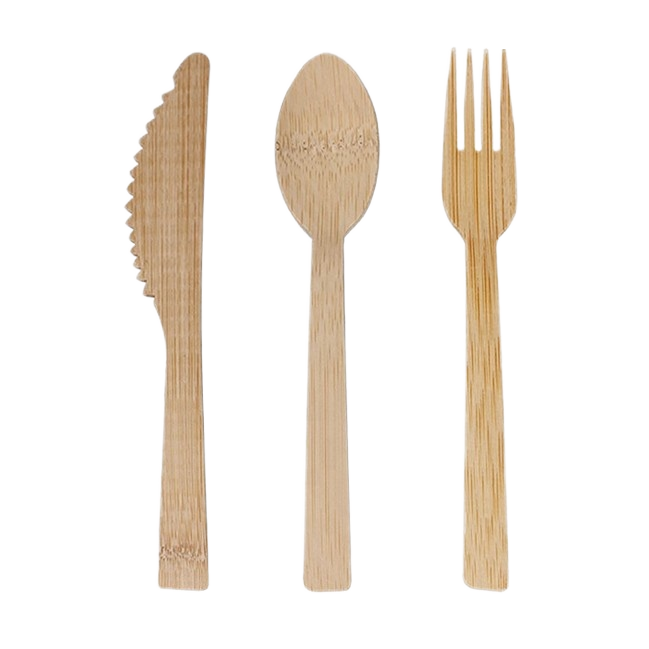
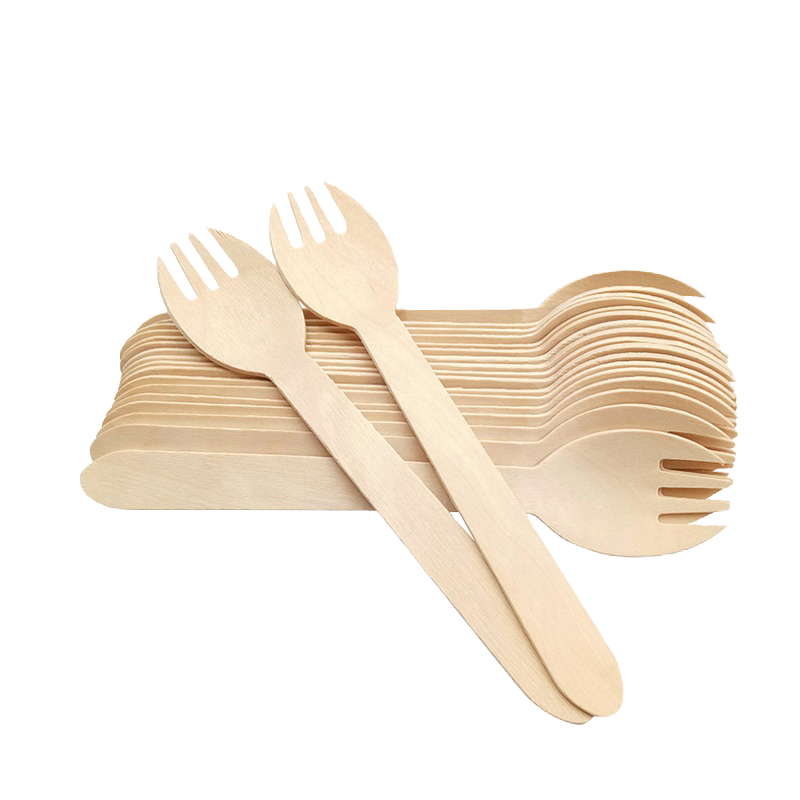
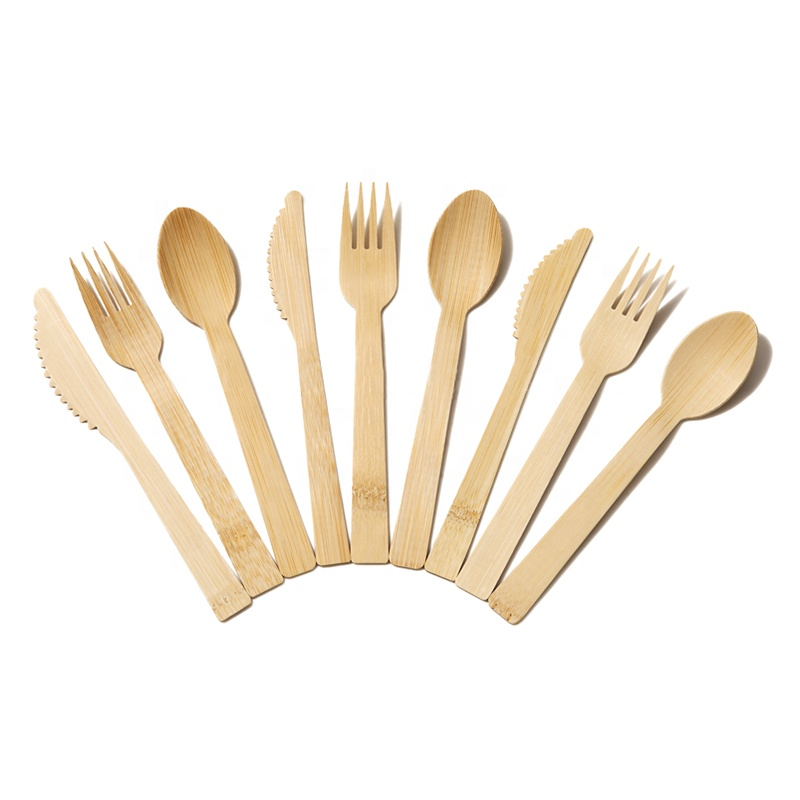
| Cutlery for takeaway and events | Bamboo or wooden cutlery, ideally in kraft-wrapped sets | Stiffness with your firmest dish; heat rating |
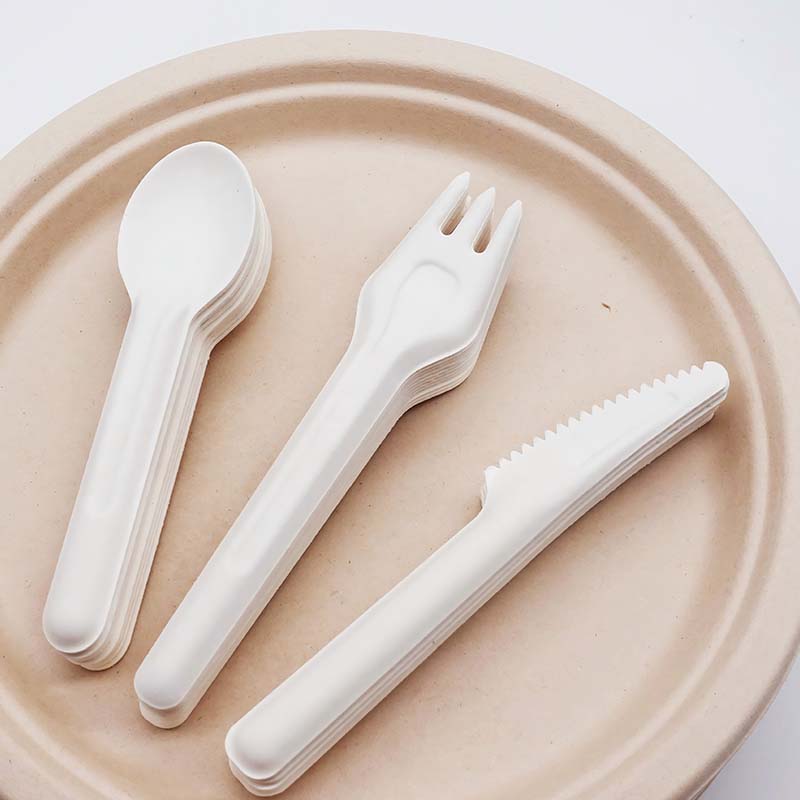
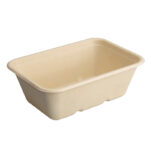
| Hot food containers and plates | Bagasse | Microwave rating; PFAS documentation |
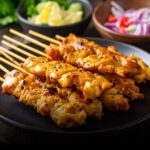
| Kebabs, satay and canapés | Bamboo skewers and picks | Length and diameter for the dish |
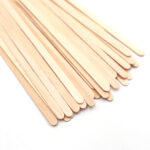
| Drinks | Bamboo or wooden stirrers; plant-based straws | Dispenser or individual wraps for self-service |
Three compliance points apply in most markets:
- Plastic bans: the EU and England ban single-use plastic cutlery and plates, including PLA and other bioplastics. Bamboo, wood and uncoated fiber are accepted.
- Labels: only call items compostable if they carry a certificate such as BPI or OK compost; California restricts “compostable” and “biodegradable” claims.
- PFAS: several US states and the EU restrict PFAS in food packaging, so ask for documentation on fiber products.
For container-load ordering, see our bulk disposable wooden cutlery buying guide. For plate materials, see our guide to eco-friendly disposable plates, and to size an event order, see how many plates per guest. Running a café as well? See compostable tableware for cafes.
Supplied by Friendly Bamboo
Friendly Bamboo manufactures bamboo and wooden cutlery, wrapped sets, skewers, picks, stirrers, straws and plates in Huoshan, Anhui. Bamboo cutlery is rated from -10°C to 80°C; bagasse is rated microwave-safe to 120°C for short reheating.
- Samples: free, with shipping paid by the buyer; ready in about 7 days
- Lead time: typically 30–45 days for standard orders
- Payment: 30% deposit, 70% before shipment
- Shipping: FOB, DDP or EXW from Shanghai, Xiamen or Qingdao
- Documents: FSC chain of custody RR-COC-003046; amfori BSCI audit; FDA, LFGB and EN 13130 food-contact test reports
Frequently asked questions
For takeaway, delivery, off-site catering and pop-ups, usually yes, because nothing comes back to be washed. For steady dine-in service with a working dishwasher, reusables usually cost less; ReThink Disposable case studies show small businesses saving thousands of dollars a year after switching dine-in to reusables.
For takeaway and delivery, off-site events, food trucks and pop-ups, during dishwasher breakdowns or boil-water advisories, for peak overflow, and in high-loss areas such as pool terraces.
Follow your local health department’s instructions. Several health departments recommend switching to disposable, single-service utensils and tableware, and not using dishwashers connected to tap water.
Divide the item price by the number of uses before breakage or loss, then add washing labor, water, energy and chemicals, and any transport and handling per use.
Multiply daily covers by items per cover by the number of days you want to cover. Three days is a practical starting point for most restaurants.