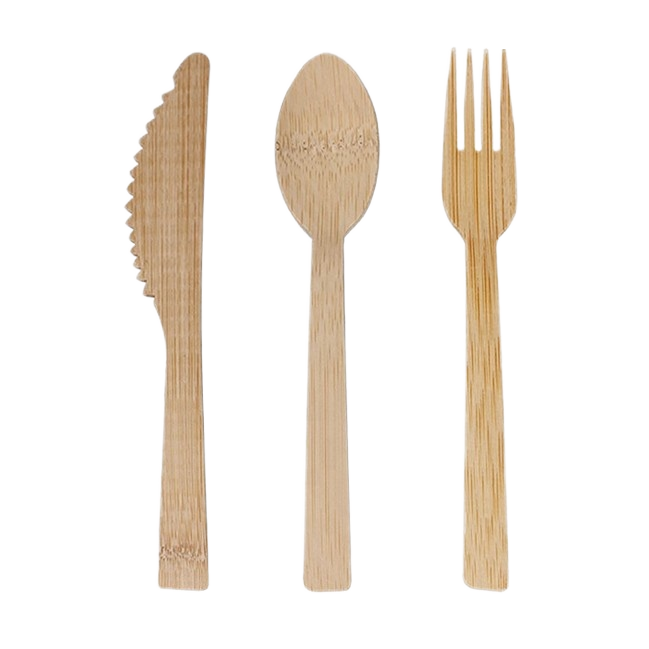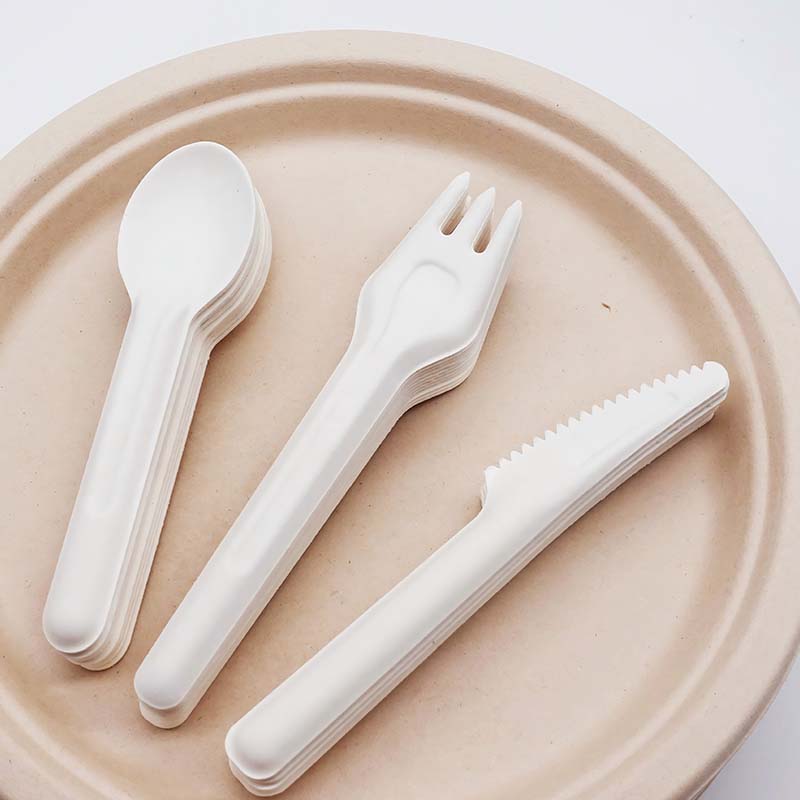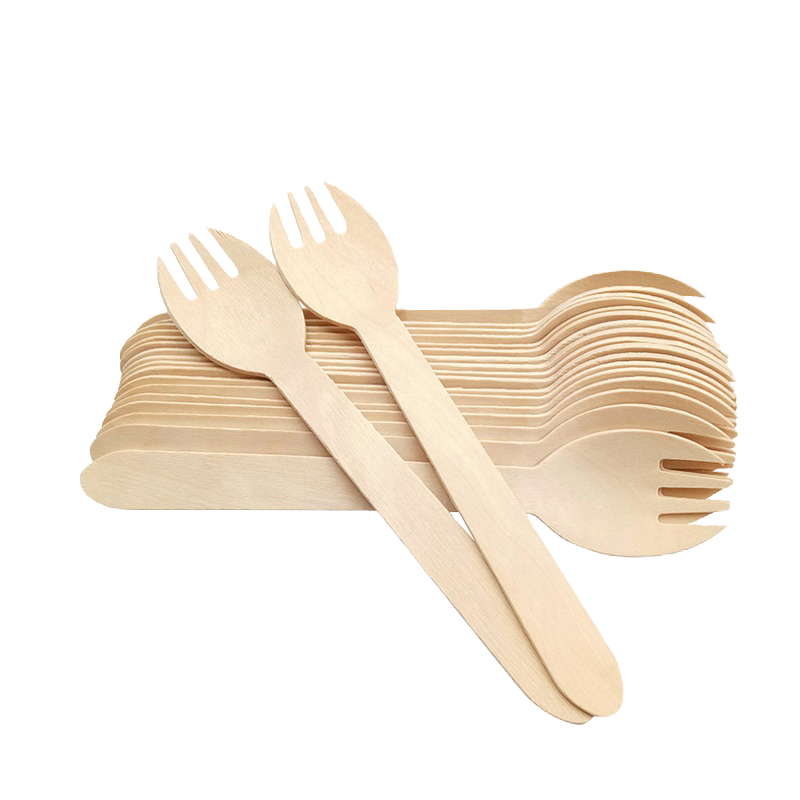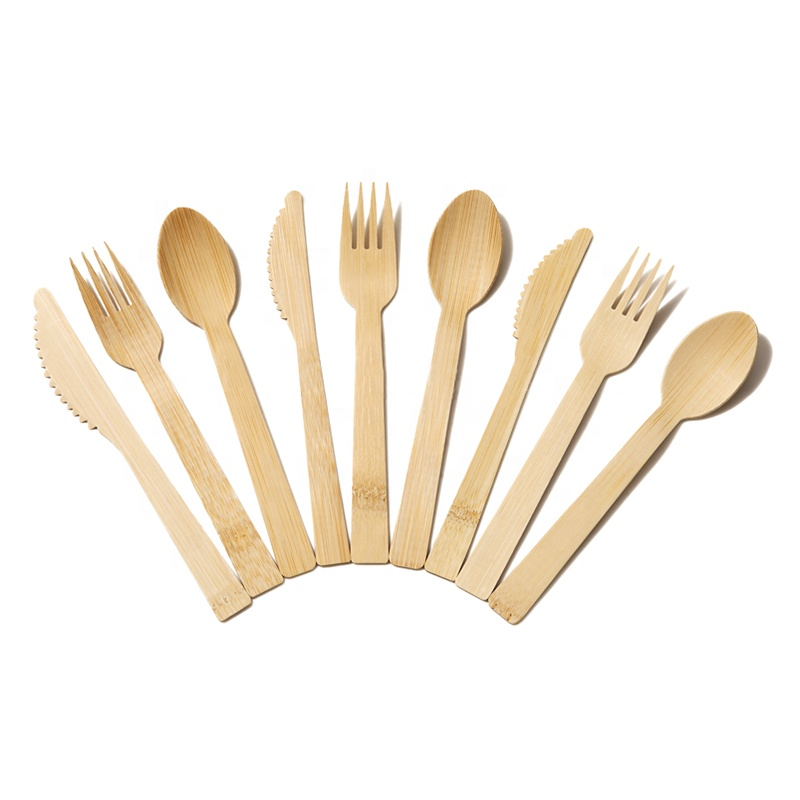


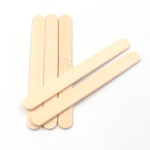
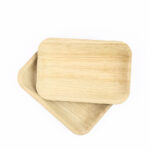

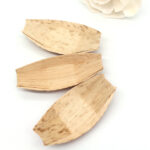


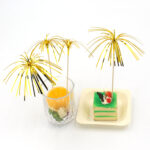


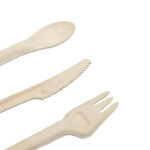




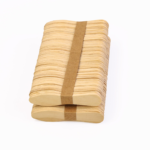
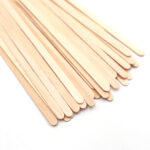

To buy bulk disposable wooden cutlery well, pick the material for your market, write a specification the factory can’t misread, inspect against it before you pay the balance, and order early enough to cover production and sea freight. Each of those steps protects against a specific problem: the wrong grade, mold in transit, short counts or running out of stock.
Key takeaways
- Material: bulk disposable wooden cutlery is mostly birch; bamboo is stiffer and less woody in the mouth, and is outside the EU Deforestation Regulation.
- Specification: define length, thickness, grade, finish, moisture, packing and carton counts in writing before the deposit.
- Quality: inspect for splinters, cracks, burrs, dark spots, mold and warping, using an AQL sampling plan.
- Timing: reorder when stock on hand covers production time, transit time and a safety buffer, which is often three to four months of use.
- Storage: keep cartons dry and off the floor; damp storage is the main cause of mold in wooden cutlery.
- Price: driven by material, size, thickness, grade, packing format, branding, volume and freight.
Should bulk disposable wooden cutlery be birch or bamboo?
Birch is the standard material for bulk disposable wooden cutlery and usually the lower-cost option. Bamboo costs more but is stiffer and feels smoother in the mouth. Both are accepted where single-use plastic cutlery is banned.
| Factor | Birch wooden cutlery | Bamboo cutlery |
| How it’s made | Stamped from thin birch veneer | Cut from bamboo, then hot-pressed and polished |
| Stiffness | Medium; thin pieces can flex | High |
| Mouthfeel | Noticeably woody; can feel dry on the lips | Less woody than traditional wooden cutlery |
| Heat | Suitable for hot food | Friendly Bamboo rating: -10°C to 80°C |
| EU Deforestation Regulation | In scope as a wood product from 30 December 2026 | Out of scope |
| Unit price | Usually lower | Usually higher |
| Best for | High-volume takeaway, events, schools, budget-led contracts | Premium takeaway, hotels, airlines, EU-bound orders |
CPLA cutlery isn’t a substitute in the EU or England, where it’s banned as single-use plastic. For a deeper comparison, see our guide to disposable bamboo cutlery.
Distributors can stock both: birch for price-sensitive customers and bamboo for premium accounts. Buying both from one factory lets you combine them in a single container.
What should a bulk disposable wooden cutlery specification include?
A specification is the document both sides inspect against. Send it before the deposit, attach it to the purchase order, and keep a signed approved sample from the factory as the physical reference.
| Spec line | What to define | Example |
| Item and material | Piece type and wood species | Birch fork |
| Length | Overall length in mm | 160 mm |
| Thickness or weight | Thickness, or grams per 100 pieces | Agreed from the approved sample |
| Grade | Allowed color variation and surface marks | A-grade: even light color, no dark marks |
| Finish | Sanding or polishing; any coating or oil | Sanded smooth, no coating |
| Moisture | Maximum moisture content at packing | Agreed figure, checked at inspection |
| Food-contact compliance | Test report for your market | FDA or LFGB report |
| Sourcing claim | Certificate covering the wood | FSC chain of custody |
| Packing | Pieces per bag or wrap; set contents | 100 pieces per bag, or kraft-wrapped 4-in-1 sets |
| Carton | Pieces per carton, carton size and gross weight | Per supplier packing list |
| Carton marks | Item code, quantity, batch code, country of origin | “Made in China” plus batch code |
Friendly Bamboo’s wooden cutlery comes in 100, 110, 140 and 160 mm lengths, and its bamboo cutlery from 75 to 210 mm. Pieces can be packed in bulk cartons, individually wrapped in kraft, or as pre-wrapped 3-in-1 and 4-in-1 sets with a napkin.
How do you check the quality of bulk disposable wooden cutlery?
Agree the grade, list the defects you won’t accept, and inspect a random sample before the balance is paid.
Grades
Wooden cutlery factories commonly sell more than one grade. A-grade usually means an even, light color with no visible marks. B-grade allows more color variation and small natural marks, at a lower price. Definitions vary between factories, so ask for photos or physical samples of each grade and write the accepted grade into your specification.
Defects to list in your specification
| Severity | Defect | Why it matters |
| Critical | Mold, foreign matter, odor | Food-safety risk; whole lot may be rejected |
| Critical | Splinters or sharp edges on lip-contact areas | Injury risk |
| Major | Cracks, breaks or snapped tines | Unusable piece |
| Major | Burrs or rough edges | Customer complaints |
| Major | Warping | Pieces don’t sit flat or nest in packing |
| Major | Wrong length or short counts | Contract and pricing errors |
| Minor | Color variation within the agreed grade | Appearance only |
Inspection
Book a pre-shipment inspection when production is complete and most of the order is packed. Inspectors draw a random sample under ISO 2859-1 (AQL). A common setup for consumer goods is zero tolerance for critical defects, 2.5 for major and 4.0 for minor, but you can set your own levels.
For wooden cutlery, ask the inspector to open several master cartons from different pallets, smell each opened bag, check for dark spots that indicate mold, and break-test a few pieces of each item.
Friendly Bamboo accepts third-party pre-shipment inspections, so you can use the inspection company of your choice.
Also read – Disposable Bamboo Travel Cutlery Set
How much bulk disposable wooden cutlery should you order, and when?
Reorder when the stock you hold will last through production, shipping, customs and a safety buffer. Working this out per item avoids running short while a container is still at sea.
Reorder point = average monthly usage × (total lead time in months + safety stock in months)
Total lead time has three parts:
- Production: typically 30–45 days for standard orders at Friendly Bamboo.
- Sea freight: depends on the route; several weeks from Chinese ports to Europe or the Americas.
- Customs clearance and inland delivery: allow about a week.
Worked example
This is a hypothetical example. Replace the figures with your own usage and freight quotes.
| Item | Figure |
| Average monthly usage | 200,000 forks |
| Production | 40 days |
| Sea freight | 35 days |
| Customs and delivery | 7 days |
| Total lead time | 82 days, about 2.7 months |
| Safety stock | 1 month |
| Reorder point | 200,000 × 3.7 = 740,000 forks |
In this example, the next order goes in when stock falls to about 740,000 forks. Add a safety buffer before peak seasons, such as summer events or the year-end holidays, and before Chinese New Year, when factories pause for several weeks.
Order size is usually set by container fill rather than demand alone. A full 20ft or 40ft container lowers freight cost per piece, and mixing items such as forks, knives, spoons and stirrers lets smaller buyers fill a container.
How to store bulk wooden cutlery
- Store cartons on pallets, off the floor. The FDA Food Code requires single-service articles to be stored at least 15 cm (6 inches) above the floor in food establishments.
- Keep the warehouse dry and away from wet walls, doors and loading bays.
- Keep inner bags sealed until use.
- Use stock in order of arrival, oldest first.
- Open a sample bag from each new delivery and check for odor or dark spots before releasing it to customers.
What drives the price of bulk disposable wooden cutlery?
Eight factors set the unit price. Knowing them lets you compare quotes on the same basis and decide where to save.
| Factor | Effect on price |
| Material | Bamboo usually costs more than birch |
| Length and thickness | Longer and thicker pieces use more material |
| Grade | A-grade costs more than B-grade |
| Packing | Bulk bags cost least; individual wraps and pre-assembled sets cost more |
| Branding | Laser engraving and printed wraps or boxes add cost and may carry their own minimum |
| Volume | Larger orders usually lower the unit price |
| Order mix | Many small lines in one order can raise handling cost |
| Incoterm | FOB, CIF and DDP quotes include different costs, so compare like with like |
Ways to lower cost per piece
- Stick to standard lengths unless a custom size solves a real problem.
- Use bulk packing for back-of-house and self-service dispensers; reserve wrapped sets for takeaway and delivery.
- Use B-grade where appearance matters less, if the grade definition is acceptable.
- Fill containers by mixing items, such as forks, spoons, knives and stirrers.
- Share a 6–12 month forecast so the factory can plan material and production.
At Friendly Bamboo, minimum orders vary by product and size. Custom-printed packaging has a minimum of 100,000 units. To compare quotes on a landed basis, including duties and freight, see our guide to importing disposable tableware from China.
How do you choose a bulk disposable wooden cutlery supplier?
Check these points with every supplier on your shortlist before you send a deposit.
- Factory or trader: ask which items are made in the supplier’s own factory and which are sourced.
- Documents: FSC chain of custody for the wood, food-contact test reports for your market, and a recent social audit. Verify certificate numbers in the issuer’s public database.
- Samples: test each item with your firmest and hottest dishes.
- Capacity: ask for monthly output for your items and the lead time at your volume.
- Inspection: confirm the supplier accepts an independent pre-shipment inspection.
- Payment terms: avoid paying the full amount before inspection.
- Track record: check buyer reviews and main export markets on the supplier’s B2B profile.
How Friendly Bamboo works with bulk buyers
| Term | Detail |
| Company | Anhui Yien Import-Export Trading Co., Ltd., founded in 2013, with two factories in Huoshan, Anhui and more than 500 employees |
| Buyer rating | 4.8 out of 5 from 551 reviews on Alibaba |
| Documents | FSC chain of custody RR-COC-003046; amfori BSCI audit; FDA reports SHAEC24024167602 and SHAEC24024167604 covering bamboo and wooden cutlery; LFGB and EN 13130 test reports |
| Samples | Free, with shipping paid by the buyer; ready in about 7 days |
| Lead time | Typically 30–45 days for standard orders |
| Payment | 30% deposit, 70% before shipment |
| Inspection | Third-party pre-shipment inspections accepted |
| Shipping | FOB, DDP or EXW from Shanghai, Xiamen or Qingdao |
| MOQ | Varies by product and size |
Planning a bulk disposable wooden cutlery order? Friendly Bamboo manufactures birch and bamboo forks, knives, spoons and wrapped sets in Huoshan, Anhui, with free samples, third-party inspections welcome and FOB, DDP or EXW shipping. Browse our wooden cutlery wholesale range or request a quote.
Packing cutlery into kits for takeaway or airlines? See our guide to the disposable bamboo travel cutlery set.
Frequently asked questions
Bulk disposable wooden cutlery is sold through manufacturers’ own websites, B2B platforms such as Alibaba, and importers, and many of the manufacturers are based in China. Buying factory-direct gives the lowest unit price, but you handle shipping and import, or choose DDP terms.
A-grade usually means even, light color with no visible marks. B-grade allows more color variation and small natural marks at a lower price. Definitions differ between factories, so agree them in writing with samples.
Specify a maximum moisture content at packing, check for odor and dark spots at inspection, and store cartons dry, sealed and off the floor.
Birch is usually cheaper and suits high-volume, price-led contracts. Bamboo is stiffer, less woody in the mouth and outside the EU Deforestation Regulation, which suits premium and EU-bound orders.
Add production time, sea freight, customs and a safety buffer. For many buyers that means reordering when three to four months of stock remain.