






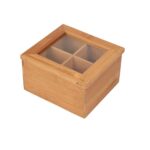
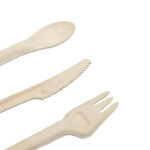

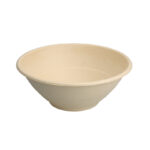

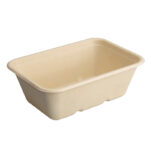



Compostable tableware for cafes changes the experience in small, physical ways: a straw that lasts the whole iced latte, a stirrer that doesn’t splinter, a fork that doesn’t bend in a slice of cake, and a counter free of plastic. It only delivers on the “compostable” promise if the products are certified and actually reach a composting stream.
Key takeaways
- Customers notice performance first. Paper straws can absorb about 30% of their weight in liquid within 10–30 minutes; bamboo straws were measured with 4.36 times the wet strength of paper.
- Self-service stations have rules. Under the FDA Food Code, stirrers, straws and other lip-contact items at self-service must be individually wrapped or come from an approved dispenser.
- “Compostable” is a certified claim. Only print it with a BPI, OK compost or equivalent certificate for the exact product.
- Plastic stirrers, straws and cutlery are banned in the EU, including bioplastic versions; wood and bamboo are accepted.
- Composting needs a collection route. Coffee grounds, food waste and certified tableware only compost if your hauler collects them.
- Compostable tableware for cafes doesn’t have to be expensive: small items such as stirrers and picks cost very little per drink.
Where does compostable tableware for cafes make a difference?
A café uses more single-use items than the cup. Each of these is a point where customers handle the product and form an impression.
| Touchpoint | Plant-based option | What customers notice |
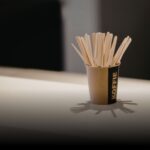
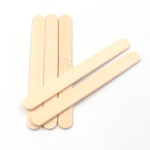
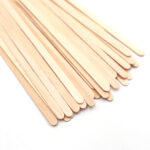
| Stirring coffee and tea | Wooden or bamboo stirrers | Smooth edges, no splinters, no woody taste in the drink |
| Iced drinks and smoothies | Bamboo, bagasse, wheat or reed straws | Whether the straw lasts until the drink is finished |
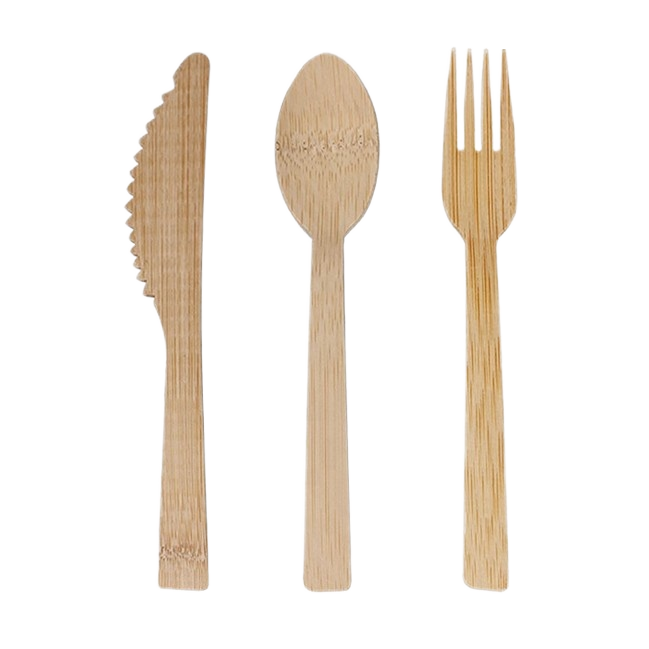
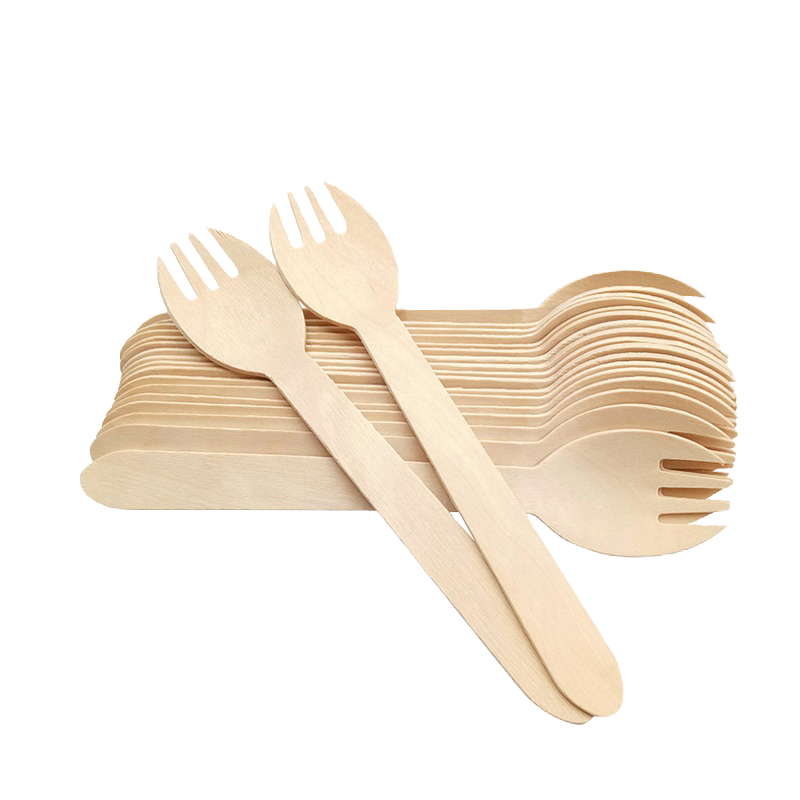
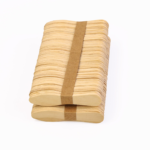
| Cake, pastries and salads | Bamboo or wooden forks and spoons, 140 mm for desserts | Whether the fork bends or splits in dense cake |
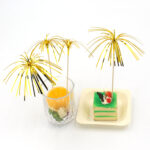
| Sandwiches and samples | Knotted or paddle picks, bamboo toothpicks | A neat, plastic-free presentation |
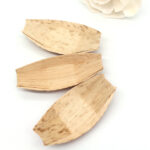
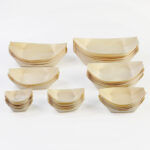
| Takeaway food | Bagasse boxes and bowls | Whether the container holds heat and grease without leaking |
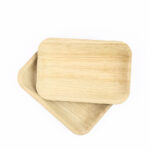
| Dine-in plates | Reusables, or bamboo and bagasse plates | Look and stability on the table |
| Cups and lids | Check lids separately | A plastic lid on a “compostable” cup undermines the claim |
The last row matters. Customers judge the whole order, so a single plastic item can undercut everything else on the tray.
For stirrer sizes and suppliers, see our guide to choosing a wooden coffee stirrer manufacturer in China.
What do customers notice about compostable tableware in a cafe?
Performance comes before sustainability. A straw that collapses or a fork that snaps is what customers remember, whatever the label says.
Straws
Paper straws soften as they absorb liquid. A North Carolina State University study found commercial paper straws absorbed about 30% of their weight after 30 minutes, and a 2026 study measured up to 30% within 10 minutes. In a 2025 study, straws made from wound bamboo slices had 4.36 times the wet strength of paper straws.
The 2026 study also found that lids change the picture. With open-ended lids, customers rated paper straws almost as highly as PLA straws, because the lid masked the straw’s weaknesses. For slow drinks without lids, such as iced coffee in a glass, a stronger straw matters more. See our comparison of bamboo straws vs paper straws.
Stirrers
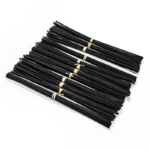
Stirrers sit in hot drinks, so finish matters. Well-sorted birch or bamboo stirrers are smooth, stay straight and add little or no taste. Rough or under-dried stirrers splinter, which customers notice immediately.
Cutlery
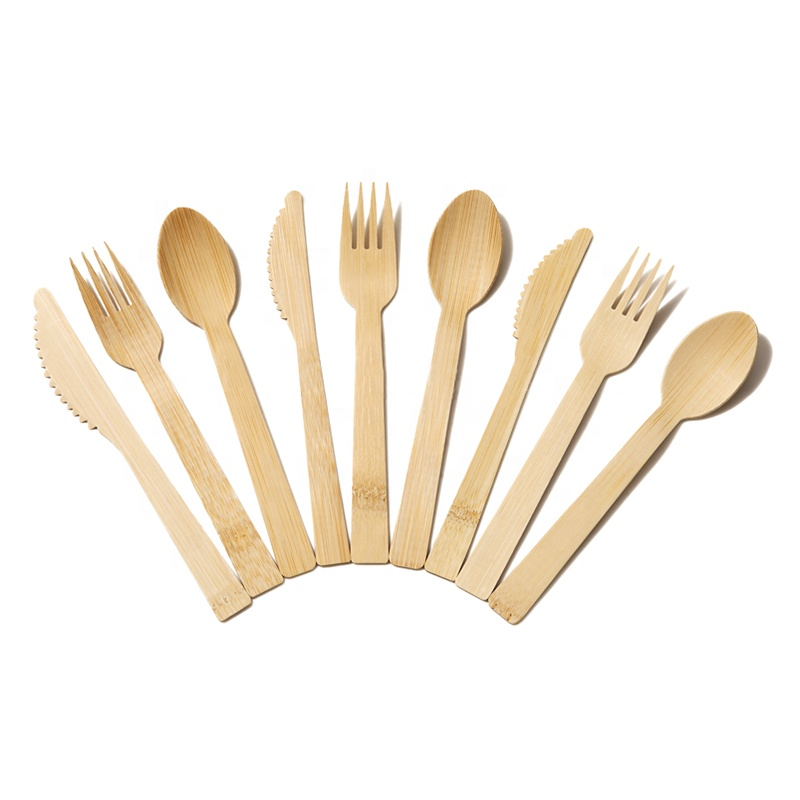
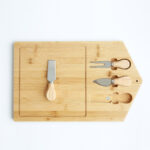
Bamboo cutlery is stiffer than thin birch and distributors describe it as having a less woody feel than traditional wooden cutlery. Friendly Bamboo’s bamboo cutlery is rated from -10°C to 80°C, which covers soups and hot dishes at serving temperature.
The wider signal
Packaging also shapes how customers see the café. In PwC’s 2024 survey of more than 20,000 consumers, eco-friendly packaging was cited by 38% as a factor that would change their buying behavior.
How should a cafe set up a self-service station with compostable tableware?
The condiment station is where hygiene rules and waste meet. Under the FDA Food Code, adopted across US states, single-service items for food or lip contact at self-service must be offered with the original individual wrapper intact or from an approved dispenser. Unwrapped knives, forks and spoons must be presented so customers touch only the handles.
In practice, that means:
- Stirrers: in a dispenser box that releases one at a time, or individually kraft-wrapped. Not loose in an open cup.
- Straws: individually wrapped, or from a dispenser.
- Cutlery: wrapped sets, or loose pieces standing handle-up in a holder.
- Napkins: from a dispenser that releases one at a time.
- Waste: a small bin for used stirrers and wrappers right at the station.
Keep some items behind the counter
Handing out straws and cutlery only on request, especially for takeaway and delivery, cuts the number of items used. It also keeps the station tidy and lets staff match the item to the order, such as a spoon for soup or a fork for cake.
Wrapped cutlery sets work well for grab-and-go fridges and delivery bags. See our guide to the disposable bamboo travel cutlery set for formats.
What can a cafe claim about its tableware?
Say what’s true and provable. Describing the material is safe; claiming an outcome needs evidence.
| Wording | When you can use it |
| “Our stirrers and cutlery are made from wood and bamboo” | Whenever it’s true |
| “Plastic-free” | Only if no item in the order has plastic, including lids, linings and individual wraps |
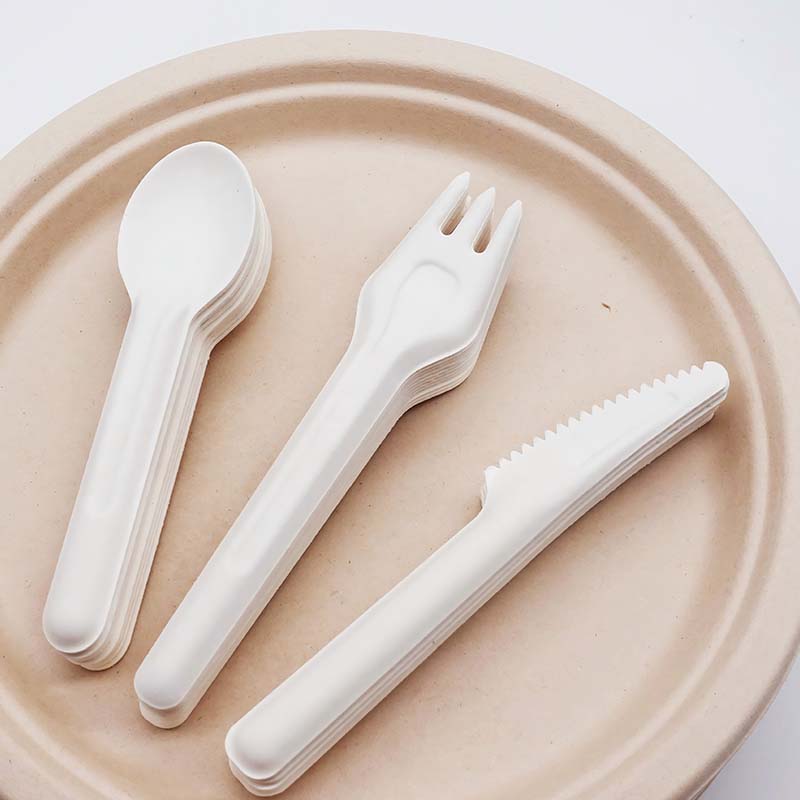
| “Compostable” | Only with a BPI, OK compost or equivalent certificate covering that exact product |
| “Home compostable” | Only with a home-compostability certificate such as OK compost HOME |
| “Biodegradable” | Avoid; California restricts the claim to products meeting specified standards |
For the difference between these terms, see our guide to bio-based, biodegradable and compostable materials.
Rules by market
- EU: single-use plastic straws, stirrers, cutlery and plates have been banned since July 2021, including bioplastic versions such as PLA. Wood, bamboo and uncoated fiber are accepted.
- England: plastic straws and stirrers have been banned since October 2020, and single-use plastic plates and cutlery since October 2023, including biodegradable and compostable plastic.
- United States: no federal ban; city and state rules vary, and several states regulate “compostable” claims and PFAS in food packaging.
How do you make sure compostable tableware for cafes actually gets composted?
Compostable products only compost if they reach a facility that accepts them. Set up the collection before you advertise it.
- Ask your hauler what they take. Some composters accept food scraps only. Many avoid PLA products because they look like conventional plastic on a sorting line, as researchers at Michigan State University report.
- Start back-of-house. Used coffee grounds and food prep scraps are clean, predictable compost streams that most food-waste services accept.
- Add a front-of-house bin only if tableware is accepted. If it is, label the bin with pictures of the exact items that belong in it.
- Use one compostable system where possible. Stanford’s Coupa Café switched all its foodware to certified compostable items, so customers put everything in one bin and nothing needs sorting.
- Be honest where there’s no collection. Plant-based tableware still removes plastic from the counter, but without collection, it goes to general waste. Don’t tell customers it will be composted.
Friendly Bamboo’s wooden and bamboo products are natural materials, but they don’t currently carry a compostability certificate. If your café plans to label them as compostable, that claim needs a certificate for the exact product.
Also read – Eco-Friendly Disposable Tableware
What should a café order, and how do you keep costs down?
Start with the items customers handle most, then work through the rest as stock runs out.
- Stirrers first. They’re used with nearly every hot drink and cost very little per piece, so the switch is quick and cheap.
- Straws next. Choose by drink: a stronger straw for slow iced drinks and smoothies.
- Cutlery and picks. Short 140 mm forks and spoons for cakes and desserts; picks for sandwiches and samples.
- Takeaway containers last, once you’ve tested them with your hottest and greasiest dishes.
To keep costs down, offer straws and cutlery on request, buy bulk packs for back-of-house use and dispenser packs for the counter, and order lengths that match your cups rather than one size for everything.
Café supplies from Friendly Bamboo
| Product | Options |
| Wooden coffee stirrers | 110, 140, 178 and 190 mm; bulk bags, dispenser boxes, retail boxes or individually kraft-wrapped |
| Bamboo coffee stirrers | Flat and round |
| Straws | Single-use bamboo straws, plus sugarcane bagasse, wheat straw and reed straws; minimum order 10,000 units |
| Bamboo and wooden cutlery | Forks, knives, spoons and kraft-wrapped sets |
| Picks | Bamboo toothpicks, knotted and paddle picks |
Samples are free, with shipping paid by the buyer, and are usually ready in about 7 days. Standard orders typically take 30–45 days. Products carry FSC chain of custody (RR-COC-003046) and FDA, LFGB and EN 13130 food-contact test reports.
Frequently asked questions
Start with wooden or bamboo stirrers, strong plant-based straws for iced drinks, bamboo or wooden cutlery for cakes and salads, and bagasse containers for takeaway food. Only call them compostable if each item carries a certificate such as BPI or OK compost.
Yes, for most cafés. They’re accepted where plastic stirrers are banned, don’t contain plastic, and well-made birch or bamboo stirrers are smooth and add little or no taste.
They soften over time. Studies measured paper straws absorbing about 30% of their weight within 10–30 minutes. Lids hide much of the softening, but for slow drinks without a lid, a stronger bamboo straw lasts longer.
Under the FDA Food Code, self-service items for lip contact should be individually wrapped or come from an approved dispenser, so loose stirrers in an open cup aren’t recommended.