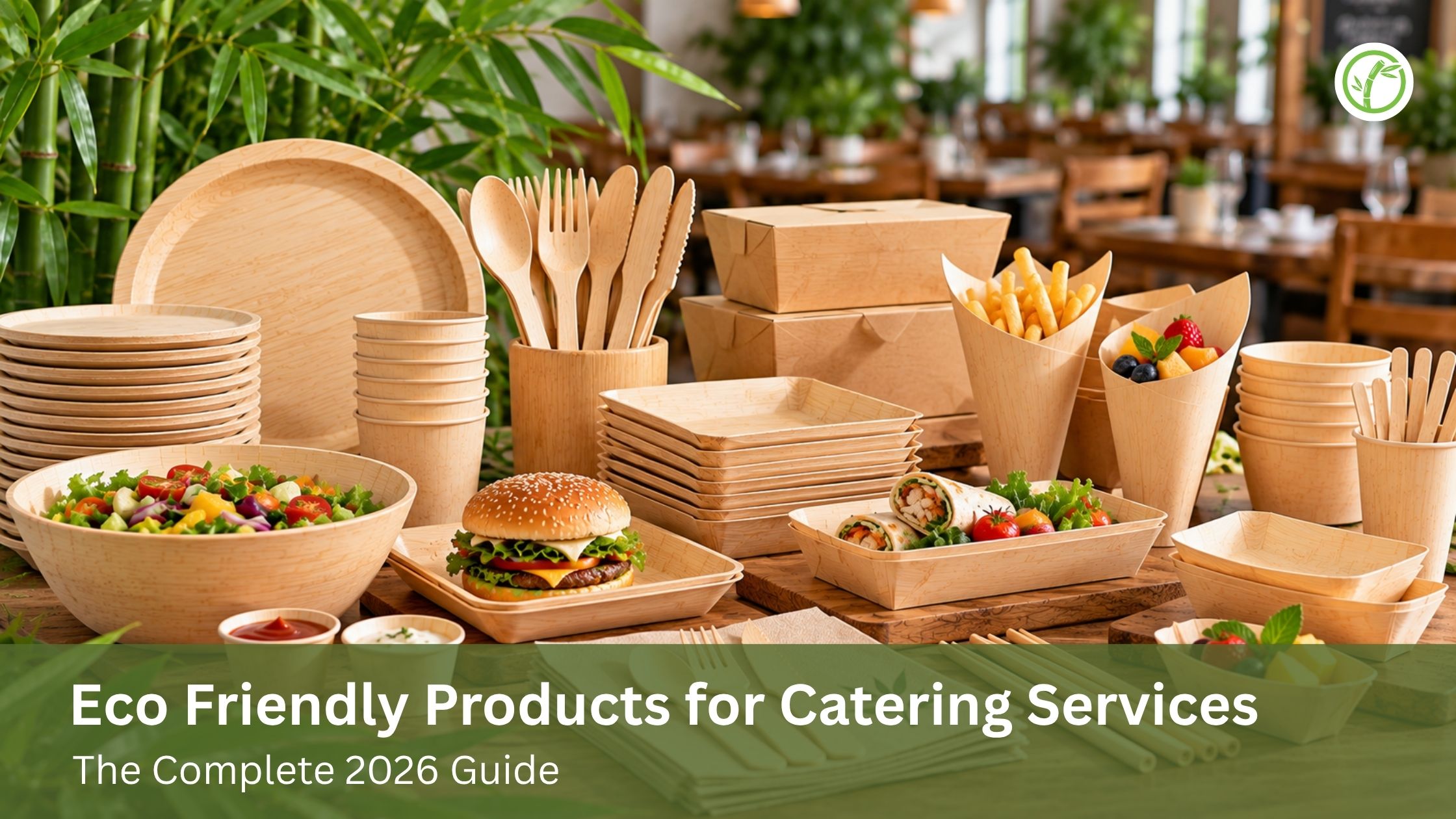
Switching to eco friendly products for catering services is no longer optional 71% of event planners now consider sustainability a key factor when selecting a catering vendor. This guide covers every product category your catering operation needs to go green, from tableware and straws to food packaging and kitchen equipment, with honest guidance on what actually works at event scale.
Why Eco-Friendly Products Matter for Catering Services Right Now
The sustainable catering services market was valued at $117.81 billion in 2025 and is projected to reach $145.60 billion by 2030. The growth isn’t driven by trend client mandates, regulatory change, and measurable business return, but by them.
According to ReFED, businesses implementing waste-reduction strategies have seen a return of up to $14 for every $1 invested. Food waste prevention also leads to more accurate budgeting and better inventory management both critical for catering operations managing tight margins across variable event sizes.
Attendees, particularly younger generations, demand visible eco-friendly practices as a baseline for participation, reducing single-use plastics and prioritizing sustainably sourced food and beverages. In 2026, this is no longer a client wish list item. Eco-friendly initiatives have shifted from trend to requirement.
57% of consumers say sustainability practices at least somewhat influence their choices when dining away from home, and for event catering, where the food experience is part of the occasion, that influence is even stronger.
1. Compostable and Biodegradable Tableware: The Biggest Category
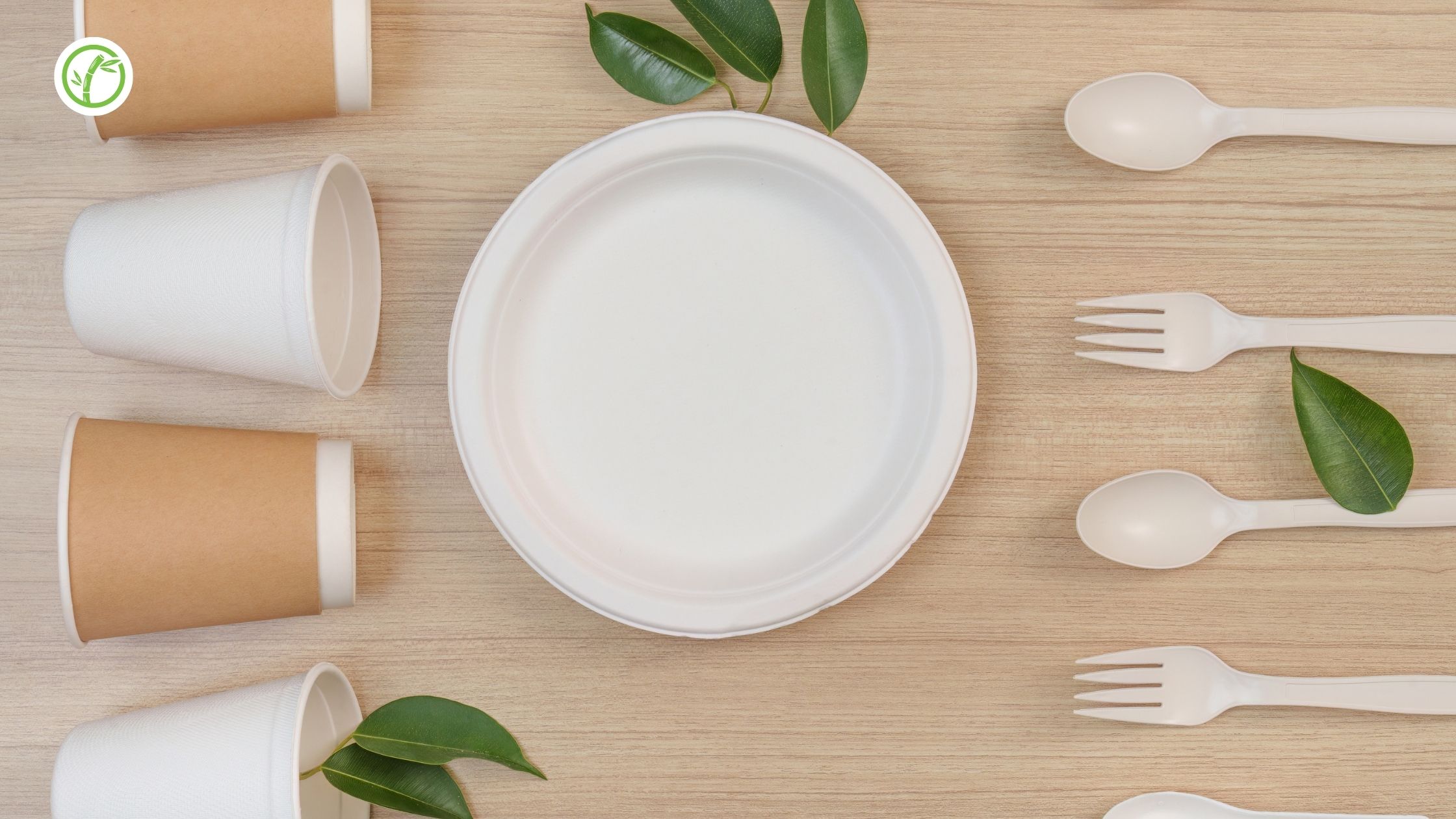
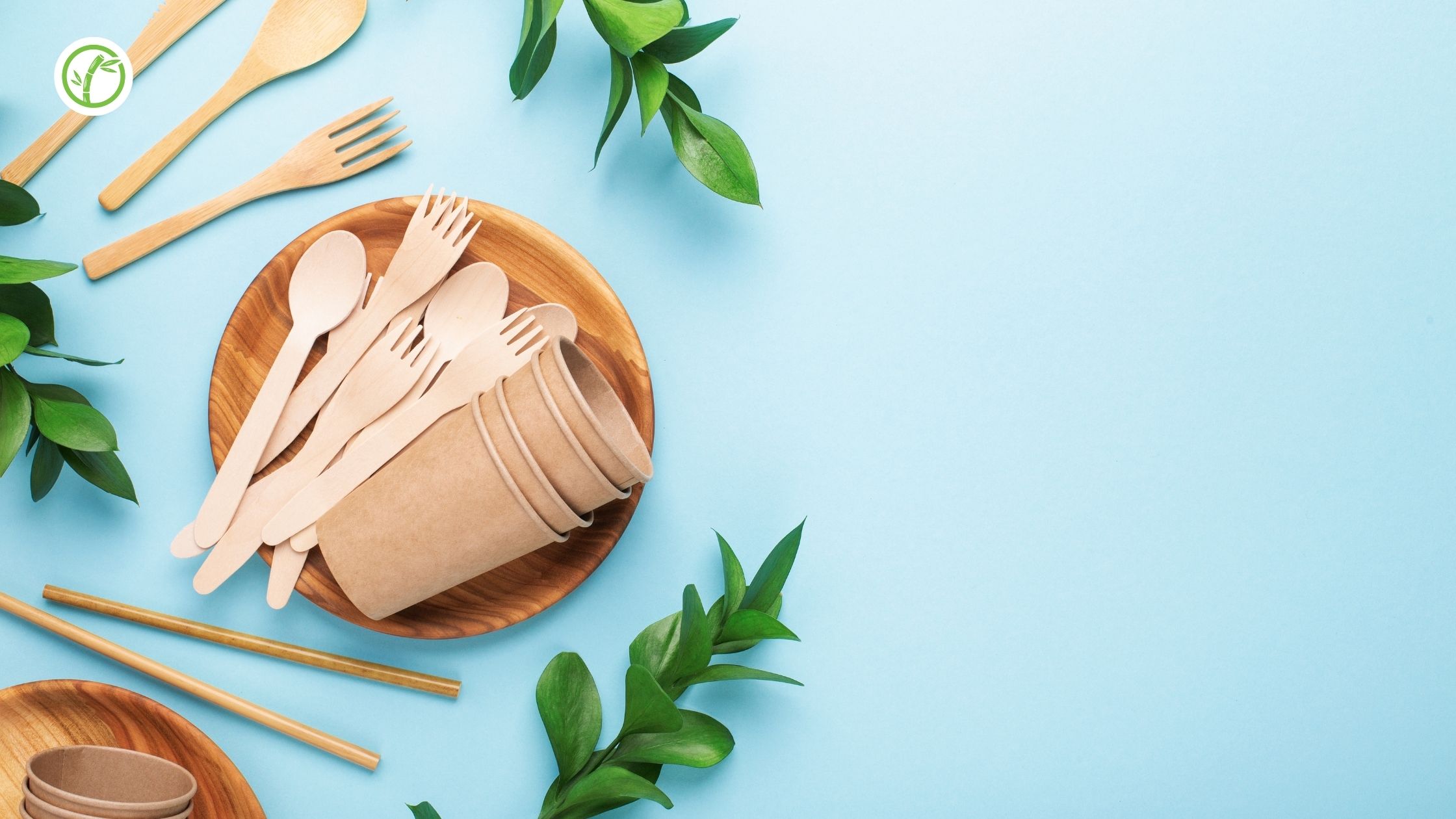
Tableware is the most visible eco-friendly decision a caterer makes. It’s what every guest handles, photographs, and comments on. Getting this right sets the tone for everything else.
What Material Should You Choose for Catering Plates?
The right material depends on your event type, budget, and aesthetic. Here’s how the main options compare:
Bagasse (sugarcane pulp) is the workhorse of eco-catering tableware. Made from agricultural waste, it’s oil-resistant, heat-tolerant, compostable in 60–90 days under industrial conditions, and cost-effective at high volumes. Bagasse is best for plated dinners, buffet service, and hot food stations. For most catering operations running large-volume events, bagasse plates deliver the best cost-to-performance ratio of any compostable option.
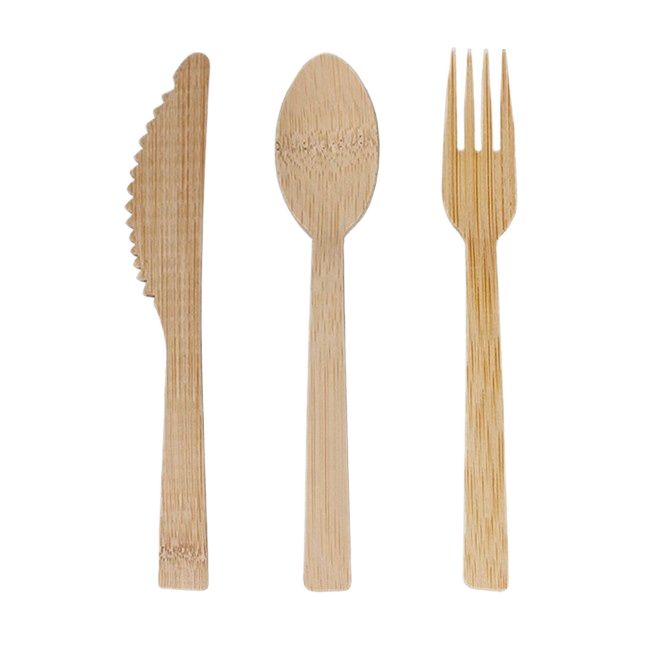
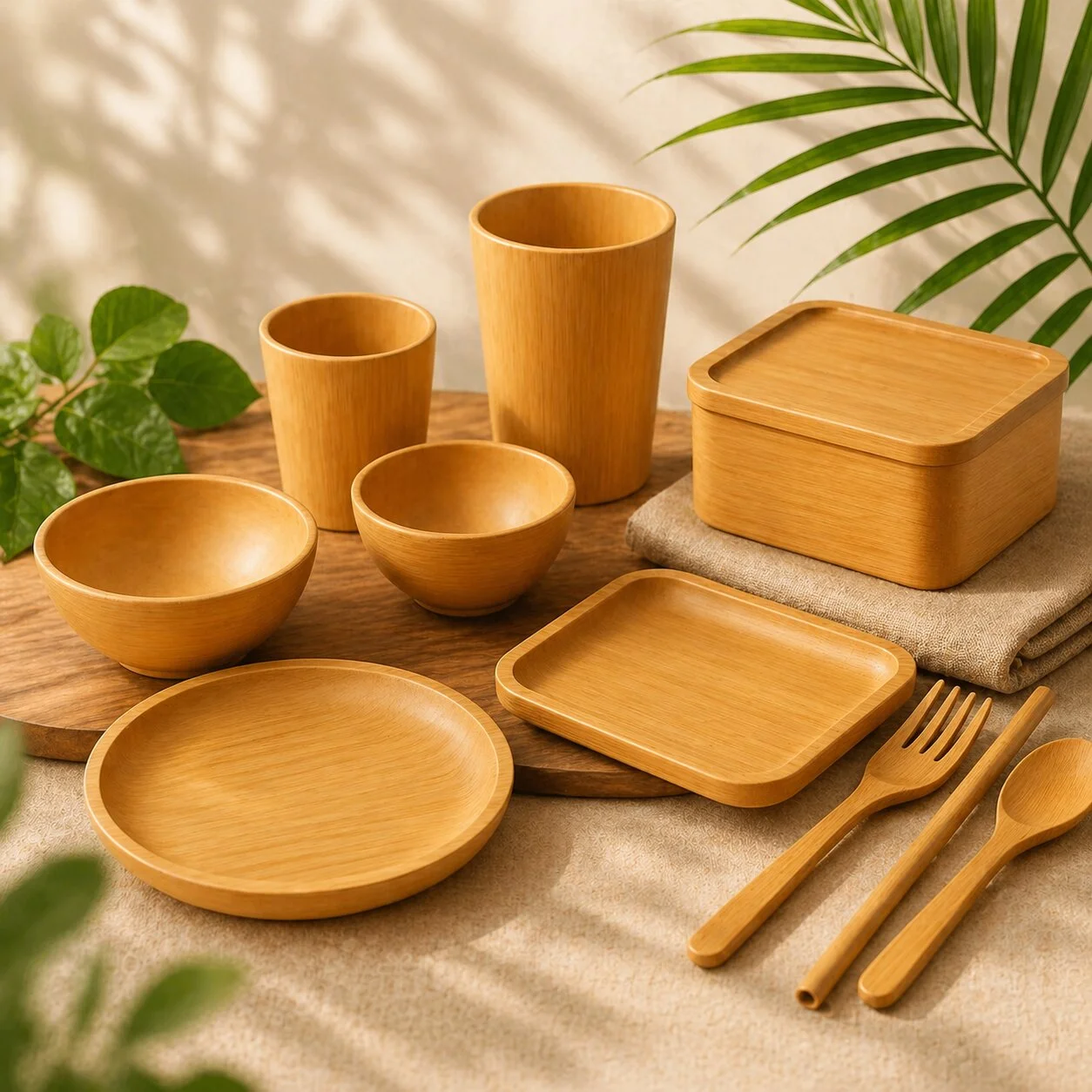
Bamboo is the premium tier. Bamboo cutlery is the strongest natural option, naturally antimicrobial, and has an incredibly smooth texture typically 15–25% more expensive than wood, but the premium look justifies it for high-end events. For weddings, gala dinners, corporate showcase events, and any occasion where the tableware is part of the experience, bamboo disposable plates present a quality aesthetic that conventional disposables simply can’t match.
Palm leaf is made from naturally fallen Areca palm leaves — no trees are cut. Each piece has a unique grain pattern, making every plate one-of-a-kind. Strong, naturally waterproof, and visually striking for outdoor, rustic, or destination events.
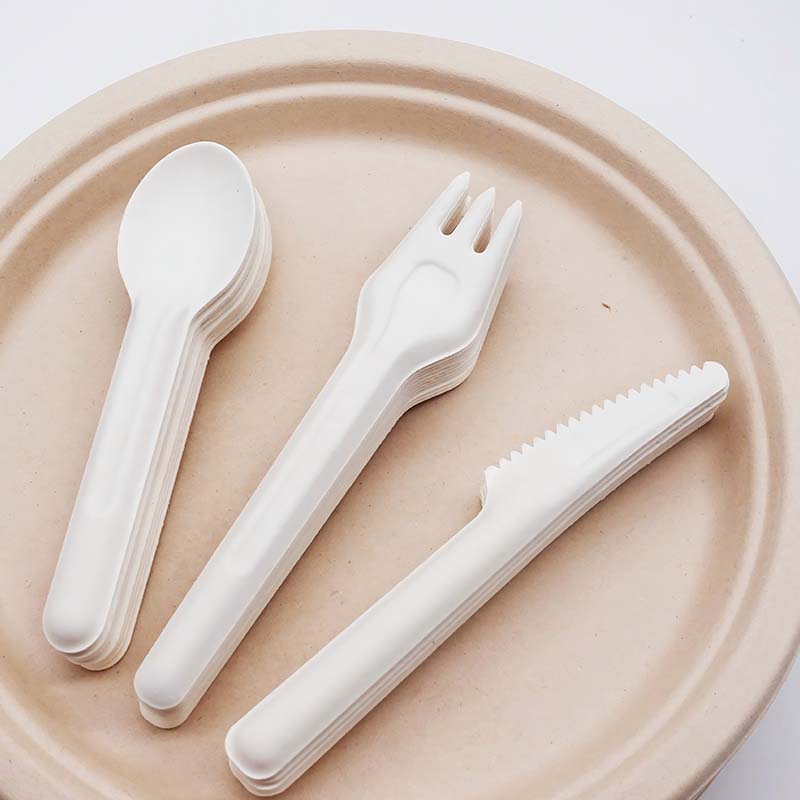
Paper-based / moulded fibre plates and bowls are the most accessible entry point. Widely available, FSC-certified options are recyclable as well as compostable, and work well for informal catering, food festivals, and corporate lunch service.
2. Eco-Friendly Cutlery for Catering Events
Bamboo Cutlery
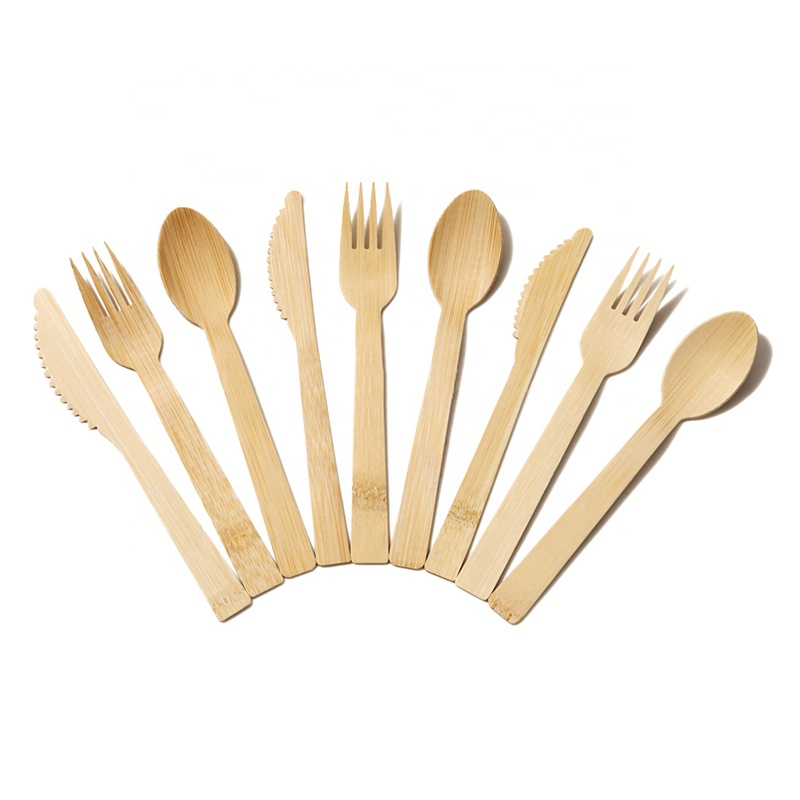
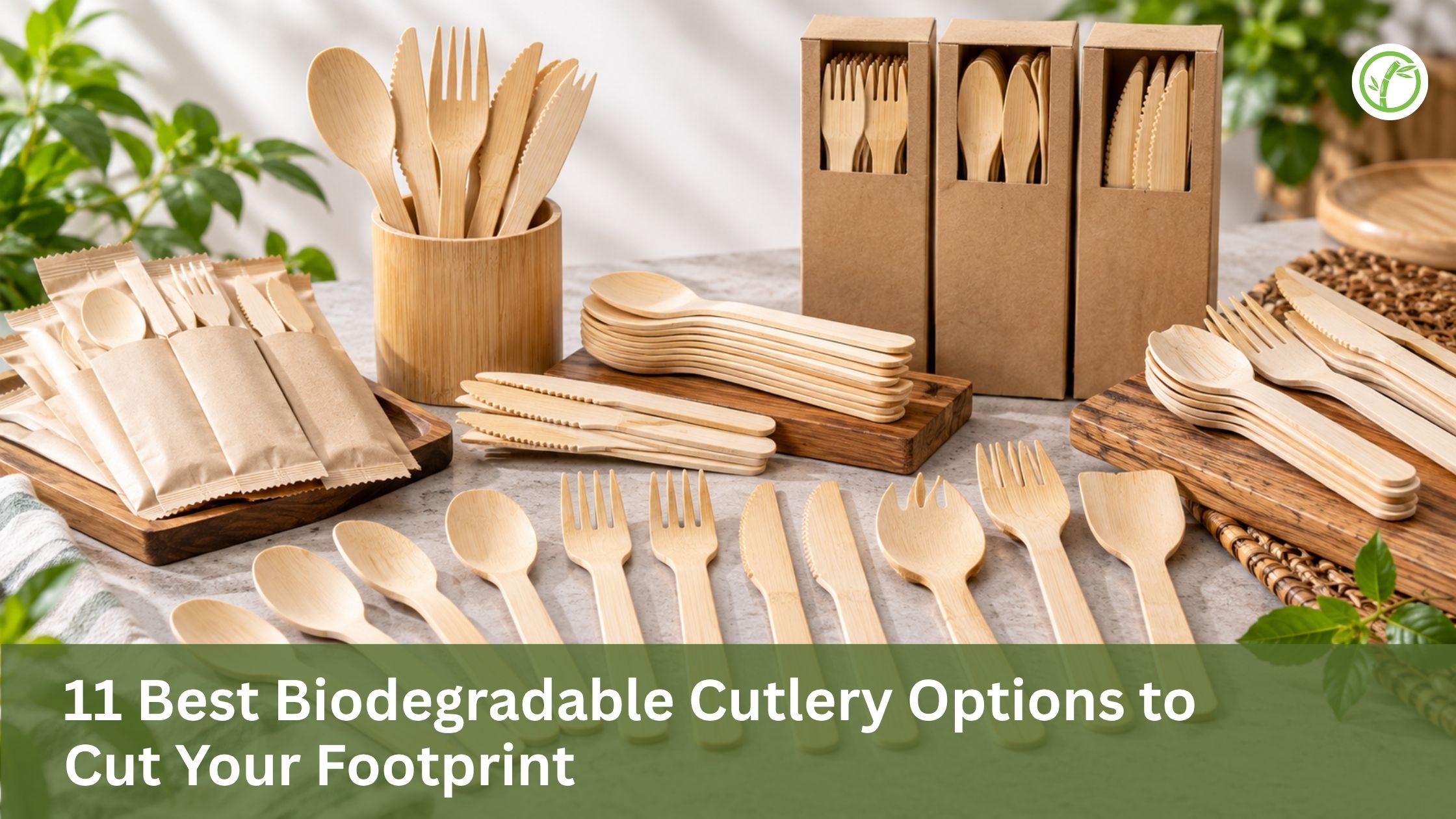
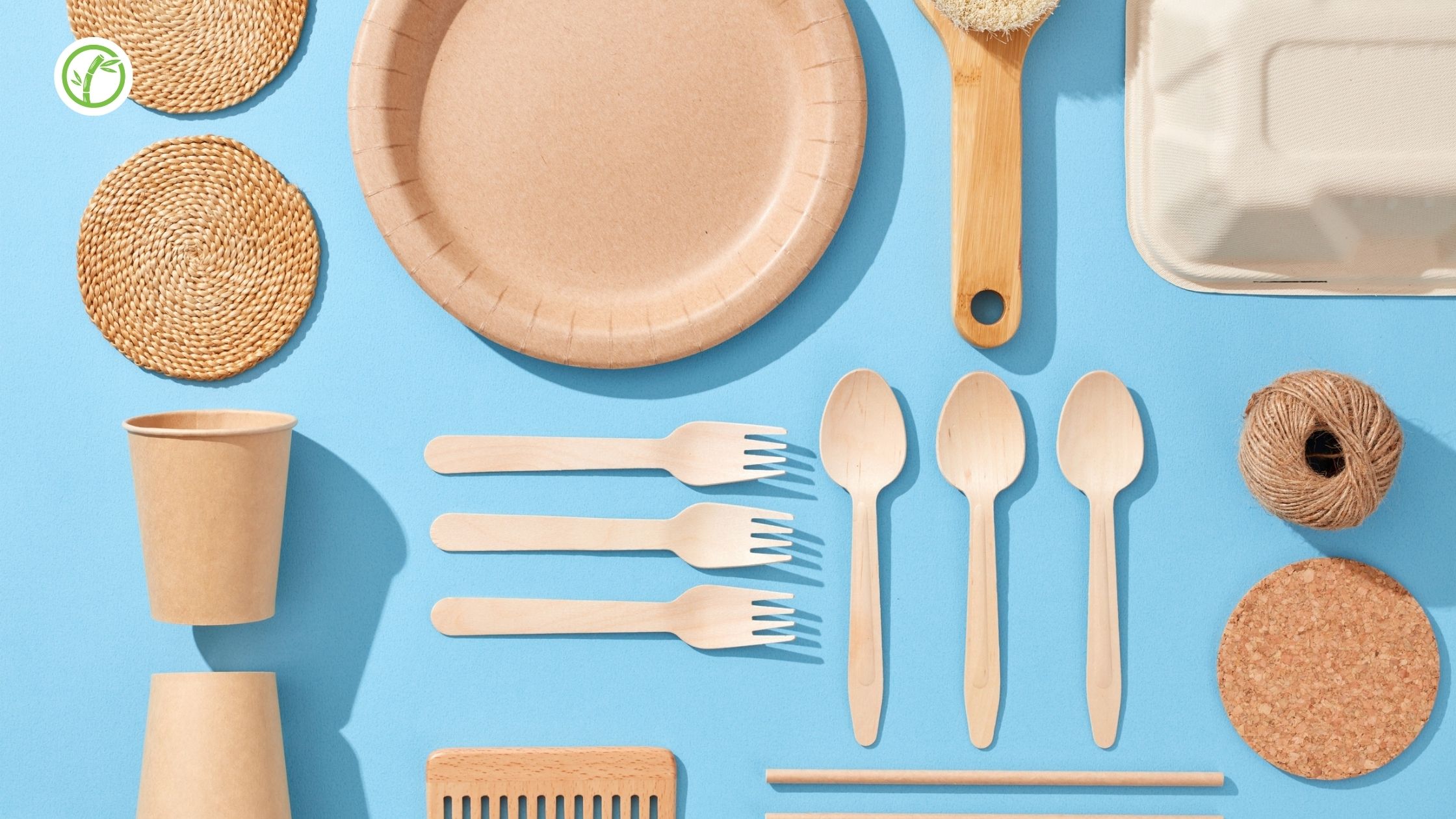
For catering events where presentation matters, bamboo cutlery is the clear premium choice. It’s strong enough for all standard meal types — including meats, pasta, and dense salads — PFAS-free, and home compostable. The natural grain finish photographs well and signals genuine sustainability rather than token gesture.
Bamboo cutlery sourced in bulk is cost-effective at event scale and available in individual utensils or full place setting kits. For caterers running a full range from casual corporate lunches to premium weddings, wholesale bamboo tableware — including serving spoons, tongs, and salad servers — creates a complete and cohesive sustainable table setup.
Wooden Cutlery
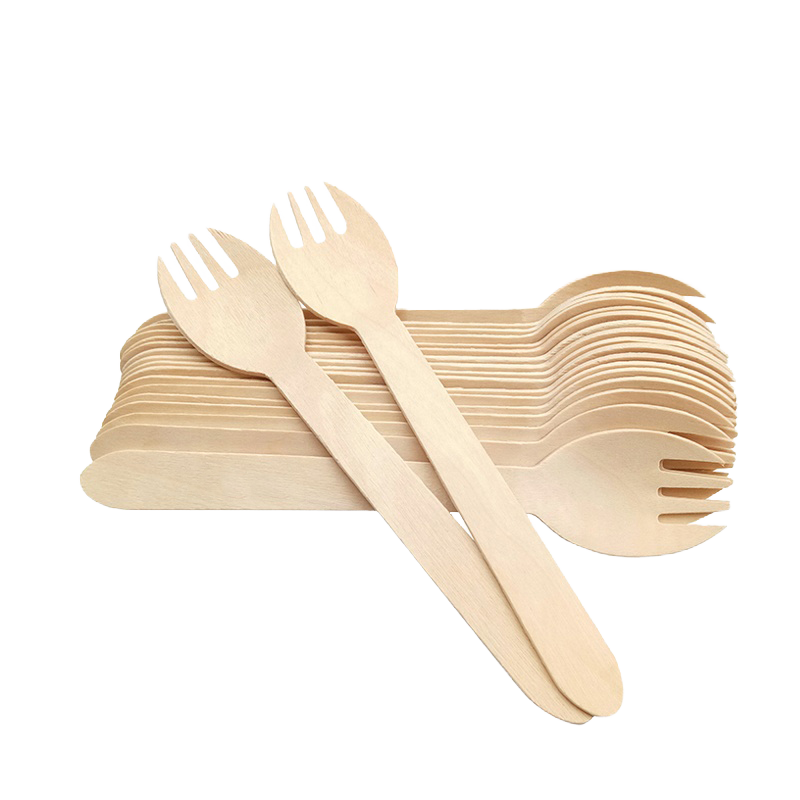
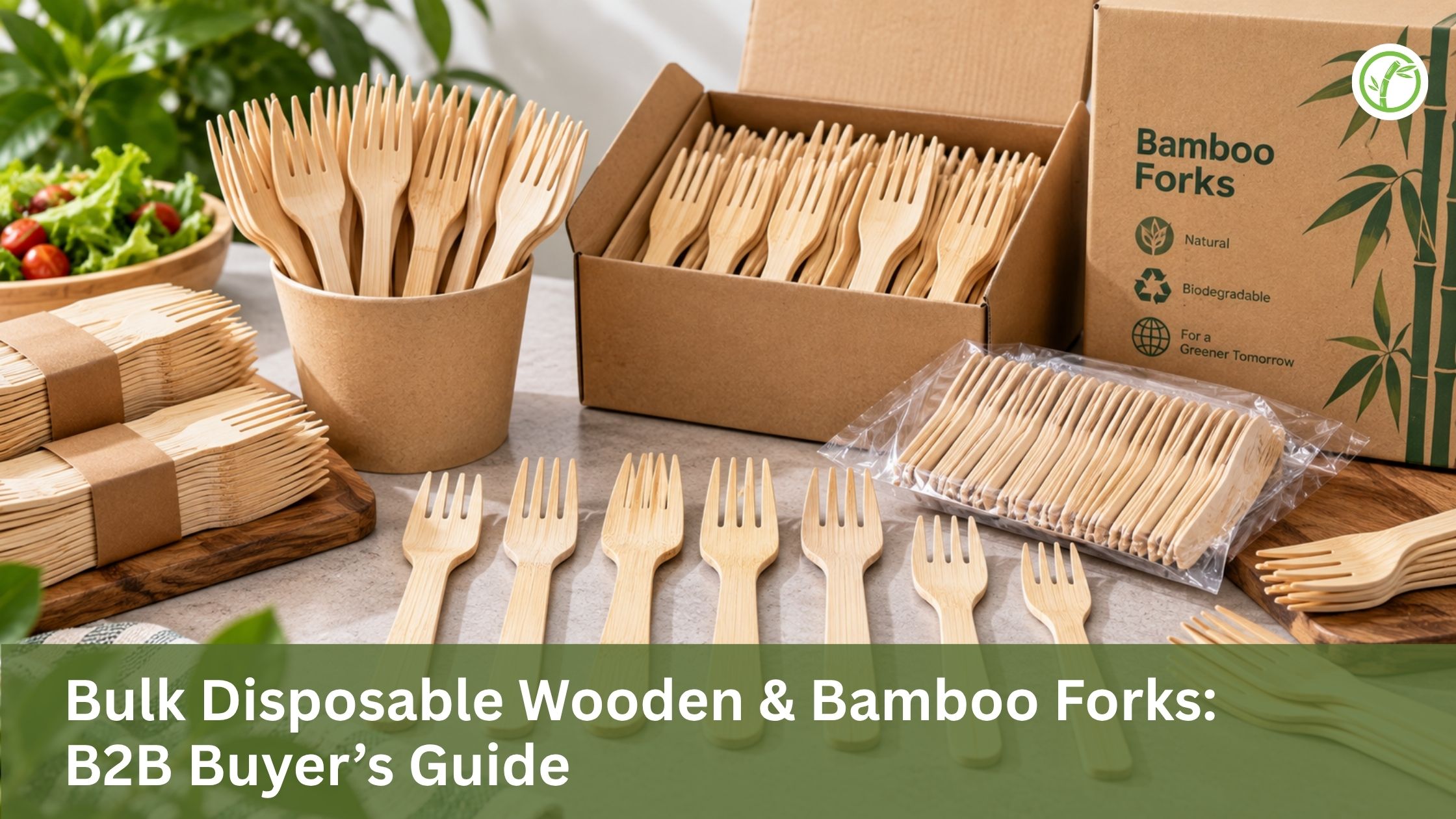
For most events, birch wood cutlery paired with bagasse plates delivers the best balance of aesthetics, performance, and cost. Birch wooden forks and knives have higher rigidity than bamboo, making them particularly reliable for cutting dense proteins and root vegetables. For high-volume catering where per-unit cost is the primary consideration, wooden cutlery is the most practical and affordable eco-friendly option available.
Both bamboo and wooden cutlery are fully biodegradable and meet the same functional requirements as plastic cutlery across all standard catering applications.
Also read – eco friendly products for hospitals
3. Eco Friendly Straws for Catering Bars and Beverage Stations
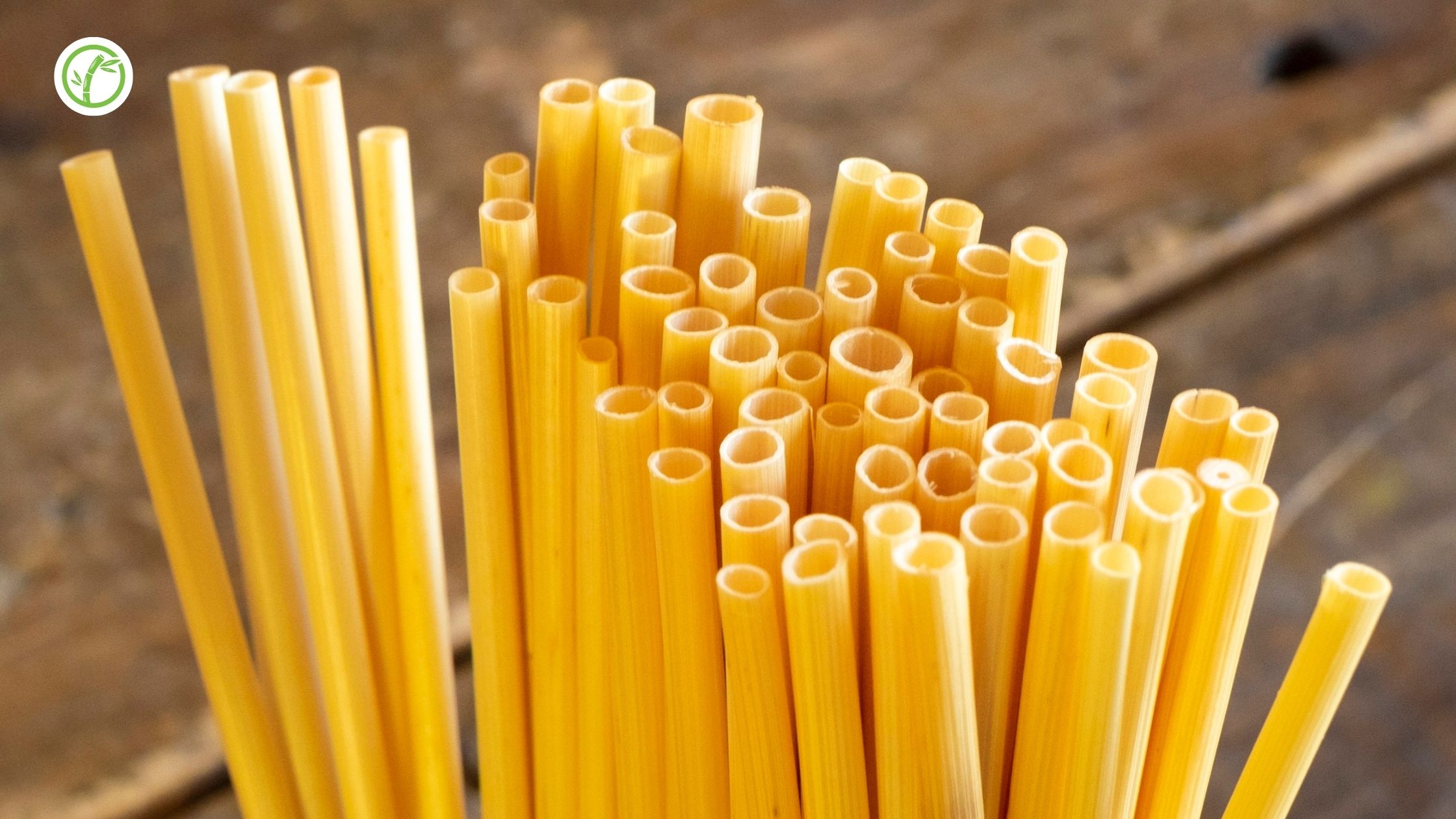
Catering bars at weddings, corporate events, and outdoor festivals go through thousands of straws per event. Paper straws remain the most common plastic replacement — but the guest experience problem is well-documented: they go soggy within 20–30 minutes, affecting drink quality and generating complaints.
Bamboo straws are the most durable natural alternative. They’re naturally hollow, free from chemicals and binding agents, home compostable, and maintain their structure for the full duration of any drink. Bamboo straw manufacturers supply bulk options in standard and custom lengths for bars, beverage stations, and cocktail service.
Reed straws have a similar natural appearance and compostable profile. Wholesale reed straws work well for caterers seeking variety across different event aesthetics reed straws have a slightly thicker, more rustic look compared to bamboo.
Wheat straws are a popular alternative for caterers whose guests may want a completely plastic-free, single-use option with a distinctive natural appearance. They’re naturally gluten-free, compostable at home, and particularly well received at garden parties, outdoor weddings, and eco-themed events. Wheat straws wholesale are available in bulk for volume catering operations.
4. Cocktail Picks, Garnish Tools, and Skewers

These small items accumulate fast at any catering event with a bar or canapé service. A 300-guest cocktail reception can go through 1,500+ cocktail picks in a single evening — switching from plastic to bamboo is one of the easiest sustainability swaps a caterer can make, and one guests often notice and appreciate.
Cocktail picks and garnish tools made from bamboo are available in multiple styles to match different event aesthetics:
- Cocktail picks wholesale — standard knotted picks for olive, cherry, and citrus garnishes
- Bamboo umbrella picks — for tropical or resort-themed events
- Bamboo flag picks — for branded events with custom printed flags
- Bamboo knot cocktail picks — clean, modern presentation for contemporary events
For canape and appetizer service, flat bamboo skewers handle brochettes, skewered proteins, and antipasto items reliably without splintering. Bamboo sticks in custom lengths suit satay stations, live-fire catering, and themed food experiences.
5. Chopsticks for Asian-Themed Catering Events
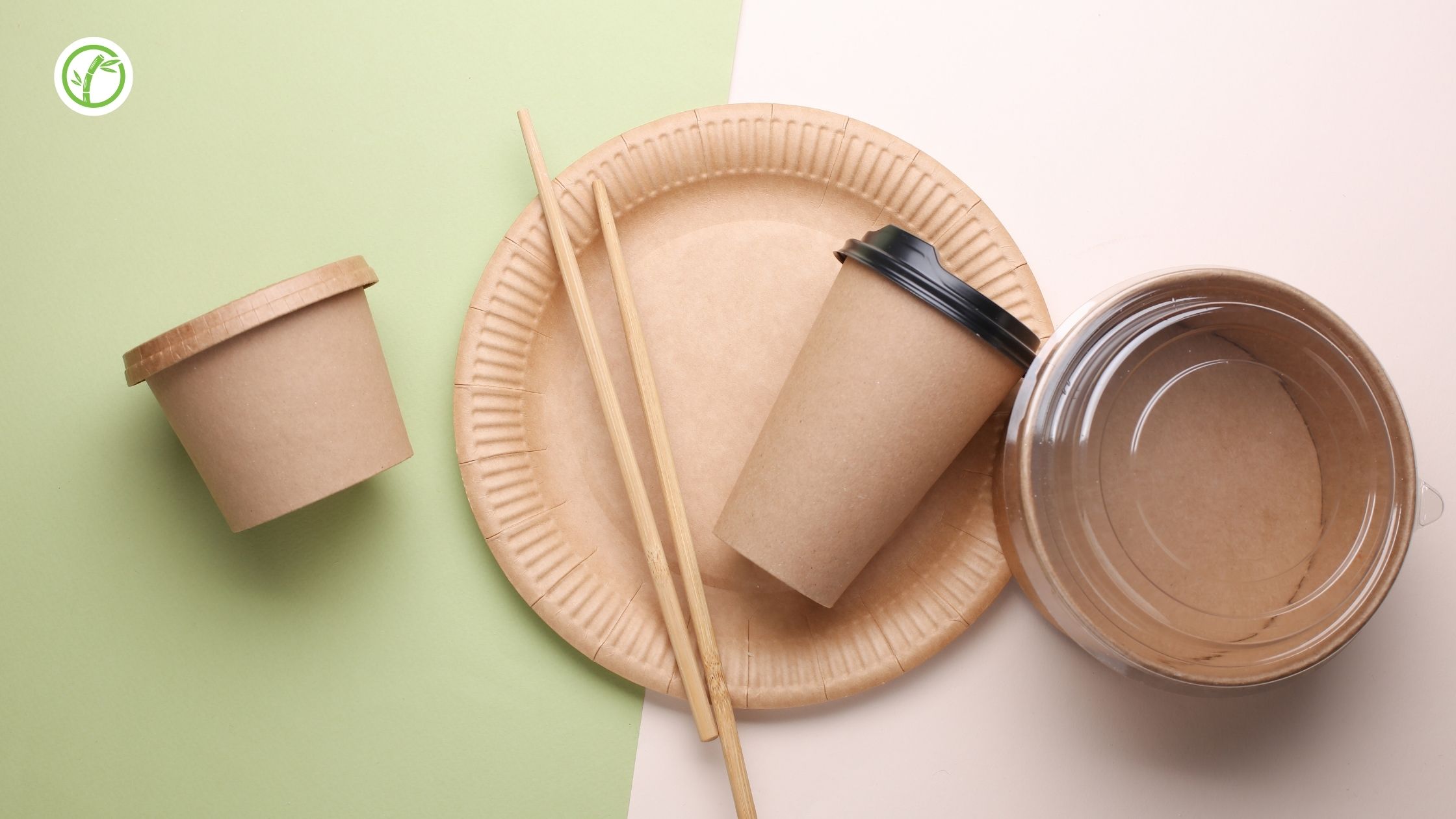
Asian-themed catering, sushi stations, ramen bars, dim sum service, and pan-Asian menus is a growing segment in corporate and wedding catering. Plastic chopsticks are incompatible with a sustainable brand story; bamboo chopsticks are the natural replacement with far better aesthetics and identical function.
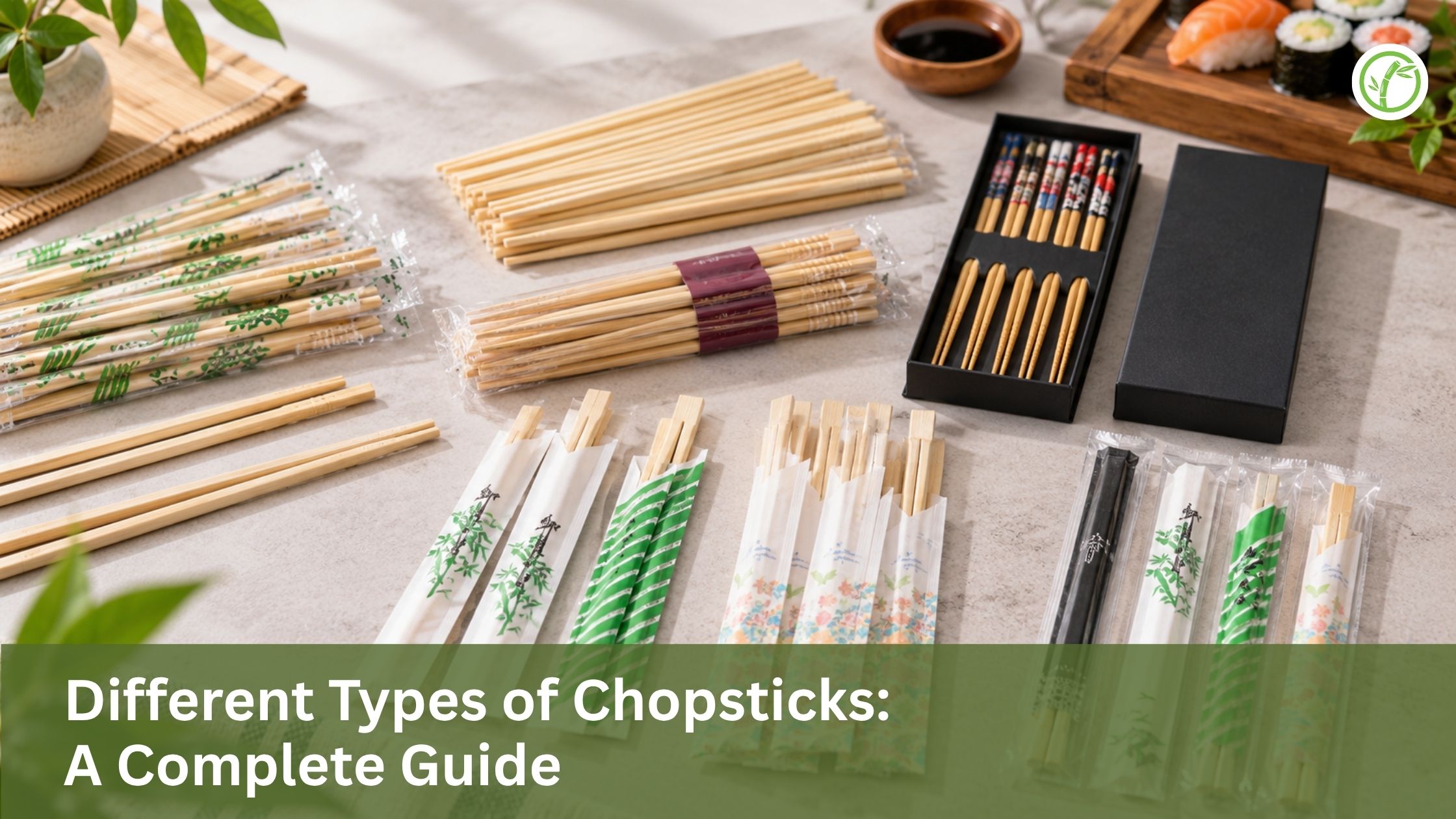
Sushi chopsticks wholesale and tensoge bamboo chopsticks are available in bulk with optional custom-branded sleeves a detail that works particularly well at corporate catering events where brand presentation matters. Bamboo twin chopsticks are the standard format for most catering services, convenient to hand to guests and compostable after use.
Also read – Bamboo Stick Manufacturers in China
6. Eco Friendly Food Packaging for Catering, Delivery, and Takeaway
Catering operations handling delivery boxes, corporate lunch drops, and takeaway meal packs face the same packaging challenge as restaurants but at higher volumes and often with tighter turnaround times.
Bagasse containers and clamshells are the most practical solution for hot food delivery. Bagasse containers handle curries, soups, rice dishes, and proteins without leaking or warping, and compost within 60–90 days. For bulk corporate catering and office lunch delivery, bagasse packaging manufacturers offer custom sizing and branding options.
Recycled kraft paper bags and boxes handle dry goods, bakery items, and secondary packaging well. Look for FSC-certified options without PFAS coatings for a fully clean supply chain.
Compostable PLA containers work well for cold food salad boxes, dessert cups, and chilled meal packs. PLA requires industrial composting to break down; confirm your clients’ or venue’s composting access before specifying it.
7. Reusable Serviceware: When It Makes More Sense Than Disposable
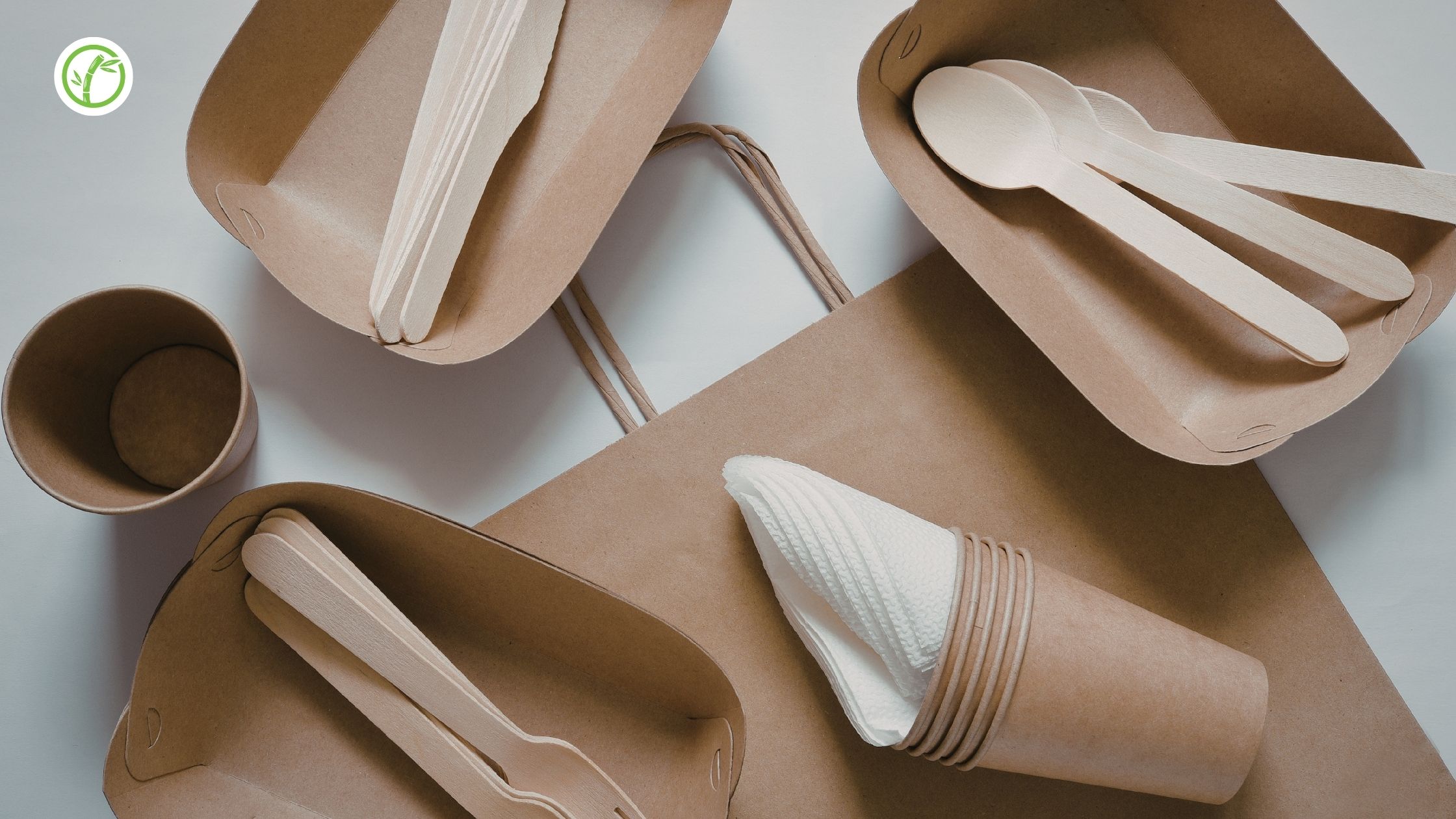
Not every event needs disposable tableware. For seated dinners, corporate events with a home venue, and clients who prioritize zero-waste events, reusable serviceware is the most sustainable option of all no waste generated, no composting infrastructure required.
Reusable glassware, ceramic plates, and stainless steel cutlery can be hired from event hire companies or owned by larger catering operations. The trade-off is logistics: washing, transport, and breakage management. For events below 150 guests with a nearby wash station, reusable serviceware is practical and leaves essentially zero packaging waste.
For outdoor and high-mobility catering where reusables aren’t practical, the compostable options above are the correct default.
8. Food Sourcing and Zero-Waste Kitchen Practices
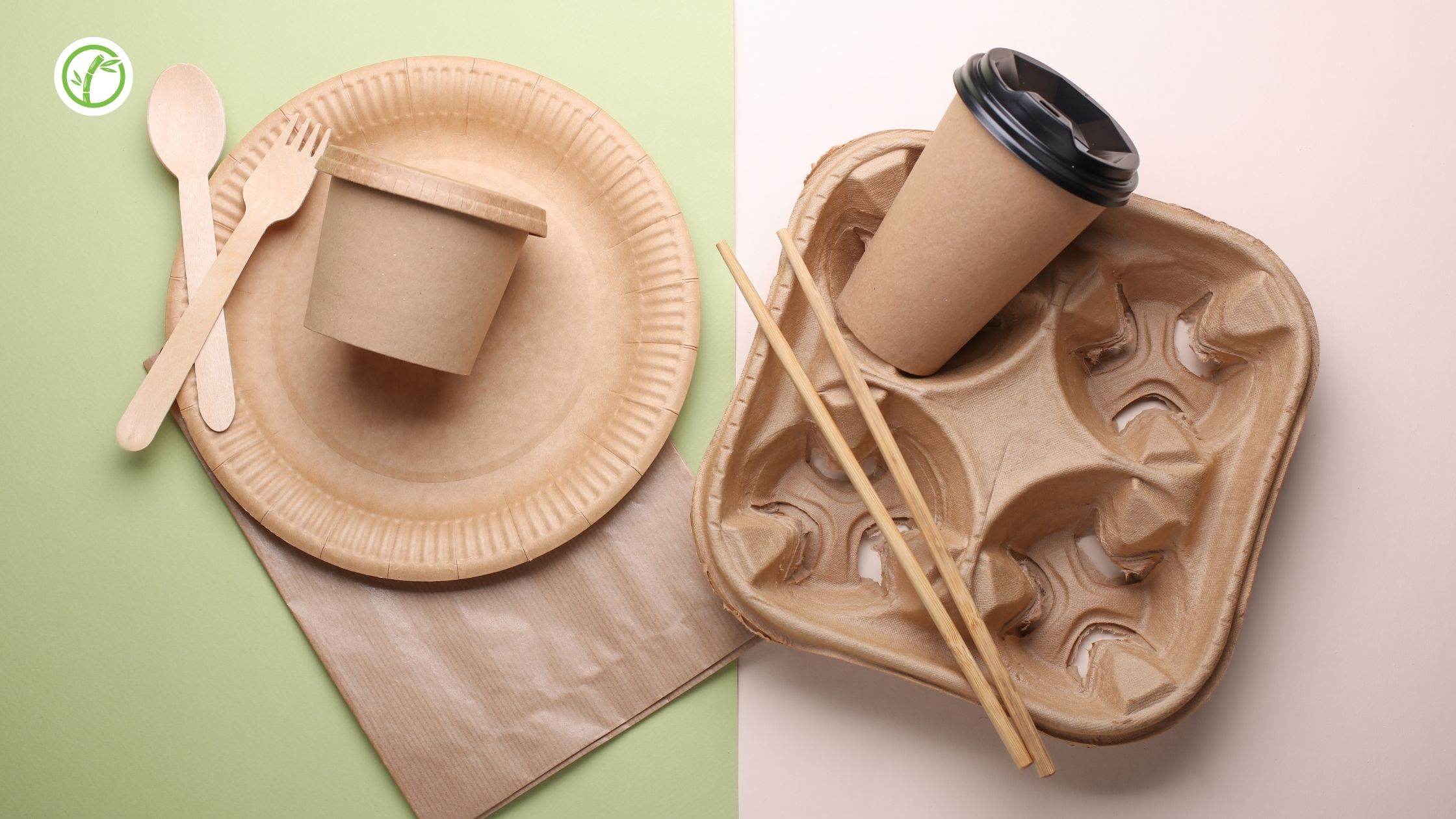
The product switches above address what’s visible to guests. But the kitchen supply chain is where catering’s environmental footprint is often largest.
Local and seasonal sourcing reduces transport emissions, supports regional food systems, and provides a credible “provenance” story that clients increasingly request in their briefs. Choosing local and seasonal ingredients reduces the emissions associated with long-haul transportation, making a tangible impact over time.
Bulk ingredient delivery reduces packaging waste at the source. Working with suppliers who deliver in reusable crates rather than single-use plastic wrap eliminates a significant ongoing waste stream from the kitchen itself, one that’s easy to overlook while focusing on guest-facing changes.
Accurate headcount management and portion planning directly cut food waste. Out of 20,000 meals at one event study, over five tons of food went uneaten. Extrapolated across the 1.9 million business events hosted annually in the US, the food waste opportunity is enormous. AI-powered menu planning and ordering tools are increasingly accessible to catering businesses of all sizes and provide the demand forecasting accuracy that manual planning can’t match.
Food donation partnerships for post-event surplus ensure that excess food feeds people rather than landfills. Programmes like Too Good To Go, Olio, and local food banks accept surplus catering food; integrating this into post-event operations is both ethical and operationally straightforward.
9. Energy-Efficient Catering Equipment
Equipment runs throughout every event, and for outdoor or mobile catering, energy consumption is a direct operating cost as well as an environmental one.
Induction cooktops for on-site cooking stations are more energy-efficient than gas, produce no combustion emissions, and are increasingly specified for indoor and enclosed-venue catering. Portable induction units are practical for live cooking stations, carvery service, and chef’s table experiences.
Insulated food transport containers made from recycled or biodegradable materials maintain food temperature during transit without single-use polystyrene inserts. Smart temperature monitoring in transit reduces food safety incidents and waste from temperature excursions.
ENERGY STAR-rated kitchen appliances in permanent catering kitchens reduce utility costs and GHG emissions simultaneously. For catering businesses operating from a fixed kitchen, appliance upgrades offer the fastest ROI on infrastructure sustainability investments.
Also read – Bamboo Cutlery Manufacturers in China
Eco Friendly Catering Products: Comparison Table
| Product | Material | Compostable | Best Event Type | Cost Level |
| Bagasse plates | Sugarcane pulp | Yes (60–90 days industrial) | High-volume events, buffets, plated dinners | Low |
| Bamboo plates | Bamboo | Yes (commercial) | Weddings, premium events | Medium |
| Palm leaf plates | Fallen palm leaves | Yes (home) | Outdoor, rustic, destination events | Medium |
| Bamboo cutlery | Bamboo | Yes (home + industrial) | Premium events, weddings, corporate | Medium |
| Wooden cutlery | Birch wood | Yes (home) | All events, high-volume | Low–Medium |
| Bamboo straws | Bamboo | Yes (home) | Bars, cocktail receptions, all events | Medium |
| Reed straws | Reed grass | Yes (home) | Outdoor, casual, garden events | Low–Medium |
| Wheat straws | Wheat stems | Yes (home) | Garden, outdoor, eco-themed events | Low–Medium |
| Bamboo cocktail picks | Bamboo | Yes | All bar service | Low |
| Bagasse containers | Sugarcane pulp | Yes (industrial) | Delivery, corporate lunch, takeaway | Low |
| Kraft paper bags/boxes | Recycled paper | Yes (home) | Dry goods, bakery, secondary packaging | Low |
How to Source Eco Friendly Catering Products at Event Scale
Sourcing eco-friendly tableware, cutlery, and packaging for catering requires a different approach to retail purchasing. Event volumes — often 200 to 5,000+ place settings per event require direct manufacturer relationships or specialist wholesale suppliers.
Buy direct from manufacturers where possible. Chinese manufacturers produce the majority of the world’s bamboo and bagasse tableware at factory pricing that’s not accessible through intermediary distributors. For catering companies building a regular supply chain, where to buy bulk bamboo products at factory price and which supplier offers wholesale bamboo products for distributors are the practical starting points.
Understand import logistics if sourcing from China. For catering businesses buying at the volumes that make direct import worthwhile, how to import eco-friendly products from China and how to import disposable tableware from China cover the process from supplier selection to customs clearance. The cost benchmarking guide helps procurement teams build accurate budget models before committing to volume orders.
Verify certifications before bulk purchasing. Look for BPI or OK Compost certification on bagasse and compostable items; FSC certification on wood and bamboo products; and “No PFAS Added” labelling on any coated paper products. Request material data sheets from suppliers rather than relying on marketing descriptions alone.
Real Example: Zero-Waste Wedding Catering in Practice
A mid-size catering company in the UK running 150–300 guest weddings and corporate events rebuilt its disposable supply chain over two event seasons. The switches made:
- Plastic cutlery → bamboo cutlery for premium weddings; birch wooden cutlery for corporate events
- Foam and plastic plates → bagasse plates for hot food; bamboo plates for seated dinners
- Plastic cocktail picks and stirrers → bamboo cocktail picks and bamboo coffee stirrers
- Plastic straws → bamboo straws at bars; wheat straws at garden events
- Single-use packaging → kraft paper bags and bagasse containers for takeaway and delivery catering
Post-switch, the company’s pitch materials changed. “Fully compostable tableware” became a headline deliverable in proposals. Within six months, 30% of new enquiries specifically referenced sustainability as a reason for contacting them. Two corporate contracts were won directly against competitors who still used plastic tableware, with sustainability cited as a key decision factor by the procurement team.
The Bottom Line
Eco-friendly catering products in 2026 cover every touchpoint of the event: the plate in each guest’s hand, the fork they use, the straw in their cocktail, the box their lunch arrives in. Each product switch is individually simple. Together, they build a catering business that wins contracts, retains clients, and operates with a genuine sustainability story that isn’t just marketing.
Start with tableware and cutlery, the two categories with the highest guest visibility and the most straightforward supplier alternatives. Build out to straws, cocktail picks, packaging, and kitchen practices from there. The businesses that embed sustainability into their supply chain now are the ones that will be winning contracts when clients make it non-negotiable.
External sources: Sustainability in Event Catering: How Eco-Friendly Practices Are Reshaping the Industry – Catersource | State of the Catering and Events Industry 2025 – Catersource
FAQ: Eco-Friendly Products for Catering Services
Yes, across all standard catering applications. Bamboo and birch wooden cutlery handle all meal types — from sliced proteins to pasta, salads, and desserts — without bending or splintering under normal use. Bagasse plates hold hot, wet, and oily foods without warping or leaking during typical meal service. The only scenario where natural materials require more consideration is very long service times for hot food; bamboo plates handle extended heat better than bagasse in those cases.
Birch wooden cutlery offers the best cost-to-performance ratio for high-volume catering, where per-unit cost is the primary concern. Bamboo cutlery costs 15–25% more per unit but justifies the premium for events where presentation is a selling point. At volumes typical of regular catering operations (10,000+ units per month), direct procurement from manufacturers significantly reduces the cost gap between wooden and bamboo options.
This is the most important practical question in eco catering — a compostable plate in general waste still ends up incinerated or in landfill. Effective approaches include: coordinating with the venue on waste segregation before the event; providing labelled compost collection bins; briefing event staff on separating compostables; and working with a composting logistics partner who collects from events. For outdoor events, home-compostable materials (bamboo, wood, palm leaf, wheat) provide the most robust end-of-life option regardless of on-site infrastructure.
Yes. Wooden cutlery and bagasse plates are competitively priced against mid-grade plastic alternatives at comparable volumes. The cost difference narrows further when sourcing directly from wholesale or manufacturer-level suppliers rather than retail. Many small catering businesses find the per-event premium is less than £0.10–0.20 per head — an amount that can be factored into pricing or absorbed as a marketing investment given the contract-winning value of a genuine sustainability story.
The most important certifications for catering tableware are BPI (Biodegradable Products Institute) or OK Compost for compostable items, FSC (Forest Stewardship Council) for bamboo and wood products, and “No PFAS Added” for any coated paper or fibre products. For catering operations reporting on sustainability to corporate clients, supplier-level certifications and material data sheets also help with ESG reporting requirements that are increasingly requested in contract negotiations.
Not always — it depends on the washing logistics. Reusable ceramic plates and stainless steel cutlery have a lower per-use environmental footprint once a certain number of uses are reached, but they require energy, water, and detergent for washing. For nearby seated events with a wash station, reusable wins. For outdoor events, multi-venue days, or travel catering where washing logistics are complex, certified compostable disposables have a comparable or lower overall footprint when properly composted. The worst outcome environmentally is compostable products in general waste — so infrastructure always needs to be confirmed first.