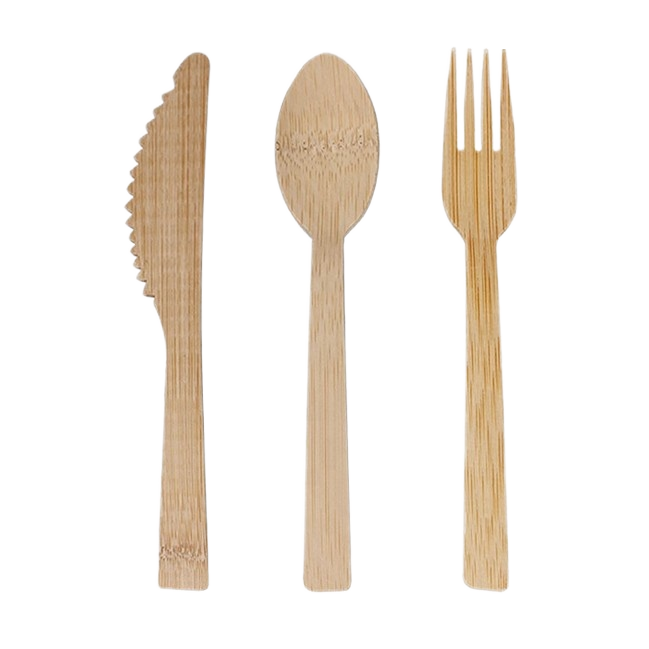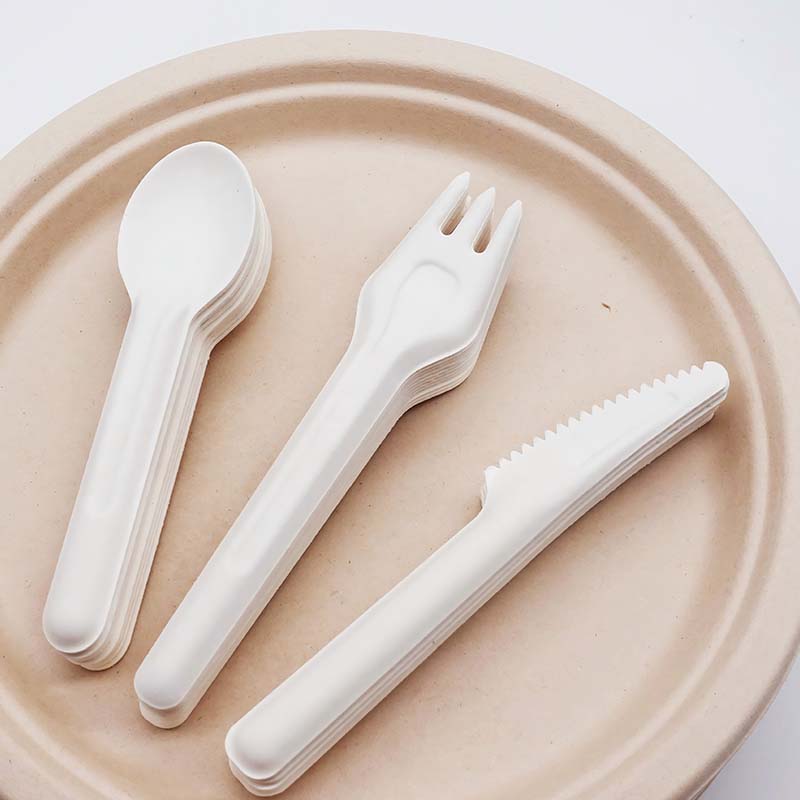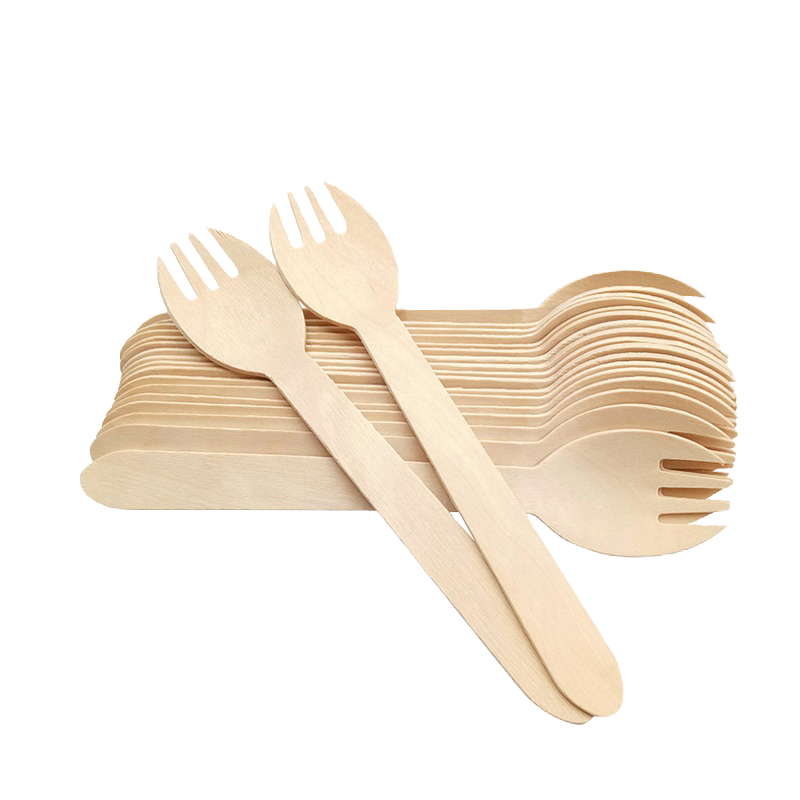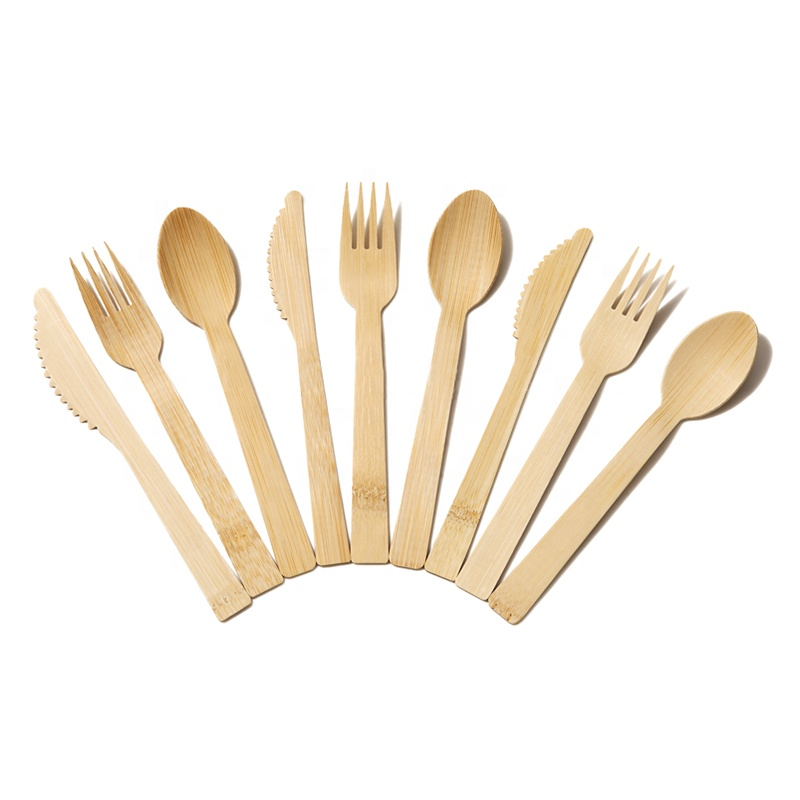




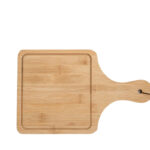


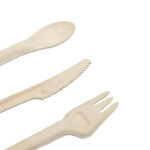

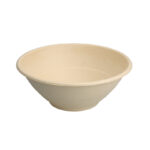




Setting a table with eco-friendly disposable tableware follows the same rules as a china setting: plate in the center, fork on the left, knife and spoon on the right, glass above the knife. What changes is the material choice, which affects how the table looks and holds up, and how you plan buffets, standing receptions and the waste at the end.
Key takeaways
- Same layout, different materials: set eco-friendly disposable tableware using the standard place-setting rules, and only put out pieces guests will use.
- Match the materials: bamboo, wood and bagasse look best together in natural tones; avoid mixing them with glossy plastic.
- Buffets: plates at the start of the line, cutlery and napkins at the end, ideally as wrapped sets.
- Standing receptions: small 6–7″ plates, knotted picks and plenty of napkins, so guests can eat with one hand.
- Plan the waste: clearly labeled bins for food waste and general waste, placed where guests finish eating.
How do you set a basic place setting with eco-friendly disposable tableware?
Use the standard basic setting from the Emily Post Institute, swapping china and metal for plant-based pieces.
- Plate: center a 10″ dinner plate in front of the seat.
- Fork: place the bamboo or wooden fork to the left of the plate.
- Knife: place the knife to the right of the plate, blade facing inward toward the plate. Keep this even with dull wooden knives so the table looks consistent.
- Spoon: if soup or dessert needs one, place it to the right of the knife.
- Glass: set the cup or glass above the knife.
- Napkin: to the left of the fork, or folded on the plate.
Two memory aids help when you’re setting many tables. Reading left to right, the word FORKS gives the order: fork, “O” for the plate, knife, spoon. And Emily Post’s guidance is to set only the utensils you’ll use: if there’s no soup, there’s no soup spoon.
The more casual version
For a relaxed lunch or picnic, Emily Post’s casual setting places the fork, knife and spoon together on the napkin, to the left of the plate. With disposables, a kraft-wrapped cutlery set laid on the napkin or across the plate does the same job and keeps the cutlery clean until the guest sits down.
How do you set a multi-course table with disposables?
For a seated meal with more than one course, add pieces in the order guests will use them, working from the outside in.
| Course | What to add | Where |
| Starter or salad | 7″ plate, salad fork | Plate stacked on the dinner plate; salad fork outside the dinner fork if the salad comes first |
| Soup | Bowl, soup spoon | Bowl on the dinner plate; spoon outside the knife |
| Bread | 6″ plate | Above the forks, top left |
| Main course | 10″ dinner plate, dinner fork and knife | Center; fork left, knife right |
| Dessert | 7″ plate, dessert fork and spoon | Brought out with dessert, or set above the dinner plate from the start |
If dessert cutlery is set at the start, the Emily Post Institute places the fork above the plate with its handle pointing left, and the spoon above it with its handle pointing right.
With disposables, bringing dessert plates and cutlery out with the course is often simpler. It keeps the table clear and avoids unused pieces going straight into the bin.
Setting chopsticks
For East Asian menus, lay bamboo chopsticks horizontally in front of the plate or bowl, tips pointing left, ideally on a small rest so the tips don’t touch the table. A wrapped pair can sit in the same position.
How do you lay out a buffet with eco-friendly disposable tableware?
Arrange the line in the order guests need things, so nobody has to juggle cutlery while serving themselves.
- Plates at the start, stacked in small piles so they’re easy to lift one at a time.
- Cold dishes and salads.
- Hot dishes, with a serving utensil for each.
- Sauces and condiments.
- Cutlery and napkins at the end, ideally as wrapped sets so guests pick up one pack.
Keep drinks and desserts on separate stations, each with its own cups, stirrers, dessert plates and spoons. This stops queues building at the main line.
Two hygiene rules that affect the layout
- Cutlery must be wrapped or presented handle-first. Under the FDA Food Code, self-service knives, forks and spoons that aren’t prewrapped must be presented so only the handles are touched. Wrapped bamboo or wooden cutlery sets solve this without extra containers.
- Guests need a clean plate for each trip. Food Code rules adopted by many US states don’t allow self-service guests to reuse a soiled plate to take more food. Put a small sign at the start of the line and keep the plate stacks topped up.
For large events, a double-sided line serves guests from both sides so the queue moves faster. To work out quantities, see our guide to how many plates per guest, which also covers cutlery and napkins.
How do you set up a standing reception or cocktail party?
At a standing event, guests hold a drink in one hand, so everything else must work one-handed. Skip full cutlery and plan around small plates, picks and napkins.
| Item | What to use | How many |
| Small plates | 6–7″ bamboo, wooden or bagasse plates | About 1 per guest per hour |
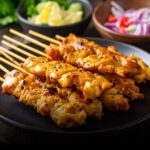
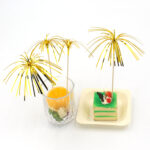
| Canapé picks | Knotted or paddle picks, 6–9 cm | Pre-skewered on the food |
| Cocktail garnishes | Knotted picks, 9–12 cm for short glasses, 15–18 cm for tall | 1 per drink that needs one |
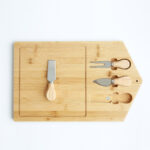
| Cheese and olives | Bamboo toothpicks in a holder | A full holder at each board |
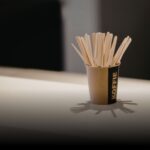
| Drink stirrers | Bamboo or wooden stirrers | 1 per hot or mixed drink |
| Napkins | Cocktail napkins | 2–3 per guest |
Three setup details make a difference:
- Serve food already on picks. Guests take one item cleanly, with no need for tongs or cutlery.
- Put a small pot for used picks next to every food station and high table. Otherwise used picks end up on plates, tables and the floor.
- Place napkins with the food, not only at the bar.
For pick and skewer lengths by use, see our guide to bamboo skewer sizes. For the bar, see our guide to choosing a wooden coffee stirrer manufacturer in China.
How do you choose eco-friendly disposable tableware that looks right?
A disposable table looks considered when the pieces match each other and suit the setting.
- Stick to one material family. Bamboo, wood and bagasse share warm, natural tones and look good together. Mixing them with glossy white plastic or brightly printed melamine breaks the look.
- Size the pieces to the course. Use 10″ plates and 160–170 mm cutlery for mains, and 7″ plates with 140 mm cutlery for starters and desserts.
- Choose weight for outdoor events. Light plates and napkins blow away. Heavy-base bagasse or wooden plates sit better on an outdoor table, and wrapped cutlery sets stay together.
- Dress it up with textiles. Linen or cotton napkins and a table runner make a disposable setting look formal; they can be washed and reused.
- Brand it for corporate events. Logo-engraved cutlery handles or printed kraft wraps add a finished look without extra décor.
| Event | Plates | Cutlery | Extras |
| Wedding or gala dinner | Solid bamboo or palm leaf | Bamboo cutlery, set individually | Linen napkins |
| Corporate lunch | Bagasse or bamboo | Kraft-wrapped bamboo sets with logo | Branded wraps |
| Garden party or BBQ | Heavy-base or compartment bagasse | Wrapped wooden or bamboo sets | Picks and skewers |
| Children’s party | Bagasse compartment plates | Short wooden spoons and forks | Blunt-tip picks |
For plate materials and labels, see our guide to eco-friendly disposable plates. For wrapped cutlery formats, see the disposable bamboo travel cutlery set guide.
Also read – Properly Dispose of Disposable Bamboo Plates
How do you handle waste after an event with eco-friendly disposable tableware?
Plant-based tableware only delivers its benefit if it ends up in the right bin. Plan the waste as carefully as the table.
- Find out what your venue or hauler collects. Food-waste or compost collection may accept food scraps and natural-material tableware; some only take food. Check before labeling bins.
- Set up two or three clearly labeled streams: food waste, recycling for cans and bottles, and general waste. Use pictures as well as words.
- Place stations where guests finish eating, near exits and clearing points, not hidden behind the kitchen.
- Staff the station at peak times at larger events. A person directing guests keeps streams clean.
- Bundle used skewers with points facing the same way so they don’t pierce bags.
Don’t describe tableware as compostable to guests unless it carries a certificate and your hauler accepts it.
Tableware from Friendly Bamboo
Friendly Bamboo manufactures plant-based tableware for events and catering in Huoshan, Anhui:
- Bamboo and wooden cutlery, loose or in kraft-wrapped sets
- Bamboo BBQ skewers, knotted and paddle picks, and toothpicks
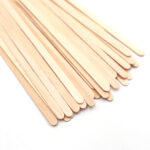
- Bamboo and wooden coffee stirrers
- Bamboo chopsticks
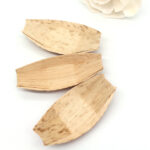
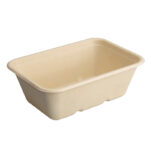
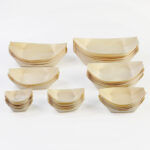
- Bagasse, bamboo, wooden and palm leaf plates
Samples are free, with shipping paid by the buyer, and are usually ready in about 7 days. Products carry FSC chain of custody (RR-COC-003046) and FDA, LFGB and EN 13130 food-contact test reports.
Planning tables for events, catering or hospitality? Friendly Bamboo manufactures eco-friendly disposable tableware, including bamboo and wooden cutlery, wrapped sets, skewers, picks, stirrers and plates, with free samples and bulk supply. Browse our wholesale bamboo cutlery range or request a quote.
Frequently asked questions
The same way as with china: plate in the center, fork on the left, knife on the right with the blade facing the plate, spoon to the right of the knife, glass above the knife and napkin to the left or on the plate. Only set out the pieces guests will use.
At the end of the line, after the food, so guests don’t have to hold it while serving themselves. Wrapped sets are the easiest option and meet self-service hygiene rules.
Yes. Solid bamboo, wood and palm leaf plates with matching bamboo cutlery and linen napkins can look as considered as a china setting, especially in natural or outdoor venues.
Either bring them out with dessert or set them above the plate: the fork with its handle pointing left, and the spoon above it with its handle pointing right.
Small 6–7″ plates, canapés served on picks, toothpicks for cheese and olives, drink stirrers at the bar, and two to three napkins per guest.