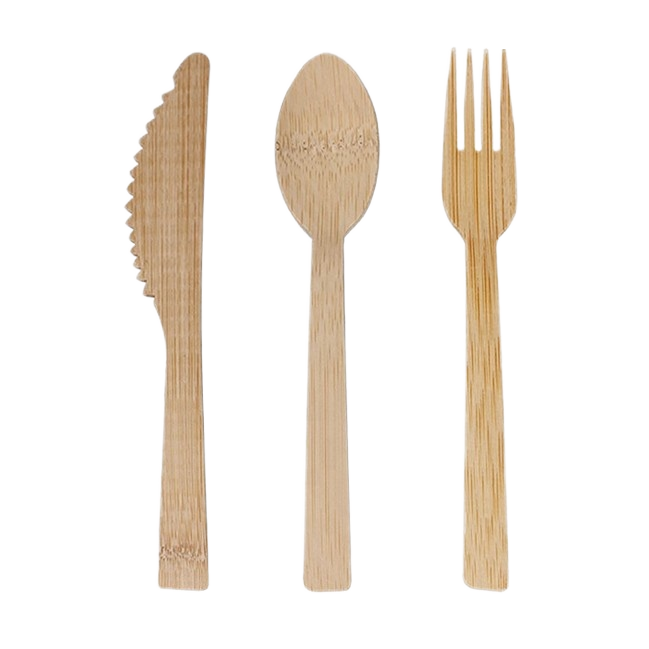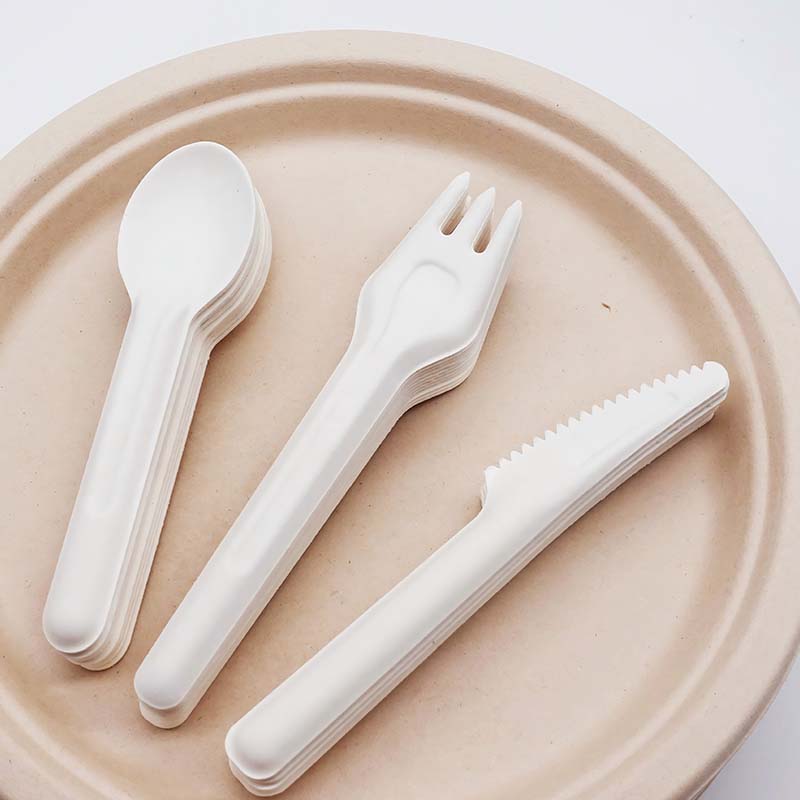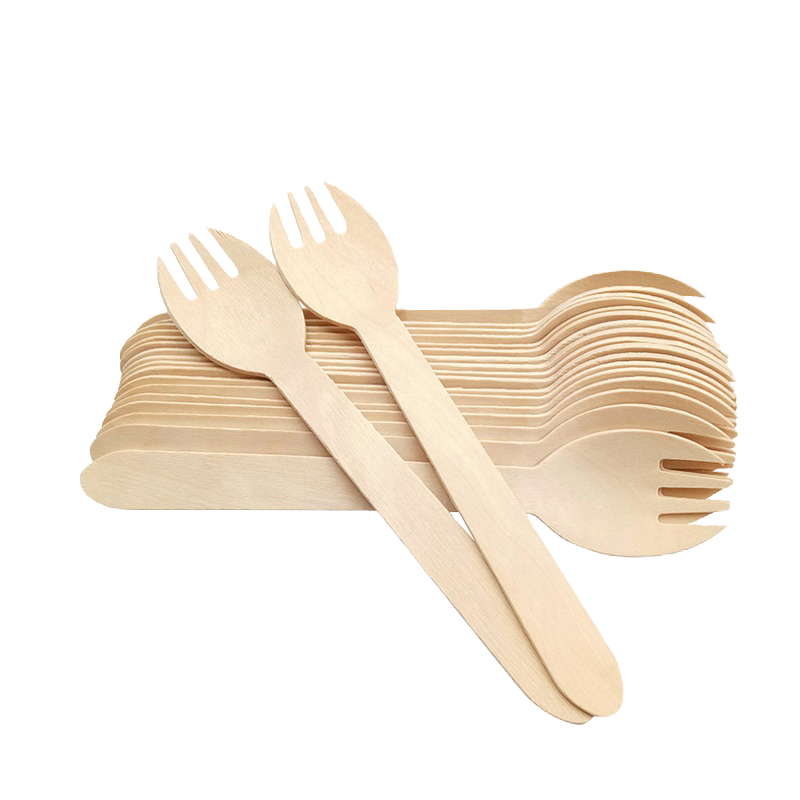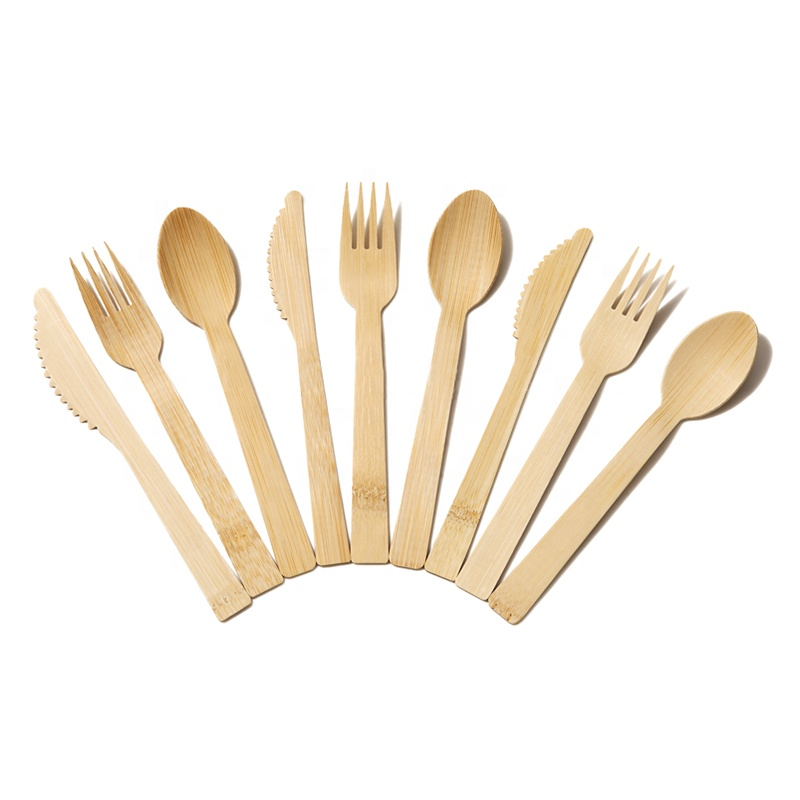

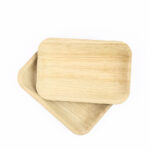

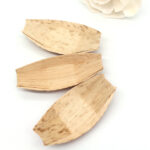


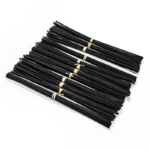
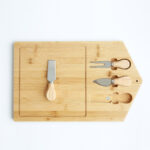


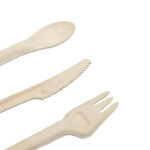




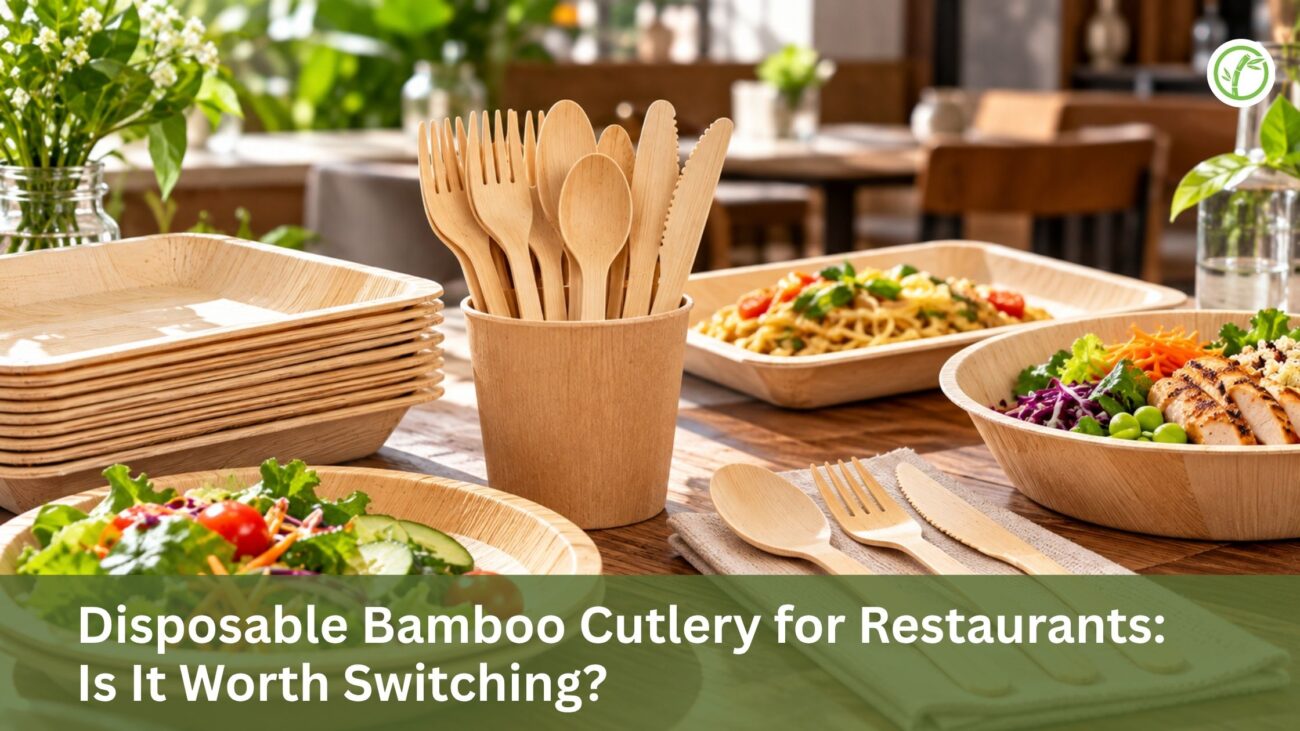
For most restaurants that serve takeaway, yes. Plastic cutlery is now banned for customers in the EU, England and Canada. In several US states and cities, it can only be handed out when the customer asks for it. Bamboo cutlery is stronger and smoother than most wooden cutlery, contains no plastic, and can carry your logo.
The switch costs more per piece than plastic. But on-request rules mean you hand out fewer sets, so the total spend often moves less than the unit price suggests.
Key takeaways
- Plastic cutlery, including compostable plastic such as CPLA, cannot be supplied to the public in the EU (since July 2021) or England (since October 2023). Canada banned its sale from December 2023.
- California, Washington State, New York City, and Washington, D.C. require restaurants to give out utensils only on request, regardless of material. A switch can therefore come with a drop in volume.
- Bamboo cutlery is harder and smoother than typical birch wood cutlery, and it doesn’t soften in hot food like paper cutlery.
- “Bamboo fiber” cutlery mixed with melamine is a plastic composite, not natural bamboo, and is not authorized for food contact in the EU.
- Ask any supplier for food-contact test reports, and store cutlery dry. Wood and bamboo can grow mold in damp storage.
- Logo engraving turns each fork into branding that travels with every delivery order.
Why are restaurants replacing plastic cutlery?
Mainly because the law now requires it in many of their markets. Two kinds of rules apply: outright bans on plastic cutlery, and “on request” rules that stop restaurants adding cutlery to every order.
| Market | Rule | In force | What it means for cutlery |
| European Union | Single-Use Plastics Directive (EU) 2019/904 | 3 July 2021 | Plastic cutlery can’t be sold. Bio-based and compostable plastics, such as CPLA, count as plastic. |
| England | Plastic Plates etc. Regulations 2023 | 1 October 2023 | Single-use plastic cutlery banned for supply to the public, including compostable plastic |
| Canada | Single-use Plastics Prohibition Regulations | Manufacture and import banned December 2022; sale banned December 2023 | Covers cutlery made from or containing polystyrene or polyethylene |
| California | AB 1276 | 1 January 2022 | Utensils only on request, and they can’t be bundled, whatever they are made of, including bamboo |
| New York City | Local Law 17 of 2023 (“Skip the Stuff”) | 2023 | Utensils, condiments and napkins for takeaway only on request. Delivery apps must default to none. |
| Washington State and Washington, D.C. | State and district on-request laws | In force | Utensils only on request |
Sources: StopWaste on California AB 1276, Zerocater summary of US on-request laws, phys.org on Canada’s ban.
Two things follow for a restaurant buyer.
First, CPLA and other compostable plastic cutlery doesn’t solve the problem in the EU or England, because it still counts as plastic there. Bamboo, wood and fiber cutlery do.
Second, on-request rules apply to bamboo cutlery too. You will hand out fewer sets, so order quantities should be based on how many customers actually ask, not on total orders.
How does bamboo cutlery compare with wood, CPLA and plastic?
Bamboo gives the best mix of strength, feel and legal flexibility of the disposable options. Each material has a place, though:
| Material | Strength and feel | Hot and heavy food | Allowed for the public in EU and England? | Best for |
| Bamboo | Hard, dense and smooth when well finished | Holds up in hot dishes, curries and salads | Yes | Takeaway and delivery where cutlery is part of the brand experience |
| Birch wood | Lighter and cheaper; can feel dry or rough if poorly finished | Fine for most dishes; thinner pieces can flex | Yes | High-volume, price-sensitive takeaway |
| Bagasse (molded fiber) | Lighter, with a matte finish | Good for light meals; less rigid for cutting | Yes, if it contains no plastic | Cafés, desserts, salads |
| Paper or card | Folds or softens with moisture | Weak in soups and sauces | Yes | Ice cream, snacks, very light food |
| CPLA (compostable plastic) | Feels like plastic | Good heat resistance | No, it counts as plastic | US markets without plastic bans |
| Conventional plastic (PS, PP) | Cheapest, familiar | Varies | No (also banned for sale in Canada) | Markets with no restrictions |
Bamboo or wooden cutlery: which should you choose?
Choose bamboo when the cutlery is part of how customers judge the meal. Choose birch wood when price per piece matters most.
Bamboo grows quickly and makes dense, hard cutlery that is less likely to splinter or bend, so it suits heavier dishes and premium takeaway. Birch wood cutlery costs less and is widely used for coffee shops, food trucks and events. The cheapest grades can feel dry in the mouth.
Some restaurants use both: bamboo in the delivery set, where it carries the brand, and wooden stirrers and spoons at the counter. Friendly Bamboo supplies bamboo, wooden and bagasse cutlery, so both can come on one order.
Watch out for “bamboo fiber” cutlery
Not everything sold as bamboo is solid bamboo. Some “bamboo fiber” cutlery is ground bamboo bound with melamine or another plastic resin. That makes it a plastic product, not natural bamboo.
EU authorities have treated bamboo powder and similar plant fibers as unauthorized additives in plastic food-contact materials, and they have withdrawn these products from EU markets. Ask the supplier directly whether the cutlery is solid bamboo with no resin binder, and get it in writing.
Also read – Are Disposable Plates Microwave-Safe
How much does switching to bamboo cutlery cost?
Bamboo costs more per piece than plastic, but restaurants under on-request rules hand out far fewer pieces. Work out the cost per month, not per fork.
Here is a hypothetical example. Replace the numbers with your own quotes and order data:
| Before: plastic in every bag | After: bamboo on request | |
| Takeaway orders per month | 3,000 | 3,000 |
| Orders that get cutlery | 3,000 (all) | 1,200 (40% ask) |
| Cost per set | $0.03 | $0.10 |
| Monthly cost | $90 | $120 |
In this example, the unit price more than triples, but the monthly cost rises by a third. Your own request rate is the number that matters most. Track it for a few weeks before you set order quantities.
Are bamboo utensils safe for food contact?
They are when the supplier can prove it with test reports for your market. Ask for documents before the first order, not after a customer or inspector asks.
- Food-contact test reports. FDA requirements for the US. For the EU, compliance with Regulation (EC) 1935/2004, often shown through German LFGB testing. Friendly Bamboo’s cutlery is tested to FDA, LFGB and EN 13130 requirements.
- Sourcing certificate. FSC certification shows the bamboo or wood comes from responsibly managed sources. Friendly Bamboo is FSC-certified for sourcing.
- No resin binder. A written statement that the cutlery is solid bamboo, with no melamine or plastic binder.
- Mold control. Bamboo and wood absorb moisture. Ask how the supplier dries and packs the cutlery, and store it in sealed cartons off the floor, using the oldest stock first.
Don’t print “compostable” or “biodegradable” on your packaging without a certificate for that exact product. Our guide to bio-based, biodegradable and compostable claims explains which labels need proof.
Should cutlery come in sets or individually wrapped?
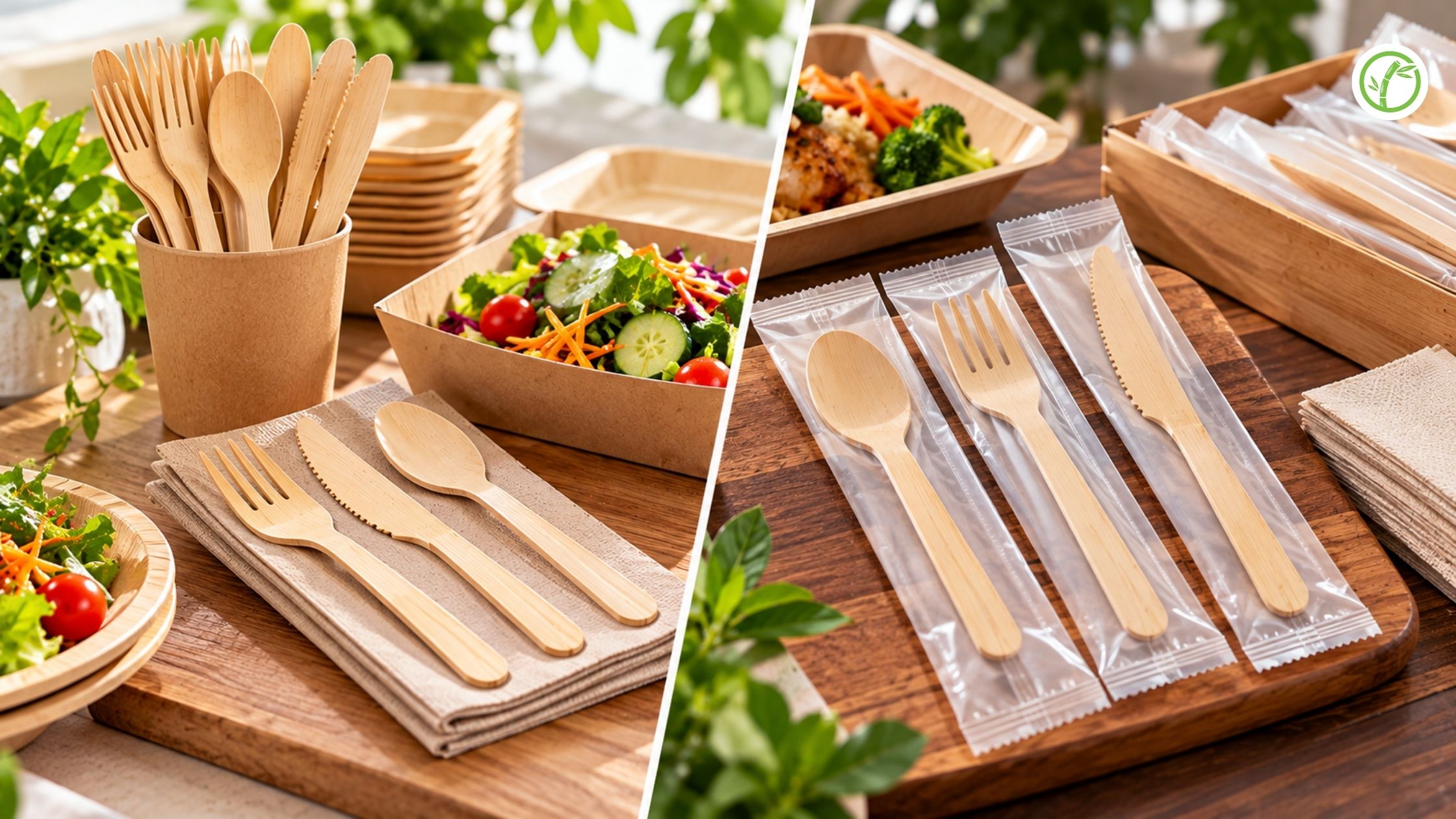
It depends on your market. Pre-packed sets of fork, knife, spoon and napkin are quick for staff, but California’s AB 1276 says utensils can’t be bundled in a way that stops a customer from taking only the item they want.
- Bulk packs: dine-in, counters and self-service stations
- Individually wrapped pieces: delivery in on-request markets, where customers pick a fork or a spoon
- Sets with a napkin in a kraft sleeve: catering, events and markets without bundling rules
[CONFIRM: packaging formats Friendly Bamboo offers, and cutlery lengths.]
Can bamboo cutlery carry your brand?
Yes. A logo can be engraved directly on the handle, so it reaches every customer who uses the fork, even after the bag is thrown away. Friendly Bamboo engraves logos on bamboo cutlery and also prints custom branding on the cutlery packaging, with a minimum order of 100,000 units for branded packaging.
Keep an engraved logo simple. Fine lines and small text don’t engrave cleanly on a narrow handle. [CONFIRM: MOQ for engraved bamboo cutlery.]
How do you switch to bamboo cutlery, step by step?
- Check the rules where you sell. Find out whether plastic cutlery is banned, and whether utensils must be on request.
- Measure your real usage. Count how many orders actually need cutlery, and which pieces customers ask for most. Forks usually outnumber knives.
- Choose the material per use. Bamboo for delivery sets, wood or bagasse where price matters most.
- Choose the packaging format. Individually wrapped for on-request delivery, bulk for counters, sets for catering.
- Request samples and test them. Use them with your heaviest, hottest dish. Check for bending, splinters and any taste.
- Collect the documents. Food-contact test reports for your market, FSC certificate, and a no-resin statement.
- Plan storage. Keep cartons sealed, dry and off the floor, and rotate stock.
- Brief your staff and update delivery apps. In on-request markets, set the app default to “no cutlery”.
If you’re sourcing from overseas, our guide to bagasse packaging manufacturers in China covers what to check in a factory’s certifications and MOQs.
What mistakes should you avoid?
- Switching to CPLA for the EU or UK. It still counts as plastic there.
- Buying “bamboo fiber” cutlery without checking. If it’s bound with melamine or resin, it’s plastic.
- Ordering for every order in an on-request market. You’ll overstock, and stock can absorb damp.
- Bundling sets in California. Customers must be able to take only the piece they want.
- Printing eco claims you can’t prove. Get a certificate for the exact product first.
- Skipping the hot-food test. Thin cutlery that bends in a curry damages the meal and the brand.
Source your bamboo cutlery
Friendly Bamboo has supplied bamboo, bagasse and wooden disposables to B2B buyers for more than 12 years. Its bamboo cutlery is FSC-certified for sourcing and tested to FDA, LFGB and EN 13130 food-contact requirements, with logo engraving and custom-branded packaging available. Browse the wholesale bamboo disposable products or request a quote.
For the rest of your takeaway order, see our guide to eco-friendly food packaging for small businesses.
Frequently asked questions
For heavier dishes and branded delivery, usually yes. Bamboo is harder and smoother. Birch wood is cheaper, and fine for coffee shops, events and light food.
Yes. Solid bamboo cutlery is not plastic, so the single-use plastic bans don’t apply to it. “Bamboo fiber” cutlery bound with melamine or plastic resin is a different product, and is not allowed for food contact in the EU.
Yes. In California, New York City, Washington State and Washington, D.C., the on-request rules cover utensils of any material, including bamboo and compostable options.
Solid bamboo is a natural material, but whether a product can be labeled “compostable” depends on certification for that product. Don’t print the claim without the certificate.
Yes. Logos can be engraved on the handle, and custom branding can be printed on the packaging. Friendly Bamboo’s minimum for branded packaging is 100,000 units.