

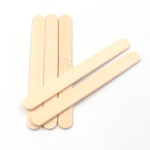
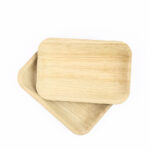









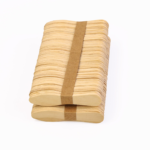
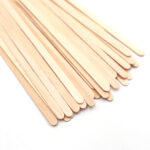

Some disposable plates are microwave-safe and some are not: plain paper plates and molded bagasse plates are generally fine for short reheating, while foam, melamine, unlabeled plastic and anything with metal trim should stay out of the microwave. The material matters more than the word “disposable,” and a plate’s own label is the final word.
Key takeaways
- Paper plates: the USDA lists most paper plates as safe in the microwave and recommends white, unprinted ones.
- Bagasse plates: molded sugarcane fiber handles hot food well; Friendly Bamboo rates its bagasse tableware as microwave-safe up to 120°C.
- “Bamboo fiber” plates: many are bamboo powder bound with melamine resin, and the FDA advises against heating food in melamine dinnerware in the microwave.
- Foam: the USDA lists foam plates, bowls, cups and trays as not safe for microwave use.
- Single-use plastic: don’t microwave it unless it’s clearly labeled microwave-safe.
- Reheat to 165°F: whatever the plate, the USDA recommends reheated leftovers reach 165°F.
Which disposable plates are microwave-safe?
Use this table as a quick guide. Where a plate’s own label says something different, follow the label.
| Plate material | Microwave-safe? | Why |
| Plain white paper | Yes, for short reheating | USDA lists most paper plates as safe; white, unprinted is best |
| Printed or colored paper | Check the label | Inks and dyes aren’t designed for heat on every product |
| Wax- or plastic-coated paper | Only if labeled microwave-safe | Some coatings are made for heat, others for grease resistance only |
| Bagasse (sugarcane fiber) | Yes, within the rated limit | Molded fiber that tolerates heat and grease without a plastic coating |
| Solid bamboo or wood | Not recommended for reheating meals | Natural fiber can dry out and crack; check the manufacturer’s guidance |
| “Bamboo fiber” (with melamine) | No | Melamine shouldn’t be used to heat food in the microwave |
| Palm leaf | Check the label | Ratings vary by manufacturer |
| PLA (plant-based plastic) | No | Standard PLA softens at around 55–60°C |
| CPLA or PP plastic | Only if labeled microwave-safe | Heat tolerance depends on the exact grade |
| Foam (polystyrene) | No | USDA lists foam plates and trays as not safe |
| Any plate with metallic trim or foil | No | Metal can spark in a microwave |

Can you microwave paper plates?
Most paper plates are fine for short reheating. The USDA’s microwave guidance lists most paper plates, towels, napkins and bags as safe, and recommends white, unprinted materials for optimal safety.
Three details change the answer:
- Printing and color. Decorative inks aren’t always intended for heat. Plain white is the safest choice when there’s no label.
- Coatings. Many paper plates have a wax or polyethylene coating to stop grease soaking through. Some are made for microwave use and say so on the pack; others aren’t. Follow the label.
- Thin, uncoated paper. It won’t usually burn, but it can soak up grease and steam and go soft, so a heavy portion may sag when you lift it out.
The USDA also lists brown paper bags and newspaper as not safe. Those aren’t food-grade materials, which is another reason to use paper made for food.
Are bagasse plates microwave-safe?
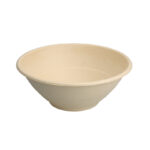
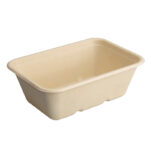
Yes, within the manufacturer’s rated limit. Bagasse is the fiber left after sugarcane is crushed for juice, molded under heat and pressure into rigid plates, bowls and clamshells.
That process is what makes it suited to reheating. Friendly Bamboo’s bagasse tableware gets its grease resistance from dense fiber rather than a plastic coating, and is rated microwave-safe up to 120°C.
A few practical points:
- Use short bursts. Reheat in intervals and stir between them, rather than running one long cycle.
- Watch very oily food. Fat heats faster than water, so oily dishes reach higher temperatures on the plate surface.
- Check the specific product. Coatings, additives and thickness vary between suppliers, so a rating applies to that product only.
- Ask about PFAS. Some fiber products have used fluorinated grease barriers. Look for a supplier statement or test report showing no intentionally added PFAS.
For events where guests may reheat food, our bagasse plates come in sizes from 5 to 12 inches, including compartment plates.
- Friendly Bamboo’s bagasse plates are suitable for microwave reheating, but not for prolonged heating. Warm food in short intervals rather than one long cycle.
Are bamboo plates microwave-safe?
It depends on which kind of “bamboo plate” you have. Three very different products share the name.
| Type | What it is | Microwave? |
| Solid bamboo or bamboo skin | Pressed or carved from the plant itself, with visible grain | Not recommended for reheating meals; follow the maker’s guidance |
| Molded bamboo pulp | Bamboo fiber pulped and molded, like bagasse | Often yes, within the rated limit; check the label |
| “Bamboo fiber” composite | Bamboo powder bound with melamine resin, usually glossy and hard | No |
Why solid bamboo isn’t for reheating
Solid bamboo and wood are natural materials that hold some moisture. Repeated or long heating can dry them out, warp them or crack them. The USDA does list straw and wood baskets for quick warm-ups of rolls or bread, but that’s a brief warm-up, not reheating a full meal.
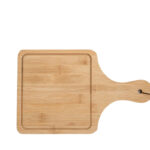
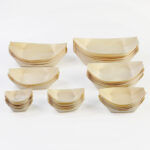
Solid bamboo plates are best for serving: canapés, sushi, salads and plated mains at events. Friendly Bamboo’s bamboo plates are made for this kind of presentation.
Why “bamboo fiber” plates should stay out
Many colorful “bamboo” plates and bowls are bamboo powder held together with melamine resin. The FDA advises not to heat foods in the microwave in melamine-based dinnerware, although it considers melamine tableware safe for serving.
Signs you have a melamine composite: a glossy, almost ceramic finish; no visible grain; bright printed patterns; and “bamboo fiber” or “melamine” on the label.
- Friendly Bamboo’s solid bamboo and wooden plates are suitable for short warm-ups only, not long reheating. Our bamboo skin bowls are not microwave-safe; their heat resistance varies by grade, typically 70–100°C, so they’re best used for serving.
Which disposable plates should never go in the microwave?
- Foam (polystyrene) plates and trays. The USDA lists foam-insulated cups, bowls, plates and trays as not safe. Foam isn’t heat-stable at high temperatures.
- Plates with metallic trim, foil or staples. Metal can spark. The USDA also lists take-out containers with metal handles and food completely wrapped in foil as unsafe.
- Melamine and “bamboo fiber” composites. Serve on them, but heat food in something else.
- Unlabeled single-use plastic. The USDA advises against microwaving take-out containers and other one-time use containers, because they can warp or melt, possibly letting chemicals migrate into the food.
- PLA plates. Standard PLA softens at around 55–60°C, well below the temperature of reheated food. Our guide to bio-based, biodegradable and compostable materials explains the difference between PLA and CPLA.
If you’re not sure what a plate is made of, transfer the food to glass or ceramic labeled for microwave use.
Also read – How to Import Disposable Tableware from China
How can you tell if a disposable plate is microwave-safe?
Check the packaging first. The USDA’s rule is simple: use any utensil labeled for microwave use.
- Look for the words “microwave safe” on the pack or the plate. Icons vary between brands, often wavy lines or a microwave outline, so wording is more reliable than a symbol.
- Read any limits. Good labels give a maximum time, power level or temperature.
- Check the material. If the pack says foam, polystyrene, melamine or PLA, don’t microwave it.
- Look for metal. Any gold or silver trim, foil layer or staple rules a plate out.
- No label and unsure of the material? Transfer the food.
How do you reheat food safely on a disposable plate?
- Reheat in short intervals, stirring or turning the food between them
- Use medium power for dense or oily food so it heats evenly
- Cover loosely with a paper towel or vented lid to hold in moisture
- Let the food stand for a minute after heating
- Check that leftovers reach 165°F, as the USDA recommends, using a food thermometer
- Lift the plate from underneath with both hands; even safe plates can soften slightly when hot
Is microwave-safe the same as oven-safe?
No. A microwave mainly heats the food, and the plate warms up from contact with it. An oven or air fryer heats the plate directly with hot air, often at 180–230°C, which is well above the rating of most disposable plates.
A bagasse plate rated to 120°C, for example, is suitable for microwave reheating but not for a conventional oven. Paper plates, solid bamboo, foam and plastic plates should never go in an oven or air fryer.
If a recipe needs oven heat, use oven-rated cookware and transfer the food to a disposable plate for serving.
How should food businesses choose microwave-safe disposables?
Assume customers will reheat takeaway in whatever you send it in. Choosing the right material, and labeling it honestly, prevents complaints and keeps food safe.
- Use microwave-rated containers for reheatable dishes. Bagasse clamshells, bowls and plates suit curries, rice, pasta and other meals often eaten later.
- Check lids separately. A bagasse base may be microwave-safe while a clear PLA or PET lid isn’t. Tell customers to remove lids that aren’t rated.
- Print “microwave-safe” only with supplier evidence. Ask for the rating, maximum temperature and any time limit in writing.
- Avoid melamine-based “bamboo” disposables for hot food. Use solid bamboo for presentation and bagasse for anything that may be reheated.
- Ask for PFAS documentation for fiber products, since several US states and the EU now restrict PFAS in food packaging.
Planning an event? Our guide to how many plates per guest helps you size the order, and our disposable bamboo cutlery guide covers matching utensils.
Need microwave-safe plates for takeaway or events? Friendly Bamboo manufactures bagasse plates rated microwave-safe up to 120°C, plus solid bamboo plates for presentation, in bulk for caterers, restaurants and distributors.
Frequently asked questions
Yes, most of them. The USDA lists most paper plates as safe and recommends white, unprinted ones. Avoid plates with metallic decoration and follow the label on coated plates.
Yes, within the manufacturer’s rating. Friendly Bamboo’s bagasse tableware is rated microwave-safe up to 120°C. Reheat in short intervals and check the specific product’s label.
Solid bamboo plates aren’t recommended for reheating meals because heat can dry and crack them. Bamboo-fiber plates bound with melamine should not be microwaved at all.
No. The USDA lists foam plates, bowls, cups and trays as not safe for microwave use.
Some are. Bagasse and many molded-fiber plates are, within their rating. PLA plates are not, because PLA softens at low temperatures. Check the label for the specific material.
Follow the time on the package where there is one. Otherwise, reheat in short intervals and check the food reaches 165°F rather than running one long cycle.