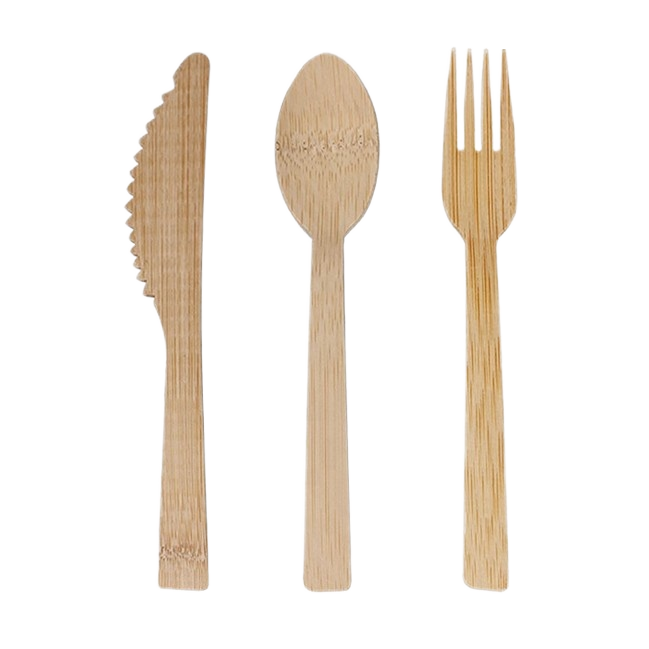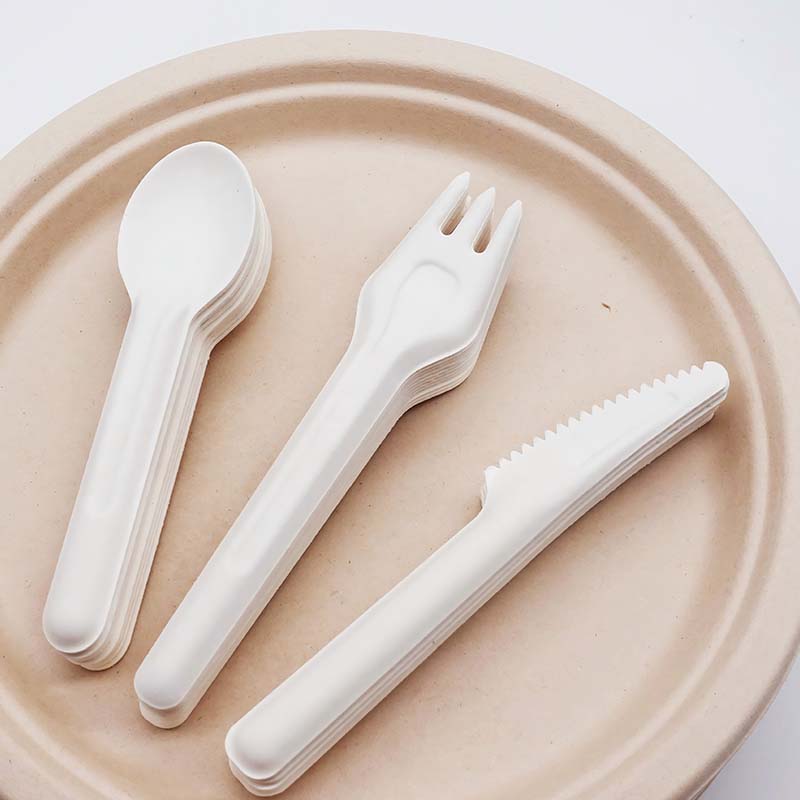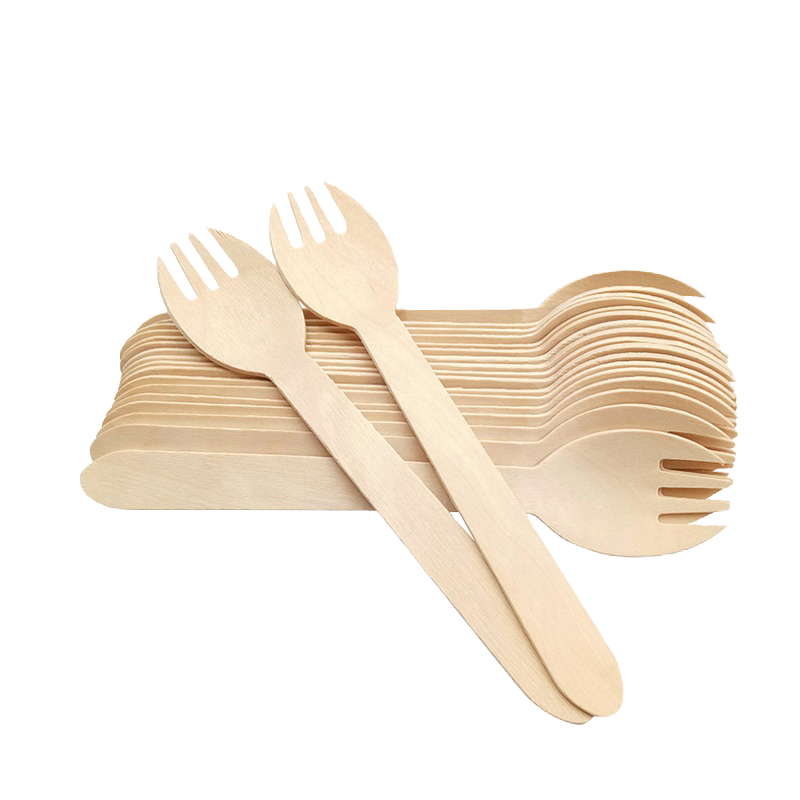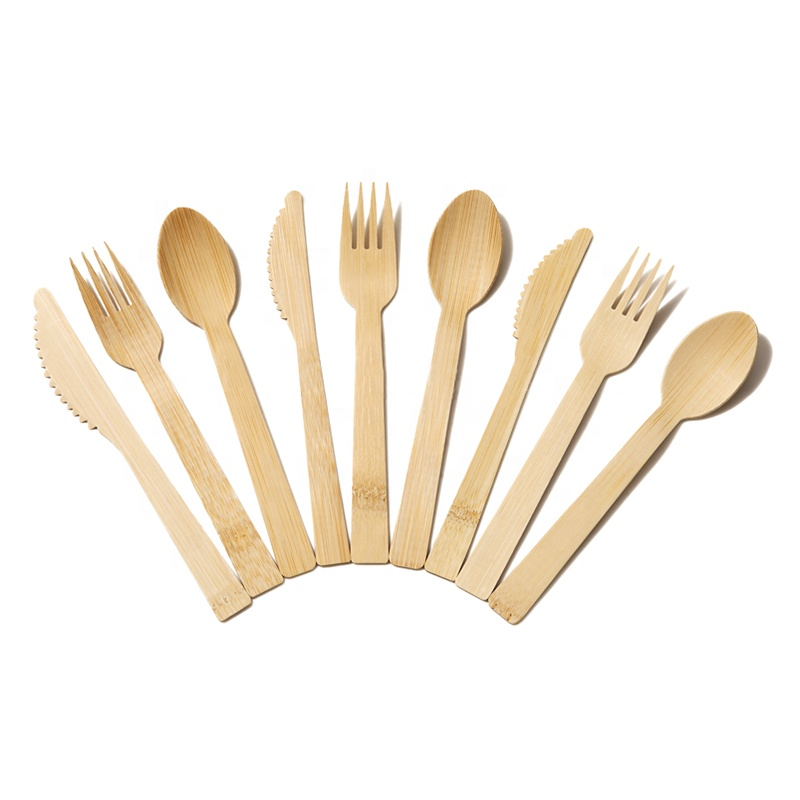




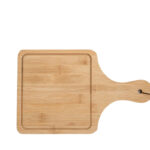


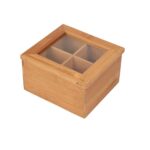
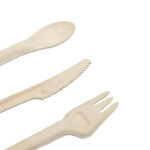

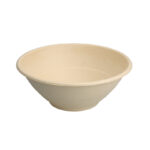

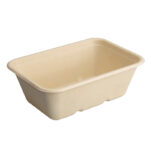


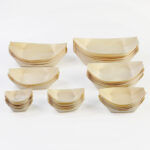
To import disposable tableware from China, confirm what your market allows, classify each product’s HS code, vet and sample a factory, agree on shipping terms, inspect before shipment, then clear customs with the right documents. The step that changed most in 2026 is duty: bagasse and other molded-pulp tableware from China carries two layers of US Section 301 duty, so it is not duty-free.
This guide is written by Friendly Bamboo, a bamboo, wood and bagasse tableware manufacturer in Anhui, China, for distributors and food service buyers ordering by the carton or container.
Key takeaways
- There’s no import licence for tableware, but US importers need an importer of record, a customs bond and correct filings.
- HS codes drive cost. Bagasse plates fall under 4823.70; bamboo tableware under 4419.1x; other wooden tableware under 4419.90.
- US duties on Chinese tableware stack. Molded pulp carries a 25% Section 301 duty, and since 24 July 2026 a further 12.5% Section 301 forced-labor duty applies to most Chinese goods.
- Small parcels are no longer duty-free. The US $800 de minimis exemption is suspended indefinitely and will be repealed by law from 1 July 2027.
- EU rules differ by material. The EU Deforestation Regulation covers wood products from 30 December 2026, but bamboo products are out of scope.
- Inspect before you pay the balance. A pre-shipment inspection costs far less than a rejected container.
Is importing disposable tableware from China still worth it in 2026?
For bamboo and wood products, usually yes. For bagasse going into the US, it depends on your margins, because US duties now add roughly a third to the product cost.
Why China remains the main source:
- Bamboo. China has the largest bamboo sector and dominates exports of bamboo products, from chopsticks to tableware. Moso bamboo, the main species for cutlery and straws, grows at commercial scale there.
- Range. One factory can often supply cutlery, straws, plates and containers in a single shipment, which cuts freight and admin per item.
- Customization. Engraving, printed sleeves and private-label packaging are standard services at many export factories.
What has changed:
- US buyers pay more duty. The 12.5% forced-labor Section 301 duty applies on top of existing Section 301 duties on imports from China.
- Moving origin doesn’t escape every layer. The same forced-labor duty applies to 60 economies. Vietnam, for example, is also in the 12.5% group, though it avoids China-specific Section 301 lists.
- EU and UK buyers face no China-specific surcharge, but stricter material rules, covered below.
The practical answer is to run a landed-cost calculation for each product before committing. The worked example later in this guide shows how.

How do you import disposable tableware from China, step by step?
Step 1: Define your products and target markets
List every item you plan to import with its material, size, pack count and expected annual volume. Note which countries you’ll sell into, because the rules differ sharply by market.
Think in shipping volume as well as unit count. Ocean freight is charged per container or per cubic meter, so a plate that nests tightly costs less to ship than a bulky container of the same weight. Ask suppliers for carton dimensions and how many cartons fit in a 20-foot, 40-foot or 40-foot high-cube container.
Step 2: Check what your market allows
Confirm that each material is legal and correctly labeled in your destination before you contact suppliers. In the EU and England, for example, PLA and CPLA cutlery are banned as single-use plastic, while bamboo and wood are accepted.
The compliance table later in this guide summarizes the main rules for the US, EU and UK. For the meaning of each eco-label, see our guide to bio-based, biodegradable and compostable materials.
Step 3: Classify HS codes and estimate duties
The HS code decides your duty rate, so classify each product before you compare quotes. Search past US Customs rulings for similar products, and if a classification is unclear, a customs broker can request a binding ruling from CBP under 19 CFR Part 177.
Then build a landed-cost estimate for each product: factory price, freight, duties, fees and inland delivery. The duty table and worked example below show how.
Step 4: Find suppliers
Start a shortlist of five to eight suppliers from more than one channel:
- B2B platforms such as Alibaba, Made-in-China and Global Sources, which show business profiles and transaction history
- Trade fairs, especially the Canton Fair in Guangzhou, held in spring and autumn
- Manufacturer websites, which often give more product and certificate detail than platform listings
- Referrals from other importers or freight forwarders
Bamboo processing is concentrated in bamboo-growing provinces such as Anhui, Fujian, Zhejiang and Jiangxi. Our guides to bamboo utensils manufacturers in China and bagasse packaging manufacturers in China compare factories by product range and MOQ.
Step 5: Vet each supplier
Check that a supplier is real, is the factory it claims to be, and can document its claims.
- Business licence: ask for a copy and check the company name matches your contract and invoice
- Factory or trading company: both can work, but you should know which you’re dealing with
- Certificates: verify FSC certificates in the FSC public database and compostability certificates with the issuing body
- Test reports: FDA or LFGB food-contact reports and PFAS tests, dated and from an accredited lab
- Social audit: a recent BSCI, SMETA or similar audit, increasingly requested by large customers
- Factory visit: in person, by video call, or through a third-party audit firm
Step 6: Approve samples and a written specification
Test samples in real use before ordering, then agree a written specification and a signed “golden sample” that production must match.
The specification should cover dimensions, weight, color, finish, moisture content for bamboo and wood, pack count, carton size and carton markings. It becomes the reference for inspection in step 8.
Step 7: Agree price, MOQ, payment and Incoterms
Get quotes at two or three quantities so you can see the price breaks. Agree the MOQ, lead time, payment schedule and what happens if goods fail inspection, all in writing.
A common payment structure is a deposit on order and the balance after a successful pre-shipment inspection. Avoid paying the full amount before goods are inspected.
The Incoterm decides who pays for and controls each stage of shipping:

| Incoterm | Seller handles | You handle | Best for |
| EXW (Ex Works) | Goods ready at the factory | Everything from pickup onward, including export clearance | Experienced importers with a strong forwarder in China |
| FCA (Free Carrier) | Delivery to your carrier, export clearance | Main freight, insurance, import | Consolidated or air shipments |
| FOB (Free On Board) | Delivery onto the vessel at the Chinese port, export clearance | Ocean freight, insurance, import clearance, delivery | Most container importers; you control freight costs |
| CIF (Cost, Insurance and Freight) | Ocean freight and minimum insurance to your port | Import clearance, duties, delivery | Buyers who want simpler freight booking |
| DDP (Delivered Duty Paid) | Everything, including import duties | Receiving the goods | Buyers who want one all-in price; check who acts as importer of record |
Step 8: Inspect, then ship
Book a pre-shipment inspection when production is complete and at least 80% is packed. Inspectors check a random sample against your specification and golden sample, using acceptable quality limits (AQL) under ISO 2859-1.
Plan around Chinese New Year. Many factories pause production for several weeks around late January or February, so place orders early or schedule delivery for after the holiday.
For ocean shipments to the US, your forwarder or broker must file an Importer Security Filing (ISF) at least 24 hours before the container is loaded in China.
Step 9: Clear customs and receive your goods
Your customs broker files the entry using these documents:
- Commercial invoice
- Packing list
- Bill of lading
- Certificate of origin, where your market or trade program requires one
- Food-contact test reports, kept on file and supplied if customs or regulators ask
- A Lacey Act plant declaration for wood and bamboo products, where required
US importers also need a customs bond. Every product or its packaging must be marked with the country of origin, such as “Made in China.”
How Friendly Bamboo works with importers:
- Incoterms: FOB, DDP, EXW and other terms on request
- Loading ports: Shanghai, Xiamen or Qingdao
- Lead time: typically 30–45 days for standard orders; custom orders are scheduled to your requirements
- Samples: free, with shipping paid by the buyer; ready in about 7 days, and any sample charges are deducted from your first order
- Payment: 30% deposit, 70% before shipment
- Inspections: third-party pre-shipment inspections are welcome
- Documents: amfori BSCI audit, FSC chain of custody (RR-COC-003046), and FDA, LFGB and EN 13130 food-contact test reports
- MOQ and pricing: vary by product and size; request a quote for your range
What HS codes and US duties apply to disposable tableware from China?

The table below shows common classifications and the duty layers that apply to China-origin goods as of 30 September 2026. Rates change often, so confirm each line with your customs broker before quoting customers.
| Product | Typical HTS code | Base (MFN) duty | Section 301 China list duty | Section 301 forced-labor duty | Example total |
| Bagasse or molded-pulp plates, bowls, clamshells | 4823.70 | Free | 25% | 12.5% | About 37.5% |
| Bamboo chopsticks | 4419.12.00 | 3.2% | Check with broker | 12.5% | 15.7% plus any list duty |
| Other bamboo tableware (plates, trays, straws) | 4419.19.90 | 3.2% | Check with broker | 12.5% | 15.7% plus any list duty |
| Bamboo forks and spoons | 4419.19 (own subheading) | Check with broker | Check with broker | 12.5% | Varies |
| Birch and other wooden tableware | 4419.90 | Check with broker | Check with broker | 12.5% | Varies |
Where the figures come from:
- Molded pulp: a US Customs ruling on molded bamboo-pulp food containers from China found them free of base duty but subject to an additional 25% Section 301 duty under heading 9903.88.03.
- Bamboo tableware: US Customs rulings classify bamboo chopsticks under 4419.12 and other bamboo tableware under 4419.19.90, each at 3.2%.
- Forced-labor duty: since 24 July 2026, China is in the group that pays a flat 12.5% Section 301 forced-labor duty, in addition to existing Section 301 duties.
US entries also carry a Merchandise Processing Fee of 0.3464% of value, within a set minimum and maximum, and ocean shipments pay a Harbor Maintenance Fee of 0.125%.
What happened to earlier tariffs?
The Supreme Court struck down tariffs imposed under the International Emergency Economic Powers Act (IEEPA) on 20 February 2026. A temporary 10% global tariff under Section 122 replaced them and expired on 24 July 2026, the day the forced-labor duty took effect.
The $800 de minimis exemption has not come back. CBP suspended it indefinitely for all modes from 24 June 2026, and the statutory exemption is repealed from 1 July 2027.
What compliance rules apply in the US, EU and UK?
| Requirement | United States | European Union | United Kingdom (England) |
| Food-contact safety | FDA food-contact rules; suppliers typically provide FDA test reports | Regulation (EC) No 1935/2004; buyers often ask for LFGB test reports | Retained food-contact law based on Regulation 1935/2004 |
| Single-use plastic bans | State and city rules only | Plastic plates, cutlery, straws and stirrers banned, including PLA and CPLA | Plastic plates, bowls, trays and cutlery banned for public supply, including compostable plastic |
| Eco-claim labeling | State laws, such as California AB 1201 on “compostable” claims | PPWR labeling rules phasing in; claims must be substantiated | Claims must not mislead consumers |
| PFAS | Several states ban intentionally added PFAS in food packaging | PPWR PFAS limits for food-contact packaging since 12 August 2026 | Check current guidance |
| Wood and bamboo sourcing | Lacey Act declarations for listed plant products | EUDR due diligence for wood products from 30 December 2026; bamboo excluded | UK timber regulations for wood products |
| Origin marking | Country of origin on goods or packaging | Origin needed for customs, not usually on the product | Origin needed for customs |
Two rules worth highlighting
EUDR treats birch and bamboo differently. The EU Deforestation Regulation applies from 30 December 2026, with the wood sector covered from that date for companies of all sizes. A July 2026 delegated regulation confirms that products made from bamboo and rattan fall outside the scope. EU importers of birch cutlery need geolocation and harvest data from their supplier; bamboo importers do not.
The US Lacey Act now reaches more plant products. From December 2024, the US Department of Agriculture’s APHIS extended Lacey Act declarations to more product chapters, including bamboo and rattan items. Ask your supplier for species and country-of-harvest details.
EU buyers of birch wood products can discuss EUDR data requirements with Friendly Bamboo before ordering.
Also read – Biodegradable Utensil Manufacturers in the US
How do you calculate the landed cost of a tableware shipment?
Add every cost from the factory gate to your warehouse, then divide by the number of units. Duty is usually calculated on the value of the goods, not on freight.
Example: one container of bagasse plates into the US
This is a hypothetical example using rates as of 30 September 2026. Freight, brokerage and delivery figures are illustrative; replace them with your own quotes.
| Cost item | Basis | Amount |
| Goods (FOB China) | 400,000 plates at $0.05 | $20,000 |
| Ocean freight, one 40-foot container | Forwarder quote | $3,000 |
| Section 301 China list duty | 25% of goods value | $5,000 |
| Section 301 forced-labor duty | 12.5% of goods value | $2,500 |
| Merchandise Processing Fee | 0.3464% of goods value | $69 |
| Harbor Maintenance Fee | 0.125% of goods value | $25 |
| Customs brokerage and ISF filing | Broker quote | $300 |
| Port-to-warehouse delivery | Trucking quote | $800 |
| Total landed cost | $31,694 | |
| Landed cost per plate | $31,694 ÷ 400,000 | About $0.079 |
In this example, duties add $7,500, more than double the ocean freight. The landed price per plate is about 58% higher than the factory price.
Run the same calculation for each product. A bamboo item at a 3.2% base rate plus the 12.5% forced-labor duty lands very differently from a molded-pulp item carrying the extra 25% list duty.
What mistakes do first-time tableware importers make?
- Assuming eco-friendly products are duty-free. Some older guides still say this. Molded pulp from China carries two Section 301 layers in the US.
- Quoting customers on factory price. Always quote from landed cost, including duty, freight and fees.
- Buying small parcels to test the market. Without de minimis, small shipments pay full duty plus courier costs.
- Treating the EU “glass and fork” symbol as a certificate. It shows an item is intended for food contact. It doesn’t prove the item passed any test.
- Importing CPLA into the EU or England. It’s plant-based but still banned as single-use plastic in those markets.
- Paying the full balance before inspection. Keep payment leverage until goods pass a pre-shipment inspection.
- Ignoring carton markings. Missing origin marks or inconsistent product codes cause customs delays and warehouse errors.
- Ordering just before Chinese New Year. Production and shipping slow for weeks, and stock can run out.
- Not checking certificates against the issuer’s database. A PDF can be edited; a database entry can’t be faked by the supplier.
If you also need documents for customer ESG questionnaires, see our guide to ESG in food service.
Planning your first container from China? Friendly Bamboo manufactures bamboo, birch wood and bagasse tableware in Huoshan, Anhui, for importers and distributors in 50+ countries, with custom branding and private-label packaging. Browse our wholesale bamboo disposable products or request a quote.
Frequently asked questions
No import licence is required for tableware. You need an importer of record, a customs bond, an ISF filing for ocean freight, and products that meet FDA food-contact rules and any state labeling laws.
Bamboo tableware falls under heading 4419. Chopsticks use 4419.12, and other bamboo tableware commonly uses 4419.19.90. Bamboo forks and spoons have their own subheading, so confirm with a customs broker.
Molded bagasse plates, bowls and containers are classified under 4823.70 as molded or pressed articles of paper pulp.
It depends on the product. As of 30 September 2026, molded-pulp items from China face about 37.5% in combined Section 301 duties, while bamboo items face a 3.2% base rate plus the 12.5% forced-labor duty and any applicable list duty.
FOB is the most common choice for container shipments, because you control freight costs through your own forwarder. DDP is simpler but usually more expensive, and you should confirm who acts as importer of record.
Allow for production lead time plus several weeks of ocean transit and customs clearance. Add extra time around Chinese New Year.