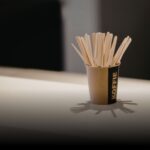


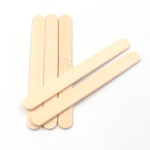
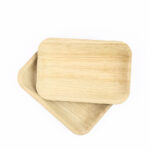

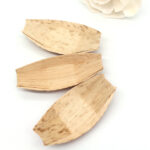




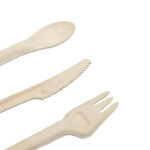




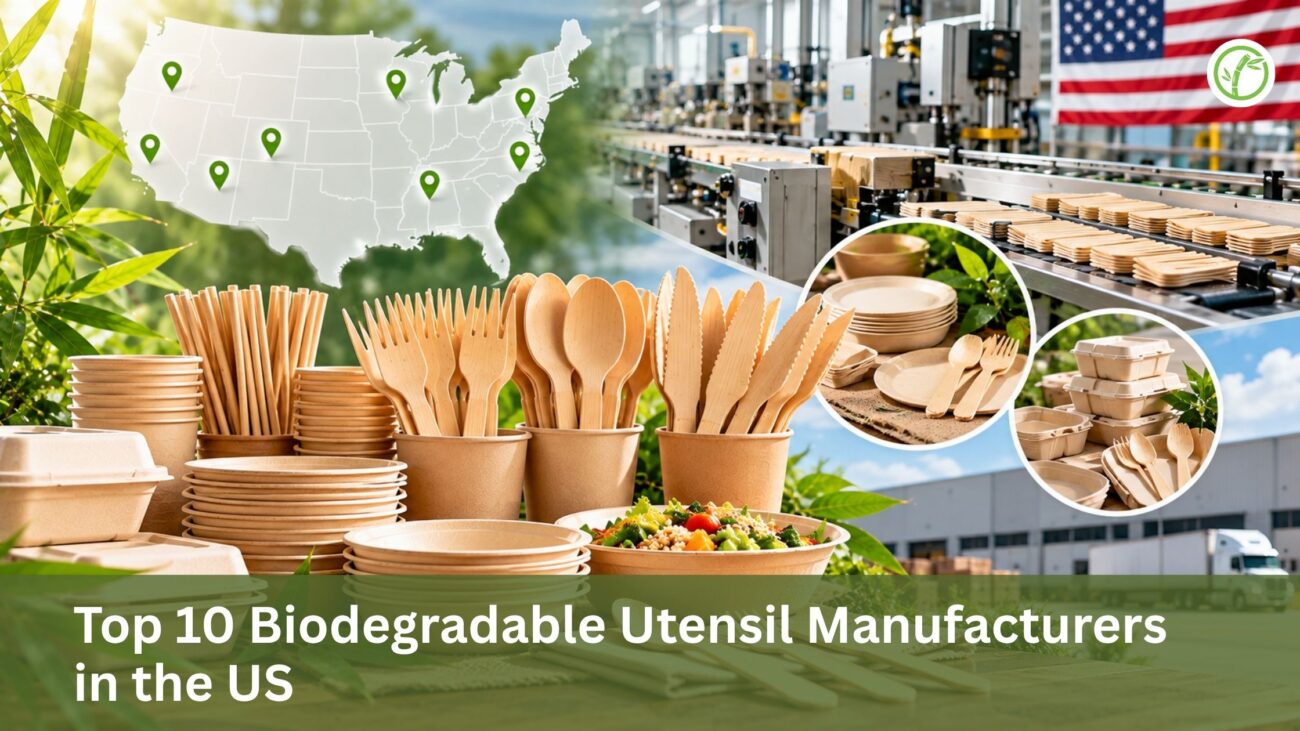
The main US companies making biodegradable utensils on American soil are WinCup, UrthPact, Eagle Beverage, LifeMade, and EcoTensil. Novolex (Eco-Products and Vegware), World Centric, Karat and Repurpose are major US-based brands, but they don’t all make their cutlery in US factories.
That distinction matters if your customers or contracts require made-in-USA supply. Most “top manufacturer” lists blur it, so this one keeps the two groups separate.
Key takeaways
- US-made compostable cutlery is mostly plant-based plastic. PHA and PLA-based forks, knives and spoons are molded in US plants; paperboard is the main non-plastic option.
- Bamboo and wood cutlery comes from elsewhere. US brands sell it, but none of the US factories on this list produce bamboo or wood cutlery.
- Ownership has consolidated. Novolex completed its $6.7 billion acquisition of Pactiv Evergreen in April 2025 and also owns Eco-Products and Vegware.
- PHA supply has been volatile. Danimer Scientific, a leading US PHA producer, filed for Chapter 11 in March 2025 and was acquired by Teknor Apex.
- Verify certifications yourself. BPI publishes a searchable database of certified products and companies.
- California restricts compostability claims. Products sold there need certification to match the words printed on them.
Which US companies make biodegradable utensils?
| # | Company | Headquarters | Made in a US factory? | Main utensil materials | Best for |
| 1 | WinCup (phade) | Atlanta, Georgia | Yes | PHA | Buyers wanting home-compostable, US-made cutlery |
| 2 | UrthPact | Leominster, Massachusetts | Yes | Compostable bioplastics, recycled-content plastic | Private-label and contract manufacturing |
| 3 | Eagle Beverage | Washington state | Yes | PHA | Large quick-service volumes |
| 4 | LifeMade | Greer, South Carolina | Yes | Bio-based compostable resin | Home-compostable foodservice and retail cutlery |
| 5 | EcoTensil | Corte Madera, California | Yes, per the company | Paperboard | Tasting spoons and in-pack utensils |
| 6 | Eco-Products (Novolex) | Boulder, Colorado | Varies by product | Plant-based compostable resin | Chains needing a broad compostable range |
| 7 | Vegware (Novolex) | Edinburgh, UK, with a US base in Huntington Beach, California | Varies by product | CPLA, paper | Operators with front-of-house composting |
| 8 | World Centric | Petaluma, California | Not disclosed | FSC bamboo, plant-based resin | Buyers wanting bamboo cutlery from a B Corp brand |
| 9 | Karat (Karat Packaging) | Chino, California | Varies by product | CPLA, bio-based resin, wood | Distributors buying across many categories |
| 10 | Repurpose | Los Angeles, California | Not disclosed | Plant-based resin (corn, cassava, beets) | Retail and small foodservice |
The list covers companies that make or brand single-use forks, knives and spoons. Container and cup makers that don’t focus on utensils are excluded.
US-made biodegradable utensil manufacturers
These five companies produce utensils in US facilities.
1. WinCup (phade)
WinCup is an Atlanta-based foodservice packaging manufacturer founded in 1968. Its phade brand started with PHA straws and has expanded into forks, knives and spoons, which the company describes as the first PHA-based cutlery in the US, made in the USA.
- Material: PHA, a biopolymer made by fermenting plant oils
- Certification: phade spoons are listed as BPI certified
- Worth knowing: phade uses Danimer Scientific’s Nodax PHA resin. Ask about resin supply continuity, given Danimer’s 2025 restructuring.
2. UrthPact
UrthPact is a contract manufacturer of compostable bioplastic products, founded in 2013 and based in Leominster, Massachusetts. It runs SQF-certified manufacturing in Leominster and Lincoln, California.
- Material: compostable bioplastics, plus recycled-content plastic cutlery
- Model: private label or wholesale, designed and molded in the US
- Worth knowing: offers home-compostable cutlery as well as industrially compostable lines
3. Eagle Beverage
Eagle Beverage, based in Washington state, opened a plant that uses Nodax PHA resin to produce single-use forks, knives and spoons. The company also secured part of the PHA cutlery business of one of the world’s largest quick-service restaurant chains.
- Material: PHA
- Best for: high-volume foodservice programs
- Worth knowing: the same PHA supply question applies as for WinCup
4. LifeMade
LifeMade Products, based in Greer, South Carolina, is a subsidiary of Jadex Inc. and describes itself as a leading provider of US-made single-use cutlery.
- Material: USDA-certified bio-based resin
- Certifications: TÜV Austria OK compost HOME #2594 and BPI #10529271
- Worth knowing: LifeMade earned an EcoVadis Silver rating in 2025, which helps buyers who answer ESG supplier questionnaires
5. EcoTensil
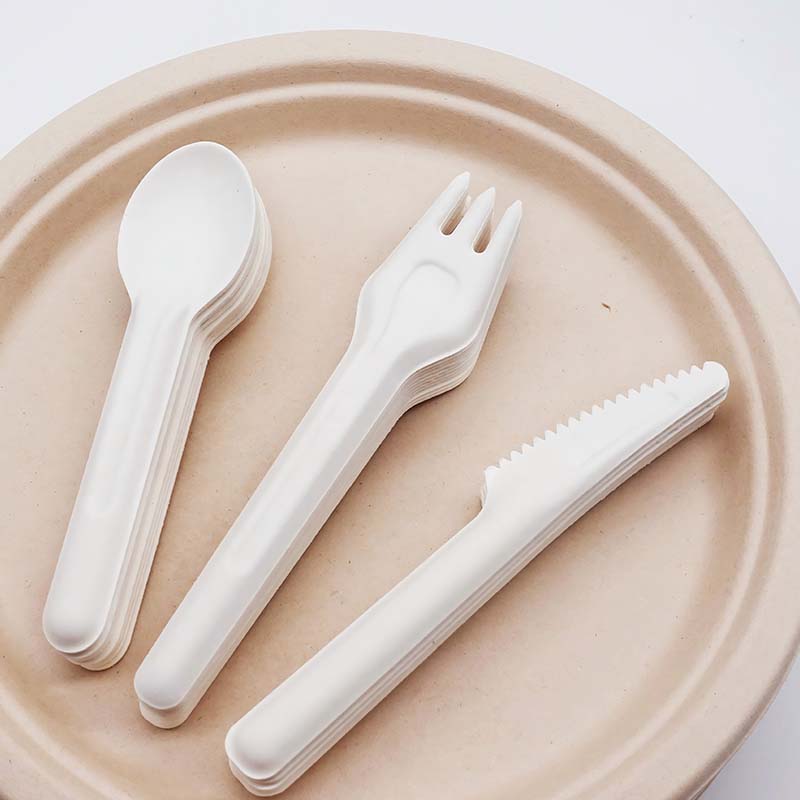
EcoTensil, based in Corte Madera, California, makes folding utensils from paperboard, including its EcoTaster tasting spoon and PopOut SpoonLidz for grab-and-go packaging. The company has said its products are made from SFI renewable paperboard and created in the US.
- Material: paperboard
- Best for: tasting spoons, ice cream shops and spoons built into packaged food lids
- Worth knowing: the only non-plastic US-made option on this list
US-based biodegradable utensil brands
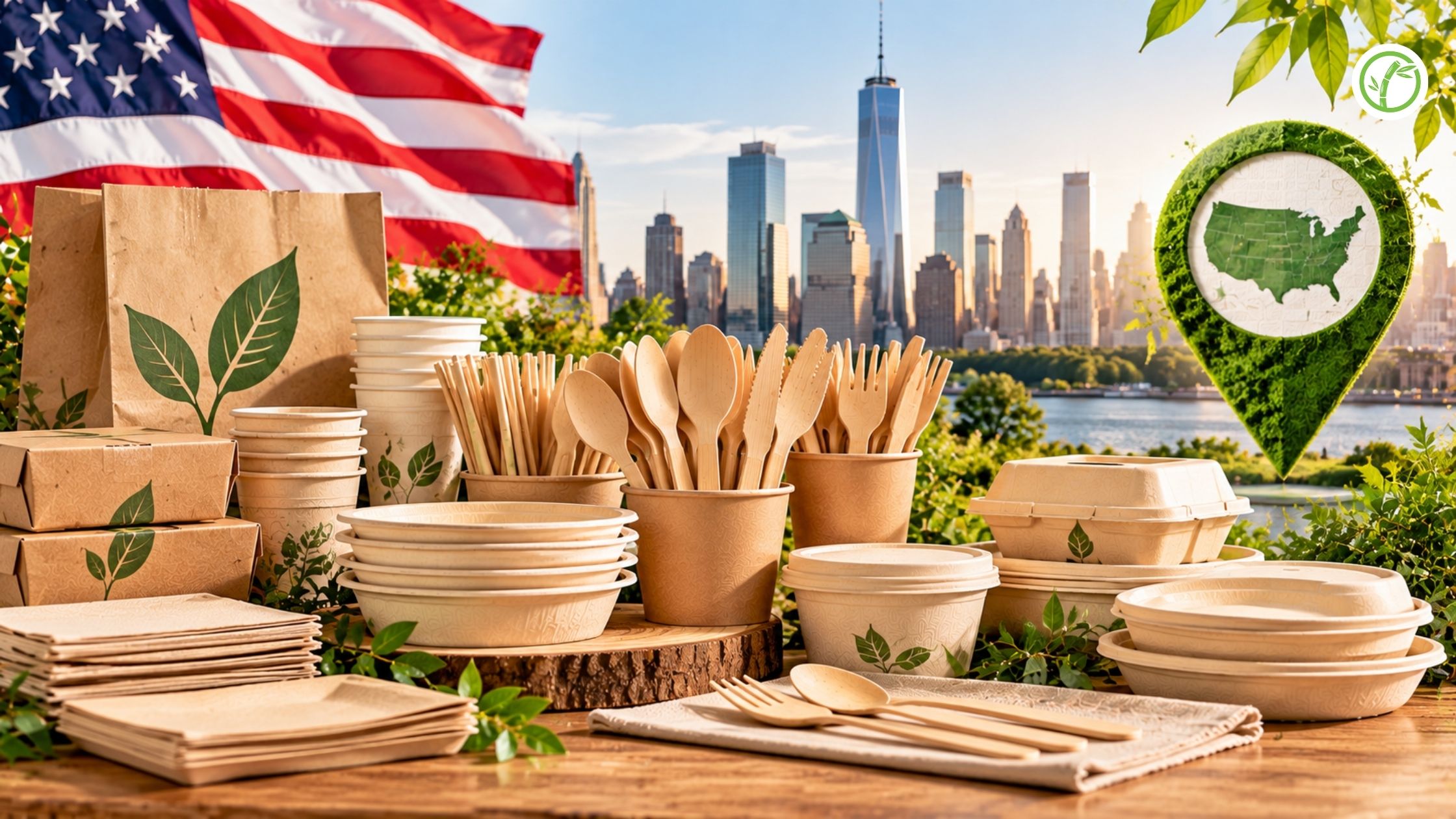
These companies are US-based and sell compostable utensils at scale. Some products are made in their own US plants, while others are sourced from partner factories, so ask about the country of origin for each line.
6. Eco-Products (Novolex)
Eco-Products, based in Boulder, Colorado, is a Novolex brand and Certified B Corporation. It offers BPI-certified compostable forks, spoons and knives, including a line for the Cutlerease single-piece dispenser.
- Parent company: Novolex, which completed its $6.7 billion combination with Pactiv Evergreen in April 2025 and is headquartered in Charlotte, North Carolina
- Best for: chains that want one supplier across cups, containers and cutlery
7. Vegware (Novolex)
Vegware was founded in Edinburgh in 2006 and lists Huntington Beach, California as its US base. Novolex brought Vegware into its Eco-Products portfolio in 2021.
- Material: CPLA cutlery, sold loose and in wrapped kits
- Worth knowing: Vegware runs environmental teams that work with waste companies on compost collection, useful for operators setting up front-of-house composting
8. World Centric
World Centric was founded in 2004 and is headquartered in Petaluma, California. It is a Certified B Corporation that gives 25% of its profits to social and environmental causes.
- Material: FSC-certified bamboo cutlery that is USDA certified biobased and CMA approved, plus plant-based resin cutlery
- Worth knowing: its bamboo cutlery contains no added PFAS, lamination or bioplastics. The company hasn’t published where the factory is located.
9. Karat (Karat Packaging)
Karat Packaging, listed on Nasdaq as KRT, is the holding company for Lollicup USA, incorporated in California in 2001. It operates manufacturing facilities in Chino, California; Rockwall, Texas; and Kapolei, Hawaii, plus several US distribution centers.
- Material: its Karat Earth line includes CPLA cutlery kits, bio-based forks and wooden tasting spoons
- Best for: distributors buying cutlery alongside cups, lids and containers
10. Repurpose
Repurpose is a consumer brand based in Los Angeles and founded in 2010. Its cutlery is made from corn, cassava and beets, certified commercially compostable and has no added PFAS.
- Best for: retail and smaller foodservice buyers
- Worth knowing: certified for commercial composting only, not home composting
How do you verify a US utensil supplier’s claims?
Check these five things before adding a supplier to your range. Each takes minutes.
- Search the BPI database. BPI lists certified companies and products online. For example, LifeMade’s maker, Hearthmark, has its certified cutlery products listed by item number. Confirm the exact product you’re buying is listed, not just the brand.
- Check home-compost claims separately. “Home compostable” needs its own certificate, such as TÜV Austria OK compost HOME. BPI certification covers commercial composting only.
- Ask where each line is made. “US company” and “made in the USA” are different claims. Ask for the country of origin on each SKU, which should also appear on cartons.
- Match the label to state law. California’s AB 1201 limits “compostable” claims to products meeting specified ASTM standards, and several other states have similar truth-in-labeling laws.
- Ask for a PFAS statement. Several US states restrict PFAS in food packaging. A written “no intentionally added PFAS” statement, backed by a test where available, should be standard.
For the difference between the material claims you’ll see on these products, see our guide to bio-based, biodegradable and compostable plastics.
Should you buy from a US maker or import factory-direct?
It depends on the material you want and how much your contracts value domestic supply. US factories lead on PHA and other bioplastic cutlery. Bamboo and wood cutlery is a factory-direct import category.
| Factor | US-made supplier | Factory-direct import |
| Materials | Mainly PHA, other bio-based resins and paperboard | Bamboo, birch wood, bagasse and bioplastics |
| Lead time | Shorter; domestic trucking | Longer; production plus ocean freight and customs |
| Unit price | Often higher | Often lower per unit, before freight and duties |
| Landed cost extras | Domestic freight | Ocean freight, customs brokerage, duties and tariffs |
| Tariff exposure | None | Subject to current US tariffs, which changed repeatedly in 2025–2026; check rates for your HTS code before quoting |
| “Made in USA” contracts | Qualifies, if the product meets federal origin rules | Doesn’t qualify |
| Custom branding | Molded or printed, depending on supplier | Laser engraving, printed wraps, private-label packaging |
| Compliance | FDA food contact and state labeling laws apply | The same FDA and state labeling rules apply to imports |
A practical approach is to combine both: domestic bioplastic cutlery where contracts require US origin, and imported bamboo or wood cutlery where customers want a non-plastic option.
Where Friendly Bamboo fits
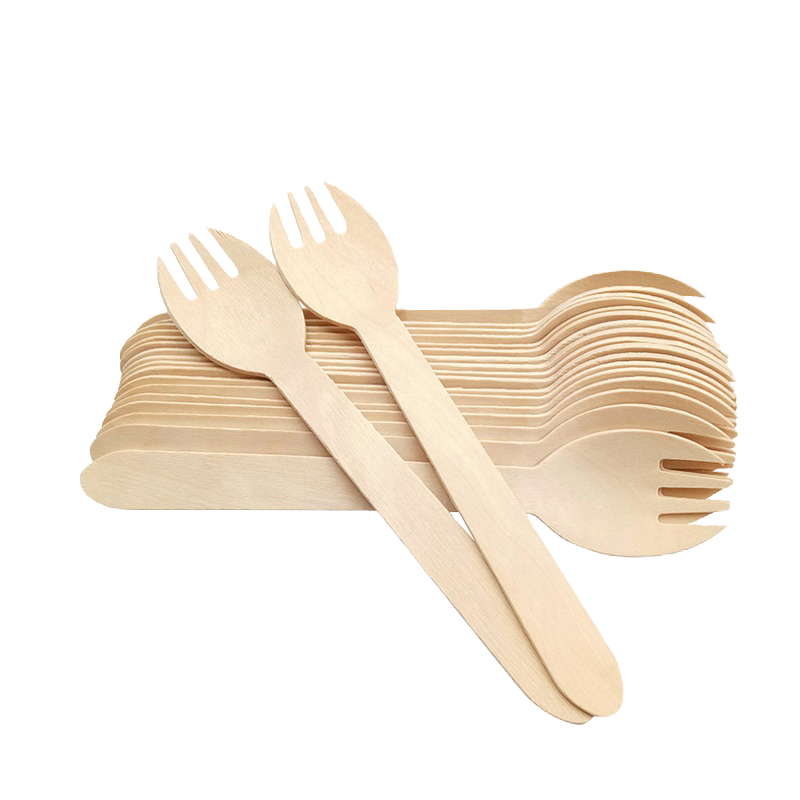
Friendly Bamboo is a China-based manufacturer in Huoshan, Anhui, not a US company. We supply US importers, distributors and private-label brands that want bamboo or birch wood cutlery factory-direct.
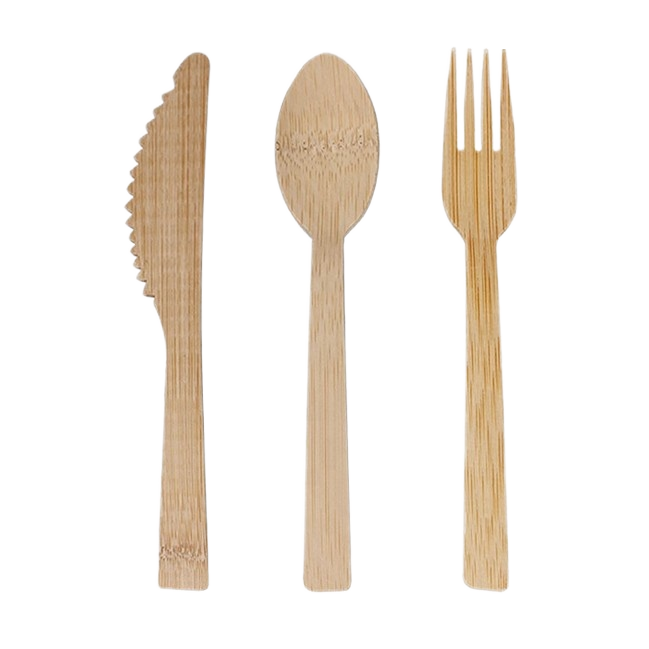
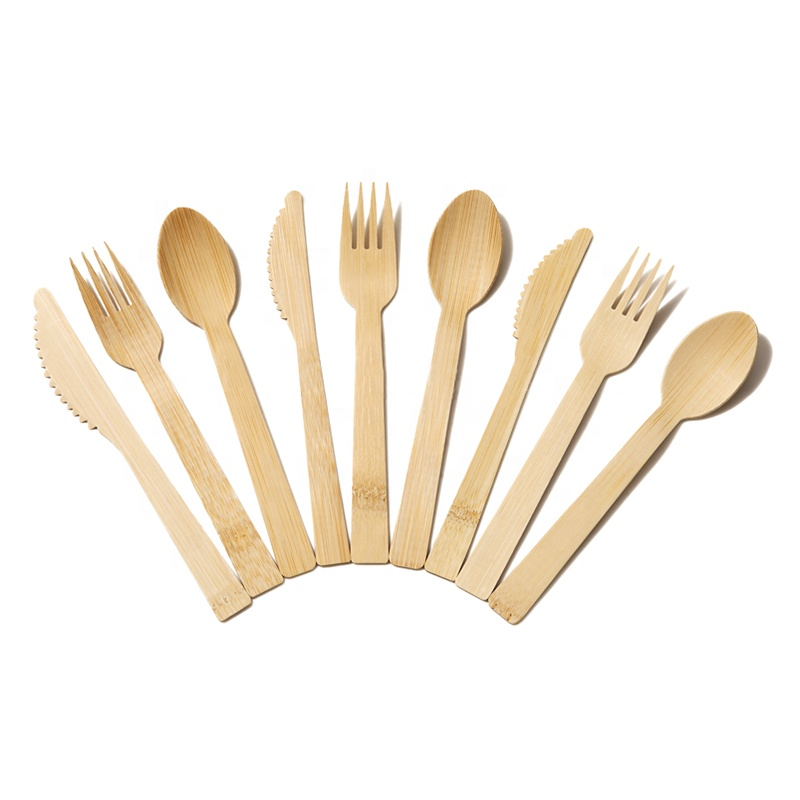
Our wholesale bamboo cutlery is made from Moso bamboo harvested at 5+ years and hot-pressed without adhesives, in sizes from 75 mm to 210 mm, with kraft-wrapped sets and logo engraving. See what bamboo does well, and where it falls short, in our guide to disposable bamboo cutlery. To compare factories, see our guide to bamboo utensils manufacturers in China.
Friendly Bamboo offers DDP terms to the US, so duties and delivery can be included in one price, and we’re open to working with US importers and distributors. We don’t hold US warehouse stock; orders ship from China. Our bamboo and wooden cutlery has FDA food-contact test reports (SHAEC24024167602 and SHAEC24024167604), available on request. Cutlery is sold individually and in sets, and minimum orders vary by size, so request a quote for your range.
Importing bamboo or wood cutlery for the US market?
Friendly Bamboo manufactures bamboo and birch wood utensils factory-direct for US importers, distributors, and private-label brands, with DDP delivery, logo engraving, and kraft-wrapped sets. Browse our wholesale bamboo cutlery range.
See also why compostable tableware is becoming mainstream.
Frequently asked questions
WinCup (phade), UrthPact, Eagle Beverage, LifeMade and EcoTensil all produce utensils in US facilities. Brands such as Eco-Products, Vegware, World Centric, Karat and Repurpose are US-based but may source some lines from overseas.
None of the US factories on this list make bamboo cutlery. US brands such as World Centric sell bamboo cutlery, but buyers wanting it factory-direct generally import it.
PHA is a biopolymer produced by bacteria fermenting plant oils. PHA cutlery is certified home and industrially compostable in some products, and it’s the main material behind US-made compostable cutlery from WinCup and Eagle Beverage.
Search the BPI database for the exact product, and look for a TÜV OK compost HOME certificate if the product is sold as home compostable.
Yes. Imported utensils must meet FDA food-contact rules and the same state labeling laws, such as California’s limits on “compostable” claims.