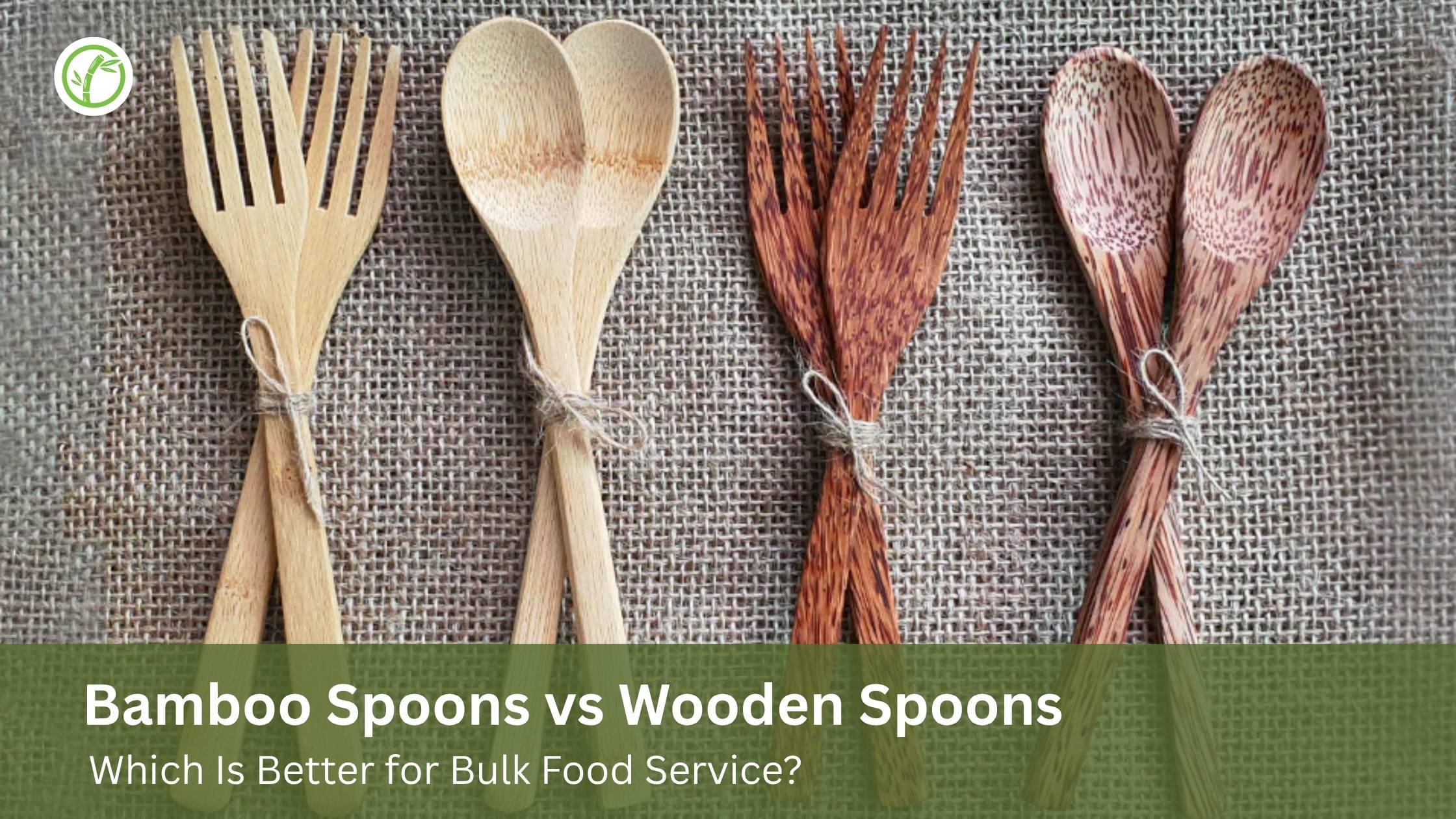
If you source disposable spoons for a food service operation, you have probably noticed that suppliers offer both bamboo and wooden options — often at similar price points. The products look similar. They are both natural, biodegradable, and compostable. So what is the actual difference, and which one should you buy?
The answer depends on what you serve, how your customers perceive quality, and where you fall on the cost-versus-premium spectrum.
The Material Difference
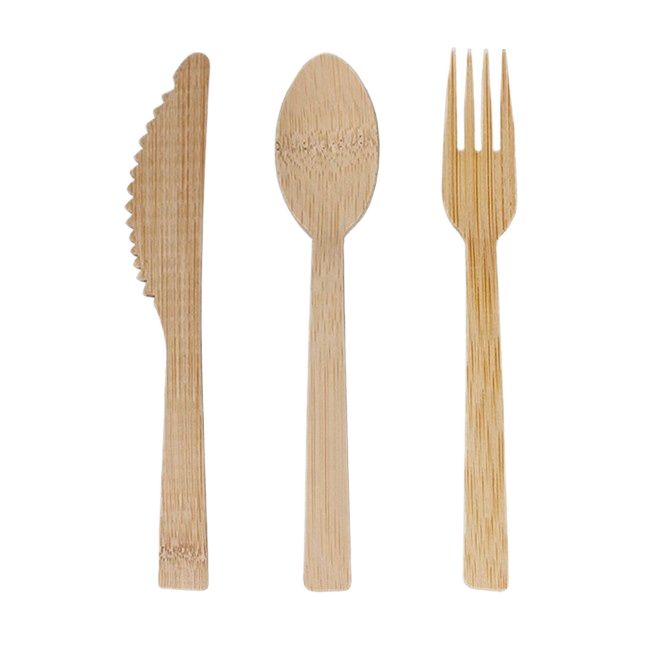
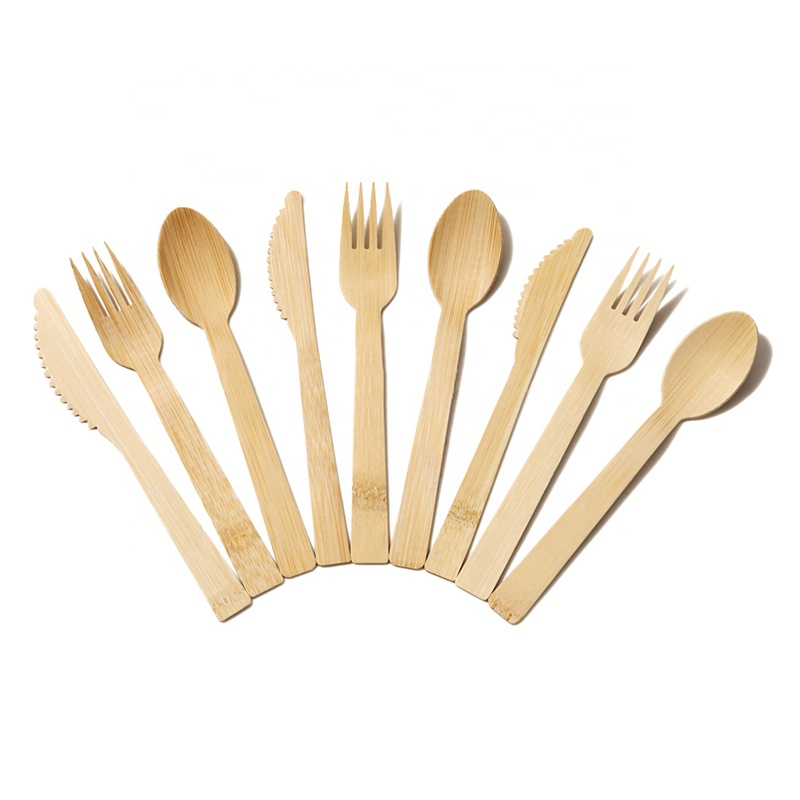
Bamboo spoons are made from Moso bamboo — a dense, fibrous grass that is technically not wood at all. Bamboo has a higher density and more uniform fibre structure than most commercial woods, which translates into greater rigidity and a smoother surface finish.
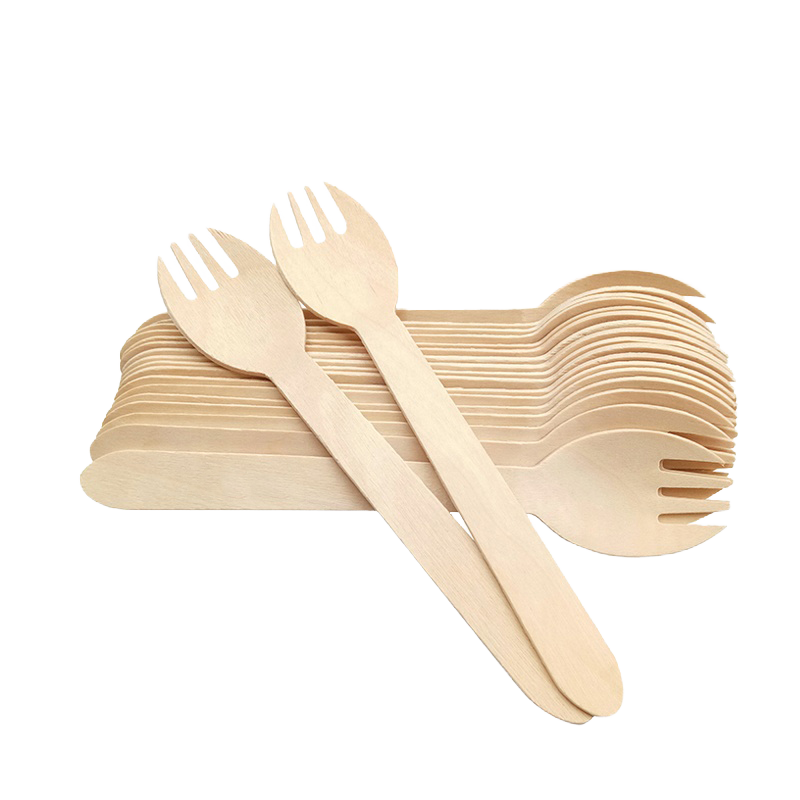
Wooden spoons are typically made from birchwood, though some suppliers use poplar, pine, or willow. Birch is the most common because it is widely available, sustainably harvested, and produces a clean, light-coloured product. However, birch is softer and more porous than bamboo.
Insight: Moso bamboo has a Janka hardness rating of approximately 1,380 lbf (pounds-force), putting it in the same category as hard maple and white oak. Birchwood rates around 1,260 lbf. This 10 percent hardness advantage is measurable in real use — bamboo spoons resist deformation under pressure more effectively than birch.
Strength and Performance
For disposable spoons used in food service, the strength difference matters most with semi-liquid and dense foods — soups, stews, curries, thick yoghurt, ice cream, and rice dishes.
A bamboo spoon holds its shape when scooping thick dal or stirring a hot curry. It will not flex or warp during normal use. The bowl depth is consistent across a batch because the hot-press forming process creates precise dimensions.
A birch wooden spoon performs well with lighter foods but can flex slightly under heavier loads. For thick, dense foods, some users notice a subtle bend in the bowl that bamboo does not exhibit. This is a minor difference for casual dining but becomes noticeable at premium events where every detail matters.
For ice cream service specifically — one of the highest-volume spoon applications — both materials work. However, bamboo tasting spoons are increasingly preferred by gelato shops, frozen yoghurt chains, and dessert bars because the smoother surface does not absorb flavours between tastes.
Taste and Odour
This is the factor that surprises most buyers.
Bamboo spoons are taste-neutral when properly manufactured. There is no woody flavour transfer to food, even with hot or acidic items. This neutrality is a result of the high-temperature steaming process that removes natural sugars and compounds during manufacturing.
Wooden spoons — particularly those from softer woods like poplar or pine — can leave a faint woody taste, especially when used with hot liquids or acidic foods like fruit salads and yoghurt. Birch is better than most woods in this regard, but it is not as neutral as bamboo.
Insight: In blind taste tests conducted by food packaging industry groups, consumers consistently rate bamboo utensils as more taste-neutral than wooden alternatives. For food service applications where the utensil should not influence the eating experience — ice cream, yoghurt, hot beverages, soups — this difference favours bamboo.
Cost Comparison
At wholesale volumes of 50,000+ units, the pricing difference is small but present.
Birch wooden spoons typically cost $0.01 to $0.02 per unit. Bamboo spoons cost $0.02 to $0.04 per unit. The premium for bamboo is roughly 1 to 2 cents per spoon.
For a business serving 300 spoons per day, that translates to $3 to $6 per day in additional cost for bamboo — approximately $90 to $180 per month. For most operations, this is negligible. For extremely high-volume, price-sensitive operations like institutional cafeterias or stadium concessions, it may influence the decision.
Which Should You Choose?
Choose bamboo spoons if you prioritise taste neutrality, premium aesthetics, and strength with dense or hot foods. Bamboo is the better choice for ice cream shops, premium catering, hotels, branded takeaway, and any setting where the customer’s sensory experience matters.
Choose wooden spoons if your primary concern is absolute lowest cost and your application involves lighter foods — cold salads, dry snacks, or low-temperature items where taste transfer is not a factor.
Many businesses stock both. Bamboo for customer-facing premium applications. Wood for back-of-house and basic service.