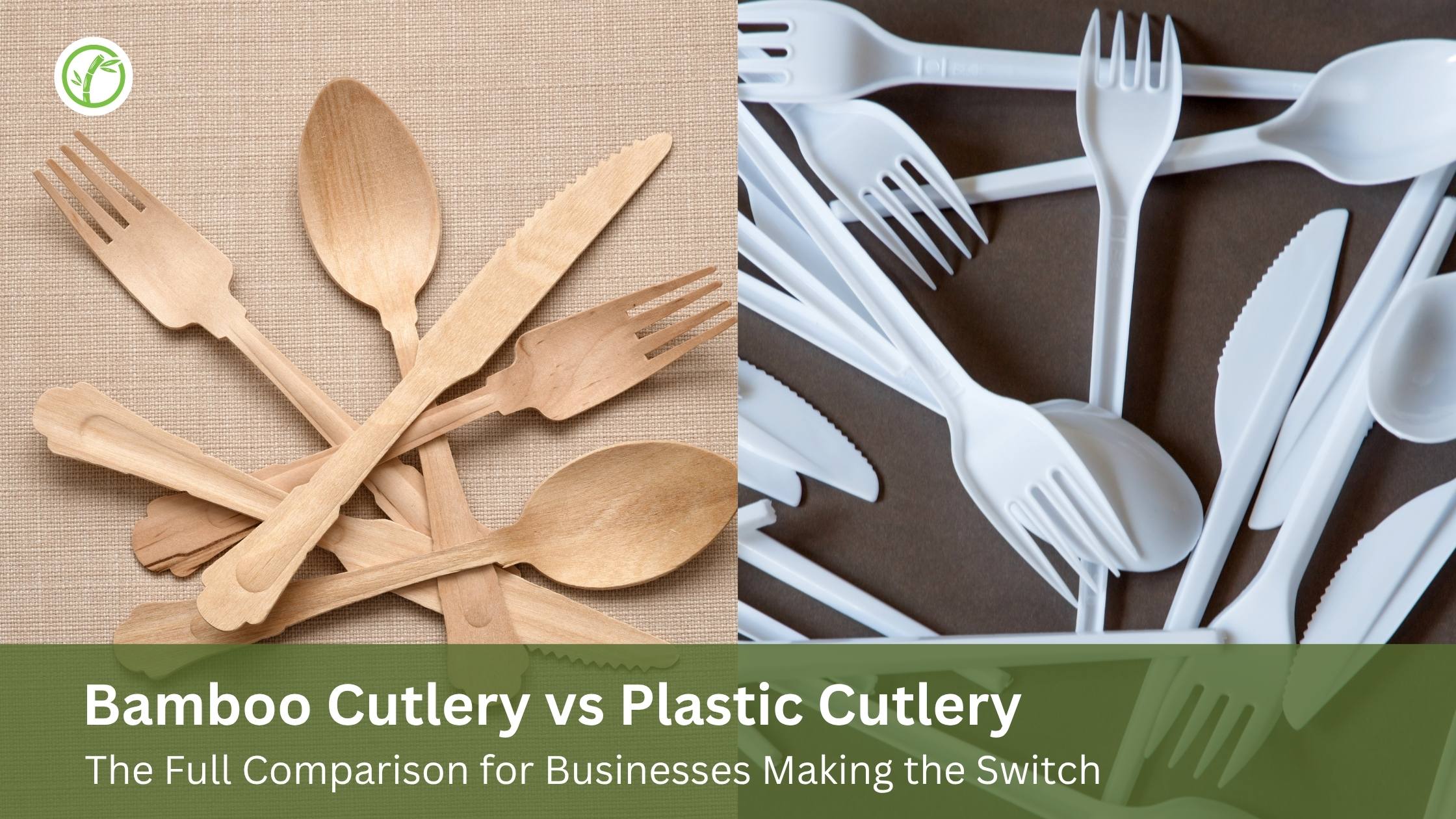
You already know plastic is a problem. But if you are responsible for purchasing decisions at a restaurant, hotel, or catering company, “knowing” is not enough. You need numbers. You need a clear-headed comparison that goes beyond environmental guilt and looks at what actually matters for your operation: cost, performance, compliance, and what your customers think when they pick up that fork.
This article puts bamboo cutlery and plastic cutlery side by side across every factor that affects your bottom line and your brand. No greenwashing. Just the comparison you need to make a confident decision.
The Cost Question: Is Bamboo Actually More Expensive?
Let us get the elephant out of the room first.
At the very lowest price tier, plastic cutlery is cheaper. A polypropylene fork from a bulk supplier costs roughly $0.01 to $0.03 per unit. A bamboo fork at wholesale volumes costs roughly $0.02 to $0.05 per unit.
So yes, if you compare the cheapest possible plastic to bamboo, plastic wins on sticker price. But sticker price is only part of the story.
The first hidden cost is regulatory risk. Over 250 cities and counties in the United States alone have passed restrictions on single-use plastic food packaging. The European Union banned single-use plastic cutlery entirely in 2021. India, Australia, Canada, and the UAE have all introduced or expanded plastic bans. If you are still buying plastic in volume, you are one regulation away from scrapping your entire inventory and scrambling for alternatives at short notice. Emergency sourcing always costs more than planned procurement.
The second hidden cost is brand damage. Industry surveys consistently show that more than half of takeaway customers consider sustainable packaging when choosing where to order from. A growing number of diners actively avoid restaurants that still use plastic disposables. The revenue you lose from perception matters more than the fraction of a cent you save per fork.
The third hidden cost is waste disposal. Many municipalities now charge premium rates for non-recyclable plastic waste. Bamboo cutlery, on the other hand, can be composted — often reducing your waste management bill.
When you factor in regulatory compliance, customer preference, and waste management, the total cost of ownership between bamboo and plastic narrows significantly. For many businesses, bamboo already comes out ahead.
Strength and Usability: Which Performs Better at the Table?
This is where misconceptions tend to live. Many procurement managers assume that “eco-friendly” means “flimsy.” That might have been true a decade ago. It is not true anymore.
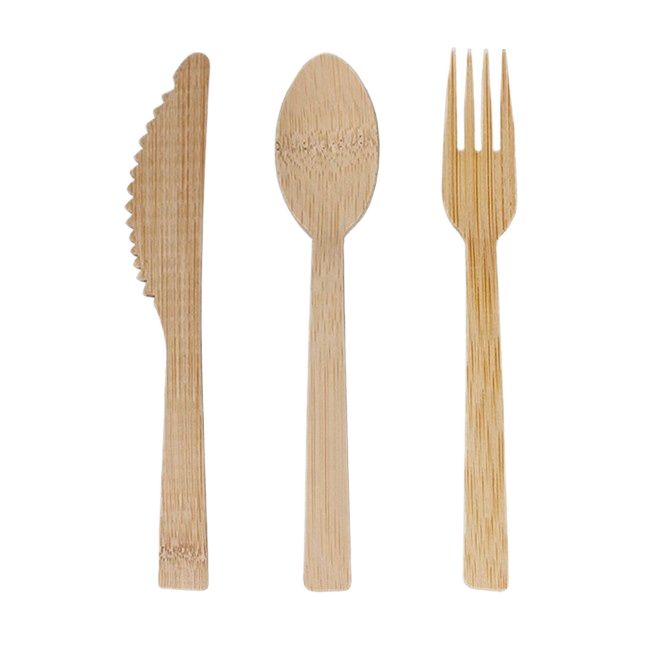
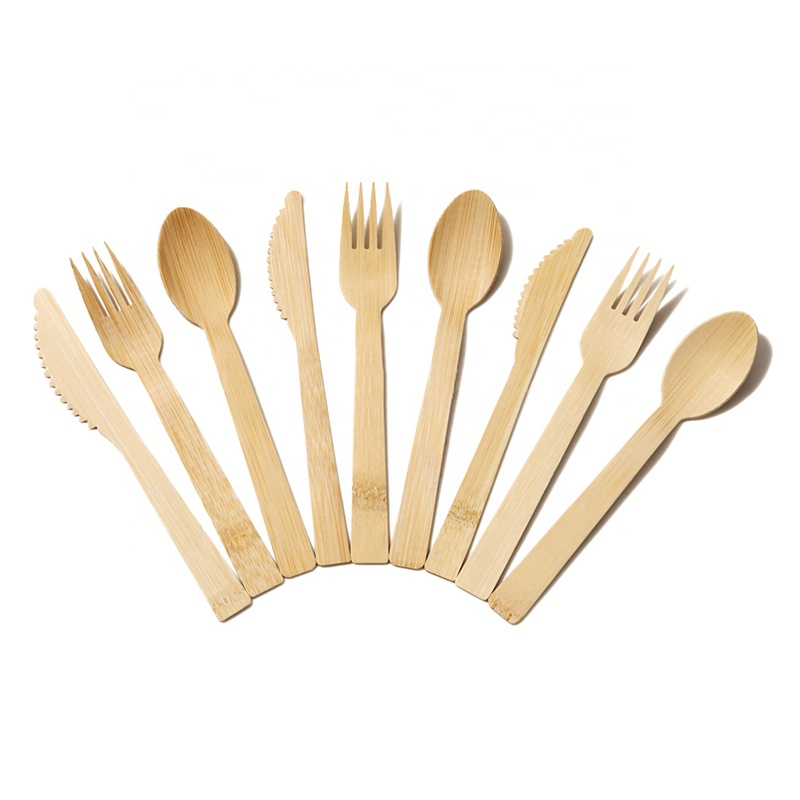
Quality bamboo cutlery is made from Moso bamboo, one of the densest natural materials on the planet. A well-manufactured bamboo fork can pierce grilled chicken, dense salads, and thick pasta without bending or snapping. Try that with a polystyrene fork — it will break before it gets through a medium-rare steak.
Polypropylene forks are more flexible and resilient than polystyrene, but they have their own weakness: heat. Polypropylene begins to soften at temperatures above 120°C, which means it can warp or feel unstable when used with very hot food. Bamboo, by contrast, handles temperatures from -18°C to over 200°C without any structural change. For hot soups, curries, and grilled items, bamboo is the more reliable choice.
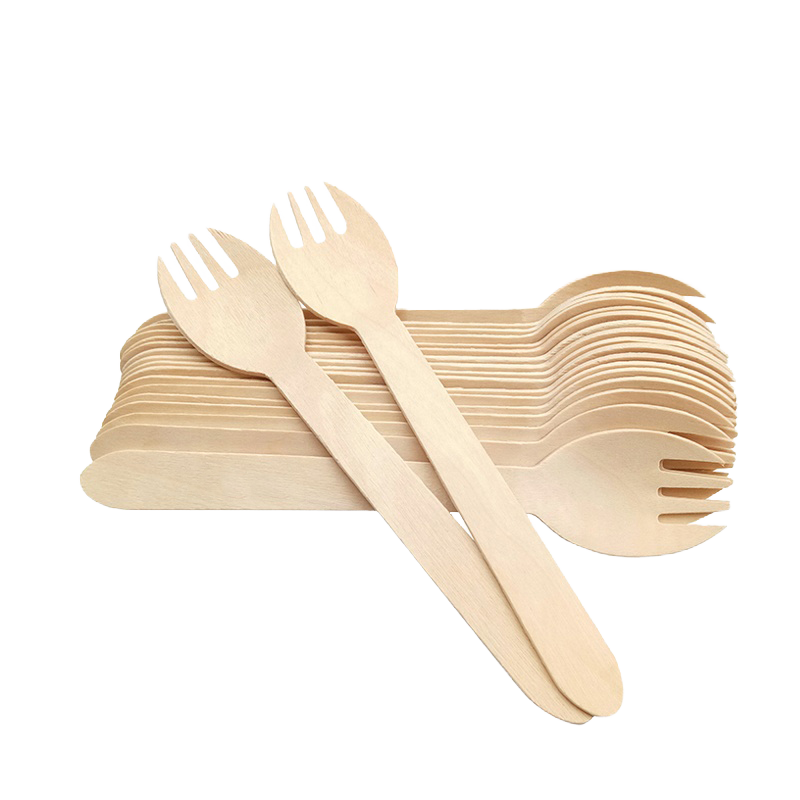
Where plastic still has an edge is in ultra-lightweight applications where the cutlery will be used for cold, soft food only — think yogurt cups, ice cream tasters, or salad bars. In those contexts, cheap plastic does the job adequately, and the cost difference is largest. But for anything involving a real meal, bamboo outperforms.
One more practical difference: texture. Bamboo has a natural warmth and smoothness that diners notice. Plastic feels industrial. This sounds subjective, but in hospitality and events, the tactile experience of every touchpoint matters. A bamboo fork quietly communicates quality. A plastic fork communicates convenience.
Food Safety: What Goes Into Your Customer’s Mouth
This is not just about perception — it is about chemistry.
Certain types of plastic cutlery, particularly those made from polystyrene, can leach chemicals into food. When exposed to hot, acidic, or oily food, small amounts of styrene and other compounds can migrate from the utensil into the meal. The health implications are debated, but the concern is real enough that health-conscious consumers actively avoid plastic food contact products.
Bamboo cutlery manufactured to FDA and LFGB standards is verified safe for direct food contact. The manufacturing process involves no adhesives, coatings, or synthetic additives. The cutlery is steamed, dried, cut, and hot-pressed using only heat and pressure. The result is a 100 percent natural product that does not interact with food at any temperature.
Bamboo also carries a natural antimicrobial substance called “bamboo kun,” which provides inherent resistance to bacteria and fungi. This is not a marketing claim — it is a well-documented property of the bamboo plant. While this does not replace proper food handling hygiene, it adds a layer of natural protection that plastic simply does not have.
For businesses that serve children, health-conscious customers, or operate in markets where PFAS-free and chemical-free claims are increasingly important, bamboo cutlery offers a clean, transparent supply chain.
Environmental Impact: The Numbers That Matter
Here is where the comparison becomes unambiguous.
A single plastic fork weighs about 3 grams and takes 400 to 1,000 years to decompose. Even then, it does not disappear — it breaks into microplastics that contaminate soil, water, and the food chain.
A single bamboo fork weighs about 4 grams and decomposes in 90 to 180 days under composting conditions. It returns to soil as organic matter, leaving no toxic residue.
Bamboo grows to harvest maturity in three to five years. It does not require pesticides, fertilisers, or irrigation. A bamboo forest absorbs approximately 12 tonnes of carbon dioxide per hectare per year and releases 35 percent more oxygen than an equivalent stand of trees.
Plastic production depends entirely on petroleum extraction and petrochemical processing — energy-intensive, carbon-heavy, and reliant on a finite resource whose price fluctuates with global oil markets.
For a restaurant serving 500 takeaway orders per day, switching from plastic to bamboo cutlery eliminates roughly 547 kilograms of non-biodegradable plastic waste per year from a single location. For a 50-location chain, that is over 27 tonnes of plastic diverted from landfills annually.
These are the numbers that belong in ESG reports, sustainability pages, and customer-facing communications.
Certifications: What Each Material Offers
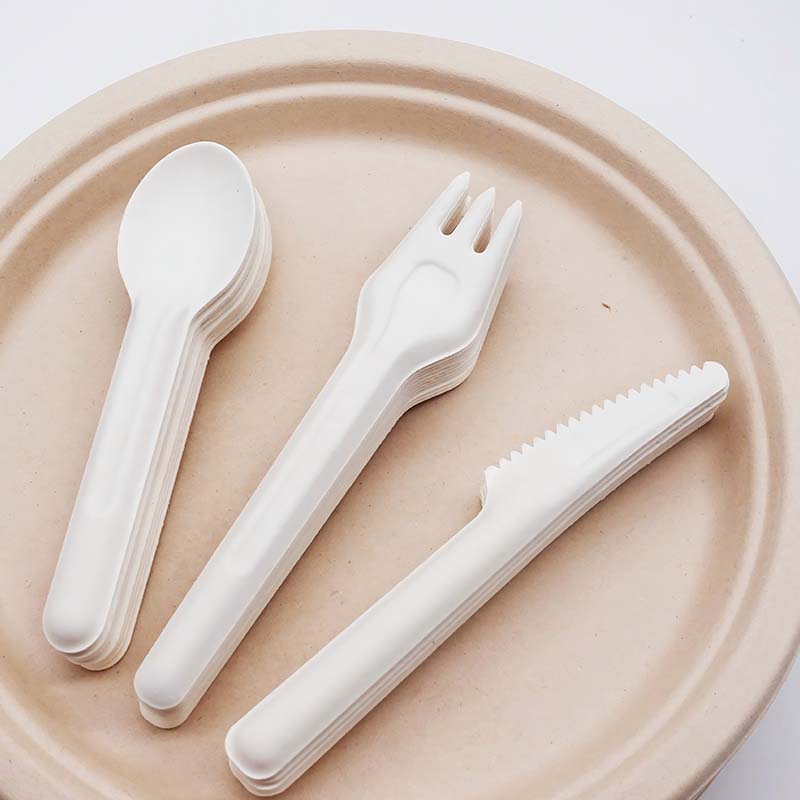
Plastic cutlery rarely carries meaningful sustainability or safety certifications beyond basic recyclability claims. And even those claims are misleading — most plastic cutlery is not recycled in practice because food contamination makes it unsuitable for recycling streams.
Bamboo cutlery from reputable suppliers comes with a stack of independently verified certifications. FSC certification verifies sustainable sourcing. FDA compliance confirms food contact safety. ISO 9001 certifies manufacturing quality. ISO 14001 covers environmental management. BPI certification confirms compostability.
For businesses that supply to major retailers, hotel chains, or corporate clients with ESG requirements, these certifications are not optional — they are prerequisite. Bamboo gives you the documentation. Plastic does not.
Customer Perception: The Factor You Cannot Spreadsheet
A plastic fork says: “We chose the cheapest option.”
A bamboo fork says: “We care about quality, your experience, and the planet.”
That is a simplification, but it reflects a real shift in consumer psychology. According to multiple industry reports, 73 percent of consumers consider sustainability when choosing where to eat. Younger demographics — millennials and Gen Z — weight this even more heavily.
For brands that compete on experience, trust, and loyalty rather than pure price, bamboo cutlery is a low-cost way to send a powerful message. It is a marketing investment disguised as a procurement decision.
So Which Should You Choose?
If your only metric is the absolute cheapest per-unit cost and you serve cold food in a market with no plastic regulations, plastic still wins on price.
For every other scenario — hot food, premium dining, takeaway, delivery, events, hotels, catering, or any market with existing or upcoming plastic bans — bamboo is the stronger business decision. It performs better with hot food, carries real certifications, eliminates regulatory risk, impresses customers, and decomposes in months instead of centuries.
The cost difference at wholesale volume is pennies. The perception difference is enormous.
Ready to make the switch? Explore our full bamboo cutlery range and request a bulk quote →